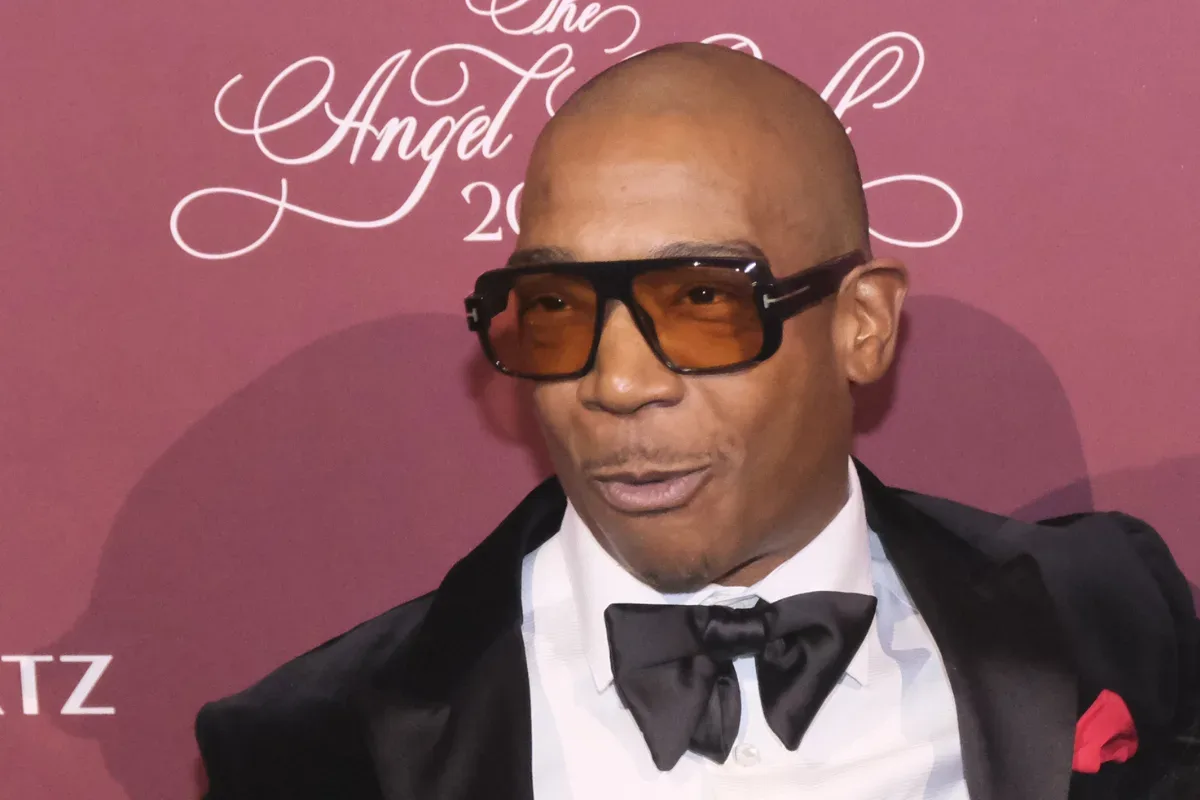
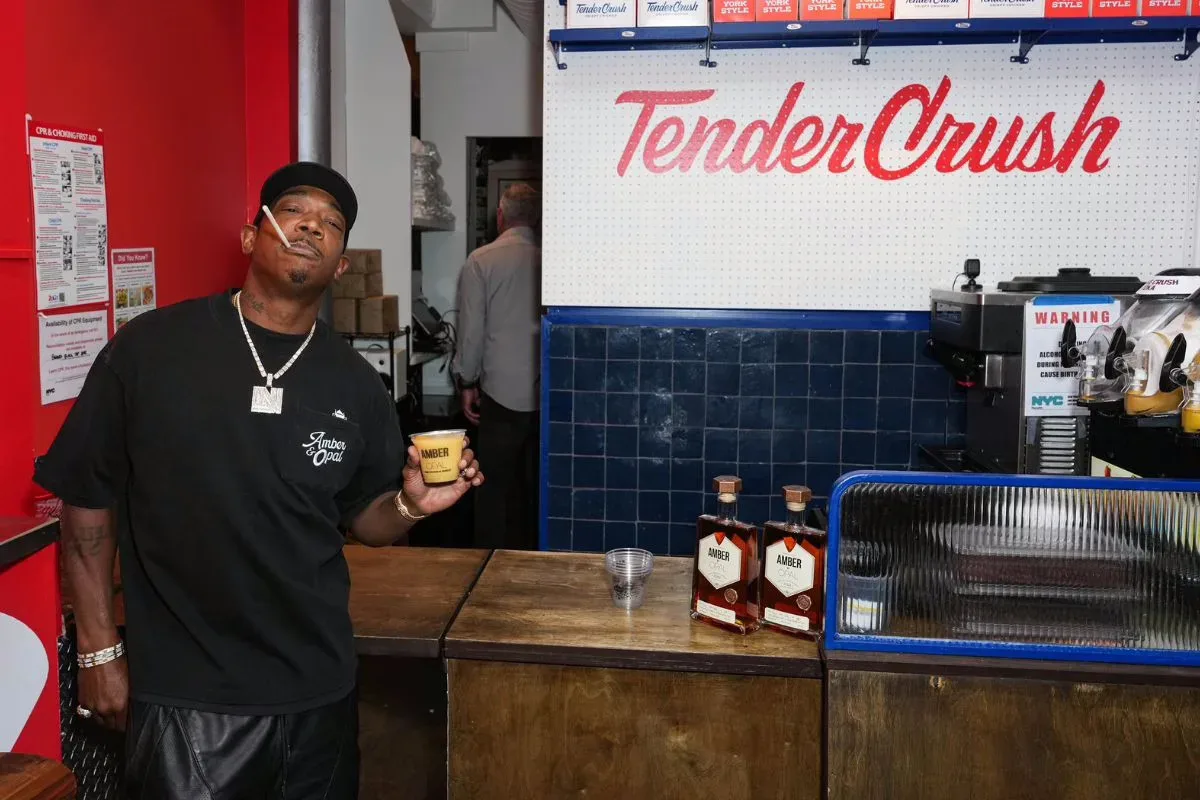
Ja Rule is considering a new way to revisit his catalog: recasting one of his albums through an artificial-intelligence-generated 1970s musical lens.
The rapper said hearing an AI rework of “Put It On Me” as a record seemingly from that decade prompted the idea. The track originally appeared on Rule 3:36, his second album, released in 2000. Rather than simply discussing AI as a novelty for a single song, he is now weighing a full-album project built around the same stylistic transformation.
“I’m thinking about repurposing like one of my whole albums like that and just put it out as a ’70s vibe,” Ja Rule said.
His response to the version of “Put It On Me” was emphatic: “It sounded fucking amazing.” At this stage, though, the proposed album treatment is an idea under consideration, not a confirmed release. There is no identified album, rollout plan, release date, or stated technical process for how a larger project would be made.
Why “Put It On Me” is a significant test case
“Put It On Me” is not an obscure deep cut in Ja Rule’s body of work. The original album recording features Vita. A version credited to Ja Rule, Lil’ Mo and Vita reached No. 8 on the Billboard Hot 100 in March 2001. Tru Stylze and Irv Gotti are credited as producers on the album recording.
The song also earned Ja Rule and Vita a Grammy nomination for Best Rap Performance by a Duo or Group. That history gives any substantial reimagining a clear challenge: the new interpretation would be working from a song with established collaborators, a familiar arrangement and a major chart legacy.
That does not mean an AI treatment must replace the original. The most straightforward reading of Ja Rule’s idea is as an alternate version: a new stylistic frame applied to material listeners already know. A project like that would put the appeal—and potential controversy—on the choices behind the remake: what elements remain recognizable, what changes, and how clearly the new version is presented as distinct from the 2000 recording.
What a “’70s vibe” can mean in this context
“1970s” is a broad creative shorthand rather than a technical description. It can point to the perceived character of a recording—its vocal presentation, instrumental palette, rhythm, arrangement, or mix—without necessarily reproducing any one artist, genre or historical production method.
Related coverage includes Ja Rule Is Considering an AI-Generated ’70s Makeover for a Whole Album.
That distinction matters because the available details establish the intended aesthetic but not the specific mechanism. Ja Rule said AI made “Put It On Me” sound like it had come from the 1970s. He did not identify a model, explain what inputs were used, or say whether the experiment changed vocals, instrumentation, both, or another part of the track.
Generative AI generally refers to technology that produces new output from patterns learned during training and from user instructions or supplied material. In music discussions, that output may involve vocals, lyrics, accompaniment, arrangement ideas, or a full audio-style transformation. Those are different tasks, and the report does not establish which were involved here beyond the end result Ja Rule heard.
For fans, the central practical question would be simple: is the proposed record a set of remixes, reconstructed performances, AI-sung versions, or some combination? Until Ja Rule provides further details, treating the concept as a broad creative possibility rather than a defined format is the more accurate approach.
AI as a songwriting-demo tool
Ja Rule’s comments go beyond looking backward at an existing hit. He also described a possible use for AI before a conventional recording is made.
When he writes songs for other singers, he said he has previously used a vocalist to record a guide. In songwriting, a guide vocal is a performance made to demonstrate how a song is intended to sound. It can communicate melody, phrasing, timing and the general delivery of lyrics before the intended recording artist makes a final take.
Ja Rule said a generated voice could potentially take that role. In his description, he could write a record, have an AI model sing it, and send that demonstration to an artist. He also raised another possibility: if the result sounded right to him, the AI voice could remain on the song for release.
“I could write this record, you know, feed it to the AI model, let it sing it and then send it to the artist. Or actually say, wow, this sounds amazing with the AI voice. Maybe I’ll leave it and put it out as an AI song,” he said.
That idea separates two practical uses that are often blended together in arguments about AI music. One is a private or work-in-progress tool, replacing or supplementing a conventional demo singer. The other is a public-facing creative choice: releasing a generated vocal as part of the finished recording.
The first use centers on communication during songwriting. The second changes the identity of the released performance itself. Ja Rule’s comments suggest he sees value in both, depending on the result, but he did not say he has already issued a song built around an AI vocal.
Catalog value and a new reason to revisit older work
The potential album makeover also arrives after Ja Rule discussed the possibility of selling his catalog in 2023. At the time, he said he would want a structure that could allow his family to buy back a share later.
A music catalog is the collection of songs and related rights an artist or rights holder controls or can earn from. Catalog conversations commonly focus on the long life of recordings and compositions: how music continues generating revenue through uses and listening over time. Ja Rule described streaming as a source of checks he was not receiving a decade earlier, underscoring why an artist might view older music not just as archive material but as an active part of a current business.
In that light, an alternate AI-era version of a past album could represent more than a throwback exercise. It could be a way to present familiar songs to listeners in a newly framed format while retaining the attention around the originals. Whether that produces a compelling artistic project would depend on the execution, not merely the use of the technology.
Music audiences are already seeing how continued listening can reinforce a song’s commercial afterlife; a recent milestone for Meek Mill and Drake’s “Going Bad” is another reminder that older releases can retain significant cultural and commercial momentum.
No claimed pitch, no announced partnership
Despite his openness to experimenting, Ja Rule said nobody had approached him with an AI-music project when asked whether he had been pitched one. That detail keeps the story focused on an artist reacting to a result he heard and exploring what it could mean for his own work, rather than confirming an outside collaboration or commercial campaign.
For now, the clearest takeaway is that Ja Rule sees AI as capable of doing two very different jobs: refreshing the perceived era and sound of an established song, and providing a flexible vocal sketch while new material is still being developed. His possible 1970s-style album remains only a consideration, but “Put It On Me” has given him a concrete example persuasive enough to make the experiment feel worth expanding.