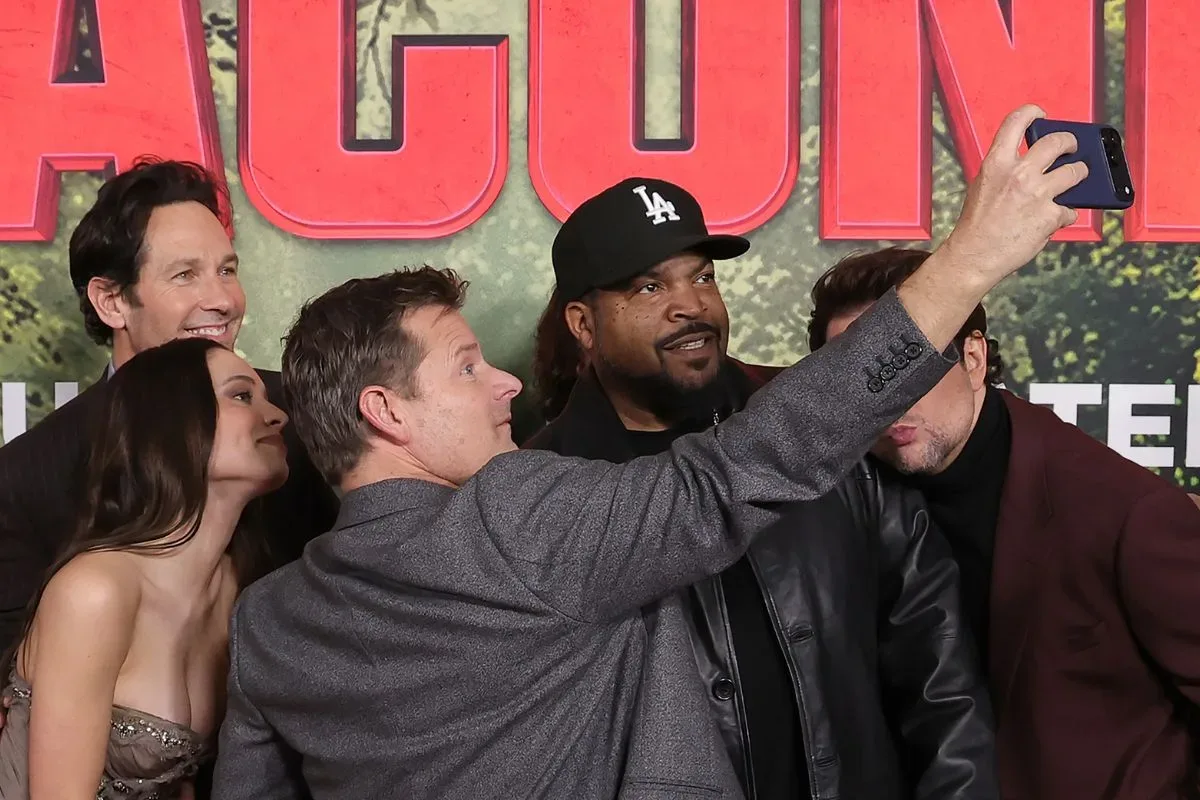
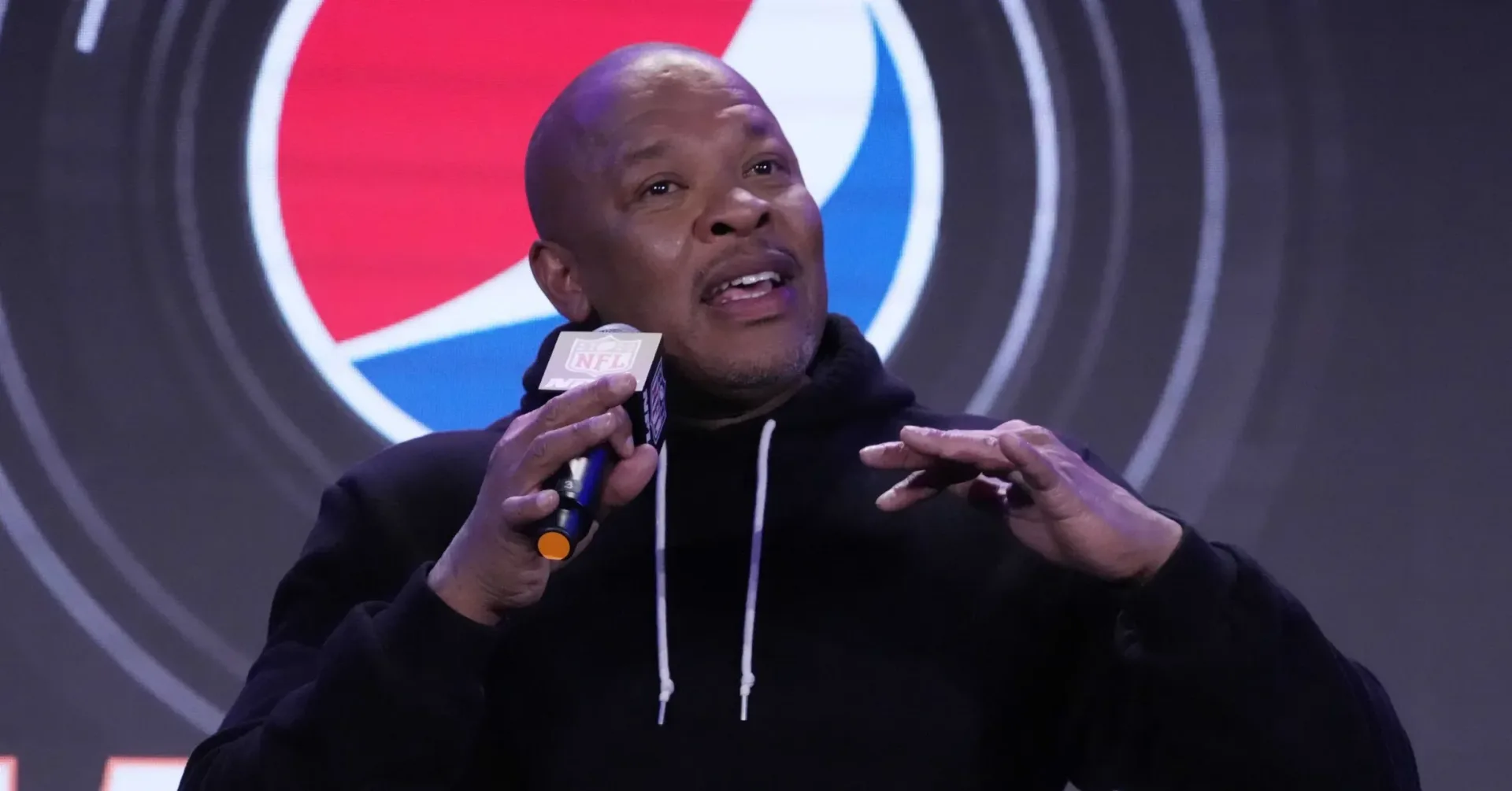
Dr. Dre is not retreating from artificial intelligence. In a recent conversation with Ice Cube and Mike Epps on Listen & Laugh, the producer said he is “extremely excited” by AI and its possible future in both music and film. That position builds on remarks he made in August, when he confirmed that AI had already entered his own production workflow as a way to experiment with material he had created.
His enthusiasm is direct, and so is his assessment of the pushback. Dre characterized AI as a new creative level and suggested that people angry about it may lack creativity themselves. It is a provocative claim, particularly in hip-hop, where the questions raised by generative tools are not limited to whether producers are willing to learn unfamiliar software.
The core disagreement is not necessarily over whether software can help make music. It is over what the software was built from, who agreed to its use, and who benefits when it produces something commercially useful. Dre’s comments therefore put two very different uses of AI under one wide umbrella: an artist experimenting with recordings they own, and a system capable of producing music from material whose creators may not have authorized that use.
What Dr. Dre says AI can offer
Dre described himself as excited by AI’s potential beyond audio alone, pointing to music and film. He did not specify the tools he uses, the exact tasks they perform, or how extensively they shape a finished work. What he has said, however, is meaningful in a narrower sense: he is using AI to explore his own existing material rather than presenting it as a replacement for authorship.
That distinction matters. “AI” is often used as shorthand for a broad family of technologies that can do very different jobs. In an artistic workflow, it might refer to a system that helps create variations, organize possibilities, manipulate sound, or generate new output from a prompt or reference material. Those are not identical processes, and the ethical stakes can change depending on the inputs and who controls them.
Dre’s framing is that of a producer considering another studio tool. In his August comments, he compared today’s reaction to AI with earlier resistance to drum machines and synthesizers. His longtime business partner Jimmy Iovine also argued that skilled musicians could make better records with the technology and said more producers may be privately experimenting with it than are willing to say publicly.
The comparison has obvious appeal. New production equipment has repeatedly expanded what musicians can make, and Dre’s career gives his view unusual weight. A producer’s job is often to hear possibility in equipment, performance and arrangement before everyone else does. From that perspective, rejecting a tool simply because it is unfamiliar can look like an unnecessary limitation.
Why the drum-machine comparison only goes so far
Dre’s analogy explains why some artists see AI as creatively useful, but it does not settle the current dispute. A drum machine or synthesizer is an instrument. The concerns surrounding generative AI are often about training data, imitation and labor rather than the existence of a new sound-making interface.
Related coverage includes Dr. Dre Reaffirms His Support for AI in Music and Film.
That is why critics can agree that musicians should be free to experiment with their own work while still objecting to systems that may generate songs using material artists did not permit. A producer working privately with recordings they created is a different situation from a company developing or deploying models that draw value from a much wider pool of human work.
Ownership is the practical term at the center of this split. If an artist owns or has permission to use recordings, then using technology to test ideas from that material is closer to an extension of their established process. If a system relies on protected recordings, performances or voices without authorization, the issue becomes whether creators had meaningful consent and whether they are compensated for the value derived from their work.
That debate is especially pointed in a genre where voice, flow, production choices and persona can be inseparable from an artist’s identity. Even when a tool is described as a creative assistant, listeners and artists may ask whether it is assisting an original creator or merely approximating the work of someone who was not invited into the process.
Tool versus artist is still the useful dividing line
The most productive version of the conversation may be less about declaring AI good or bad and more about defining its role. A tool can broaden a human creator’s choices. An artist, in the cultural sense, makes decisions, takes responsibility and brings a point of view. Those roles can overlap in a workflow without becoming interchangeable.
For Dre, AI appears to be a tool for experimentation. He has not claimed that it should take the place of musicians, songwriters or producers. But his strongest criticism of opponents risks flattening the case against unregulated or unauthorized use. The objections are not all fear of learning something new. Many concern the terms on which a new technology enters creative industries.
That is also why discussions around sample clearance remain relevant. Music has long involved questions of permission, attribution and payment when one recording is incorporated into another. The mechanics of AI differ from sampling, and the supplied information does not establish a direct legal equivalence. Still, both debates turn on a familiar principle: creative work has value, and using it can create obligations. The ongoing conversation around sample clearance in music illustrates how seriously the industry can take permission when existing work is involved.
What Dre has not addressed
Dre has made his creative case clearly, but he has not explained how he thinks the industry should resolve the related questions of ownership and compensation. Those omissions do not negate his use of AI with his own material. They do mean his public argument currently answers only part of the debate.
There are several issues that remain distinct:
- Consent: Did the people whose music, performances or other work informed a system agree to that use?
- Compensation: If a system gains commercial value from creative work, how should the people behind that work be paid, if at all?
- Disclosure: Should listeners, collaborators or rights holders know when AI has played a material role in a project?
- Control: Who determines whether a performer’s voice, likeness or style can be replicated or approximated?
- Credit: When AI contributes to a production process, how should the human creators and technical contributors be recognized?
These questions do not have a single answer in the information currently available. They also should not be treated as proof that every AI-assisted work is the same. The details of the input, permissions and final creative control matter. Dre’s own description of experimenting with work he created points toward a more bounded use case than the scenarios worrying many critics.
Why this debate matters for music and film
Dre’s latest comments extend his interest from records to filmmaking. That broadens the stakes because film combines multiple types of creative labor: writing, acting, editing, music, visual design and more. AI can be discussed as a tool in each area, but each area also raises its own questions about authorship and the protection of performers and makers.
His position nevertheless reflects a real tension in creative fields. Artists want access to useful tools, especially tools that can accelerate experimentation. At the same time, artists want their work, voice and livelihoods protected from systems that can absorb, imitate or compete with them without permission. Calling both sides of that tension “AI” can make the argument seem simpler than it is.
Dre is firmly on the side of exploration. His comments suggest he sees technological fluency as part of creative growth, much as he viewed past studio innovations. Critics are asking for a parallel commitment: if AI is going to be used in music and film, its development and deployment should account for the people whose creative labor gives those industries their value.
For now, the clearest takeaway is not that the debate has been resolved. It is that one of music’s most influential producers is increasingly willing to state his position openly. He sees AI as an opportunity for creativity and experimentation. The unanswered question is whether the industry can establish rules around consent, ownership and compensation that allow that experimentation without treating human artists as raw material.