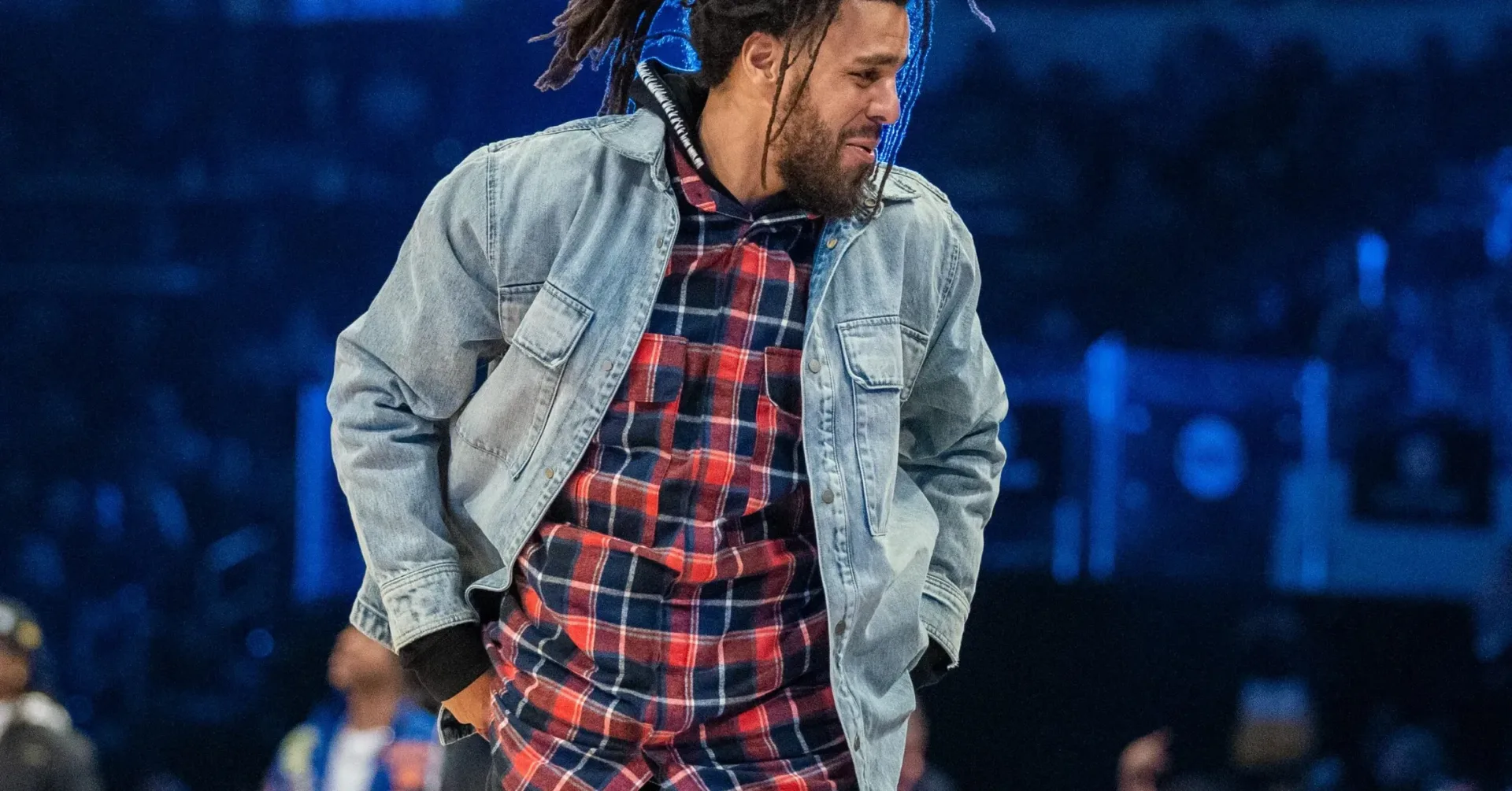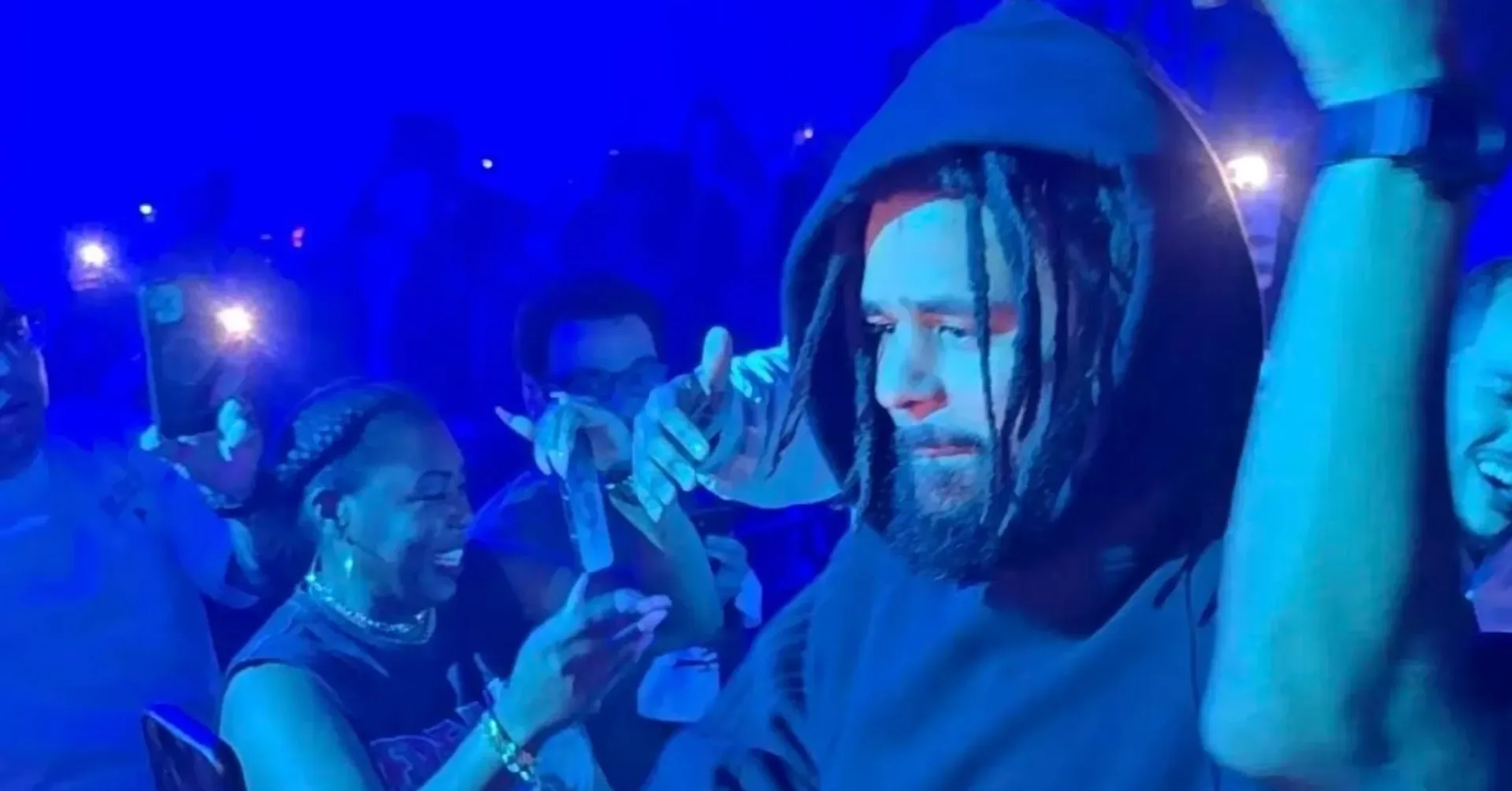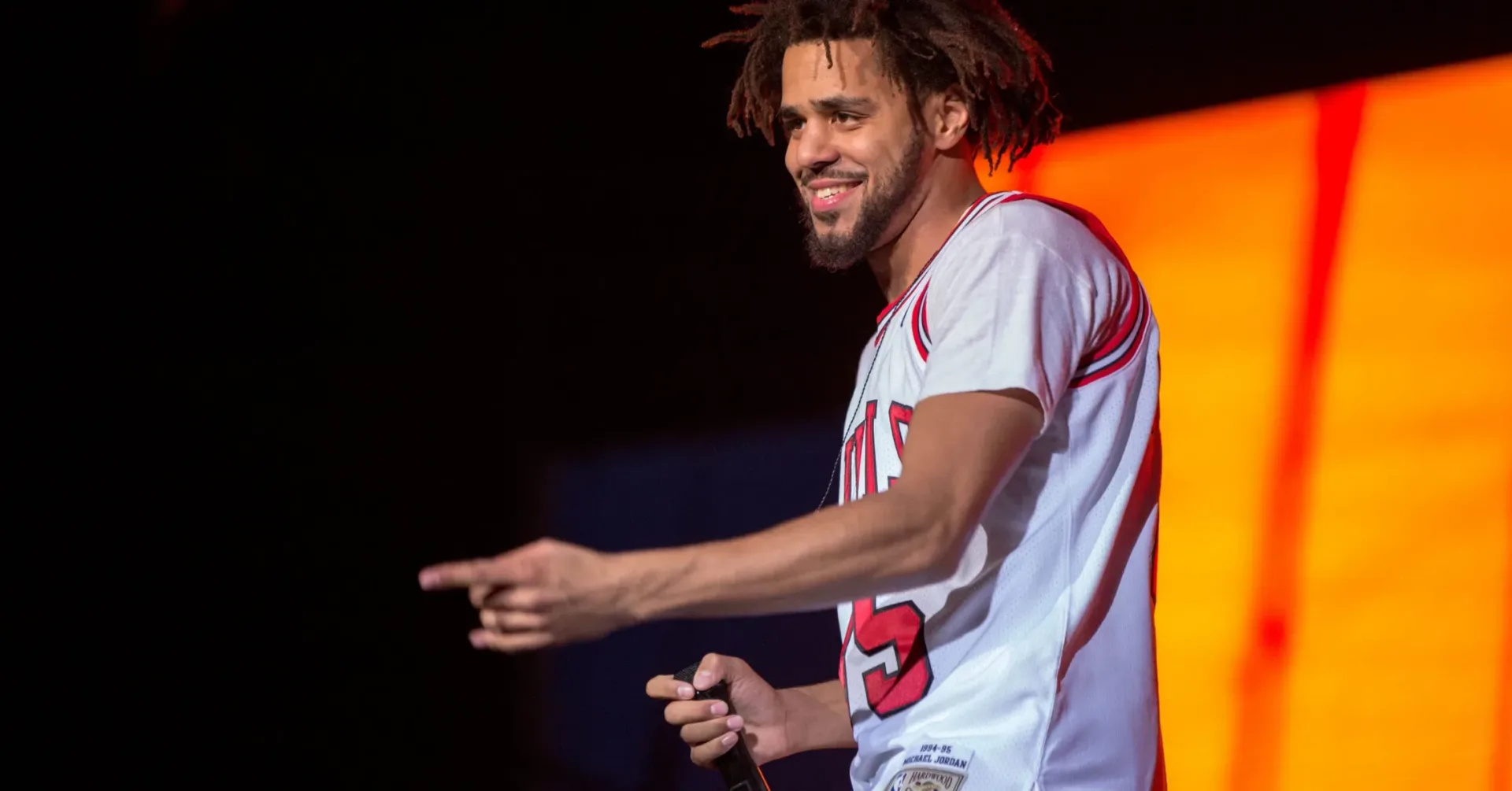
J. Cole made the opening release of his Indie 5000 sneaker a personal Fayetteville occasion, appearing at the site to greet fans who had camped overnight before the line opened. Images from the gathering show Cole taking photos with attendees, including fans in matching red outfits, turning the first drop into a face-to-face event rather than a release that happened at a distance.
One attendee documented being first in line after travelling from San Diego. That detail does not establish the total scale of the queue or the shoe’s broader demand, but it does show that the launch drew interest beyond Fayetteville. A truck carrying Dreamer branding was also stationed at the site, visually tying the setup and distribution effort to Cole’s team.
The Indie 5000 is being presented as Cole’s first independent sneaker, following five years of development without a major sportswear partner. That is the central distinction behind this release: “independent” here refers to the project being developed outside the backing of a major athletic-footwear company. It does not, on its own, reveal manufacturing arrangements, future retail plans, release quantities, sizing, materials, pricing, or wider availability. None of those details were established at the Fayetteville event.
What is clear is that Fayetteville was chosen for the opening chapter. Cole grew up in the city, and the decision to launch there before pursuing a larger-market debut makes the location part of the shoe’s message. The gathering was therefore about more than moving pairs of a new product; it framed the Indie 5000 as a project connected to the place that has remained central to Cole’s public identity.
A launch built around presence, not just product
Sneaker launches can be highly transactional: a release time arrives, customers try to buy, and the interaction ends. The Fayetteville drop added a different layer. Fans who waited through the night were met by the artist behind the shoe before the line began moving. For people who made the trip, that changed the value of the occasion even if the product itself remains the reason they were there.
This is an important distinction in sneaker culture. A shoe can be an object to wear, display, trade, or simply remember. But a launch can also become a shared event, particularly when the designer or celebrity connected to it is physically present. Photos taken on the night are evidence of that experience: fans were not merely standing in a queue for a branded item; they had an opportunity to meet Cole at the debut of a project that took years to bring forward.
That does not mean every release needs an in-person appearance to matter, nor does it make the Indie 5000’s long-term trajectory predictable. It does, however, explain why the Fayetteville setting carries weight. For an independent first sneaker, the initial impression is not only shaped by design or marketing. It is shaped by who was invited into the moment, where it happened, and how directly the creator participated.
There is also a practical side to this approach. An artist appearance gives fans who are already waiting a focal point beyond the purchase. It creates photographs, conversations, and memories that can travel well beyond the physical location. The San Diego traveller is one example of the kind of commitment such a moment can inspire. Yet it would be a leap to treat a single fan’s trip as a measure of nationwide sales demand. It is better understood as a vivid sign of enthusiasm surrounding the first release.
Why Fayetteville fits the Indie 5000 rollout
Fayetteville has long been closely associated with Cole’s story, not merely as a biographical footnote but as a continuing point of connection. Starting the Indie 5000 there makes that relationship tangible. A bigger market might offer a different kind of visibility, but a hometown launch can make a new venture feel rooted rather than imported.
That choice matters especially because the shoe is described as independent. Major sportswear partnerships often bring immediate recognition through an established corporate platform. An independent project has to establish its own identity and persuade people that the work behind it is worth their attention. Beginning in Fayetteville lets the Indie 5000 introduce itself through a community that is already meaningful to its creator.
It is also a reminder that “independent” should not be reduced to a marketing adjective. Based on the available details, the concrete claim is that Cole spent five years building the sneaker without a major sportswear partner behind it. That makes the road to this first public drop part of the story. It does not automatically tell audiences how the business operates in every respect, but it does distinguish the Indie 5000 from a conventional celebrity collaboration with a major athletic brand.
Creative control is often a recurring point of interest when well-known figures bring personal projects to the public. In another corner of pop culture, debates around authorship and control have also surfaced in George Lucas’ comments on the editing of films. The mediums and circumstances are different, but both discussions underline why audiences pay attention to how creators retain a relationship with work carrying their name.
What the “first drop” does—and does not—tell us
A first drop is the first release event for a product. In this case, it marks the Indie 5000’s arrival with real fans after its extended development period. It is a milestone, but it should not be confused with a complete release roadmap. There is no confirmed information here on future cities, dates, online ordering, restocks, or expansion plans.
The Dreamer-branded truck offered a visible sign of organized on-site setup and distribution. Still, it would be speculative to draw conclusions from the vehicle alone about the full logistics network behind the sneaker. Similarly, the crowd’s overnight wait demonstrates dedication at this particular event, but it cannot tell us how many pairs were available or how subsequent drops will be handled.
Those boundaries are useful for fans following a new independent footwear project. A successful launch-day image can create plenty of excitement, but the most helpful facts are the ones actually in view: Fayetteville hosted the first drop; fans camped out overnight; Cole greeted them before the line opened; and the event included visible Dreamer branding. Everything beyond that—including precise distribution, retail, and product specifications—remains unconfirmed from the information available.
The significance of a five-year build
Five years is a substantial amount of time for any creative project to remain in development before it reaches an audience. For the Indie 5000, that timeline adds context to the emotion around the Fayetteville launch. The fans at the event were not seeing a surprise co-branded release appear overnight. They were witnessing the public debut of something Cole had been building for years.
That context helps explain why his presence mattered. An appearance at a launch can be promotional, but it can also serve as a visible acknowledgment of the people who chose to show up for a project at its starting point. Cole’s decision to greet the overnight crowd gave the rollout a directness that fits the independent framing: the artist, the shoe, and the earliest customers occupied the same space.
There is a balance worth preserving in how that moment is read. The event can be meaningful without turning every detail into a grand claim about the future. It is not necessary to predict market impact or declare the Indie 5000 an instant cultural landmark to recognize the significance of a hometown launch. The available evidence supports a simpler and stronger point: its debut was designed as a community-facing occasion, and the person behind it showed up for it.
What fans can take from the Fayetteville event
- The Indie 5000’s first drop took place in Fayetteville. The city’s connection to Cole makes the location an intentional part of the rollout.
- Fans waited overnight. The launch attracted attendees prepared to camp out, including at least one person who travelled from San Diego.
- Cole appeared before the line opened. He greeted fans and posed for photos at the event.
- The project is described as independent. Cole spent five years building the shoe without a major sportswear partner.
- Key consumer details are still not established here. Information on pricing, product specifications, quantities, restocks, and future release locations was not provided.
The immediate legacy of the Fayetteville drop may be less about any single photograph than the combination of its details: overnight campers, visitors from out of state, Dreamer branding at the site, and Cole’s decision to meet fans before the queue officially began. For a first independent sneaker release, that is a focused statement of intent. The Indie 5000 entered the public through the city most closely tied to its creator, with the creator present to see its first supporters receive it.