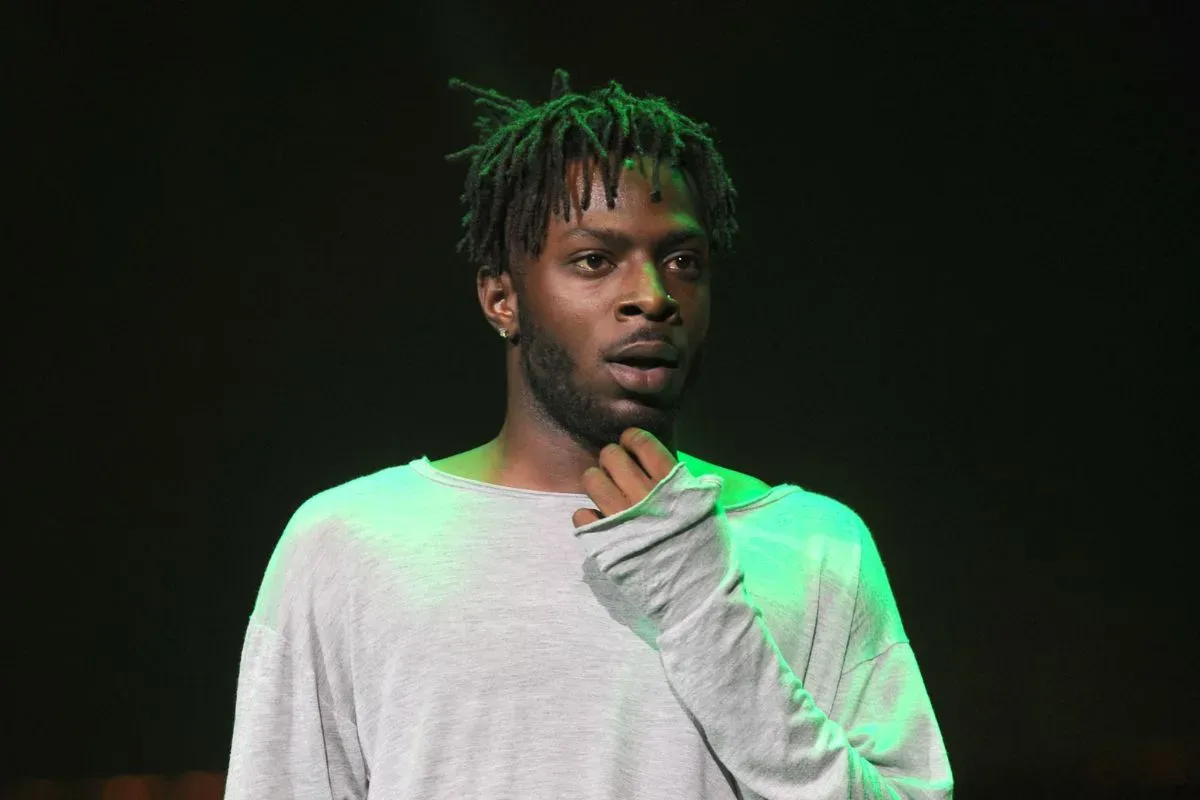
Isaiah Rashad is drawing a firm line between making candid art and being asked to serve as a public answer for everyone who sees themselves in him. In recent conversations about sobriety, identity, family and his latest album, It’s Been Awful, the Chattanooga rapper has described the pressure attached to being perceived as both a person in recovery and a Black bisexual artist.
His point is not that those connections are meaningless. Rashad has said that hearing his music has helped someone is easier to receive than being told he saved that person’s life. The distinction matters. One response recognizes what a song can mean to a listener; the other turns an artist into a counselor, a role Rashad has explicitly said he cannot fill.
“But being the drug guy and the queer guy–it’s too much pressure. I’m just an imperfect person,” Rashad said.
That is a concise statement about the distance between public meaning and private responsibility. A musician can make work that listeners use to process difficult experiences. That does not make the musician a clinician, a sponsor, or a universal spokesperson for a community. Rashad has been direct about that boundary: he said he is not a counselor and does not have advice to give.
A personal story is not a public job description
Representation is often discussed as visibility: whether audiences can find people like themselves in a genre, scene or public space. Rashad’s comments point to the other side of that visibility. Once an artist becomes a rare or especially visible figure connected to a particular experience, audiences may place broad expectations on a single person’s choices, public statements and recovery.
That pressure can be especially intense when several identities or life experiences are bundled into one public image. Rashad has spoken about being treated as an example because he is a Black bisexual rapper and a person in recovery. In a May conversation with Dominic Fike, he discussed those expectations with humor, including a joke about not receiving the kind of benefits he associated with Frank Ocean. But the underlying subject was serious: visibility can invite demands that an artist represent a whole group flawlessly.
Rashad’s formulation rejects the idea of flawless representation. Calling himself “an imperfect person” does not diminish the people who find recognition in his work. It instead sets a more realistic standard. An artist may be open about parts of life without being obliged to narrate every detail, solve other people’s problems or turn personal stability into a performance for an audience.
This is also why the difference between inspiration and obligation is important. Art can encourage a listener, offer language for an experience, or make someone feel less isolated. Those are substantial outcomes. Yet they are not the same as treatment, professional guidance or a guarantee that the artist behind the work is equipped to lead someone through a crisis.
Related coverage includes Isaiah Rashad Speaks on Recovery, Identity and Limits of Representation.
What Rashad has said about sobriety
Rashad has described sobriety in practical, day-to-day terms rather than as a finished destination. He said he avoids bars and keeps a 12-step app on his phone. A 12-step program is a peer-support approach commonly structured around a series of steps and regular mutual-support meetings; Rashad’s reference to an app indicates a routine tool he keeps readily available, not a claim that one method applies to every person.
The details he shared are small, but meaningful in context. Staying away from bars is a personal boundary around an environment. Keeping an app accessible is a way to keep support or structure close at hand. Neither detail turns recovery into a simple checklist, and Rashad has not presented it that way. His broader message is that he is working through life as an individual rather than offering a blueprint for others.
Family is part of that individual account. Rashad, who has three children, said parenthood pushed him to figure himself out. His brother, Keem the Cipher, lived with him, traveled with him and worked as the lead producer on It’s Been Awful. Rashad has also described his mother being present at key tour moments. Together, those details portray support as something rooted in close relationships as well as personal decisions.
It is worth being precise about what this does and does not establish. Rashad has explained elements of his own approach to sobriety and the role people close to him have played in his life. He has not positioned those elements as medical advice, a universal recovery model, or a substitute for professional care. That distinction aligns with his refusal to be described as a counselor.
It’s Been Awful places the conversation in a wider personal frame
Rashad’s latest album, It’s Been Awful, addresses childhood and generational trauma. It arrived after a five-year gap following 2021’s The House Is Burning, and it is his first album since private footage involving him was leaked in 2022. Those circumstances matter because they help explain why listeners may approach the record as more than entertainment, while also underscoring why the artist may want limits around what audiences expect from him.
Generational trauma, as used in this context, refers to harm and patterns of hardship that can affect families across generations. Rashad’s album engages with that subject alongside his own life rather than presenting a detached concept record. Still, an album exploring trauma is not automatically a self-help program. Songs can document feelings and experiences without assigning their maker the task of personally guiding every listener through similar pain.
The record also includes “CAMERAS,” featuring Dominic Fike. Their collaboration supplies one concrete link between the earlier discussion of public expectation and the music itself: the two artists have spoken together and also worked together. It does not mean either artist has a duty to stand in for all listeners navigating identity, substance use or public scrutiny.
For fans, that may be the clearest way to approach Rashad’s comments: take the art seriously, take the boundaries seriously, and avoid treating disclosed personal struggles as an open invitation to demand more disclosure. Public-facing artists can be emotionally resonant without becoming public property. They can make listeners feel seen without being made responsible for saving them.
The burden of being called a role model
“Role model” can sound complimentary, but it can become restrictive when it is imposed rather than chosen. It often asks a person to be consistent in ways ordinary people are not allowed—or able—to be. For an artist who has openly discussed recovery and personal growth, the pressure can be compounded by audiences who interpret every step forward or setback as a lesson for a wider community.
Rashad’s comments argue for a less punishing framework. Growth can be real without being complete. Sobriety can be a continuing practice without making someone an authority on everyone else’s sobriety. Queer visibility can matter profoundly without requiring one queer artist to speak for a vast and varied community. The same is true of the expectations attached to racial identity, parenthood and artistic vulnerability.
There is a practical implication for how fans discuss music and musicians online. A listener can say a record helped them, identify with a lyric, or celebrate the significance of an artist being visible. Those responses keep the focus on the listener’s experience and the work itself. Saying an artist “saved” someone’s life may be meant as praise, but Rashad has explained why that language carries a responsibility he cannot accept.
That does not make the emotional bond between artist and audience less real. It makes it more honest. Rashad has left room for appreciation and connection while making clear that he remains a person working through his own life. The value of the music need not depend on turning its maker into an expert, a symbol with no limits, or a perfect representative.
Why the distinction matters beyond one artist
Rashad’s remarks arrive in a broader pop-culture environment where audiences often expect personal access and moral clarity from entertainers. Social platforms can make that expectation feel immediate: one disclosure can generate demands for explanations, updates and declarations on behalf of many groups. But personal openness is not the same as permanent availability.
His approach instead emphasizes boundaries. He can talk about sobriety, acknowledge the role of family, create music that explores trauma, and collaborate with peers such as Fike. He can also say that he is not qualified to counsel people. These positions do not conflict. They define the responsible limits of what one artist can offer.
For readers following music and culture coverage, including conversations around artists’ rights and working lives such as this discussion of contracts and streaming pay, Rashad’s perspective is a reminder that the work attached to public artistry is not only commercial or creative. It can also include expectations that no performer should have to meet alone.
Rashad is not rejecting the communities that hear themselves in his music. He is naming the weight of being asked to embody them. His message is straightforward: the work may connect, help and matter, but the person making it is still imperfect—and still entitled to boundaries.