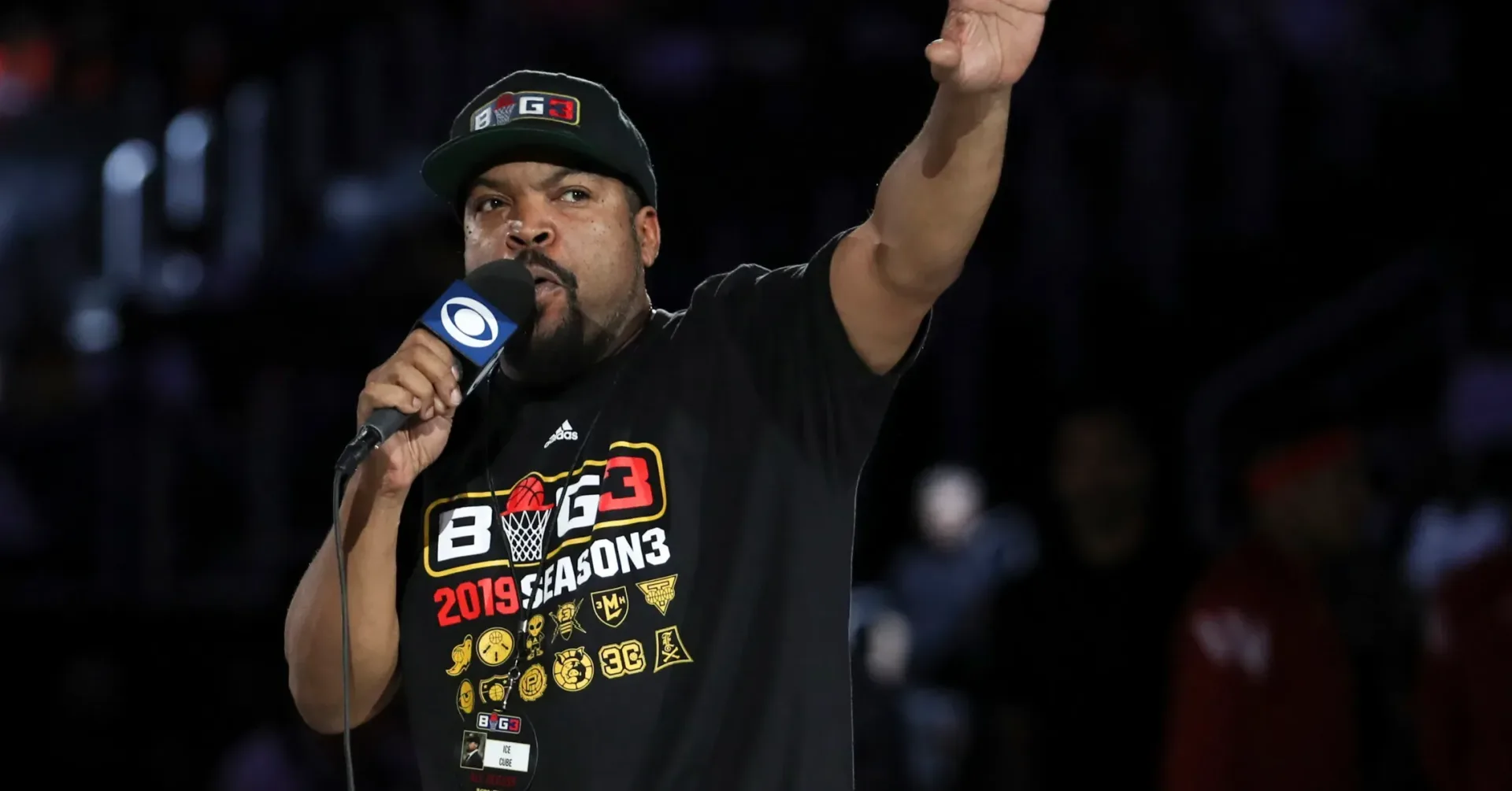
Ice Cube says AI apps have no role in his workday. The artist, actor, writer and BIG3 co-founder described working from a home studio and office, ending business at 6:30 p.m. to reserve time for family, and made his position plain: he does not use AI applications.
It is a short statement, but it carries more weight in the context of Cube’s prior objections to AI-generated vocal imitations. In May 2023, he warned that anyone using an AI recreation of his voice without authorization could face legal action, extending that warning to platforms carrying such material. His central concern was not merely whether a synthetic track sounds convincing. It was who gets to control, approve and be paid when an artist’s recognizable voice is used.
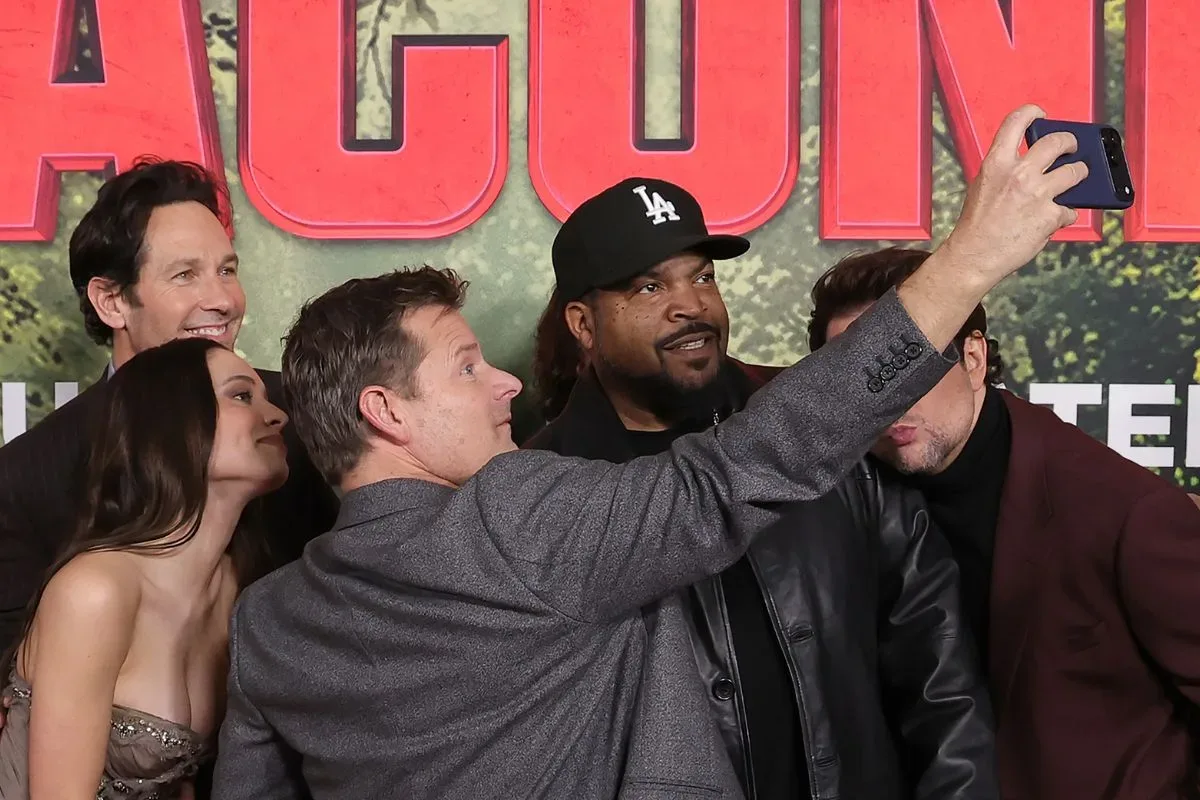
Cube’s stance arrives while work connected to him continues across music, film and basketball. On the film side, Last Friday, the New Line project written by Cube and Mike Epps, has selected Lawrence Lamont as director. California also identified Cube as the film’s star, writer and producer when the production received a state tax credit on October 7.
A workday boundary with a larger meaning
Choosing not to use AI apps is a personal workflow decision. It does not, by itself, define a technical rule for every creative tool or establish a legal standard. But Cube’s words fit a clear through-line from his 2023 comments: the person whose identity and performance give a recording its value should not be cut out of the decision-making process.
That distinction matters because “AI” can cover a broad range of software. In this discussion, the most immediate concern is AI voice cloning: a system generating speech or vocals that imitate the sound of a particular individual. The output can be presented as a new performance even though its appeal may depend heavily on a familiar voice and vocal persona.
Cube previously compared voice use to sampling. In music, sampling generally means incorporating part of an existing recording into another work. His comparison underscores an argument for clearance: if someone wants to make commercial or creative use of something closely tied to another artist’s work and identity, permission and payment should be part of the conversation.
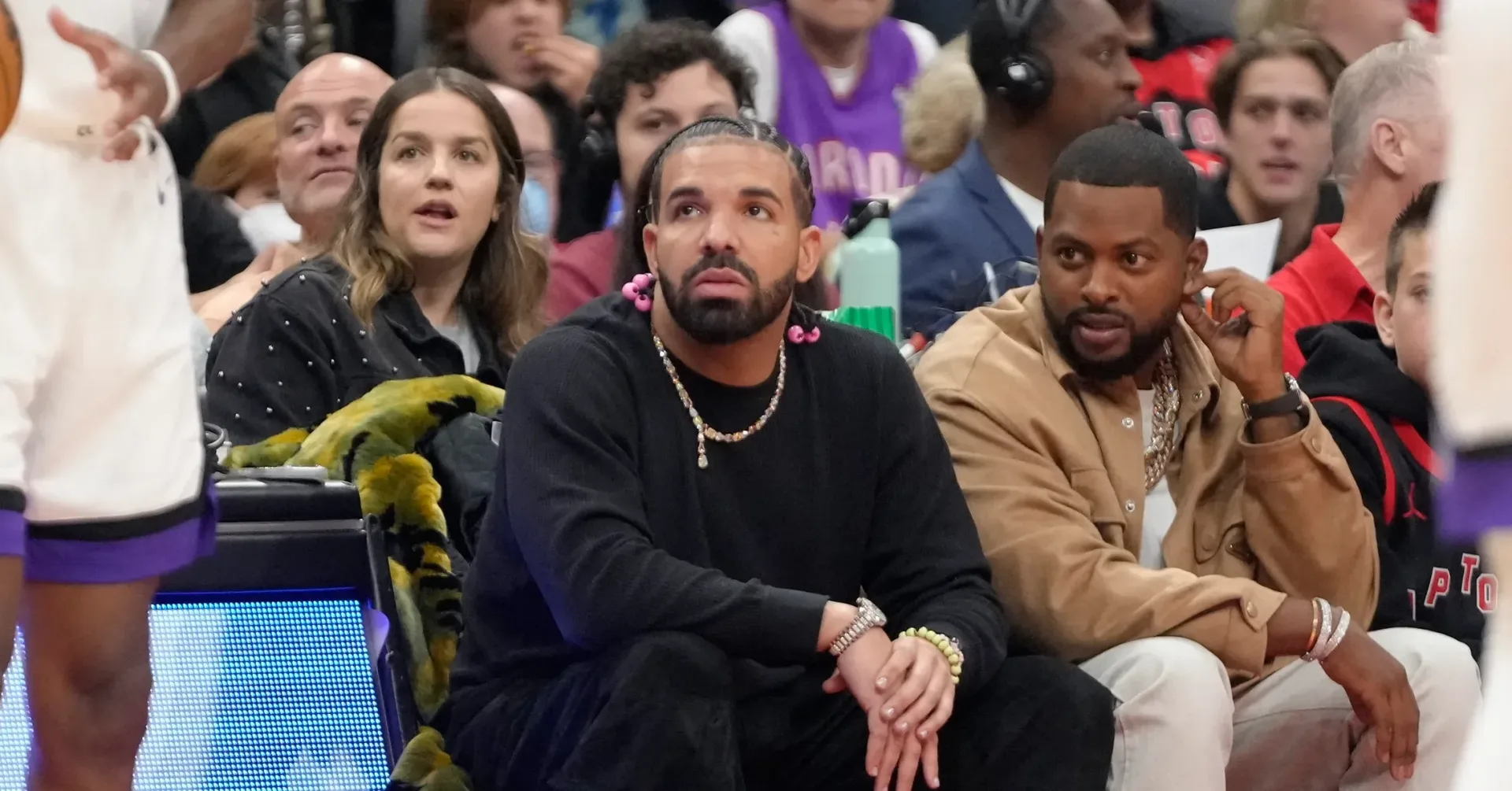
That is different from treating a famous voice as an unrestricted setting in an app. Cube rejected the premise of seeking out a fake Drake song during his earlier remarks, instead emphasizing that manipulation of an artist’s voice should not happen without compensation. His new comment about avoiding AI apps makes that concern feel operational as well as rhetorical: the technology is not part of the process he says he uses to get his own work done.
Why consent is at the center of the debate
Arguments about generative technology can get tangled because they often combine several separate questions. There is the question of training, meaning how an AI system learns patterns from material provided to it. There is the question of output, meaning the song, audio clip or other material the system subsequently generates. Then there is the question of distribution: whether services make that output accessible and how they respond when a rights holder objects.
Related coverage includes Ice Cube Says AI Apps Have No Place in His Workday.
Cube’s comments concentrate on the last two practical stakes for performers: an imitation should not be made or spread without approval, and the performer should be paid when their voice is used. This is an identity and labor issue as much as a question of novelty. A vocal performance can help listeners identify a performer immediately; an imitation may therefore benefit from years of artistic work without involving the person whose sound made the imitation desirable.
The broader music business has already had visible disputes around fake vocals. Universal Music Group had AI-made tracks involving apparent Drake and The Weeknd vocals removed from streaming services. It also objected to copyrighted music being used to train AI systems without permission and asked Apple Music, YouTube and Spotify to stop AI companies from obtaining its songs for training.
Those actions demonstrate why a discussion that begins with “Can software make this?” quickly becomes “Who authorized it?” A platform, a label, an artist, an AI company and a listener can each have different incentives. Cube’s position leaves little ambiguity about where he places the priority: consent first, with payment tied to authorized use.
Disclosure rules add another layer
California’s recent legislative backdrop adds a related, though distinct, issue. The state highlighted newly signed legislation requiring disclosure when video or audio advertisements use AI-generated performers to market goods or services.
Disclosure means that audiences are told the performer they are hearing or seeing is AI-generated. It is not the same thing as permission. A disclosure can help reduce confusion about whether a real person took part in an advertisement, while consent addresses whether that person authorized the use of their likeness, voice or performance in the first place.
That difference is useful for audiences to keep in mind. A clearly labeled AI-generated ad could still raise a permission dispute if it relies on a recognizable person without authorization. Conversely, permission does not necessarily answer every question about how prominently an AI performer should be labeled. The two concepts work on different parts of the same problem: transparency for the public and agency for the human being whose identity may be implicated.
Last Friday moves into its next creative stage
While Cube’s AI position continues to draw attention, his film work has a concrete update. Lawrence Lamont has been named director of Last Friday after Cube and Mike Epps submitted the script.
Lamont directed Keke Palmer and SZA in One Of Them Days, a comedy about two friends confronting eviction after their rent money goes missing. Katt Williams, Lil Rel Howery and Janelle James were among that film’s cast. Lamont has also directed music videos for Big Sean and J. Cole and worked on both seasons of Issa Rae’s Rap Sh!t.
The appointment is meaningful because a director shapes how a script becomes a finished movie: guiding performances, collaborating on the visual approach and managing the day-to-day creative choices of production. Naming Lamont does not supply a release date or wider production timetable for Last Friday, and none should be assumed. It does establish the filmmaker selected to lead the project from this point.
California’s October 7 tax-credit announcement described the film as a Southern California production and said it planned to employ more than 180 local cast and crew members. Cube said keeping that work near home mattered. The production credit is therefore not just a financial footnote; it ties the project to local employment for a substantial group of workers across cast and crew roles.
For readers following music-industry conversations around Drake, the renewed focus on synthetic vocals also sits alongside ongoing attention around the artist’s business dealings. A recent report on a walk-back involving a claimed Drake deal is a reminder that the artist’s name remains prominent across multiple, very different entertainment stories.
What Cube’s position means in practical terms
Cube is not presenting a technical manifesto. He is explaining a personal practice and reiterating the principles that drove his earlier objections: no unauthorized AI voice use, no assumption that a recognizable performer’s sound is free material, and no bypassing payment.
For artists, that stance frames AI not as an abstract future problem but as a present business question. A voice imitation can circulate quickly, and listeners may not always know whether the original performer participated. For platforms, it raises the challenge of responding when material is alleged to copy or imitate an artist without consent. For listeners, it reinforces the value of asking whether an eye-catching “new” track is actually connected to the musician named in its title.
The clearest point is also the simplest. Cube says the creative and business work that fills his days does not require AI apps. And when the conversation turns to a voice associated with a real person, he has consistently argued that use should come with authorization and compensation—not imitation by default.