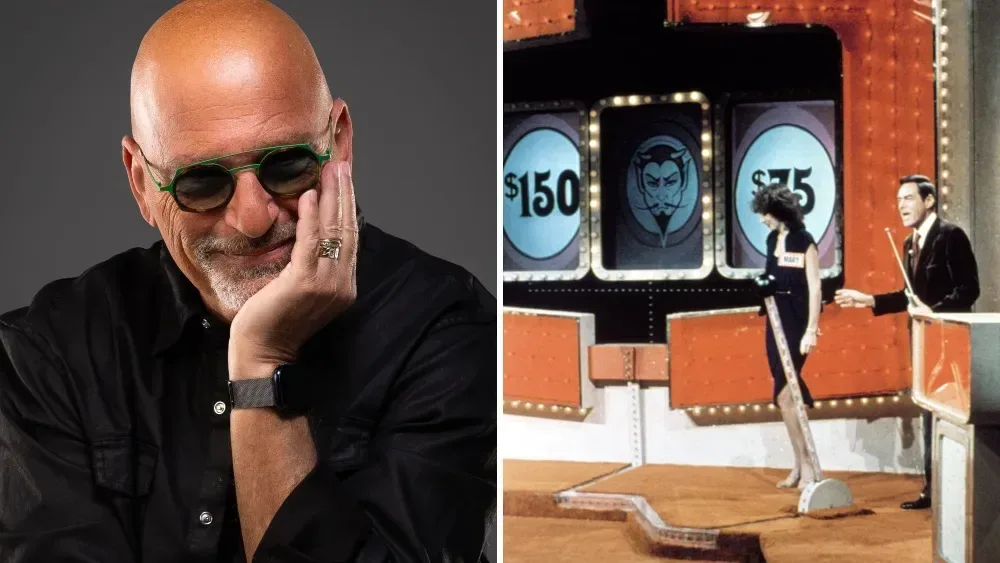
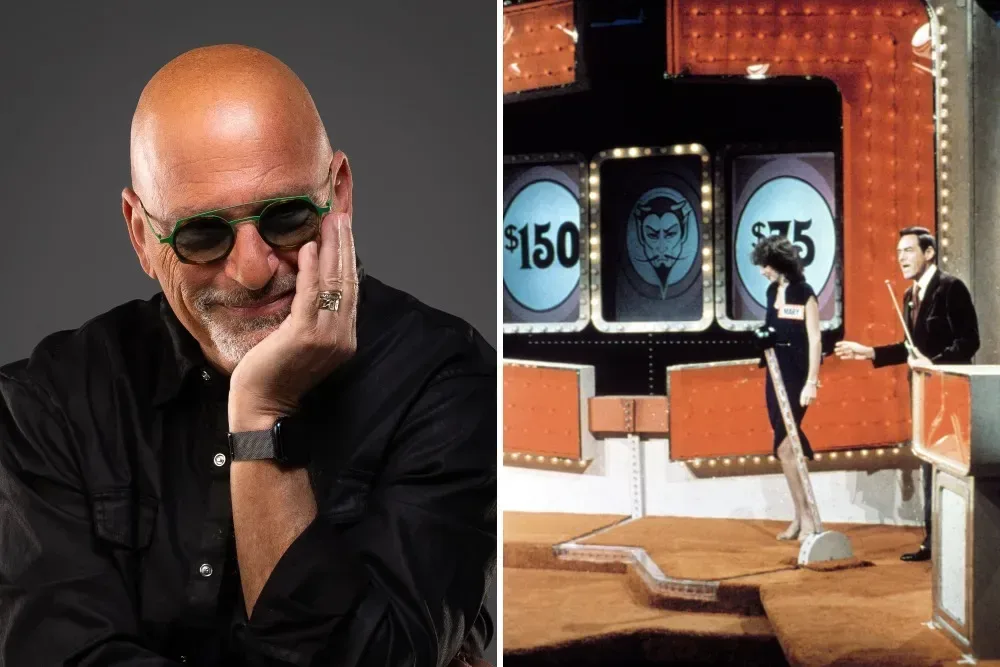
The Joker’s Wild is headed back to television with Howie Mandel as host. The new version of the classic game show is scheduled to enter production in November, ahead of a fall 2027 launch in broadcast syndication on CBS Owned Stations. Sony Pictures Television is producing the series, which will tape at Sony Pictures Studios in Culver City, California. Mashawn Nix is attached as executive producer.
The revival is built around a recognizable game-show proposition: two contestants, trivia questions, a slot-machine element and the useful chaos of a Joker symbol. But this edition is also set to introduce new twists and a newly named final challenge, Joker’s Jackpot. The available details suggest the production is looking to preserve the central identity of a format that first debuted in 1972 while giving its last phase a sharper, more overtly high-stakes structure.
How the new game is set to work
Contestants will take turns spinning the High Roller slot machine and answering trivia across different categories. In this context, the machine is not simply decoration: it is the game’s randomness mechanism, determining the terms under which the trivia portion unfolds. Jokers function as wild symbols, raising the number of points available to a contestant.
That combination is important to the show’s identity. A pure quiz program rests principally on recall, speed and strategy. The Joker’s Wild adds an element of chance before the question is even answered. Knowledge remains essential, but the stakes can shift as a result of the spin. That makes the score a record of both correct answers and the timing of opportunity.
The main game will run for three rapid rounds. At the end of them, the player with the highest point total wins and advances to the bonus game. The planned Joker’s Jackpot round puts that winner in front of deals with the Devil. Avoiding the Devil earns a jackpot ranging from $10,000 to $50,000.
“High-stakes bonus round” can mean different things across the game-show world, so the announced structure is worth separating into its basics. The ordinary game decides who has earned the right to continue; the bonus round then changes the objective from defeating another contestant to navigating a final risk-and-reward scenario. Here, the Devil is the explicit hazard, while the jackpot range establishes the upper-end incentive. Precisely how the offers work, how many decisions are required and what intermediate outcomes may exist have not been detailed.
A host with deep game-show experience
Mandel arrives with a resume that fits the format’s mix of tension and comic disruption. He hosted Deal or No Deal during the 2000s, has spent years as a judge on America’s Got Talent, and is also the host of The Price Is Right Tonight. Those roles involve different kinds of on-camera work, but each depends on reading a room: knowing when to clarify rules, heighten a contestant’s decision and leave room for an unscripted response.
That last quality could matter especially in a game built around a High Roller machine and Joker symbols. A spin creates a natural pause before the question-and-answer rhythm resumes. The host’s job in those moments is partly mechanical—keeping the play legible—and partly tonal, turning uncertainty into entertainment without obscuring what is at stake for the contestants.
“I love that we’re bringing The Joker’s Wild back,” Mandel said. “It’s such a fun, crazy show, and getting to be a part of that is a real honor.”
He also described the appeal of revisiting a series audiences have known for years while seeing what can be done with it in the present. That balance is central to the reboot’s challenge. A revival needs enough familiar material to justify retaining the name, while offering enough evolution to make the exercise feel like a current production rather than a museum piece.
A format with several lives already
The Joker’s Wild was created by Jack Barry, who hosted the original program until his death in 1984. It first debuted in 1972 and has returned in multiple forms over the decades. Most recently, the show was rebooted in 2017 with Snoop Dogg as host; that run lasted two years.
By the time the Mandel edition reaches its planned fall 2027 debut, the franchise will have been absent for eight years. That interval makes the new version neither an immediate continuation nor a completely unknown property. It has a historical title and a defined gameplay language, but it will still need to introduce that language clearly for viewers who did not see an earlier version.
For returning viewers, the advertised preservation of the familiar core may be the draw. For newcomers, the appeal may be simpler: quick rounds, broadly understandable trivia, a visible luck mechanic and a cash finale. The show does not require audiences to absorb a complicated fictional universe or commit to a serialized plot. Each episode can establish its contest, build its pressure and resolve its main game within a self-contained format.
What “broadcast syndication” means for the launch
The planned rollout is in broadcast syndication on CBS Owned Stations, rather than being described as a streaming-only release or a single-network prime-time series. Syndication is a distribution model in which programs are carried by local television stations. The stated plan identifies CBS Owned Stations as the launch platform, while not providing a full market-by-market schedule or time slots.
That distribution approach suits a game show designed for repeatable, stand-alone episodes. Viewers can join without needing to catch a previous installment, and stations have programming that can fit a regular schedule. It also places the revival in a television environment that remains broader than any one app, even as video programming increasingly appears across many device types. The expansion of video hubs, including the Apple TV app’s planned video podcasts hub, is a reminder that how viewers encounter screen entertainment continues to diversify. Nothing announced for The Joker’s Wild, however, establishes an additional streaming destination.
That distinction matters because a syndicated game show is shaped by regularity. Its format has to communicate rules quickly, reset cleanly for the next group of players, and make room for a host who can keep the pace moving. The announced three-round game gives the reboot a straightforward spine, while Joker’s Jackpot gives the episode a final escalation point.
The practical questions still unanswered
Several meaningful details remain unannounced. There is no word yet on episode length, exact station schedules, contestant eligibility, question categories, the rules governing the Devil deals, or whether the jackpot range reflects guaranteed amounts, potential prizes or a mixture of outcomes. There is likewise no indication of how closely the visual presentation will resemble prior iterations.
Those are not minor production notes. They will determine how much of the new edition’s personality comes from the inherited format and how much comes from its redesign. A fast-paced trivia show can feel very different depending on scoring, question difficulty and the amount of time spent in the bonus round. Likewise, “new twists” is a broad description until the mechanics are revealed.
For now, the clearest picture is a revival with a defined foundation: two contestants compete through High Roller spins and category-based trivia; Jokers amplify the points in play; three rounds decide a winner; and the surviving contestant faces a Devil-themed cash-game decision for $10,000 to $50,000. With Mandel hosting, production beginning in November and a fall 2027 syndicated premiere planned, The Joker’s Wild has its next roll of the dice on the calendar.