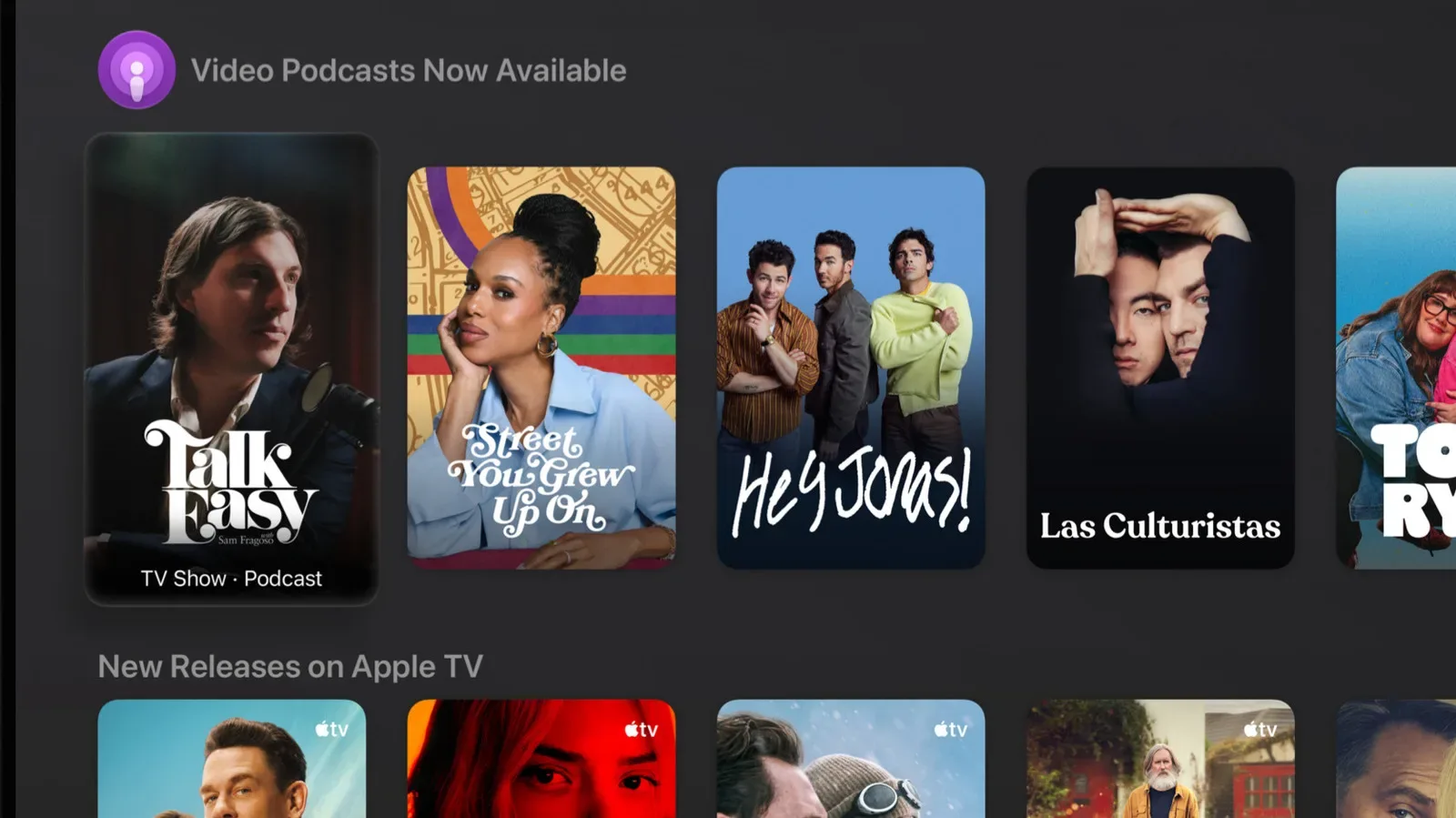
Apple is set to add a dedicated video podcasts section to the Apple TV app, a move designed to put the format in front of a vastly broader television and device audience. The app is available on more than 1 billion devices, giving video-first podcast creators a potentially significant new discovery surface beyond the regular Apple Podcasts experience.
The addition is expected to arrive on Monday, with developer access likely tied to the second beta of iOS 27.3. That timing should be treated as an expectation rather than a final public-release commitment: beta software is intended for testing, and a developer beta does not by itself establish when every user will receive the feature.
A bigger screen for a format built around conversation
Podcasts began as an audio format, but many major shows now record video alongside the familiar audio feed. A video podcast can be as simple as a filmed conversation, but it can also incorporate demonstrations, reactions, charts, interviews, gameplay footage, or other visuals that change the value of watching instead of merely listening.
Until now, Apple’s podcasts experience has naturally been associated most closely with smaller personal devices and listening on the move. A section inside the Apple TV app shifts the context. It positions video podcasts beside programming intended for long-form, lean-back viewing on a television or other large screen.
Oliver Schusser, Apple’s vice president of services, framed the purpose as broad availability and discovery: “We want podcasts to be available wherever people want to enjoy them — the small screens, big screens.” He also described the initiative as a way to help creators find a new audience, rather than an effort approached for Apple’s direct financial benefit.
What a dedicated section means—and what it does not yet confirm
A dedicated section is a distinct area within an app that groups a particular kind of programming, making it easier to browse than if those shows are dispersed throughout broader search and recommendation results. In practical terms, it should give viewers a direct route to video podcasts from the Apple TV app instead of requiring them to begin in a separate podcast-focused destination.
That is a meaningful distribution change, but the currently available details do not establish every aspect of how the hub will work. There is no confirmed information on its final layout, the breadth of its catalog at launch, how programmes will be ranked, whether it will be identical across every device carrying the Apple TV app, or whether it will include any special creator tools.
Likewise, the planned section should not be read as evidence that every audio podcast will suddenly become a video show. Video requires creators to record, edit, host, and publish an additional visual component. For many podcasts, audio remains the complete and intentional version of the work. The change is principally about giving existing and future video productions a more prominent viewing destination.
Discovery is the central opportunity
For creators, the most consequential word in Apple’s explanation is discovery. Discovery describes the ways a viewer encounters something they did not already seek out by name. In a large catalogue, that can happen through curated collections, categories, recommendations, placement in an app’s navigation, or adjacent programming suggestions.
A television-oriented video podcasts section could matter because it places those shows in a browsing environment where viewers may be choosing what to watch for an extended session. A conversation-led show that feels like background listening during a commute can become different entertainment when displayed on a living-room screen, particularly when the hosts, guests, demonstrations, or material under discussion are visible.
The scale attached to the Apple TV app is also important. More than 1 billion devices does not mean a billion people will watch video podcasts, nor does it promise an audience to any individual programme. It does, however, describe an enormous installed base where the category can potentially be surfaced. Reach and attention are not the same thing, but distribution determines where attention can begin.
For viewers, the upside is straightforward: video podcasts may be easier to find in the same app ecosystem used for other screen-based entertainment. The trade-off is that viewers who want an audio-only experience will still have reason to use the standard Podcasts app, especially when listening rather than watching is the point.
Apple Podcasts is also expected to carry more video
Apple is also planning to increase the number of video podcasts available through its regular Podcasts app. Together with the Apple TV app hub, that suggests a two-screen strategy rather than a replacement of one app by another.
- Apple Podcasts remains the natural home for podcast listening and smaller-screen use.
- The Apple TV app is being positioned as an additional viewing destination for video editions, including use on larger displays.
- Creators with video-ready shows gain another route through which viewers may encounter their work.
This distinction matters because “available everywhere” does not mean every use case is identical. A short audio episode may be most useful with headphones; a filmed interview, a visual explainer, or a show built around on-camera chemistry may benefit from the television presentation. Apple’s direction recognizes that podcasts no longer fit neatly into one mode of consumption.
Why this matters beyond podcast apps
The Apple TV app is not simply a place where people press play after already deciding on a title. It is an interface built around watching. Adding video podcasts there makes a quiet but important editorial statement: Apple is treating filmed podcasts as a category worth browsing alongside more conventional video programming.
That does not erase the line between podcasts and television, and it does not mean the two formats use the same creative language. Podcasts are often defined by recurring hosts, extended conversations, and direct audience relationships. Traditional screen programming can operate very differently. But video versions have created a practical overlap, and the new hub is an acknowledgement that some listeners now expect to watch.
The move also fits a broader question for anyone building a show: is the audio feed the product, or is it one version of a programme that can move between headphones, phones, tablets, and televisions? Apple’s stated emphasis is on allowing people to enjoy podcasts on both small and big screens. The company is therefore prioritizing access across contexts rather than presenting video as a mandatory upgrade.
Apple’s growing attention to TV hardware and software also makes the timing notable. For readers tracking that ecosystem, the reported design questions around a future set-top box are explored in our look at the Apple TV 4K’s reported A19 chip configuration. The video podcasts hub concerns software distribution, not processor specifications, but both developments point to the Apple TV experience remaining an active part of Apple’s wider services and device strategy.
What to watch when the feature appears
The initial release should answer several useful practical questions. Is video podcasts a prominent top-level destination or a more modest collection inside the app? What kinds of shows appear first? How clearly will video and audio options be labeled? And will viewers be able to move smoothly from discovering a show on a television to following it on a phone?
Those details will determine how substantial the change feels day to day. A simple category page could still improve visibility for video podcasts. Strong browsing, clear organization, and useful recommendations would make it more consequential for both viewers and creators.
For now, the confirmed core is narrow but significant: Apple is creating a video podcasts section in the Apple TV app, it is intended to reach a platform footprint of more than 1 billion devices, and the company intends to expand video podcast availability in Apple Podcasts as well. The result is a clearer place for the increasingly visual side of podcasting—whether the audience is holding a phone or settling in front of a big screen.