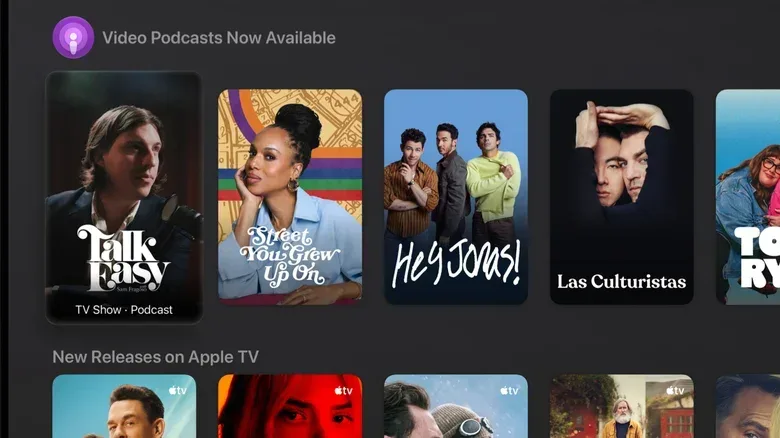
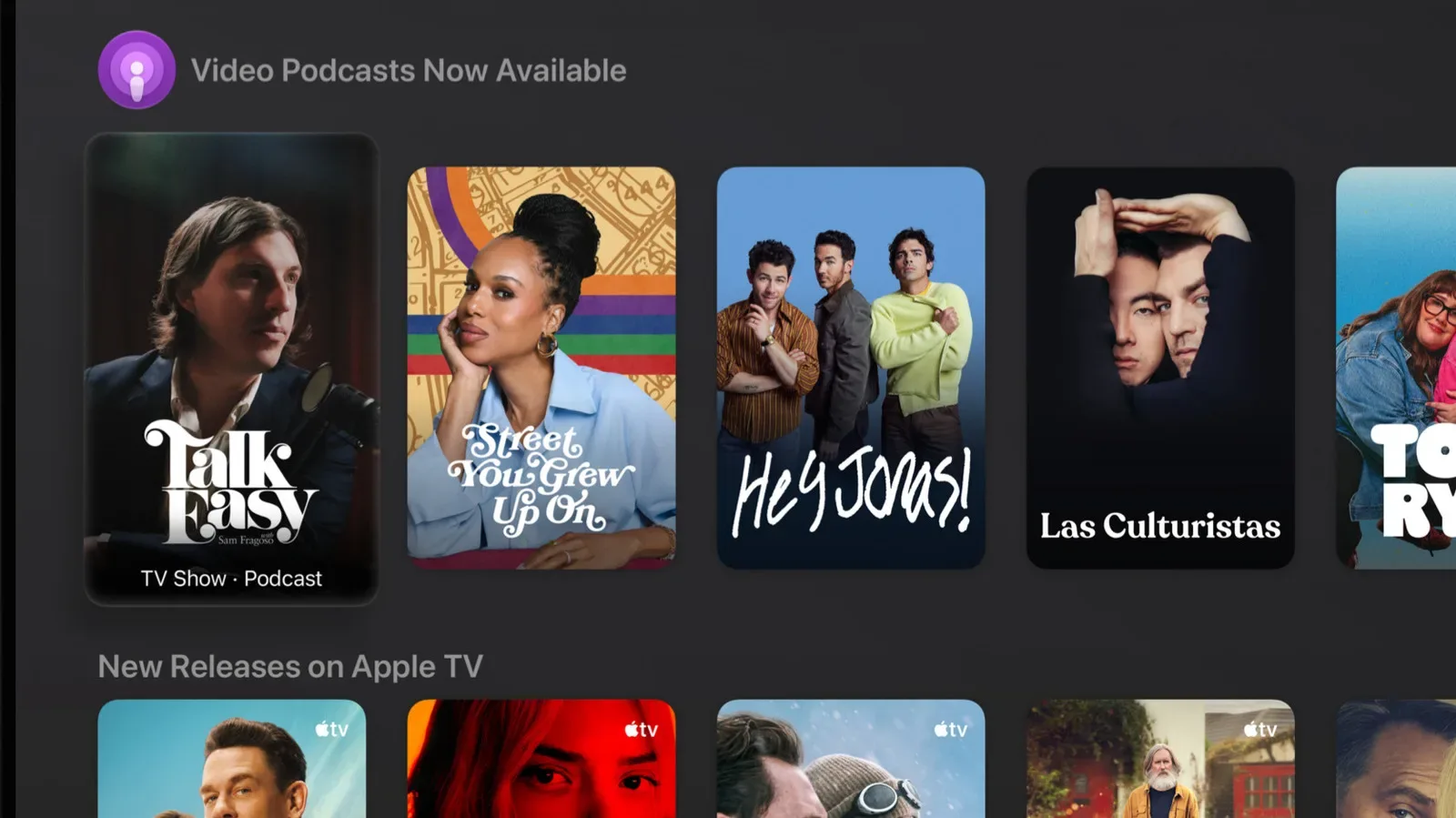
Apple is expanding its video podcast ambitions with a dedicated section in the Apple TV app, a move that could make long-form gaming conversations feel more at home beside conventional television viewing. The feature is opening to developers first, before a wider public release, and it will not require a subscription to access the section itself.
For gaming audiences, the practical change is less about inventing a new kind of show than changing where familiar programming can be found. Developer interviews, game-industry roundtables, hardware discussions, esports talk and retrospective series often work as audio-first podcasts, but increasingly include a visual component: hosts on camera, trailers or screenshots under discussion, gameplay footage, diagrams and art. A dedicated destination on Apple TV gives those productions another chance to be discovered as something viewers choose on a television rather than merely hear through headphones.
It is also a recognition that “podcast” no longer describes only an audio file. Video has become a significant part of the format, even when listeners regularly move between watching and listening.
What Apple is adding
The Apple TV app is getting a dedicated area for video podcasts. It is planned for Apple’s set-top box as well as iPhone, iPad, Mac and vehicles enabled with CarPlay. The Apple TV app on third-party devices is included too. Apple has not stated whether the section will arrive on HomeView.
At launch, availability is limited to the United States, United Kingdom, Australia, Canada and Mexico. That country list matters: a show may be published with video, yet its Apple TV availability is not presented as worldwide from day one.
Video editions of shows published through Apple Podcasts are set to appear automatically on Apple TV. In plain terms, creators who already publish an eligible video version through Apple Podcasts should not need to rebuild the same show specifically for Apple TV simply to be included. The company also says it intends to raise the number of video podcasts available within the Podcasts app.
There is a major boundary, however. Subscriber-only podcasts will not work on Apple TV. The dedicated space may be free to enter, but that does not mean every video podcast in Apple’s wider ecosystem will be playable there. For creators, and for audiences accustomed to paid feeds or member-exclusive episodes, this is the detail most likely to shape what the new area actually contains.
Why the living-room screen changes the equation
Watching a video podcast on a TV is not inherently new; viewers have long used video platforms and casting tools for that. The notable part is Apple placing the format inside its own TV app with a dedicated section. That is a discovery decision as much as a playback decision.
Related coverage includes Apple TV Adds a Dedicated Home for Video Podcasts.
Discovery is the process by which a listener finds a programme they were not already seeking. A searchable catalog and a direct subscription link serve people who know what they want. A prominent, browsable area can serve the more casual viewer who is deciding what to put on while eating dinner, folding laundry or waiting for a game download to finish. In that setting, a game discussion show is competing not only with other podcasts, but with every other easy-to-start item on the television.
Gaming video podcasts are particularly suited to that setting when the visuals carry genuine value. Footage can clarify a debate about animation, accessibility, controller design or a new trailer in ways audio cannot. On-camera chemistry may also matter for panel programmes. But a visual feed is not automatically more useful: many shows remain primarily conversation, and a television can become little more than a large picture of people wearing headphones. Apple’s approach gives that material a new home; it does not remove the creative challenge of making visuals worth looking at.
That distinction is useful for viewers as well. Audio is still the more practical choice for a commute, exercise or chores. Video is better suited to a relaxed, screen-first session, especially when an episode includes clips, demonstrations or guests whose reactions are part of the appeal. The value of the new section depends on allowing those two habits to coexist rather than treating one as an inferior version of the other.
Switching between watching and listening
Earlier this year, Apple added HTTP Live Streaming support to the Podcasts app for video. HTTP Live Streaming, often shortened to HLS, is a delivery technology that sends media in small segments and can adapt quality to a viewer’s connection. In this context, the important user-facing result is that people can switch between watching a show and listening to it.
Apple says that, in a typical month, more than 35 percent of video podcast users switch between video and audio. That figure does not tell us how many total people watch video podcasts, how long they watch, or which types of shows prompt the switch. It does show that format-hopping is a meaningful behavior rather than an edge case.
For a gaming podcast, the pattern is easy to understand. Someone could begin an episode on a TV when the discussion turns to a reveal trailer, then continue as audio when they leave the room. Or a listener might treat the full show as audio except for a segment involving gameplay footage. The format succeeds when the episode accommodates both paths gracefully: visual moments should be identified clearly in speech, while the video version should add something beyond a static recording of an audio session.
Apple executive Oliver Schusser has framed the effort around reaching audiences across both small and large screens and improving discovery for creators. The company’s stated position is that the initiative was not designed as a direct financial benefit for Apple. That claim should be read alongside the feature’s concrete limits: creators retain control over advertising, while subscriber-only podcasts are excluded from Apple TV.
Ads, artwork and the creator trade-off
Apple says podcast producers keep full control over advertisements. This is important because advertising in podcasts is not a single model. Some ads are read aloud by hosts; some are inserted into a program; and video editions can have visual sponsorship elements as well. Retaining control means the Apple TV placement is not described as taking that editorial and commercial decision-making away from the producer.
Creators will also receive additional artwork display options. Artwork can sound minor compared with video itself, but it is part of how a show communicates identity before anyone presses play. For gaming programmes, that might mean distinguishing a news show from a deep-dive history series, a community podcast or an interview format. Better presentation does not guarantee a recommendation or an audience, but it can give people more context while browsing.
The exclusion of subscriber-only video podcasts creates a counterweight. A producer whose business depends on paid video episodes cannot simply assume the Apple TV section will carry that part of the catalog. Free, ad-supported programming may be better positioned for the new destination, while paid offerings will need to remain in the places that support them. This is not necessarily a judgment on either model; it is a platform constraint that creators need to account for.
A competitive push for attention
Apple helped popularize podcast listening in the iPod era, but video podcasting has become a more competitive field as Spotify, YouTube and Netflix have embraced video versions of shows. The new Apple TV space is therefore a bid for attention in an environment where listeners increasingly expect the same programme to work as audio, video, short clips and television viewing.
That competition is relevant to game culture because gaming commentary already moves across all of those surfaces. A single conversation may be consumed as a podcast episode, a video upload, a clip shared after a major announcement, or a discussion played in the background during a game session. The audience’s question is usually not whether a programme is “really” a podcast. It is whether it is available in the moment and on the device they are already using.
Big screens make the timing especially interesting. As more households consider televisions for games, movies and general streaming, the Apple TV app’s new category adds one more type of lean-back programming to the mix. Anyone assessing a screen primarily for games should still focus on the gaming details that affect their setup, rather than assume any large display is identical; our look at what gamers should check before buying a TV explains why the specification list deserves attention.
For Apple, the immediate test will be whether a separate shelf solves a real visibility problem. Plenty of video podcasts exist, but abundance can make them difficult to find without a deliberate destination. For creators, automatic availability for videos already published in Apple Podcasts lowers friction, while ad control and new artwork options offer reasons to pay attention to presentation. For viewers, the most meaningful improvement may simply be choice: the ability to let a conversation about games remain audio when life is mobile, then turn it into television viewing when the visuals are worth the screen.
There are still unanswered practical details, including the full timetable for the public launch and whether support will reach HomeView. The initial regional rollout and subscriber-only restriction also mean the experience will not be identical for every person or every show. Even so, the direction is clear. Apple is treating video podcasts as television-adjacent programming, and that makes the living-room screen another increasingly important battleground for game talk.