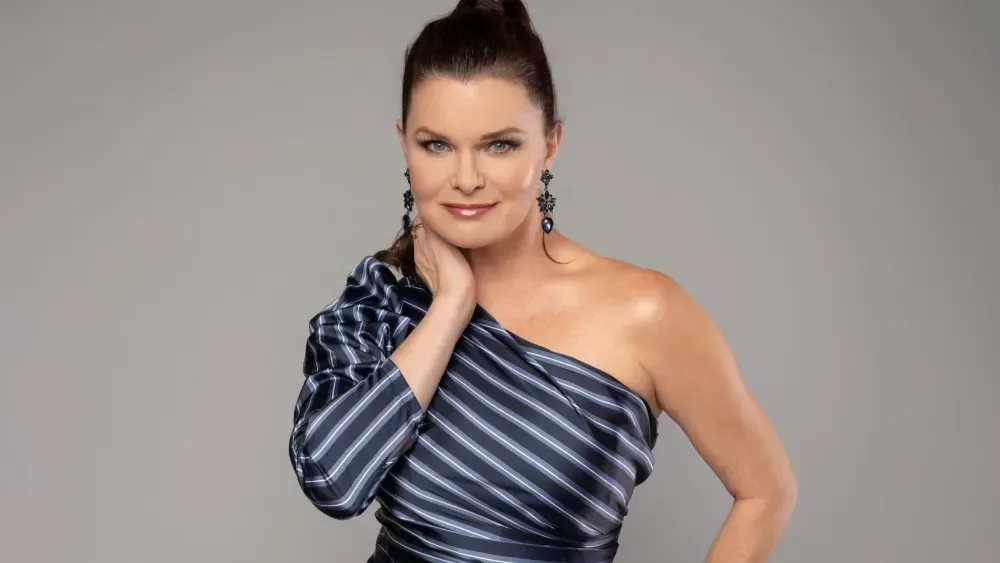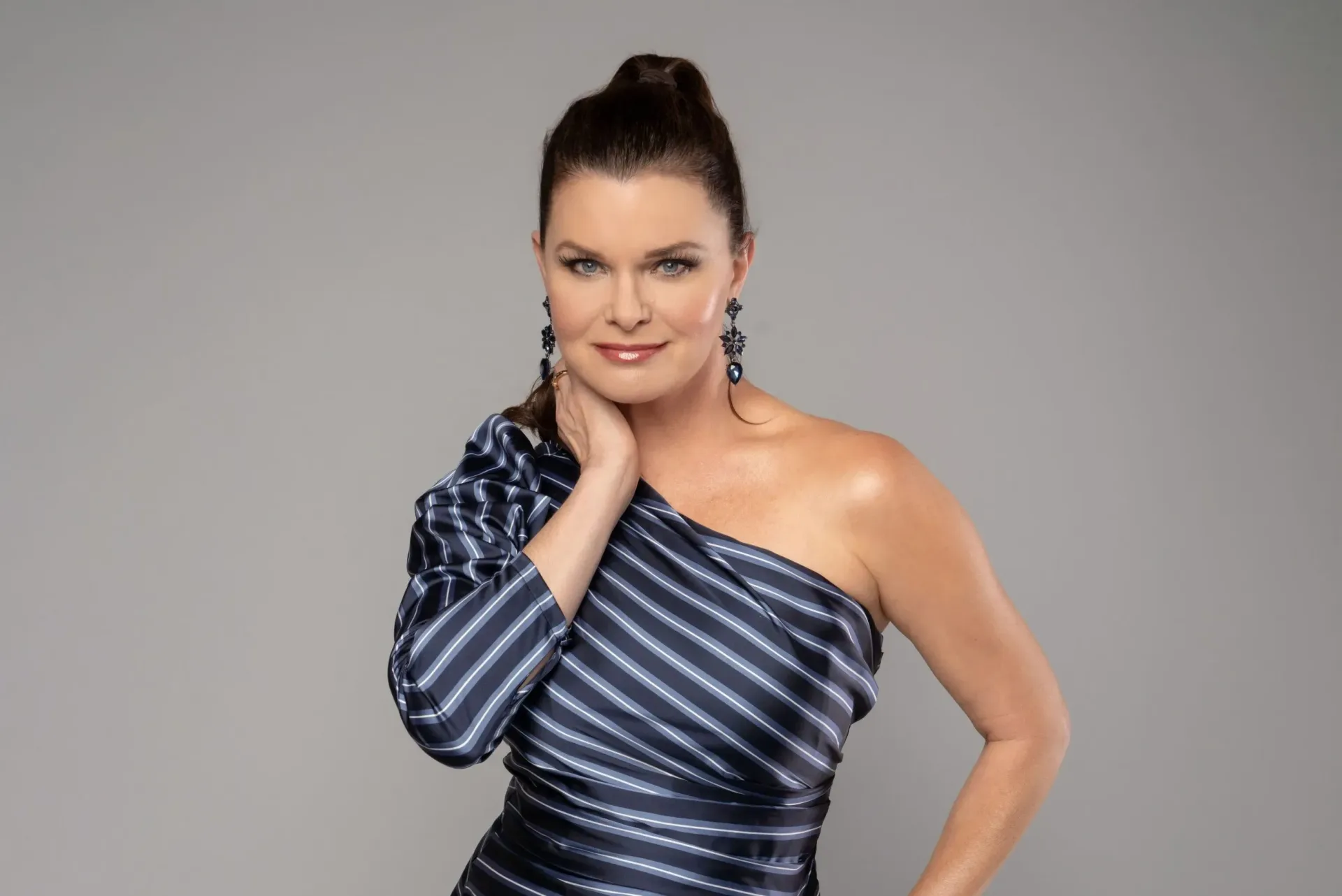
Heather Tom heads into the 53rd Daytime Emmys with the rare sort of résumé that makes a single trophy carry two meanings. A win in the outstanding lead actress in a daytime drama category for playing Katie Logan on The Bold and the Beautiful would be her seventh Daytime Emmy. That would move her beyond Erika Slezak’s six victories and make Tom the actress with the most Daytime Emmy acting wins in daytime history.
Tom is not arriving with just one possible victory, either. She is also nominated as part of The Bold and the Beautiful writing team, giving the longtime performer recognition both in front of the camera and behind it. It is a fitting double nomination for someone whose career has encompassed acting in multiple age and billing categories, script work, and developing new serialized projects beyond traditional television.
The ceremony is scheduled for Friday, Oct. 30, at 5 p.m. PT at the Hollywood Palladium in Los Angeles. It will recognize programming across daytime drama, talk, entertainment news, culinary, instructional, adventure and legal/courtroom formats. There will be no host. The Young and the Restless leads this year’s program nominations with 18, followed by first-year series Beyond the Gates with 15. General Hospital performer Genie Francis will receive the lifetime achievement award.
A record built across every major acting classification
Tom’s possible seventh win is notable not simply because of the total, but because of how it was assembled. She received her first Daytime Emmy in 1993 as outstanding younger actress in a drama series for The Young and the Restless, then won again in the same classification in 1999. Her subsequent wins on The Bold and the Beautiful span supporting actress in 2011 and lead actress in 2012, 2013 and 2020.
That record makes Tom the only performer to have won Daytime Emmys in the younger, supporting and lead acting classifications. In practical terms, it reflects a career that has continued through the industry’s changing categories and shifted naturally from younger-character roles to ensemble and then central dramatic work.
Her latest lead-actress nomination is her first in that category since her 2020 win. If she claims it, the history books would need a carefully worded footnote: Slezak would still own the record for the most victories in a single acting category. All six of Slezak’s wins came as lead actress for One Life to Live, in 1984, 1986, 1992, 1995, 1996 and 2005. Tom, meanwhile, would hold the overall total when the categories are counted together.
Tom has resisted framing the milestone as a rivalry. She has described Slezak as an icon and recalled working with her as an honor. That perspective matters because awards statistics can flatten careers into scoreboards. The more useful reading is that the potential record places two long-running daytime careers in the same conversation while acknowledging their distinct paths.
Tom’s six wins already cover younger, supporting and lead performance categories; a seventh would establish a new overall acting-win high for an actress in daytime.
The social ritual behind the nomination
Awards nights are often presented as isolated, high-pressure contests. Tom’s comments point to something more communal in the daytime world, where artists can work in the same creative orbit for decades. Her favorite nomination tradition is the annual lunch for lead-actress nominees, a gathering started by Slezak and former The Bold and the Beautiful winner Susan Flannery. The prior year’s winner organizes it.
The tradition is a small but revealing counterpoint to the record chase. Nominees get an opportunity to meet away from the formal ceremony, relax and share conversation before a winner is named. Tom has said the lunch—along with a little good-natured bill-running for the person paying—is her favorite part of being nominated.
For viewers, this is one reason daytime honors have a particular texture. The categories encompass performers whose work unfolds continuously rather than through a short seasonal run. A storyline can build over long periods, and relationships formed between casts and crews can be just as durable. The awards recognize individual submissions, but the work is created inside an unusually sustained production community.
What the writing-team nomination represents
Tom’s second nomination is for outstanding writing team for a daytime drama series. A writing-team award differs from a performance award: it recognizes the group responsible for the show’s scripts and ongoing narrative construction rather than one artist’s portrayal. In serialized drama, that can mean balancing continuing character history, cliffhangers, family conflict, romance, humor and the practical needs of a frequently produced series.
Tom credits executive producer and head writer Brad Bell with allowing her to broaden her role. She first wrote a spec script—an example script written to demonstrate a writer’s ability to handle an existing series—and then received opportunities to write additional scripts. She has also said that she writes extensively outside the program and has projects in development and being pitched.
Her comments offer a useful reminder that an actor’s knowledge of a character can have value beyond performance. Someone who has played a role for years understands the character’s voice, emotional history and the details audiences recognize. That does not automatically make anyone a strong writer, of course. But Tom describes an environment in which taking on new responsibilities depended on delivering work at the standard expected by the show’s leadership.
If the writing team wins, Tom has said Bell would be central to her thanks. It is an unusually direct acknowledgment of the career support involved in moving between departments—a move that can be difficult in an industry where performers are often expected to remain in one lane.
Forty seasons, a deeper archive and Katie Logan’s past
The Bold and the Beautiful is marking its 40th season, while Tom says she has been part of the series for 20 years. The show has also launched an app housing its complete episodic catalog. That archive matters for a serial drama in a way it may not for a standalone program: older episodes can help audiences trace character choices, relationship shifts and plot threads that return years later.
Tom has recently revisited older episodes because Katie’s current story draws on earlier plots. For an actor, that access can be a practical continuity tool, not merely nostalgia. Revisiting past material offers a way to reconnect a current performance with the character’s established experiences. For viewers returning to the show—or discovering it for the first time—the full catalog lowers a barrier that once existed when missed episodes had to be recorded on a VCR.
Tom believes this ready access is bringing both former viewers and younger audiences to the series. She also sees a renewed emphasis on the elements that define the program: family, fashion, humor and heightened melodrama. Melodrama, in this context, does not just mean exaggerated emotion. It is a storytelling mode built around high stakes, sharp reversals and strong emotional choices—the kind of narrative engine that makes secret identities, love triangles, rival families and life-changing revelations feel native to the format.
Tom describes daytime storytelling as having the broad, archetypal appeal of Shakespeare: warring families, returns from the dead, mistaken identities and romance under pressure. For The Bold and the Beautiful, she identifies the competing families and fashion houses, along with its Los Angeles and couture setting, as the core ingredients.
Microdramas: familiar daytime instincts in a new container
Outside the series, Tom is developing microdramas in several formats. A microdrama is a short-form serialized drama, designed around brief installments rather than conventional full-length television episodes. Tom sees the emerging format as reminiscent of daytime’s early creative energy: a space where creators can go big with premise and emotion.
Her projects include ideas inspired by Snow White, Sleeping Beauty and Jack and the Beanstalk, as well as a vampire-and-werewolf story for which she says the team has explored the relevant folklore and history. The creative appeal, in her telling, is straightforward: heightened genres give writers and actors room to commit completely to romance, danger and outlandish turns rather than apologize for them.
That impulse is consistent with the long-running appeal of soaps. The rules of a world may be wild, but the emotions have to be played sincerely enough for the audience to follow. Vampires, billionaires, old feuds and impossible romantic entanglements are not substitutes for stakes; they are containers for them. For another current genre collision built around werewolves and heightened fiction, see Bronze Star #1’s Weird West werewolf premise.
Friday’s awards result remains undecided. Yet Tom’s two nominations already capture the scale of her current work: an actor with a chance to reset a historic Daytime Emmys benchmark, a member of a nominated writing staff, a longtime steward of Katie Logan’s evolving history, and a creator looking toward short-form serial storytelling. That is a lot for one ceremony to hold—and, fittingly for daytime, it leaves room for a cliffhanger.