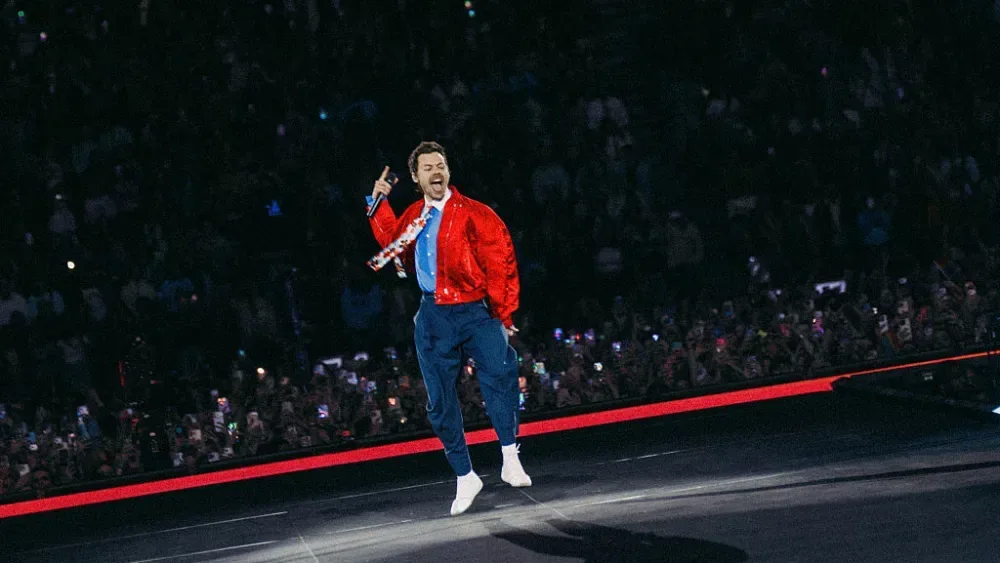
Harry Styles has finished his 30-night Madison Square Garden residency with a finale built around the sort of playful, audience-facing spectacle that has become central to his Halloween shows. The nine-week New York run ended with two “Harryween” concerts: Styles appeared as 1970s-era Elvis Presley on the first night and as Pizza Rat on the second, while the band and much of the crowd joined the costume mandate.
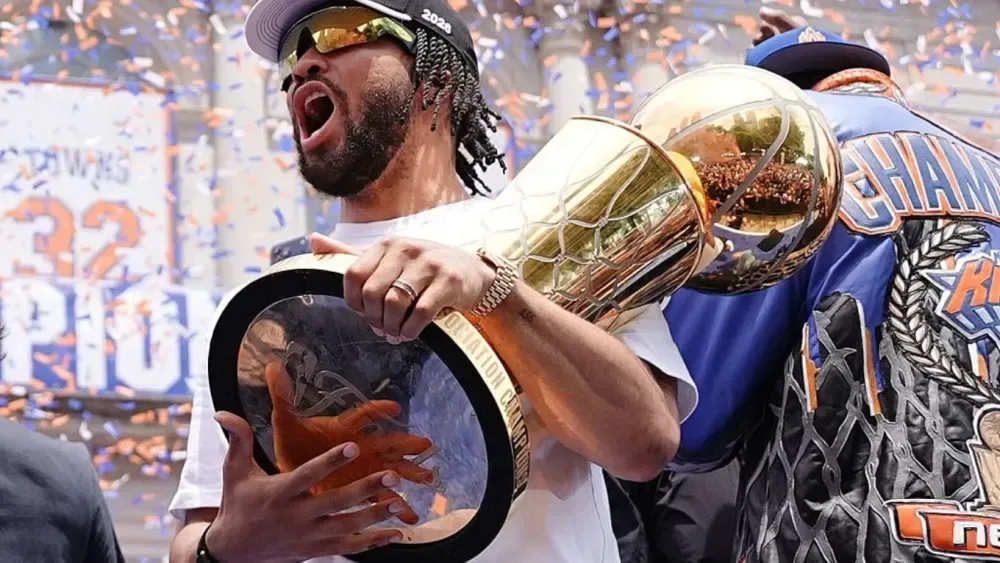
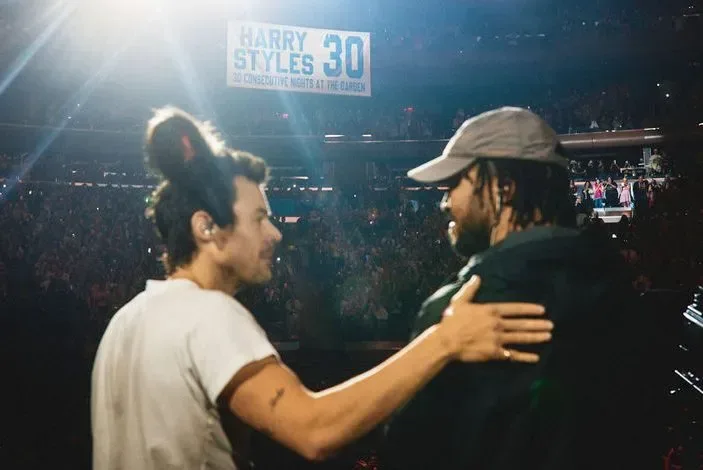
The closing night also brought out New York Knicks captain Jalen Brunson, who presented Styles with a banner commemorating the record-setting 30-show residency. It was a fittingly local capstone for a run that extended beyond the arena, with fan events, lower-Manhattan pop-up shops run by tour sponsor AmEx, and occasional reported fan encounters around the city.
Two Halloween shows, two very different callbacks
Friday’s theme worked as a look back at Styles’ own visual history. His band wore costumes based on recognizable Styles appearances, including looks associated with Coachella, the Met Gala and the Grammys. Styles called the onstage theme “favorite sequined king,” then thanked the crowd for placing him in that company.
For the encore, he changed into the outfit from his 2010 X-Factor audition and sang Stevie Wonder’s “Isn’t She Lovely.” The callback reaches back to the moment that helped take Styles, then working in a bakery, into One Direction more than 15 years ago. It was not merely a costume change: the song connects the arena-scale present to an early performance that became pivotal to his public career.
Saturday shifted from personal retrospective to a New York City tribute. Before Styles appeared, the band took the stage in costumes representing city-linked figures and symbols, including the Statue of Liberty, Andy Warhol and Anna Wintour. Styles then arrived as Pizza Rat, the internet-famous rodent from a 2015 video in which a rat carried a pizza slice down steps in a New York subway station.
That reference is deliberately silly, but it is also unusually precise. Pizza Rat is a meme inseparable from a particular city image: its scale, its subway infrastructure, its daily oddness and its ability to turn a few seconds of footage into shared online folklore. A closing-night costume based on it makes the show feel rooted in New York rather than simply Halloween-adjacent.
Styles also performed Talking Heads’ “Psycho Killer” before returning to the regular setlist. The cover added a second city-specific reference point, this time through music rather than costume. Covers can serve several functions in a concert: they can honor an influence, reshape a room’s energy, or offer a one-night marker for a particular place. Here, the selection functioned as part of the New York framing rather than as a reported permanent alteration to the tour’s set.
Jalen Brunson’s banner presentation made the residency a venue event
Brunson joined Styles onstage to recognize the 30th performance. He said Styles had attended the Knicks’ banner night a few weeks earlier, and he returned the gesture on behalf of Madison Square Garden and the team.
“I just wanted to appear and congratulate you on your 30th night,” Brunson said. “A couple weeks ago, Harry was so kind to join me and my team on our banner night, and I thought I, on behalf of MSG and the Knicks, would do the same.”
The exchange underscores what a residency means in this context. Rather than playing one stop on a route and leaving for the next city, an artist performs multiple dates at the same venue. A long residency can develop its own traditions, repeat audience rituals and city-wide presence. In Styles’ case, the 30 shows were spread across nine weeks, giving the run a rhythm closer to a recurring local event than a conventional single-night arena booking.
The banner presentation also turned a numerical milestone into a physical symbol. A 30-night achievement is already sizable on paper; being formally recognized inside the building where every show happened gives the accomplishment an unmistakable sense of place. Brunson’s appearance linked two high-profile Madison Square Garden presences without suggesting that either audience is the same. The gesture instead acknowledged their shared relationship to the venue and the city.
Why “Harryween” works as more than a costume party
Halloween concerts naturally invite dress-up, but these shows appear to make the audience part of the format rather than simply spectators observing an artist’s costume. Styles thanked attendees for showing up and dressing up, specifically recognizing the crowd’s contribution to the experience.
“You’ve been wonderful tonight — you’ve been wonderful every night,” Styles told the audience at the final show. “Thank you for showing up, for dressing up, for making us feel so loved and being so wonderful to us.”
Analysis: Costume-led shows create a shared visual language. Elvis, Pizza Rat, sequined pop-star looks and New York icons are recognizable without requiring fans to coordinate a single uniform costume. That flexibility matters: people can respond with highly elaborate outfits, simple references, or no costume at all while still understanding the joke. The artist, band and audience become participants in the same theme, which makes a large arena feel less like a one-directional presentation.
There is also a clear difference between the two final-night approaches. The Elvis and X-Factor material looks inward, revisiting Styles’ public trajectory and the aesthetics associated with it. Pizza Rat and “Psycho Killer” look outward, turning the final date into a specific thank-you to New York. Together, the pair of concerts provided an efficient summary of what a long residency can offer: personal career history on one night and an event designed for its host city on the next.
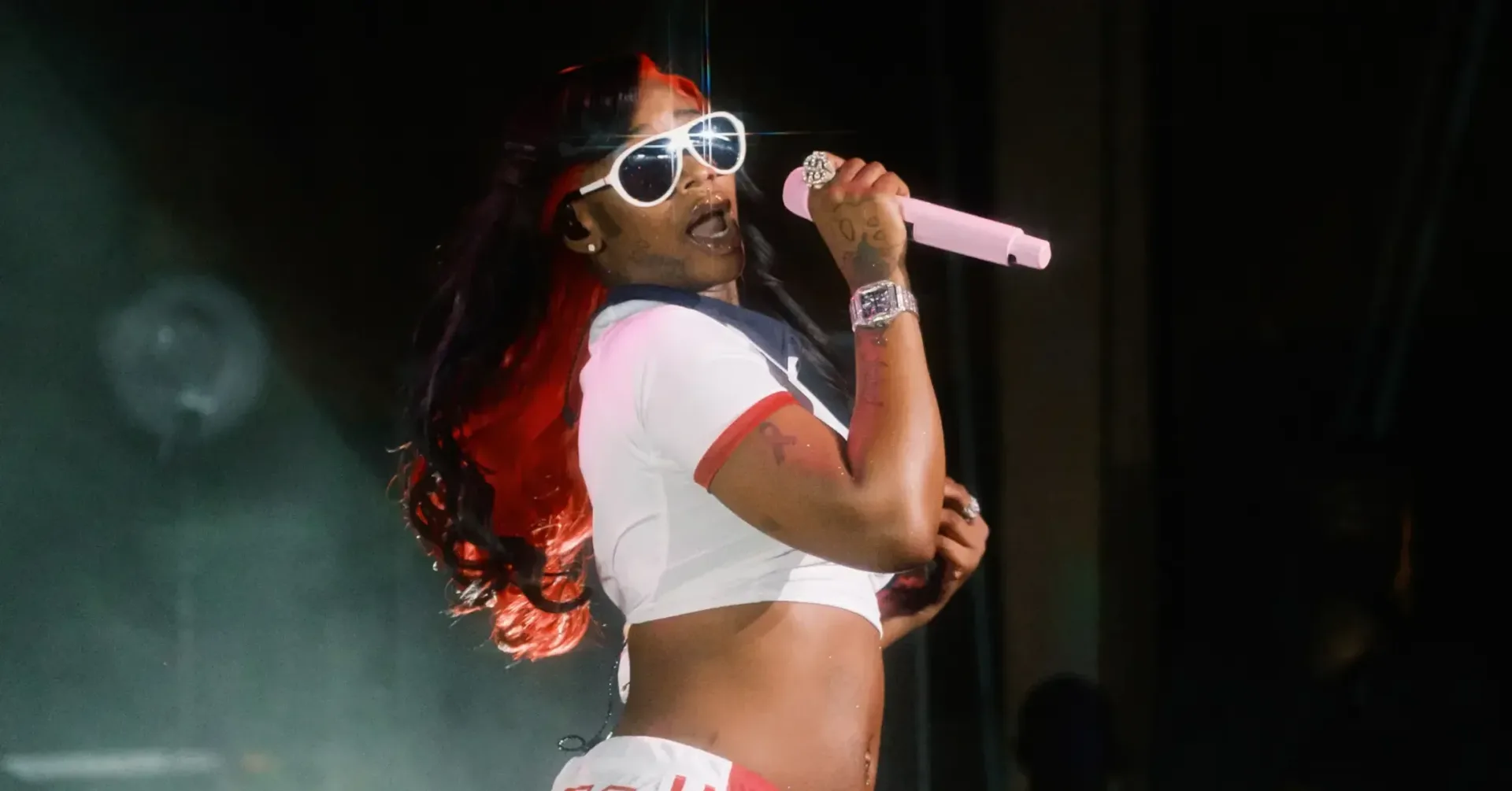
Halloween stage costumes remain a lively pop-culture lane well beyond this residency; for another recent example of a deliberately altered costume concept, see this look at Sexyy Red’s Mystique-inspired Miami performance.
The city-wide footprint around the Garden
The residency’s impact was not limited to performance nights. Fans organized activities including One Direction karaoke and a post-Harryween bar crawl, while AmEx operated pop-up shops in lower Manhattan throughout the full nine-week block. Halfway through the residency, 10 randomly selected fans were invited to experience “Together, Together” live for the first time.
These details matter because a large run of shows creates a timetable around which fans can organize. A single concert can produce a busy evening in one neighborhood. Thirty dates across nine weeks give room for repeat visits, themed gatherings and moments tailored to people attending different nights. The result is not evidence that every attendee participated in every activation, but it does show how the residency expanded into a broader social calendar around the performances.
Practical implication for fans following the tour: the New York extras were tied to this particular residency and should not be read as a guarantee that the same pop-ups, fan events, covers or costumes will appear elsewhere. The source material identifies “Psycho Killer” as part of the final show’s New York tribute and notes that Styles then returned to the standard setlist. Likewise, the 10-person “Together, Together” experience happened during the Madison Square Garden run; it is not presented as a standing tour feature.
What happens next on the “Together, Together” tour
With Madison Square Garden complete, the “Together, Together” tour is scheduled to move to Australia later this month for Styles’ final shows of the year. The U.S. leg is set to resume in April 2027, and the tour is slated to end in August with three consecutive shows at Wembley Stadium.
The upcoming itinerary gives the Madison Square Garden finale added weight. It closes a major New York chapter, but it does not mark the end of the wider tour. Fans looking ahead should distinguish between the confirmed broad routing and the details that made the Garden shows unusual. Australia, the U.S. return and Wembley dates are identified as future stops; the source does not establish individual setlists, themed nights, guest appearances or local activations for those shows.
Styles framed the final Garden night in terms of the album that inspired the tour, saying he had wanted its feeling to resemble the communal atmosphere in the room. That statement offers the clearest explanation for why the costumes, singalongs, city references and banner mattered. None changes the basic fact that the run was a series of concerts, but together they made the final pair of dates feel designed as a celebration of the people who repeatedly filled the building.
For Madison Square Garden, the final image is hard to improve on: a 30th-night banner, a Knicks captain, a crowd in costume and a headliner dressed as a rat carrying one of New York’s most enduring pieces of internet lore. It is an absurd image in the best possible way—and exactly the kind of city-specific memory a nine-week residency can produce.