
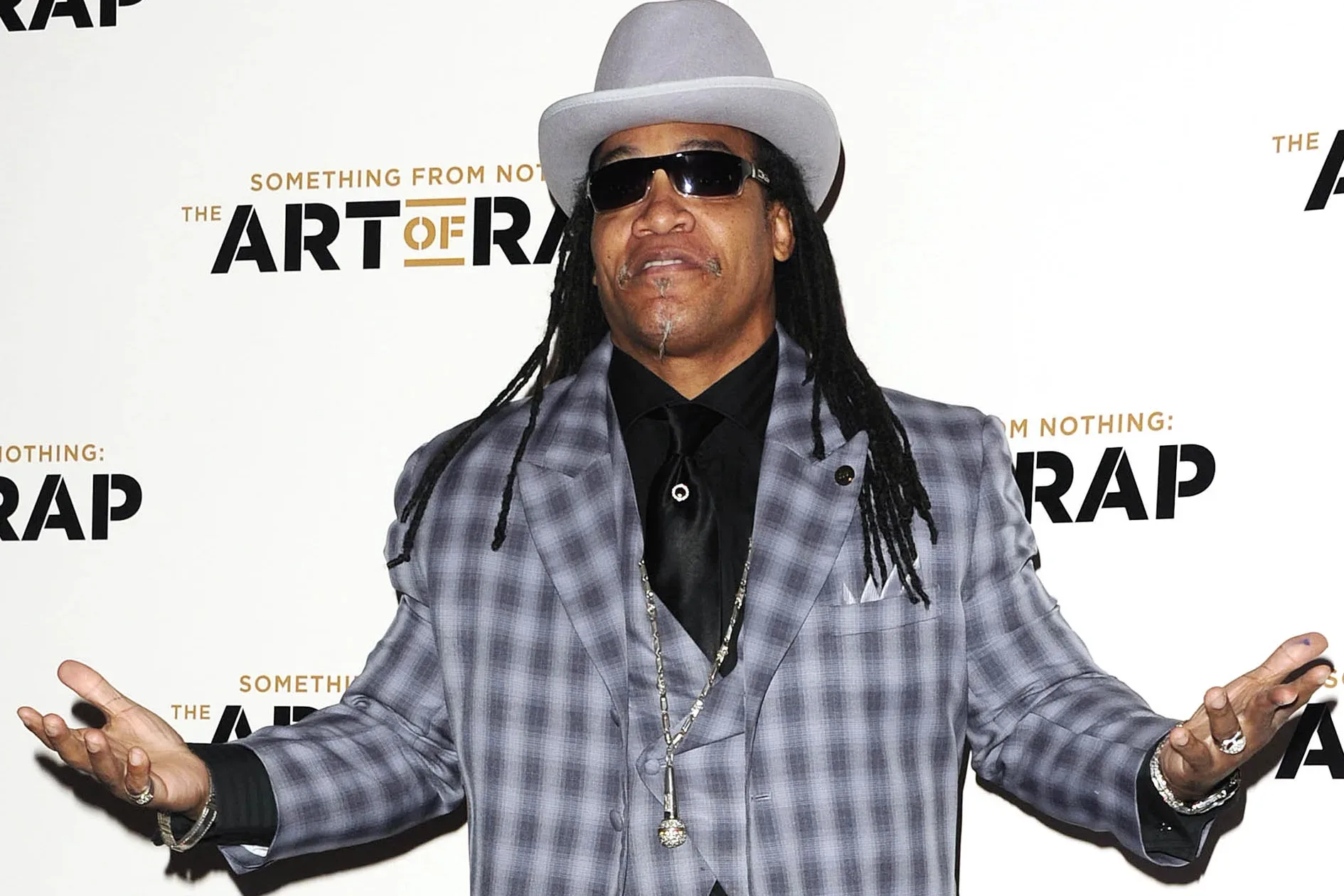
Grandmaster Melle Mel is on the Songwriters Hall of Fame ballot for 2027, placing one of hip-hop’s earliest major writers before voters in an institution built around the craft of songs. Listed under his given name, Melvin Glover, Melle Mel is nominated in the performing-songwriter category.
The ballot highlights a body of work that includes “The Message,” “Freedom,” “New York New York,” “Scorpio” and “White Lines (Don’t Do It).” That selection matters because it frames the nomination around writing rather than simply nostalgia for an influential era or acclaim for a landmark group. Voters are being asked to weigh the construction, subject matter and reach of songs that helped demonstrate what rap lyrics could communicate to a mass audience.
A nomination centered on songwriting
Songwriting recognition can be an awkward fit for public conversations about hip-hop, which often compress the work into a single idea of “rapping.” But an MC’s delivery and a song’s writing are not identical things. Performance concerns the voice, cadence, emphasis and presence that bring words to life. Writing concerns the language itself: the perspective, images, structure, ideas and turns of phrase that remain on the page before a performer delivers them.
Melle Mel’s place on the ballot puts that distinction into focus. His writing helped move rap beyond records centered only on celebration and party energy, making room for songs about city pressure, poverty and survival. Those topics had weight not merely because they were mentioned, but because they were set into accessible, memorable records intended for broad audiences.
That is the practical case behind a performing-songwriter nomination: a writer who also records the work can have an artistic identity inseparable from their voice, while still being judged on the songs’ underlying language and ideas. In Melle Mel’s case, the ballot samples span social observation, urban identity, anti-drug messaging and rap’s earlier competitive and scene-defining modes.
Why “The Message” remains central
“The Message” is the clearest focal point in any discussion of Melle Mel’s songwriting legacy. Released in 1982, the record paired verses associated with Melle Mel with writing and performance from Duke Bootee. It became a national hit while offering a stark depiction of urban life, a combination that made it unusually consequential within popular music.
The song’s cultural standing has also been formally recognized. It entered the National Recording Registry in 2002 as part of that collection’s first class. Its inclusion reflected its focus on urban social issues and its importance in helping establish a path later rappers could follow.
That history does not mean rap before “The Message” lacked skill, invention or substance. Rather, the recording became an especially visible example of a rap song built to carry difficult social reality without abandoning immediacy. It showed that a record could be direct enough to reach a wide public and still place everyday instability, fear and frustration at its center.
Related coverage includes Grandmaster Melle Mel Earns 2027 Songwriters Hall of Fame Nomination.
For songwriters, that balance is often the hard part. A topical song can become overly abstract, while a vivid story can lose its larger meaning. The durability of “The Message” rests on its ability to make broad conditions feel immediate. That is why a nomination focused on writing has particular resonance: the song’s status is tied to what its words make the listener confront.
The individual writer and the group legacy
Melle Mel’s nomination also sits alongside the established legacy of Grandmaster Flash and the Furious Five. The group became the first rap group inducted into the Rock & Roll Hall of Fame in 2007, a major institutional marker for hip-hop’s place in popular music history.
The Songwriters Hall of Fame ballot is a different question. Group recognition honors a collective accomplishment; a songwriter nomination asks voters to assess an individual catalog and contribution. Those forms of recognition can overlap, but neither automatically answers the other. The 2027 ballot gives Melle Mel’s writing its own lane.
That distinction is useful for understanding why songwriting halls remain significant even after an artist’s influence is widely accepted. Influence can describe style, cultural reach, recording innovation or live performance. Songwriting honors ask more specifically what the songs themselves did, and whether their writers shaped the language and possibilities of popular music.
What the ballot process means
A nomination is the beginning of the selection process, not an induction. Under the Hall’s eligibility standard, writers may be considered 20 years after the first commercial release of a notable song. Eligible voting members may select up to three nominees in each category. Ballots are due by midnight Eastern on December 14.
For a nominee, that means the outcome depends on how voting members compare catalogs across very different musical traditions. Melle Mel is competing for consideration within a format that has historically been more accustomed to evaluating writers associated with other forms of popular song. The ballot therefore asks voters to apply the same attention to rap writing that they would to any other songwriting tradition.
Hip-hop’s history in the institution remains comparatively brief. Jay-Z became its first rapper inductee in 2017, an important precedent after decades in which the genre had already transformed popular songwriting. The conversation around authorship and lyrical originality remains a live part of rap culture, as shown in this recent discussion involving Jay-Z and disputed lines; Melle Mel’s nomination, however, concerns the documented body of work presented to voters.
A ballot with multiple routes into pop songwriting
The 2027 slate also reflects several ways writers participate in modern popular music. Kandi Burruss and will.i.am are included in the songwriter category. Ne-Yo joins Melle Mel among the performing-songwriters. Stargate, the production duo associated with major recordings for Beyoncé, Rihanna and Ne-Yo, is nominated as well.
Those categories illustrate that a song may arrive through different creative roles. A songwriter may principally write for others; a performing-songwriter may write and deliver their own material; a production team may be closely identified with recordings that shape a song’s final musical identity. The ballot does not flatten those roles into one job, but it places them under a shared question: which catalogs have made a lasting contribution to popular music?
For Melle Mel, the answer voters will consider is rooted in early rap’s expansion of subject matter. The selected songs point toward a writer whose work combined record-making impact with a vocabulary for pressure, place and social circumstance. That legacy is bigger than a single famous track, even when “The Message” is the most obvious anchor.
Why the nomination matters now
Hall recognition is not the source of artistic importance, and Melle Mel’s place in hip-hop history does not depend on a vote. But the nomination carries value because it directs attention to the writing at the heart of that influence. It presents rap not as a genre adjacent to songwriting traditions, but as a central part of them.
More importantly, it recognizes that foundational rap records were not merely historical events or sonic breakthroughs. They were written works made of choices: what stories to foreground, what language to use, which realities deserved space in a hit record, and how to turn those realities into songs audiences could remember.
The Songwriters Hall of Fame’s voters now have the opportunity to decide whether Melle Mel’s individual catalog belongs in the 2027 class. Whatever the final result, the nomination itself places deserved attention on a writer whose words helped establish a wider horizon for rap music.