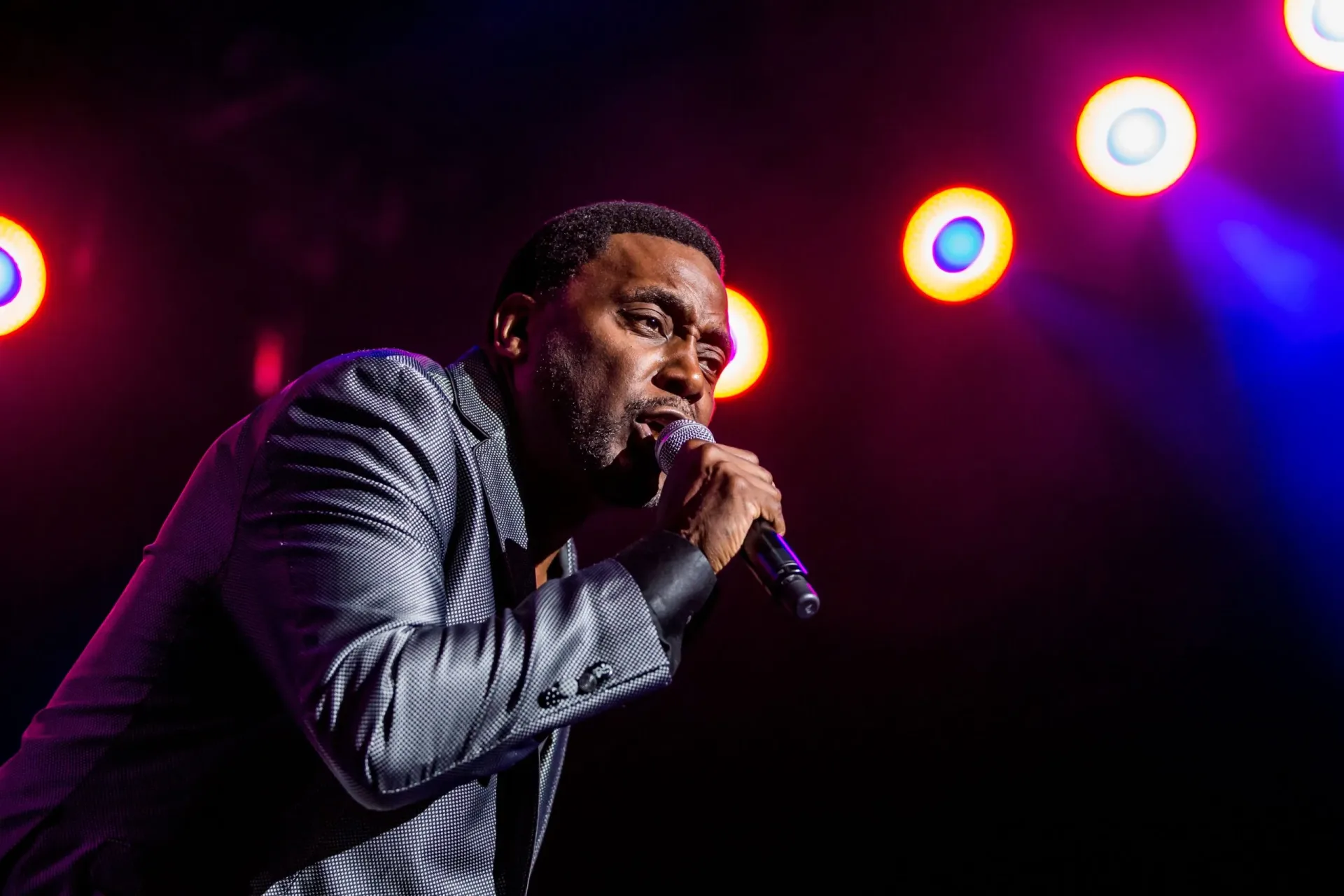
Big Daddy Kane is scheduled to enter Berklee College of Music’s Hip-Hop Hall of Fame on Thursday, November 19, in an event that puts a formal institutional honor alongside the thing that made his reputation endure: performance. The ceremony begins at 8 p.m. at the Berklee Performance Center in Boston and is set to include student work inspired by Kane’s catalog, new arrangements, and a showcase set from Kane himself.
That format matters. Rather than treating Hip-Hop as a sealed museum exhibit, the program is designed to make Kane’s work part of an active musical exchange. Students will perform and rework material connected to his career before the Brooklyn MC takes the stage. It is an approach that recognizes a legacy while asking emerging musicians to engage with its mechanics: how verses are written, delivered, paced and embodied in a live room.
An honor built around more than a hit list
Berklee’s Hip-Hop Hall of Fame sits within the school’s Africana Studies work, which is marking its fifth anniversary. Its list of prior inductees signals a broad definition of who shapes a culture. Rakim, Roxanne Shante and Kid ‘n Play appear alongside Boston figures including Edo G, the Floor Lords, Barbara Thomas and the Wonder Twins, as well as Berklee professor Prince Charles Alexander.
That mix is significant because Hip-Hop has never been solely an album-by-album story. MCs, DJs, dancers, teachers, organizers and local scene-builders all contribute to how the culture is made and passed on. Kane joins the roster as an artist whose influence is especially easy to identify in the overlap of writing and presentation: the verse is one part of the performance, rather than a separate element that ends once the recording is finished.
“For more than five decades, Hip-Hop has shaped cultures, inspired generations, and left an indelible mark on communities across the globe,” said Emmett G. Price III, dean of Berklee’s Africana Studies Division. “This year, as in years past, we honor Hip-Hop’s past, celebrate its present, and embrace its future as a testament to Afrodiasporic brilliance, resilience, and hope.”
Price described Kane as an artist who reflects both Hip-Hop’s cultural significance and its lasting influence. In practical terms, the November program gives that idea a clear shape: a veteran performer’s catalog becomes material for students to study, reinterpret and present to an audience, with the artist then appearing in the same evening.
Why Big Daddy Kane’s technique remains central
Kane’s late-1980s work established him as a formidable lyricist and live performer. Long Live the Kane and It’s a Big Daddy Thing are identified as foundational records for later generations of MCs, while songs including “Ain’t No Half-Steppin’” and “Smooth Operator” remain key entries in his catalog.
The word technique can sound overly clinical when applied to rap, but it is useful here. In this context, it means the controllable skills that support a performance: breath management, rhythmic placement, articulation, phrasing, timing and stage presence. Breath control, for example, is not simply about getting through a line without pausing. It affects how long an MC can sustain a phrase, where a pause creates emphasis and whether a complicated passage can be delivered with force in front of a crowd.
Related coverage includes Big Daddy Kane Set for Berklee Hip-Hop Hall of Fame Induction.
Kane’s influence also extends to physical presentation. His approach helped raise expectations around movement, tailored style and romantic confidence at a time when rap performance was still setting many of its public-facing rules. Those traits are not detachable accessories to the songs. The way an artist carries a verse onstage can change how an audience receives its authority, humor, seduction or threat. Kane’s status rests on that whole package: an MC with a sharply defined voice, a command of delivery and a visible understanding that live performance has its own language.
For students involved in the Berklee event, new arrangements offer an opportunity to examine that language from another direction. An arrangement is a reshaping of existing musical material for a particular performance. It might alter the instrumentation, structure or presentation while remaining rooted in the original song. The announced program does not specify what forms those arrangements will take, so the details remain unknown. Still, the concept itself fits Kane’s induction: his music is being treated as work with enough structure and character to invite close interpretation rather than simple imitation.
A live legacy, not just an archival one
There is an important difference between honoring an artist whose influence is historical and honoring one whose performance practice remains active. Kane’s live show has continued to bring his material to audiences born well after its original releases. His planned showcase set puts that continuity at the center of the induction night.
That does not mean the ceremony is a competition between an older generation and a younger one. Its design instead suggests a handoff of perspective. Students can encounter Kane’s catalog through their own musical tools; Kane can present the work with the authority of the artist who made it. The value is in the contrast. A classroom or conservatory setting can analyze technique, but a live set demonstrates how those technical choices function in real time.
It also makes the Hall of Fame’s wider remit more tangible. Recognizing culture bearers means recognizing people whose work has carried ideas, standards and practices across time. Kane’s career connects a Brooklyn breakthrough in the late 1980s to a contemporary academic setting where songwriting, production and stagecraft can be examined as parts of a global culture.
That wider view of Hip-Hop history has surfaced in other recent discussions of the genre’s institutions and recognition. For another look at an ongoing debate around who gets to create spaces for Hip-Hop honors, see this discussion of a proposed independent Hip-Hop awards show.
Curtain Call points toward a new chapter
The induction arrives while Kane is also looking ahead creatively. He has discussed plans for Curtain Call, a proposed 10-song album intended as his final solo statement. He described the project as mirroring his debut while dealing with adulthood, family and aging in Hip-Hop.
Those details make the Berklee recognition feel less like a period placed at the end of a sentence. A Hall of Fame induction necessarily looks backward at what an artist has established, but Kane’s stated plans suggest he is also considering how to frame his voice in the present. The proposed album’s themes are especially notable because they turn toward subjects that change as a career and a life develop: family, adulthood and the experience of getting older within a culture often discussed through newness and emergence.
There is no announced release information for Curtain Call in the available details, and the project should therefore be viewed as a plan rather than a completed release. But its stated concept complements the Hall of Fame event. Both ask what it means for a defining MC to remain legible across eras—not by pretending time has not passed, but by bringing that passage of time into the work.
What audiences can expect on November 19
The confirmed elements are straightforward: a Hall of Fame induction for Big Daddy Kane, student performances, original work, newly arranged material based around his catalog, and a Kane showcase performance. The location is the Berklee Performance Center in Boston, and the scheduled start time is 8 p.m. on November 19.
The evening’s larger appeal is its combination of tribute and interpretation. Kane’s place in Hip-Hop is not being presented only through familiar titles or retrospective praise. The program will put his work in the hands of students while keeping the artist himself on the bill. For an MC celebrated for control, presence and a complete performance identity, that is a fitting frame: the songs can be studied, but they can also still be performed.