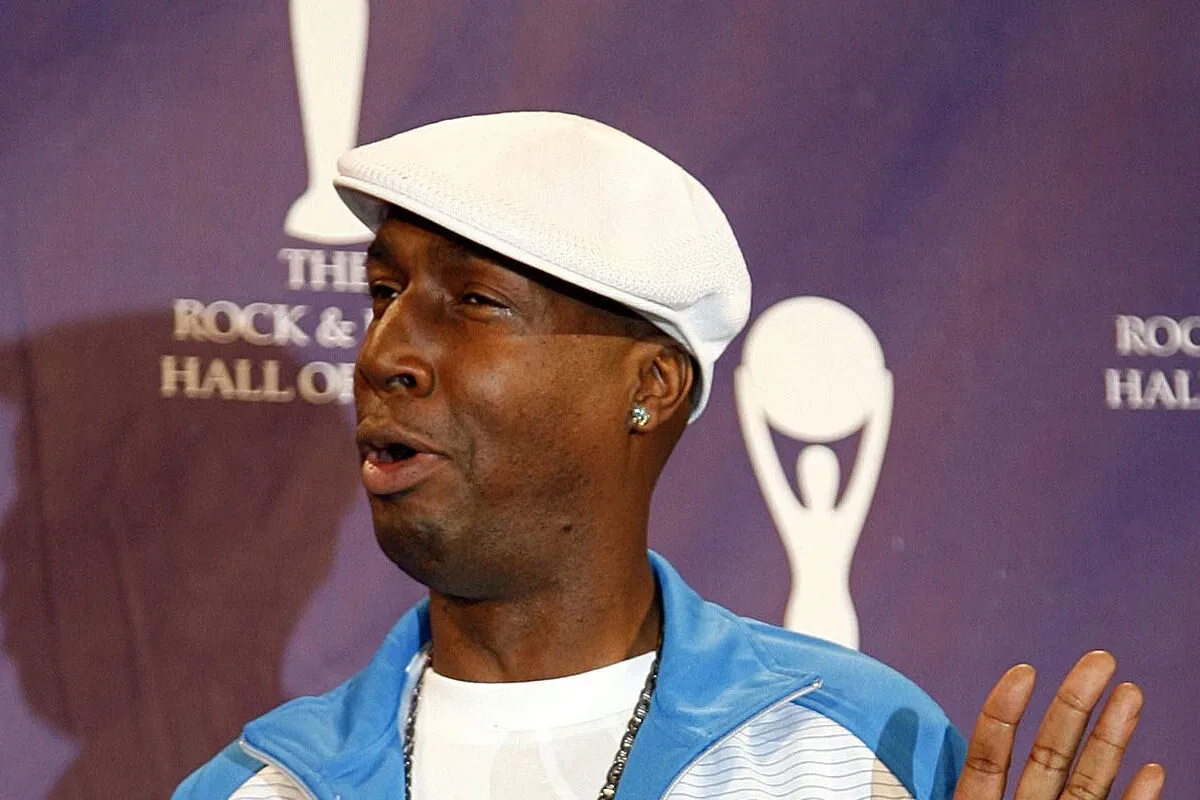
Grandmaster Flash has returned to a foundational question in Hip-Hop history: what, precisely, did the early DJ make possible? In a television conversation with Rev. Al Sharpton and Ari Melber, the Bronx pioneer discussed rap, politics and the turntable method known as the Quik Mix Theory. The appearance placed a deceptively practical musical idea inside a much larger discussion of Hip-Hop’s place in American culture.
The central point is not simply that Flash played records in an unusual way. His method changed the length and function of a song’s most useful rhythmic moment. By working with two copies of the same record, he could move between matching drum breaks and keep that section playing for dancers rather than allowing the record to progress past it. A short passage could become an extended space for movement, performance and crowd energy.
That distinction matters because a break is not necessarily a full song. It is a segment within one: a drum-led or instrumentally focused portion that can carry a strong physical pulse. Flash’s approach let the DJ treat that short segment as material that could be revisited and sustained. Instead of accepting the time limit imposed by one side of one record, the DJ could use two copies to preserve momentum.
What the Quik Mix Theory changed
The Quik Mix Theory is the name Flash gives to his contribution. In plain terms, it describes a way of alternating between two identical records so a selected break continues without an interruption for the dance floor. The records contain the same passage, but the DJ’s timing determines whether listeners experience that passage as brief or seemingly ongoing.
This was consequential at Bronx neighborhood parties because dancers did not have to stop when the break ended. The technique created longer instrumental sections, giving early MCs more room to perform as well. In that sense, the turntable was not merely a playback device. It became an instrument for reorganizing recorded music in real time around the needs of the room.
There is an important practical idea at work here. The innovation did not require a new song to be written or a band to keep playing longer. It depended on identifying the exact passage dancers responded to, owning two copies of the record and executing the transitions with control. The creative act existed in selection, timing and repetition. The result was a different kind of performance environment, one in which a record could be reshaped around a break rather than heard only from beginning to end.
Flash’s terminology also gives the technique a technical identity beyond the usual shorthand of “mixing.” A mix can mean many things in popular music, from blending tracks to balancing studio sound. The Quik Mix Theory, as described here, is more specific: it concerns sustaining a desired break through alternation between duplicate records. That specificity helps clarify why the method belongs in discussions of Hip-Hop’s early musical mechanics, not only its celebrity history.
Flash resists the single-inventor story
While explaining his work, Grandmaster Flash has been careful not to position himself as the sole creator of an entire culture. In an October interview, he framed the Quik Mix Theory as one contribution:
Related coverage includes Grandmaster Flash Revisits DJ Innovation and Hip-Hop’s Early Foundations.
“This is my contributions to the culture. It’s called the quick mix theory. So for me, I’m only one part of this.”
That framing is valuable because it separates a major individual achievement from a simplistic origin myth. Hip-Hop’s development involved DJs, dancers, MCs and audiences, along with the neighborhoods and parties where their ideas were tested. The supplied account specifically ties Flash’s method to dancers and to longer spaces for early MC performances. Neither group is incidental. A technique matters differently when it gives people new ways to move, speak and participate.
Flash’s position is not a retreat from credit. It is a definition of credit. He identifies the technique he developed and the effect it had, while leaving room for the many people who helped build the culture around it. That is a more useful way to discuss cultural history than assigning every development to one figure, particularly when the subject is a community practice shaped in live settings.
The conversation with Sharpton and Melber consequently operates on two levels. It revisits a specific craft innovation, but it also uses that innovation to examine the scale of Hip-Hop’s cultural importance in America. Flash’s account begins with a DJ trying to keep dancers engaged. Its implications reach further because the extended break helped expand what performers could do at a party.
From electronics curiosity to turntable method
Flash links his approach to an early interest in electronics. As a child, he took apart household equipment, an experience that later informed the way he thought about turntables. His book, Birth of a Culture, examines why particular DJ techniques worked and addresses the physics and mathematics involved in using turntables.
Those terms should not make the story sound more abstract than it is. In this context, physics and mathematics point to the repeatable practical problems a DJ must solve: finding the correct point in a recording, controlling when a passage begins and ends, and keeping the sequence coherent enough that the crowd experiences continuity. Flash’s story presents turntable work as a discipline where musical instinct and mechanical understanding meet.
The childhood memory he shared makes that connection especially clear. Recalling the first time his father’s record player captured his imagination, Flash said:
“My dad is a magician! He’s the best in the world. I’m like, Holy moly, how did he do that?”
The language of magic is fitting, but the later development of the Quik Mix Theory suggests an equally important second step: learning how the apparent magic works. Flash moved from fascination with a machine to a focused method for operating records in a way that served dancers. The account does not present technology as separate from creativity. It presents technical curiosity as part of the route to a new musical practice.
That perspective offers a useful corrective to the idea that turntable innovation is only about equipment. The records and players matter, but the decisive factor in this account is purpose. Flash was trying to give listeners more of the part of the music they loved. The technique was a response to an audience and to the limitations of a recorded track’s running order.
A broad listening philosophy
Flash’s comments also reject narrow boundaries around the records that can matter to a DJ. In a September conversation, he explained his outlook this way:
“This is not a black thing or a white thing, or a wrong thing or a right thing.”
Within the context of his work, that statement emphasizes an open relationship to recorded music. The relevant question was not whether a record fit a rigid label. It was whether it contained a moment capable of moving a crowd and supporting the work of the DJ. That is consistent with the Quik Mix Theory itself: the technique asks the DJ to listen closely enough to isolate a compelling passage and return to it with purpose.
It also reinforces why Flash’s account cannot be reduced to a single device trick. The method begins with musical judgment. Before a break can be extended, someone must recognize its value. Before an MC can work over a longer instrumental section, the DJ must create and maintain that section. The technology supports the decision; it does not make the decision on its own.
For readers following other stories about music’s movement across places and generations, The Weeknd’s “Hong Kong” and its connection to Faye Wong’s 1993 Cantonese vocal offers another example of how recordings can carry cultural meaning well beyond their original moment.
Birth of a Culture extends the explanation
Flash’s recent book, Birth of a Culture, arrived September 22 through Amistad. Journalist Robert “Scoop” Jackson is listed as his co-author. Based on the supplied details, the book is positioned as an examination of the methods behind early DJ practice, including the physical and mathematical reasoning Flash applied to the turntables.
That focus makes the book a natural companion to the television discussion. A short segment can introduce the core image: two copies of a record, a repeating break and a dance floor that no longer has to pause. A book can spend more time on why that procedure worked, how Flash arrived at it and how technical knowledge shaped the result.
The value of putting those details on record is not just archival. It makes the labor inside an influential sound more visible. Listeners may hear an extended break as effortless, particularly when it succeeds. Flash’s explanation directs attention back to the decisions and control required to produce that continuity. It encourages audiences to hear the DJ’s work not as background to the event, but as an active force that shaped the event.
Grandmaster Flash’s latest discussion therefore revisits Hip-Hop’s early foundations without treating them as frozen museum pieces. The Quik Mix Theory remains a concrete explanation of how a DJ could alter the possibilities of a party: preserve the rhythm, give dancers more time and open a longer instrumental lane for MCs. His insistence that he is only one part of the culture keeps that achievement in its proper setting—an essential contribution within a collective history.