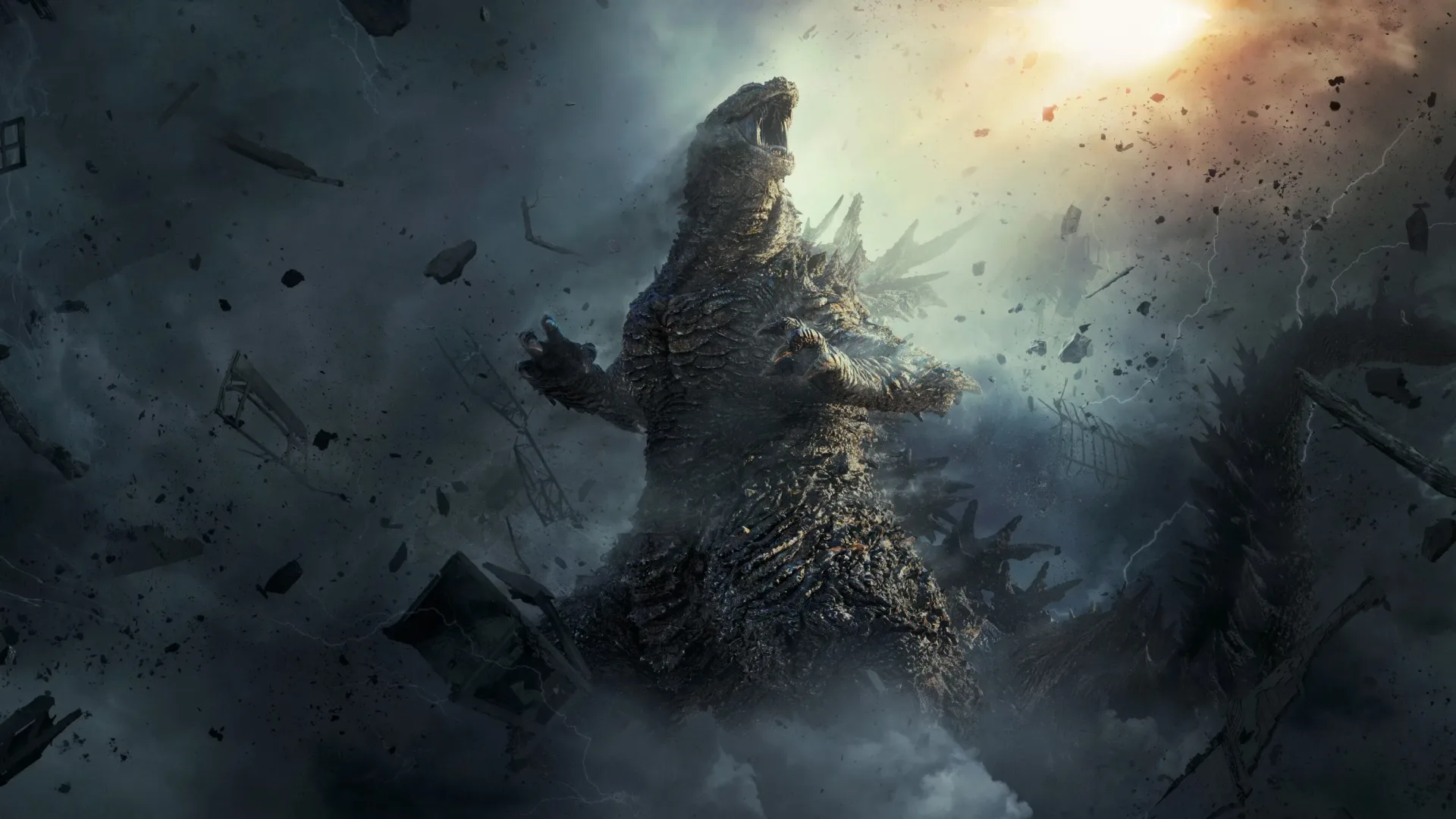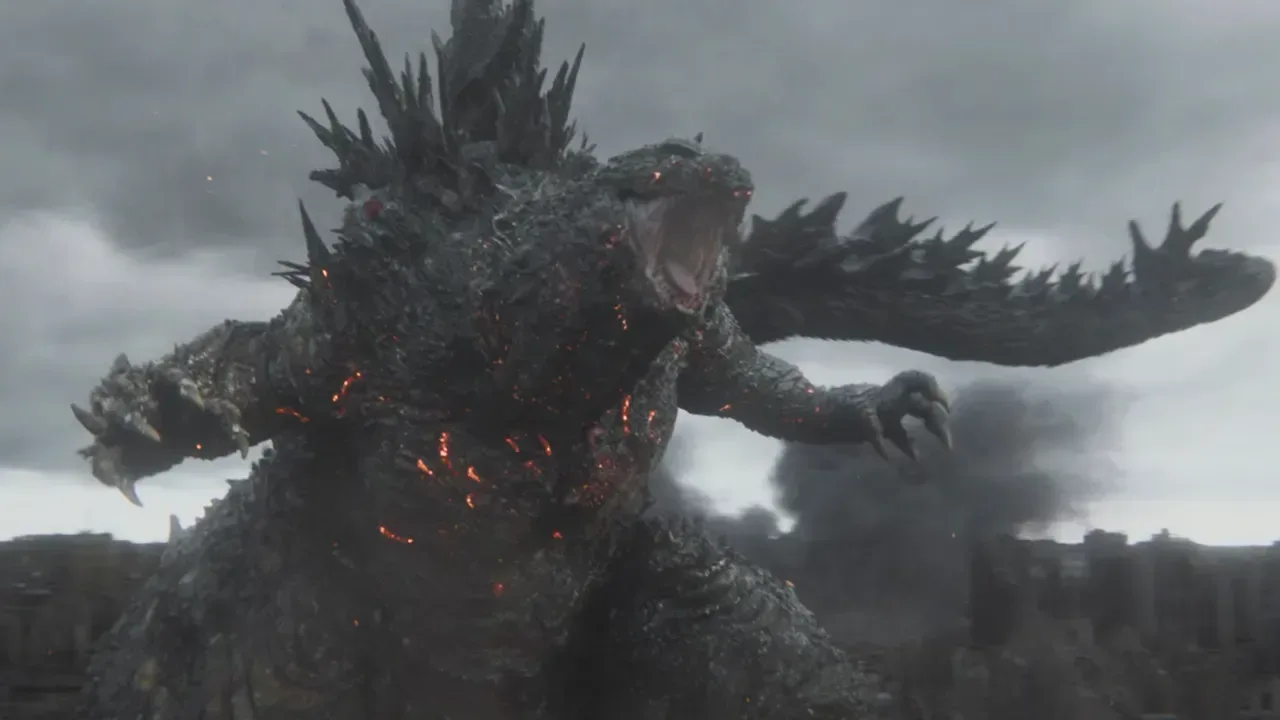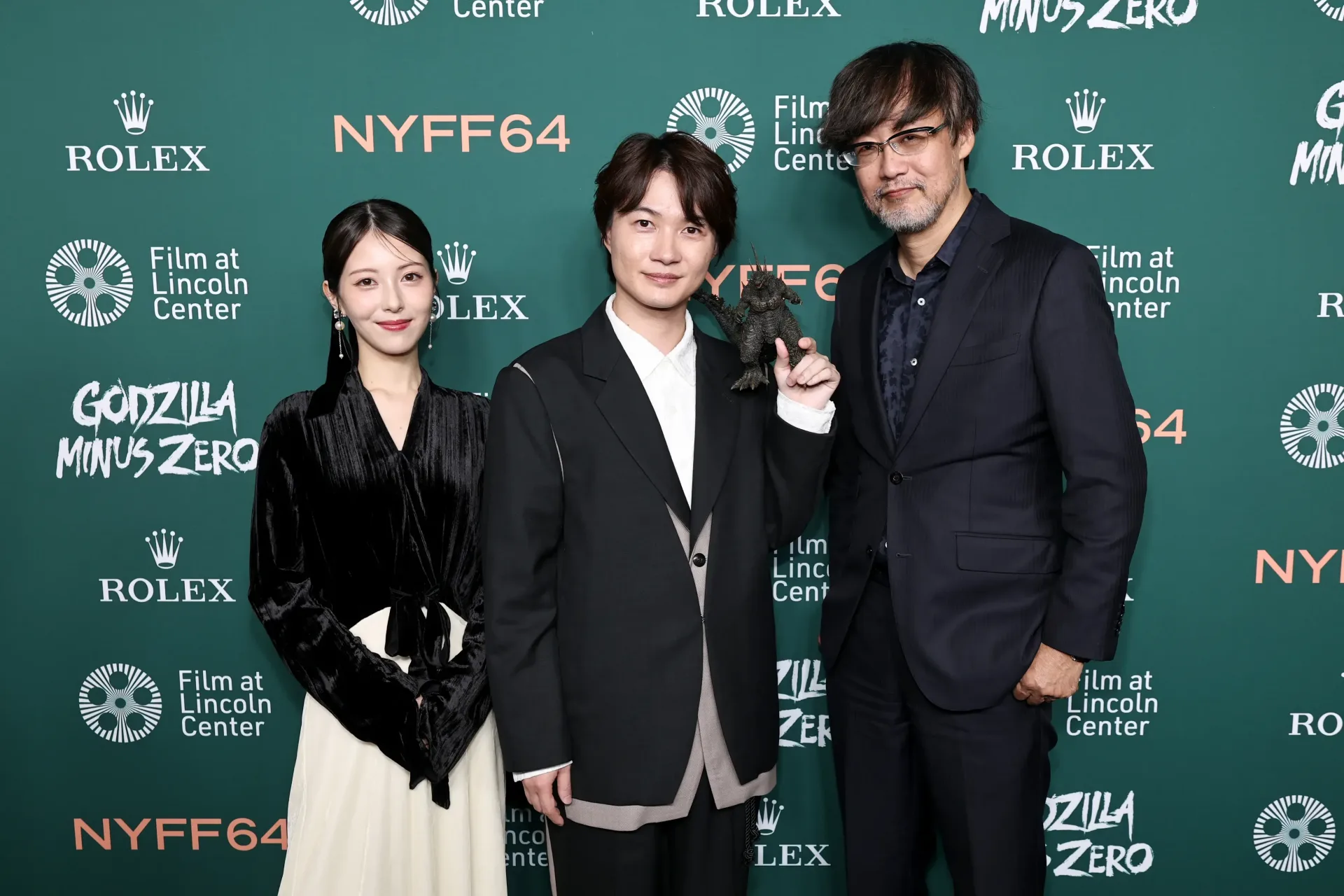
Godzilla Minus Zero is set to make franchise history before its wider debut later this year. The sequel to 2023’s Godzilla Minus One has been rated R for “violent content/bloody images,” making it the first R-rated entry across Godzilla’s 72-year history.
For director Takashi Yamazaki, that classification was not an accidental byproduct of trying to make a larger, louder sequel. He has said that certain scenes were fundamental to the movie and that cutting or censoring them was not an option. That makes the rating a meaningful statement about the filmmaker’s priorities: accessibility matters, but not enough to dilute the material he considers necessary.
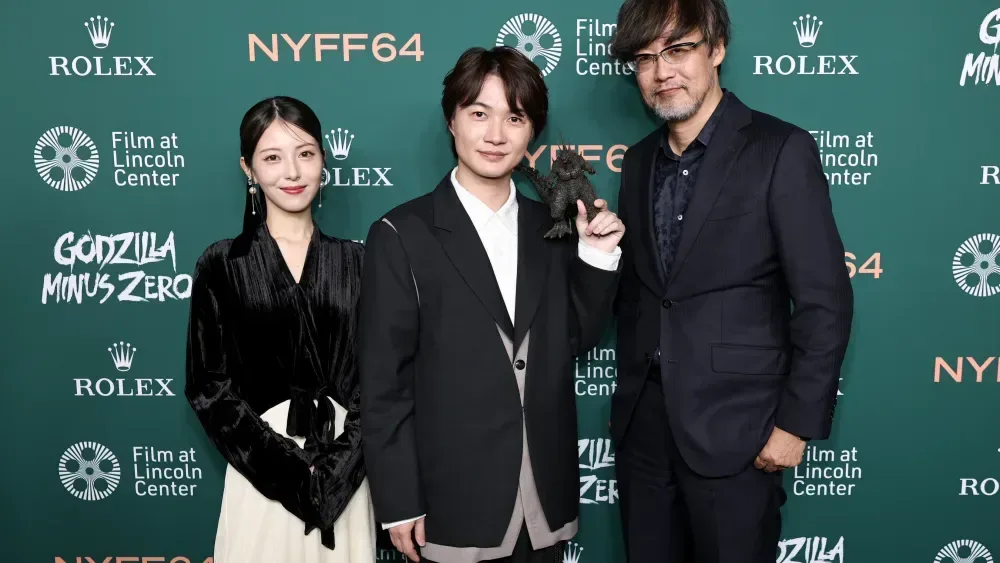
The film received its world premiere at the New York Film Festival, where the audience response was especially emphatic. The screening drew applause during the movie as well as a major reaction for Yamazaki when he appeared before and afterward. First responses from press attendees were highly positive, though the director also asked those who saw it first to protect its surprises online.
An unusual first for Godzilla
Godzilla has endured for more than seven decades because the character can support radically different tones. The giant monster is an action spectacle, but also a vessel for catastrophe, fear, survival and national trauma. An R rating does not automatically define what a film is trying to say, nor does it guarantee that a movie will be more mature or more effective. What it does communicate here is narrower and more concrete: the violence and bloody imagery in Godzilla Minus Zero crossed the line for a PG-13 classification, and Yamazaki considers those images integral to the sequel.
That distinction is important. A rating is often treated as a marketing label, but it is first an audience-access restriction. Under Motion Picture Association guidelines, people younger than 17 cannot attend an R-rated movie without a parent or guardian. For a major franchise release, that can reduce the potential opening-weekend audience and complicate the usual “four-quadrant” strategy.
Four-quadrant films are projects designed to appeal broadly across the audience groups traditionally divided by age and gender. Monster movies frequently fit that model: recognizable character, large-scale action, approachable premise and a release positioned as an event. An R-rated Godzilla sequel carries a different proposition. It may retain the scale and recognizability of a huge franchise while accepting that its content is not being tailored for every young viewer to see unaccompanied.
Yamazaki acknowledged the basic commercial logic. A studio and director generally want the broadest possible public to have access to a film, and a discussion about lowering an R rating to PG-13 is an unsurprising one. His comments make clear, however, that the final rating was not simply accepted after the fact. The creative team chose not to remove material that they felt the story required.
What the rating does—and does not—tell audiences
The supplied rating reason is specific: violent content and bloody images. It does not reveal the full plot, the scale of the violence, or which characters and situations are involved. It also does not establish that the sequel is defined solely by gore. Viewers should resist turning an R designation into a spoiler or a promise of any one kind of scene.
Related coverage includes Godzilla Minus Zero’s R Rating Was Essential, Takashi Yamazaki Says.
Still, the label provides a useful expectation-setting tool. The film is likely to depict the consequences of kaiju destruction with a degree of explicitness that the franchise has not previously carried into an R-rated release. “Kaiju,” a Japanese term commonly used for giant monsters, is central to the Godzilla vocabulary, but the word can sometimes make destruction sound abstract or playful. Yamazaki’s defense of the rating suggests Godzilla Minus Zero wants some moments of destruction to land with greater immediacy.
That is not a claim about the movie’s unseen plot. It is an interpretation of the filmmaker’s stated refusal to trim certain scenes. The practical implication is simple: prospective viewers should expect a Godzilla movie aimed at an older threshold than the series has officially used before, and parents should consult the final rating information before deciding whether it is suitable for their household.
R-rated blockbusters are no longer an automatic contradiction
For years, conventional wisdom held that an R rating severely limited the ceiling for expensive studio entertainment. The restriction remains real; fewer viewers can attend without an adult, and some families will choose another release. But recent box-office history has weakened the idea that the rating itself makes a major hit impossible.
Deadpool earned $782 million worldwide in 2016. In 2019, Joker became the first R-rated film to surpass $1 billion, finishing at $1.07 billion. Deadpool & Wolverine later reached $1.33 billion in 2024. The supplied figures also place 2026’s The Odyssey at $1.72 billion worldwide and identify it as the 17th highest-grossing film of all time globally.
Those outcomes do not create a formula that Godzilla Minus Zero can simply follow. Each title had its own audience, release circumstances, characters and creative identity. But they do demonstrate why Yamazaki can look at the rating with more optimism than earlier blockbuster assumptions might allow. In the current marketplace, an R rating can signal that a movie has preserved a distinct voice rather than been smoothed into a more generic event film.
That perception is central to Yamazaki’s position. He noted that R-rated movies once carried a more negative association, while some contemporary audiences may see the classification as evidence that filmmakers were allowed to present the work without censoring it. The important word is “may.” Ratings are not inherently artistic badges, and more restriction does not equal better cinema. Yet when a director identifies the rating as the consequence of protecting essential scenes, it can become part of how audiences understand the creative stakes.
A sequel Yamazaki did not initially plan
Yamazaki’s apparent reluctance to rush into a sequel is another notable part of the story. He told the festival audience that he had not intended to make a follow-up to Godzilla Minus One. Executives began asking about another movie after seeing an early cut of the 2023 film, a prospect that initially made him nervous. Only after the movie reached theaters and found broad international appreciation did he come to see a sequel as viable.
That context does not prove that the new film avoids franchise pressures; every sequel faces expectations. It does establish that the director’s involvement did not begin with a declared plan to turn Minus One into an immediate series. His comments at the premiere also retained a joking caution about the possibility of a third installment, directing the room’s attention to the studio executives in attendance.
For fans, the more meaningful takeaway is not a prediction of another sequel. No third film was announced in the material available. Instead, it is that Godzilla Minus Zero arrives with Yamazaki back in the director’s chair and with a publicly defined creative boundary he was unwilling to move.
Festival reception and the spoiler problem
The New York premiere created a special tension familiar to any large franchise screened ahead of general release. An early audience becomes the first group able to discuss major set pieces, character turns and surprises—while everyone else must wait. Yamazaki directly appealed to attendees not to post spoilers, emphasizing the size of Godzilla’s worldwide fan community.
That request is not mere event-night etiquette. In modern franchise culture, social media clips, reaction posts and supposedly vague jokes can give away a scene’s identity or emotional function almost immediately. The more a director emphasizes that a sequel contains surprises, the more responsible viewers should be about keeping descriptions of plot specifics out of public conversation until audiences have a reasonable chance to see it.
The raucous premiere response is encouraging, but it should be read carefully. Festival audiences are not a substitute for the wider theatrical audience, and applause during a screening is not a critical score or a box-office forecast. What it does show is that the movie played in a room ready to embrace giant-monster spectacle and that it generated a visibly energetic reaction.
Its place at a major film festival also underlines a welcome truth about the series: a giant monster movie can be both popular entertainment and a subject for serious attention. The festival’s director acknowledged that Godzilla may not be the first franchise people expect to see in that setting, then welcomed the chance to bring one there. The response suggests the pairing was a lively one.
Why this matters beyond one rating
Godzilla Minus Zero will ultimately be judged on the finished film, not on its certificate. But the R rating has already clarified an important part of its identity. Yamazaki and the team chose to retain scenes they believed were essential despite the clear trade-off in audience access. That is a concrete creative decision, not a vague promise of “darker” material.
It also makes the sequel a useful reminder that franchise filmmaking is not always a race toward the widest possible classification. Sometimes the question is whether a film can honestly deliver its intended emotional and visual impact after the material has been softened. Yamazaki’s answer, in this case, was no.
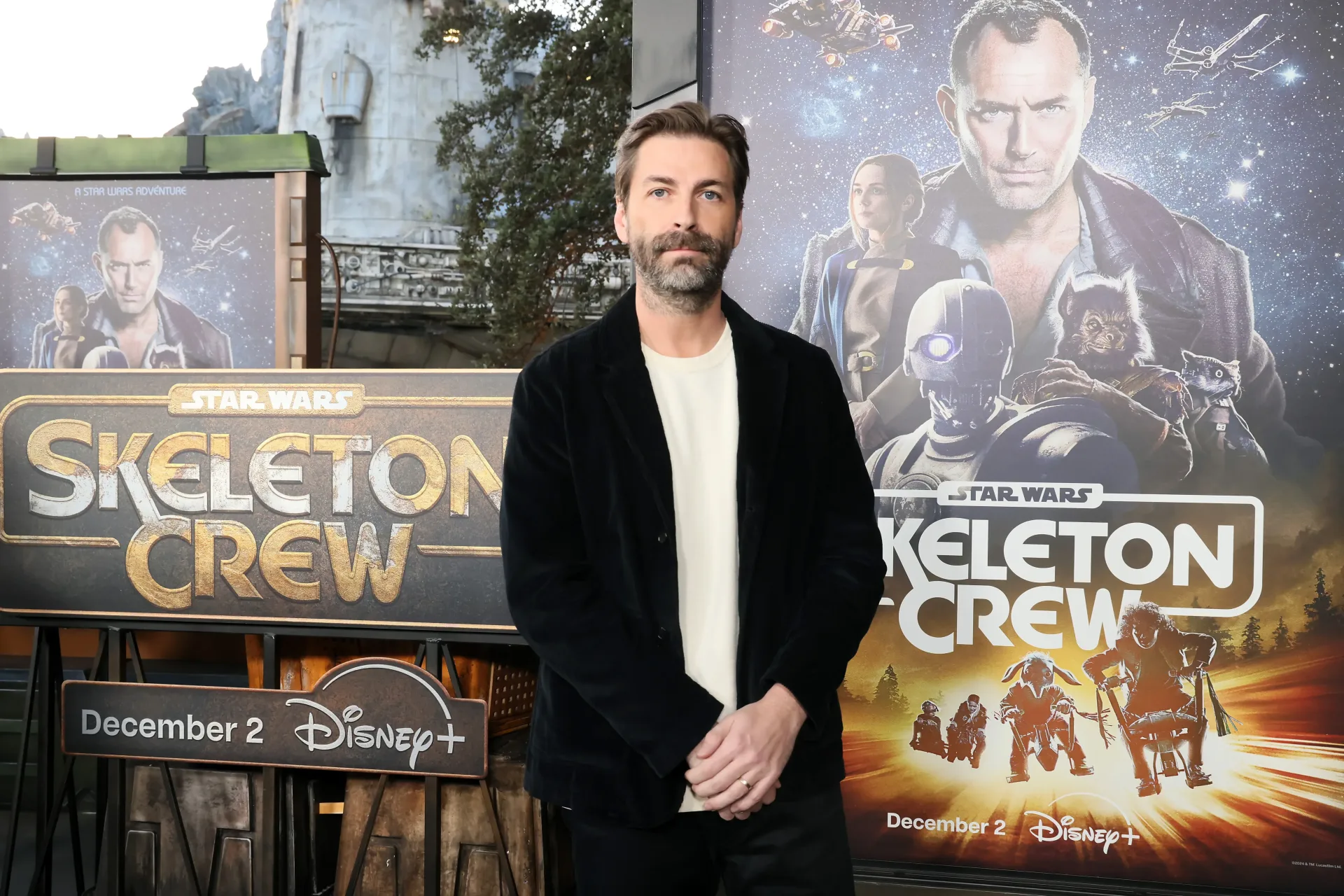
That choice comes as another major genre filmmaker, Jon Watts, is attached to a different galactic franchise project; the developing Star Wars film with Simon Kinberg scripting is a separate example of how recognizable properties remain tied to the distinct choices of their creative teams. For Godzilla Minus Zero, Yamazaki’s clearest choice is already on the record: the scenes behind its R rating stay in the movie.