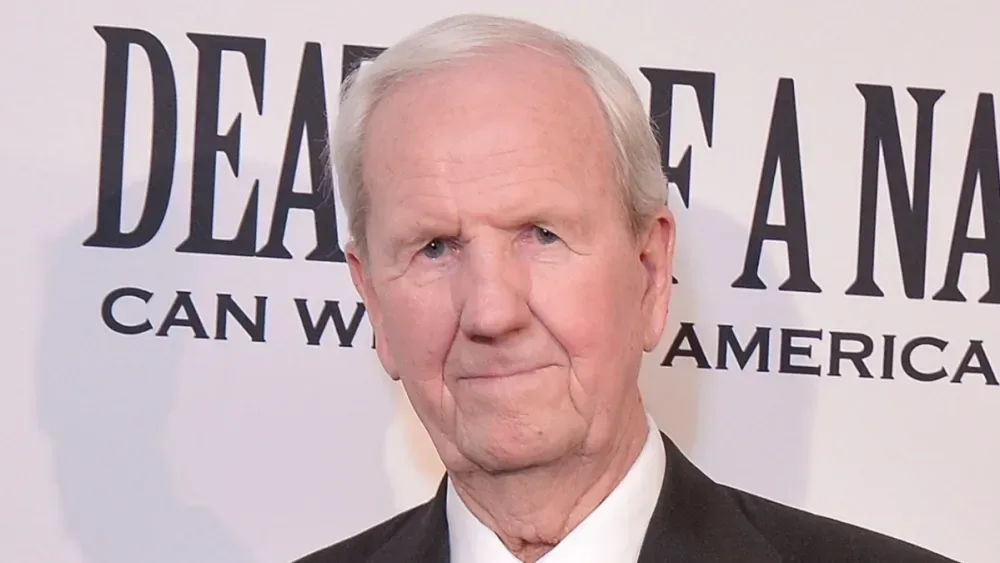
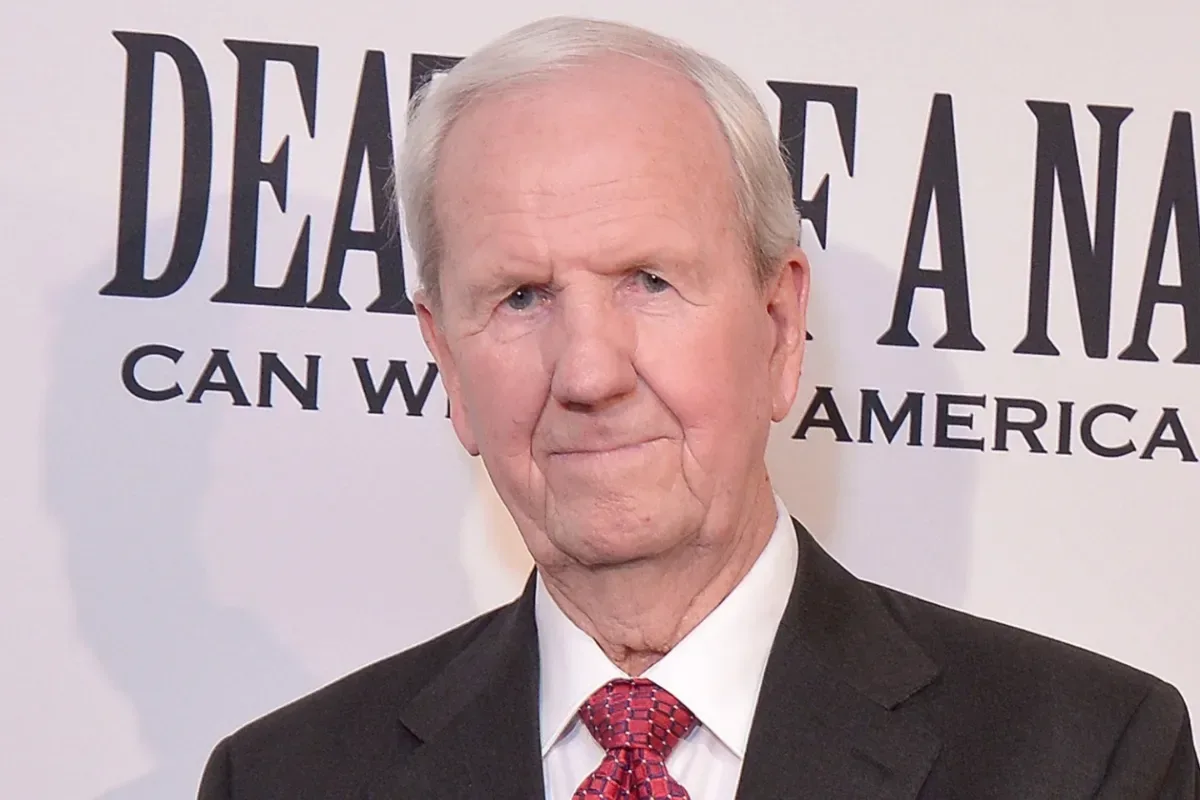
Gerald R. Molen, the producer who shared the Academy Award for Best Picture for Schindler’s List, has died at 91. His death was shared by his great-niece, Rachel Lorraine Pullan, who remembered him as a person of moral character and integrity, and described a career that began with practical studio work before he rose to producing.
Molen’s name may be less immediately familiar than the directors and stars attached to the films he helped bring to screens, but his credits cover an unusually wide stretch of major studio filmmaking. He was a producer on Steven Spielberg films including Schindler’s List, Jurassic Park, Hook, The Lost World: Jurassic Park and Minority Report. He also worked on Amblin Entertainment titles such as The Flintstones, The Little Rascals, Little Giants, Casper and Twister.
That list moves between historical drama, family fantasy, disaster spectacle, science fiction and creature features. It is a reminder that a producer’s career is often best measured not by one signature genre, but by the ability to help large, very different productions get made.
An Oscar shared for ‘Schindler’s List’
Schindler’s List won Best Picture in 1994, with Molen sharing the Oscar with Spielberg and Branko Lustig. The award is a significant part of Molen’s legacy, both because of the film’s stature and because Best Picture recognizes the producing team behind a film rather than an individual performance or craft alone.
In the standard sense, a film producer is one of the people responsible for guiding a project from development through completion. The title can encompass creative, financial and logistical oversight, and the precise division of responsibilities varies from production to production. That breadth can make producer credits difficult to reduce to a single visible task. Yet it is exactly why they matter: the role sits where artistic ambitions, staffing, schedules and the day-to-day realities of making a film meet.
Molen’s professional path suggests familiarity with that practical side of the business long before the Oscar. Pullan said he began by moving set pieces and driving at a movie studio, then worked his way to producer. Those early jobs are a useful lens for understanding a career built around production: film sets depend on a vast network of work that audiences generally do not see, from physical movement and transport to coordination between departments.
A long collaboration with Steven Spielberg
Molen’s professional relationship with Spielberg began in 1985, when he worked as a unit production manager on The Color Purple. A unit production manager is generally a production-side role focused on the organization needed to keep a shoot operating, including the practical administration that supports a production plan. It is a role far removed from celebrity, but central to the machinery of a feature film.
That work led to an associate producer credit on 1987’s *batteries not included, for which Spielberg was an executive producer. An associate producer credit can reflect a variety of contributions depending on the film, but the move marked Molen’s progression into a producer capacity. From there, he became a frequent Spielberg collaborator across some of the most prominent films in the director’s body of work.
Related coverage includes Gerald R. Molen, Oscar-Winning ‘Schindler’s List’ Producer, Dies at 91.
The scale of those later productions is evident in their range. Jurassic Park and The Lost World: Jurassic Park belong to a blockbuster franchise built around dinosaurs and spectacle. Hook reworks Peter Pan mythology as a large-scale fantasy. Minority Report is science fiction. Alongside them stands Schindler’s List, a film with an entirely different subject, tone and historical weight.
There is no single production formula that could neatly account for all of those films. What connects them in Molen’s credit history is sustained work at a high level of studio production, in partnership with a director whose projects could vary dramatically in scale and subject. For audiences revisiting those movies, Molen’s filmography offers a behind-the-camera route through a major period of popular cinema.
Beyond the Spielberg collaborations
Molen’s producer credits also include Rain Man, Days of Thunder, Just Like Heaven, The Meg, Meg 2 and The Best Christmas Pageant Ever. The span from Rain Man to the two Meg films and a holiday title underscores a career that did not remain limited to one company, one filmmaker or one type of audience.
His Amblin work similarly reached a broad family audience. The Flintstones adapted a long-running animated property for live action, while Casper brought another familiar character to the screen. Little Giants and The Little Rascals were family-oriented comedies, and Twister was a major disaster film. The shared point is not that these films are identical, but that they required producers able to navigate different creative demands within commercial filmmaking.
For viewers, producer filmographies can offer a more illuminating way to connect apparently unrelated movies than a simple genre label. A director may shape a film’s most identifiable voice, while performers give it faces and characters. Producers, meanwhile, can be the through-line in how projects are assembled and delivered. Molen’s credits place him across films remembered for effects-driven spectacle, family entertainment, drama and action.
That work is also a useful corrective to the shorthand of treating movies as the accomplishment of only their most visible names. Cinema is collaborative by nature, and a producer’s contribution may be difficult to isolate scene by scene. The Best Picture award for Schindler’s List is one of the clearest public acknowledgements of Molen’s place in that collaborative process.
From Montana to North Hollywood
Molen was born in Montana in 1935 and moved to North Hollywood in 1947. His parents, Gerald Sr. and Edith, owned and ran a café next to the Republic Pictures lot in Studio City. The proximity does not by itself explain a decades-long career, but it places his family life close to the working world of Hollywood long before he became a producer.
The account of his early work—moving set pieces and driving at a studio—gives the most direct picture of how he entered that world. It was not presented as an instant leap into an executive role. Instead, it was a progression through hands-on studio labor, production management and associate producing before his later producer credits.
That trajectory is meaningful because film credits can obscure how many forms of experience feed into producing. A producer may need an understanding of physical production as well as the judgment to support a project at a broader level. Molen’s route, as described by his family, began on the ground: with sets, transportation and the practical needs of a working studio.
A filmography with lasting points of entry
There are several ways to appreciate Molen’s work without pretending that a producer’s role can be fully captured by a single viewing. One is to look at the range of projects attached to his name: the historical seriousness of Schindler’s List, the durable popular appeal of Jurassic Park, the imaginative family films in the Amblin orbit, and the later creature-feature scale of The Meg and Meg 2.
Another is to recognize the continuity in a career that repeatedly returned to ambitious studio projects. The particulars changed—dinosaurs, tornadoes, ghosts, children’s stories, racing, science fiction and drama—but the core work of producing remained essential. Every one of those productions required extensive planning and coordination before any final film could become an audience experience.
For readers following the people who make films as closely as the films themselves, Molen’s passing is a moment to revisit the often less-visible names behind enduring mainstream cinema. It also arrives during a period when film audiences continue to discuss the legacy of major creators and their collaborators, as in this look at Luca Guadagnino’s plans for a future love story.
Molen’s wife of almost 70 years, Pat, died in January 2024 at the age of 86. He is remembered by family as someone who rose from entry-level work around a studio to a career that included one of the industry’s highest honors and a long list of influential film credits.