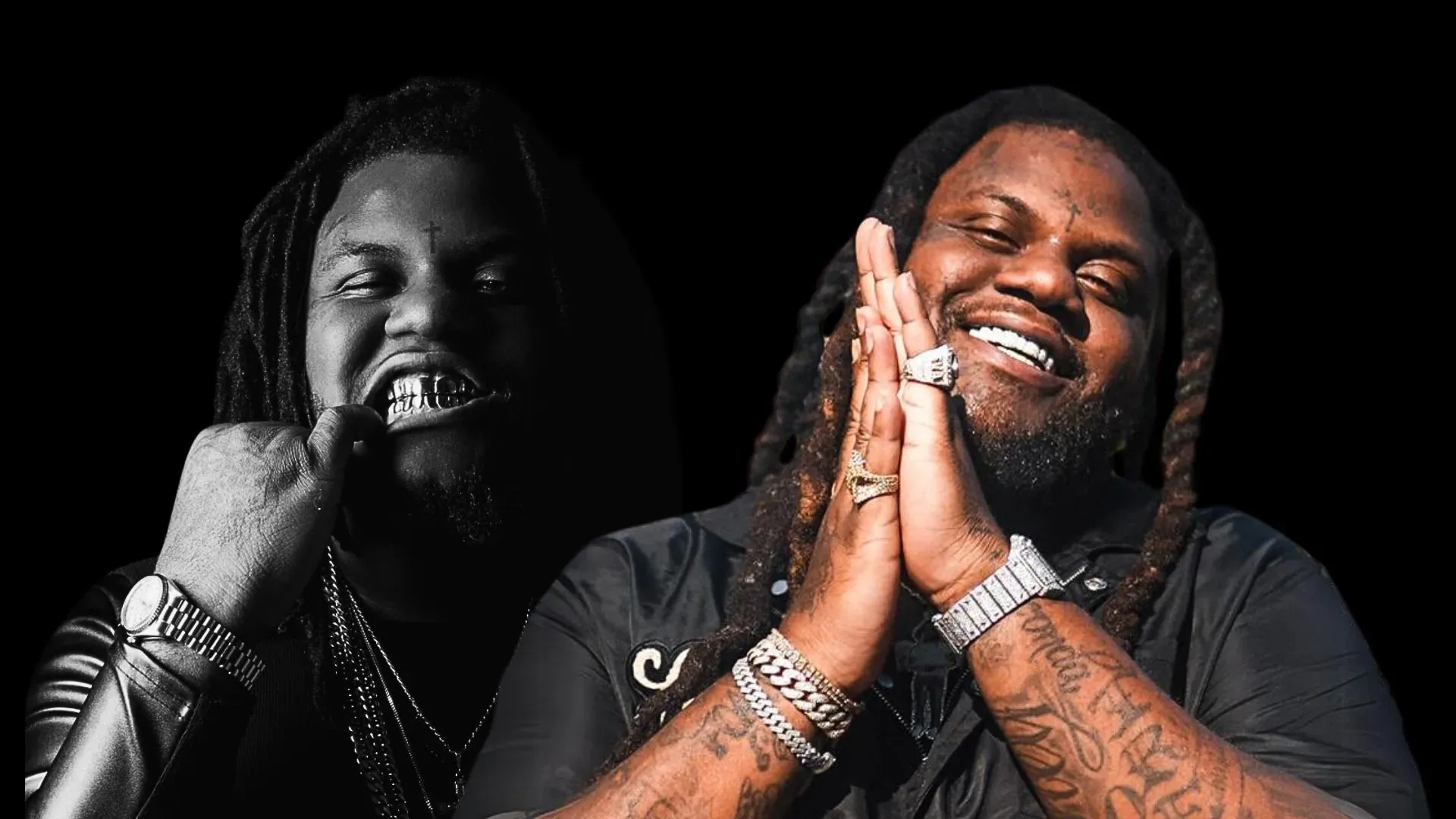
Fat Trel has alleged that the hook structure on French Montana’s 2013 single “Ain’t Worried About Nothin’” echoed a song Trel had recorded earlier in New York. Speaking about his career, the Washington, D.C.-connected rapper said he believed a producer had played his recording for French Montana and that the later hit drew from its repeated hook pattern.
The claim is Trel’s recollection and allegation; the supplied information does not establish that French Montana heard Trel’s recording, that a producer shared it, or that the released record copied protected material. Trel did not frame the matter as a current business fight with French. On the contrary, he made clear that he still has affection for French, while recalling that his frustration at the time was directed toward the producer he believed was involved.
The distinction Trel is making: pattern, not matching lyrics
Trel’s account is notably narrower than a claim that the two songs use identical words. He focused on the repetition in the hooks—the rhythmic or structural way a phrase returns and becomes the record’s central refrain.
That distinction matters when discussing rap records, where a hook can do several jobs at once. It can be the most memorable lyrical moment, a rhythmic instruction for the beat, and the part designed to be repeated by listeners. Two hooks can feel similar because they use a comparable cadence, phrasing pattern or repetition strategy even where the actual words are different.
That is also why a perceived similarity is not, by itself, proof of copying. Repetition is a common creative device in hip-hop and pop songwriting. Establishing that one artist’s work influenced another would require considerably more information than is available here: the earlier recording itself, when it was made, who had access to it, the relevant sessions, and a close comparison of the musical and lyrical elements. None of that evidence is included in Trel’s account.
Still, Trel’s description places the issue in a familiar creative tension: an unreleased or less widely heard idea allegedly crossing paths with a record that later becomes a major release. His memory of the moment is tied to career timing. He said he was working toward a major-label deal and beginning to feel momentum when he heard French’s song become successful.
Where ‘Ain’t Worried About Nothin’ fits in the timeline
French Montana released “Ain’t Worried About Nothin’” in April 2013. The track appeared on Excuse My French. A remix followed in October and added Rick Ross, Snoop Dogg and Diddy; Rico Love and Earl & E are listed for remix production.
For Trel, the period also preceded a major step in his own career. His MMG signing was made official in November 2013 through a venture involving WaleMusic and Atlantic Records. Tracy T was part of the same wave of roster expansion.
Related coverage includes Fat Trel Says French Montana’s ‘Ain’t Worried About Nothin’ Used His Hook Pattern.
The sequence helps explain why the recollection remains charged without necessarily becoming a direct accusation against French Montana personally. Trel describes a period of proximity to larger industry opportunities, not a newcomer looking backward from a wholly separate scene. Before the MMG news, he had already worked with French Montana, as well as Wale, Phil Ade and Red Cafe.
That prior connection is important context. Music careers often involve overlapping studios, producers, DJs, collaborators and label conversations. Trel’s stated theory is rooted in that kind of access: he believes a producer who heard his recording may have passed it along. It is a claim about a possible route by which an idea traveled, not an assertion supported here by session documentation or a credited chain of events.
Fat Trel’s path before MMG
Trel had built an audience before his MMG deal through projects including No Secrets and April Foolz. In a 2012 interview, he described an early path through open mics, school performances and DJ-led shows before pushing his work beyond the D.C. area.
He was also preparing Nightmare On E Street, a project named after his neighborhood and connected to difficult experiences he had described living through. At that stage, Trel said he had met with labels but did not see signing immediately as the only necessary next move. His stated preference was to keep making music at his own pace.
That independence is a useful lens for the later story. Artists can have growing regional recognition, an active release schedule and industry meetings while still operating without the leverage or infrastructure of a fully established major-label campaign. Trel’s 2011 DMV Music Award for Breakout Artist of the Year reflects that his momentum had begun before the 2013 developments.
His eventual MMG affiliation therefore was not presented as an overnight discovery. It followed a run of releases, local-stage experience, collaborative connections and sustained work. The allegation around the French Montana hook sits inside that broader career narrative: Trel remembers feeling that an idea from his creative orbit had surfaced on a bigger platform at a moment when his own profile was rising.
What is known, and what remains unverified
- Known from Trel’s comments: He says he recorded a song in New York with a repeated hook pattern that he believes was later reflected in “Ain’t Worried About Nothin’.”
- Known release context: French Montana released the song in April 2013 on Excuse My French, followed by a remix in October.
- Known career context: Trel’s MMG deal became official in November 2013, after earlier projects, performances and collaborations had helped build his profile.
- Not established by the available material: Whether French Montana heard Trel’s earlier song, whether a producer shared it, whether the recordings are substantially similar, or whether there was any uncredited use of Trel’s work.
This is more than a legalistic caveat. The terms people use in casual music conversation can mean different things. A “hook pattern” can refer to wording, cadence, rhythm, repetition, melodic contour or simply the overall feeling of a refrain. Without the underlying recordings and more precise details, listeners cannot responsibly treat Trel’s description as a settled account of what occurred.
Why hooks become the flashpoint
A hook is often the element with the widest cultural reach. Verses may establish an artist’s technical style or tell the song’s story, but the hook is generally what gets repeated in clips, at shows and in everyday conversation. When a performer believes a later hit resembles an earlier hook, the perceived loss can feel bigger than a dispute over a small line: it can feel like a lost signature moment.
But the same fact explains why disputes over hooks can be difficult to assess from descriptions alone. The building blocks of a catchy refrain—short phrases, repeated words, emphatic delivery and simple rhythmic construction—are widely used. Similarity can emerge from shared conventions, creative coincidence, genre habits or direct influence. The available account does not resolve which explanation applies here.
Trel’s choice to speak warmly about French Montana while expressing anger toward a producer also separates personal relationships from the allegation itself. He said French was “my dog” and indicated no business-driven animosity toward him. That framing suggests Trel sees the issue as one of process and access rather than a reason to publicly sever an existing connection.
There is no indication in the supplied material of a lawsuit, formal claim, response from French Montana, or action involving the producer Trel suspects. As it stands, this is an artist describing his own interpretation of events from a consequential phase of his career—not a dispute whose underlying facts have been independently demonstrated.
A broader look at the industry moment
The story also underlines how closely intertwined the early-2010s rap ecosystem could be. A rapper could move among open mics, local showcases, mixtape projects, DJ events, collaborator sessions and label meetings in relatively quick succession. Those overlapping environments can create opportunities, but they can also leave artists with lingering questions about who heard a demo, when an idea was discussed, and how a sound later appeared on a commercial release.
For fans, the responsible takeaway is not to declare a verdict from competing memories. It is to separate the documented timeline from the unverified allegation. French Montana’s song arrived in April 2013; Trel was pursuing his own next stage and later signed through the MMG, WaleMusic and Atlantic arrangement that November. Trel now says he saw a meaningful resemblance in the hook’s repeated construction and believes a producer connection explains it.
The remarks arrive alongside continuing discussion of rap careers, collaboration and label pressure, themes that also surface in Don Trip’s account of finding a way forward during label strain. In Trel’s case, however, the central point remains specific: he alleges that a song he recorded contained the template for a hook that became associated with French Montana’s 2013 record.
Until more evidence or a response emerges, the allegation should be understood on those terms—an unresolved claim from Fat Trel, coupled with a clear insistence that he does not hold personal hostility toward French Montana.