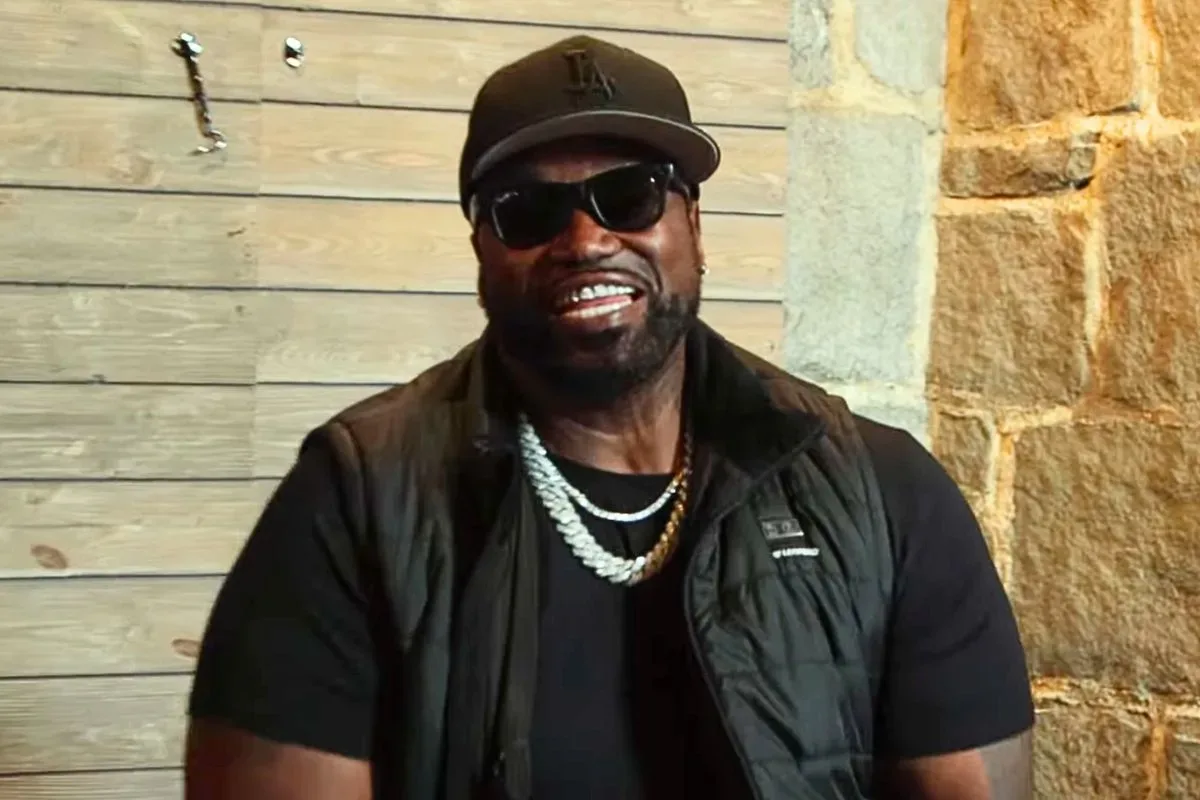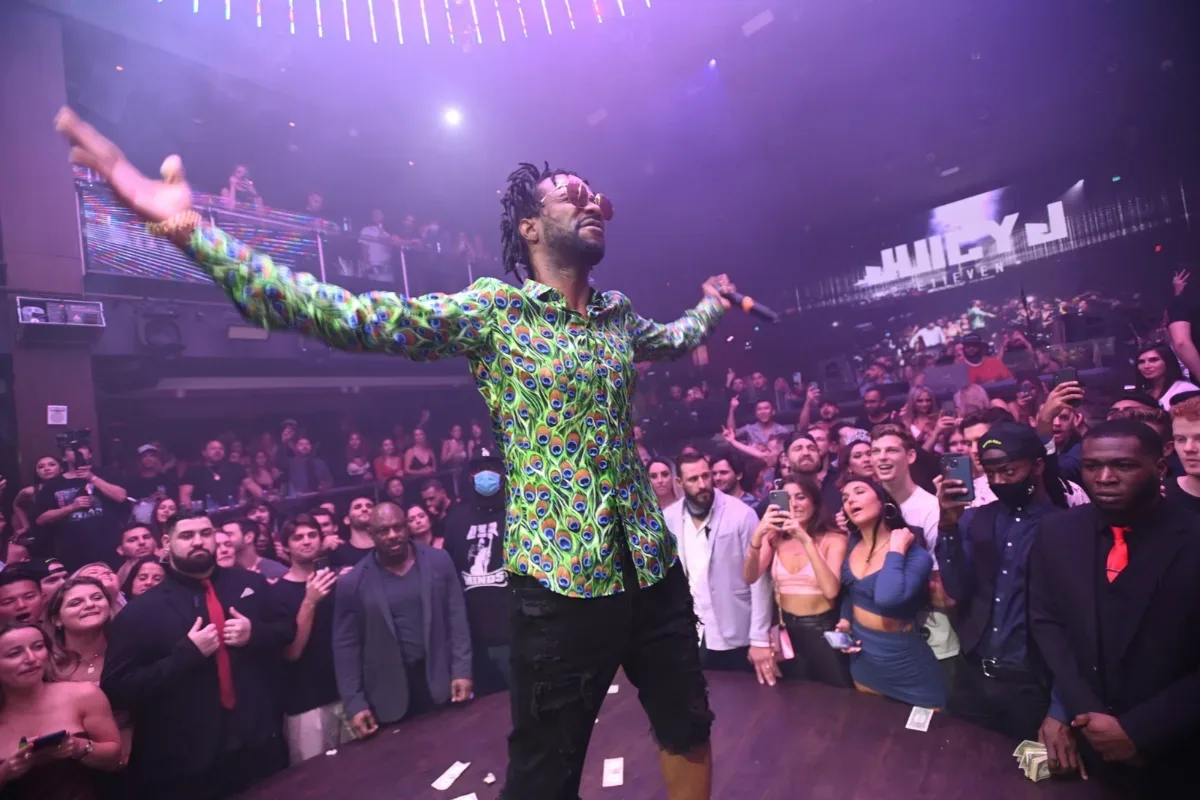
Don Trip has described a pivotal moment in which Juicy J helped him regain direction while he was dealing with frustration over a record deal. Speaking on Perspektives with Bank, Trip recalled arriving at a studio unable to focus on recording because the situation was weighing so heavily on him.
Trip’s account is not simply about professional advice or a helpful studio conversation. He said he had reached a point where he was considering retaliation, and that Juicy J created space for him to explain what was wrong. Trip said Juicy J cleared the room, listened, and asked for a few days to work on a solution.
When Juicy J returned, Trip said, he showed him ways to make money outside of being a rapper. Trip called that help life-saving, describing a time when he felt he had lost everything and viewing the intervention as a renewed opportunity.
“But he came back, he showed me how to get some money outside of being a rapper,” Trip said.
A lesson bigger than one recording session
The details of those income opportunities were not disclosed. That distinction matters: there is no basis to fill in the gaps with claims about a particular business, investment, deal, or job. What Trip did make clear is the practical outcome. Juicy J’s guidance broadened Trip’s sense of what his livelihood could be when music industry circumstances felt unstable.
For an independent-minded artist, “income outside rap” does not necessarily mean abandoning music. It can mean recognizing that recording, releasing songs, marketing, touring, and managing a public profile are not the only moving parts of a sustainable life. Trip’s own later comments about artists taking on operational work support that larger idea, even though he did not present a step-by-step business blueprint in this conversation.
The emotional dimension is equally important. Trip said he had been too preoccupied to work in the studio. Juicy J’s first contribution, in Trip’s telling, was to listen rather than demand productivity. The second was material and practical: help that gave Trip another path at a time of intense pressure.
That sequence helps explain why Trip frames the experience in such serious terms. The story is not a claim that one conversation erased the difficulties of a label conflict. It is an account of a mentor-like figure interrupting a dangerous spiral with attention, patience, and a concrete alternative.
Related coverage includes Don Trip Says Juicy J Helped Him Find a Way Forward After Label Strain.
Memphis influence, made personal
Juicy J’s role carries extra significance because Trip has long situated himself within a Memphis rap lineage. In a 2025 interview, Trip named Three 6 Mafia, Playa Fly, and Gangsta Blac as artists he heard while growing up. Juicy J, of course, is closely associated with Three 6 Mafia, so Trip’s recollection joins a musical influence with a direct personal act of support.
That does not turn the account into a broad statement about every artist from Memphis or a simple story of one generation handing down success to another. It does show how local musical influence can extend beyond sound. In Trip’s case, an artist he knew from the culture around him became someone he credits with helping him identify a way to rebuild.
Trip also said Juicy J’s work ethic remains an influence. Work ethic is a broad phrase, but in this context it points to a durable example rather than a single rescue. The value Trip assigns to it is ongoing: the lesson is not only that there was another way to earn, but that sustained effort and adaptability matter when a career’s usual path is blocked.
Independence involves more than uploading music
Trip and longtime collaborator Starlito discussed a related reality while talking about Step Brothers 4 Life in 2025. The pair’s first Stepbrothers mixtape arrived in 2011. Starlito said the newer project took shape during six studio sessions, following an eight-year break between installments.
They characterized their process as deliberately in-person. Trip said they do not make the records remotely, calling face-to-face recording part of their “secret sauce.” Starlito described a relationship that extends well beyond music, including major life events and their children’s birthdays. That history gives the collaboration a foundation that is personal as well as creative.
Their discussion also acknowledged a modern contradiction in music distribution. Artists can upload their own songs, making release more accessible than it once was. But the ability to upload is not the same thing as having every part of a release handled. Starlito pointed to the work involved in presenting and promoting an album after it has been recorded.
In practical terms, presentation can encompass the public-facing work around a project: how it is introduced, photographed or filmed, discussed, and put in front of listeners. Promotion is the continuing effort to make potential audiences aware of it. Neither task is automatically solved by the act of recording a song.
Starlito said he and Trip had taken on publicity, camera work, and engineering themselves. Engineering, in this setting, refers to the technical side of shaping recorded audio, rather than songwriting alone. Trip added that marketing is part of maintaining a career. Their description makes independence sound less like a single status and more like a collection of responsibilities that have to be covered by somebody.
“We move like a team,” Trip said.
That team-based framing fits closely with Trip’s story about Juicy J. Neither account reduces a career to individual talent. One centers on a collaborator and a shared operating model; the other centers on someone stepping in during a crisis with practical help. Both suggest that self-direction in music can still rely on trusted people, shared skills, and relationships built over time.
Family is part of Trip’s definition of success
Trip also discussed his commitment to his eight children and his choice not to place fame above being present for them. The point is relevant to his account of rebuilding because it establishes the standard by which he measures a workable career. The goal is not presented as visibility at any cost. It is the ability to keep moving professionally without surrendering the responsibilities he considers non-negotiable.
That perspective adds context to the importance of income outside a conventional rap path. Financial flexibility can be more than a career calculation when an artist is responsible for a family. Trip did not provide a detailed accounting of his finances, and none should be inferred. But he explicitly connected his outlook to being available to his children rather than pursuing fame as the highest priority.
The distinction is notable in an industry conversation that often treats success as an escalating list of public milestones. Trip’s comments instead emphasize stability, presence, and the capacity to continue. His story about Juicy J is powerful precisely because it describes assistance that helped preserve those possibilities during a period when he felt they were slipping away.
What comes next
Trip said he plans to release four projects in 2027. The statement offers a clear indication of ambition, but it is still a plan rather than a confirmed schedule; no project titles, release dates, or formats were specified.
For now, the more immediate takeaway is the framework behind that plan. Trip has described the importance of an in-person creative partnership with Starlito, the many non-recording jobs that artists may need to handle, and the value of remaining present for family. He has also credited Juicy J with delivering timely, practical guidance when he was at a low point.
It is a story about career resilience without pretending resilience is solitary. Trip’s description gives Juicy J credit for listening first, returning with useful help, and demonstrating a work ethic that continues to matter. In a separate corner of music coverage, Jalen Rose’s “Pop the Trunk” expansion similarly reflects the continuing importance of platforms and communities built around hip-hop conversation. Trip’s own account, though, remains more personal: a difficult moment, a trusted Memphis figure, and a path forward when the usual route no longer felt secure.