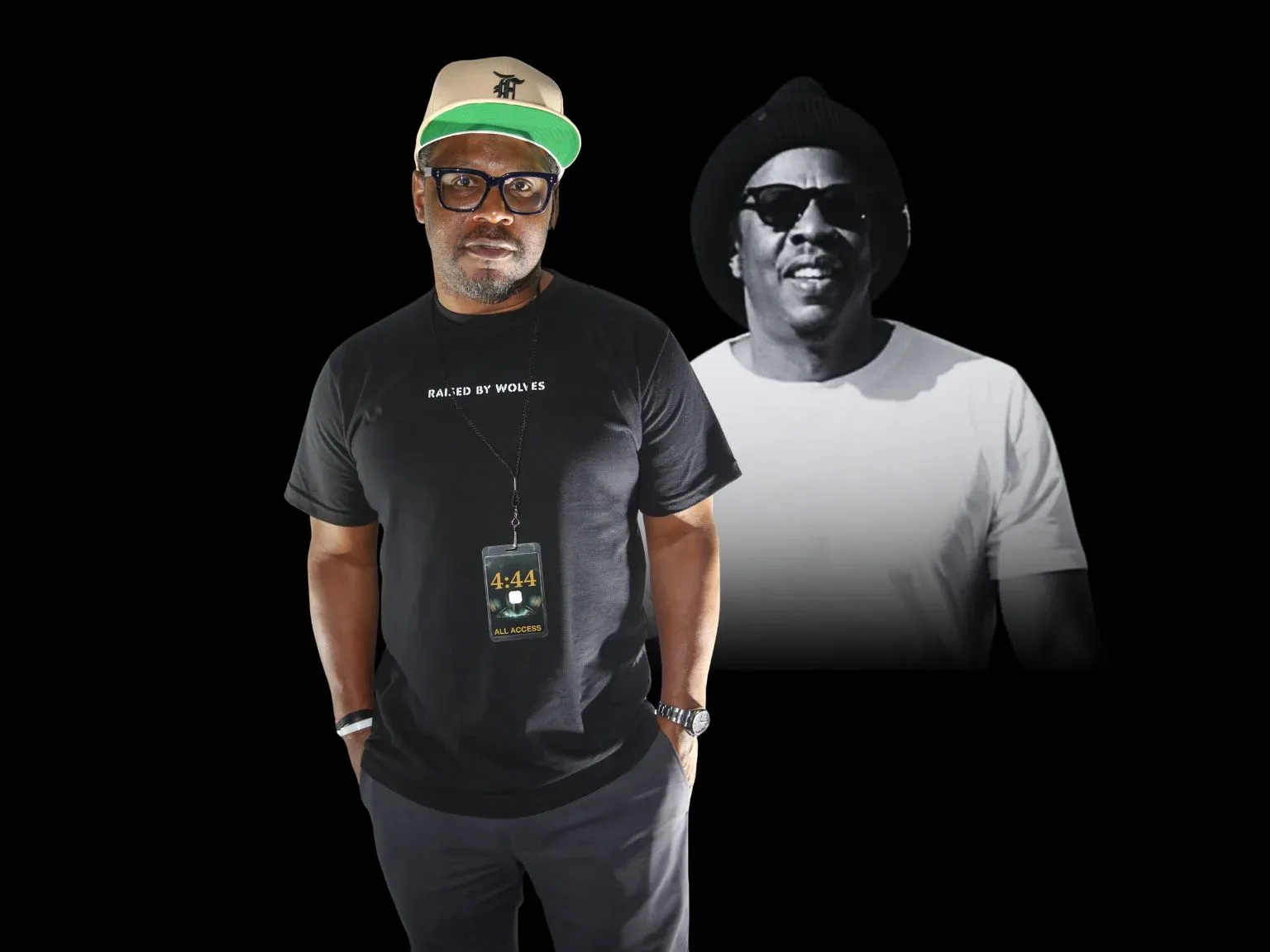
Emory Jones, the Roc Nation executive and Paper Planes co-founder long associated with Jay-Z’s inner circle, has received a presidential pardon in a new round of clemency actions. The development places a major punctuation mark on a public story that has spanned a federal prison sentence, a carefully planned return to work and a prominent role inside one of hip-hop’s most visible business ecosystems.
Jones is known to many fans through references across Jay-Z’s music, but his public profile extends far beyond a name-check. After serving nearly 16 years in federal prison following cocaine-trafficking charges, Jones returned with a re-entry plan that included employment support from Jay-Z. He later became Roc Nation’s head of lifestyle and helped establish the Paper Planes brand.
That trajectory is why the pardon is being framed by supporters as a second-chance story with unusually visible evidence of what happened after release. It also arrives in a celebrity-news environment where personal histories, business affiliations and political optics can all become part of the same argument within hours.
A long relationship that moved from lyrics to business
Jones has been a recurring figure in Jay-Z’s orbit for years. His connection to the rapper and entrepreneur has been referenced often enough that listeners who closely follow Jay-Z’s catalog may recognize the name even if they do not follow Roc Nation’s corporate structure or fashion ventures.
In 2010, Jay-Z wrote to a judge in support of Jones, outlining that work would be available to him following his release and that there was a plan for his transition back into society. That detail matters because re-entry is frequently discussed in broad terms but is difficult in practical terms. A job, stable support network and a defined next step can shape the difference between a symbolic promise and a workable path forward.
Jones’ post-release career became the clearest public example of that plan taking hold. At Roc Nation, he moved into the head-of-lifestyle position, while Paper Planes gave him another platform in apparel and brand-building. His career does not turn a complicated criminal-justice history into a simple fairy tale, but it does provide a concrete account of professional reinvention after incarceration.
For readers keeping track of music-industry figures whose personal narratives intersect with public debate, the news also lands amid a broader period of intense scrutiny around hip-hop’s biggest names. Recent discussion around YE’s reported Chicago stadium draw, for example, shows how quickly music headlines can expand into conversations about reputation, scale and cultural power.
What a presidential pardon signifies
A presidential pardon is an act of executive clemency for a federal offense. It is distinct from a commutation, which reduces or ends a sentence, and it is not a declaration that a person was factually innocent. In Jones’ case, the sentence had already been served; the clemency action instead formally recognizes a decision to forgive the federal offense.
That distinction is worth keeping in view because high-profile pardon coverage can easily slide into shorthand. A pardon does not erase the past from public memory, nor does it require the public to agree on every aspect of a person’s history. What it does represent is a formal federal decision that the person merits clemency.
Supporters of clemency frequently point to post-conviction conduct, community support and rehabilitation when making that case. Critics of the pardon system, meanwhile, often argue that access to influential advocates can affect which cases receive national attention. Both points are part of the wider policy conversation, and Jones’ ties to a global entertainment figure make that tension especially visible.
Supporters present Jones’ case as a model for re-entry
Jessica Jackson, identified as a human-rights attorney who advocated for Jones, called the pardon an example of what a second chance should look like. She highlighted the breadth of support around him, including backing from community figures and respected business leaders, and credited President Donald Trump and Alice Johnson for granting clemency.
Alice Johnson also described Jones’ journey in terms of transformation: nearly 16 years in federal prison followed by a determined effort to build a different life as an entrepreneur and creative leader. The emphasis from both advocates is not simply on the amount of time Jones served. It is on what came next.
That is the centerpiece of the case his advocates are making. Jones did not disappear from public view after prison, nor is his post-release record being described solely through private good deeds that are impossible to assess. His work with Roc Nation and Paper Planes is public-facing, giving supporters identifiable professional milestones to point to when they discuss growth and rehabilitation.
There is also a broader cultural element. Hip-hop has long documented incarceration, surveillance, loyalty and the obstacles facing people who return from prison. In that context, a well-known executive receiving clemency is not merely a Washington story or a business story. It can also resonate as a real-world chapter connected to themes that have occupied rap music for decades.
The political optics are unlikely to disappear
The news has generated attention partly because political relationships are rarely read in isolation when celebrity is involved. Jay-Z has publicly criticized MAGA-aligned politics in some settings, while the clemency action has been associated with the Trump administration. That apparent contrast is likely to fuel simplistic interpretations, but it is more accurate to separate a presidential clemency decision from every political belief held by the people connected to the recipient.
Clemency campaigns are often coalition-driven. Attorneys, family members, community advocates, employers and influential supporters can all make a case for a person’s record after conviction. That does not mean everyone in the coalition shares a party identity or a full political agenda. It means they have aligned around a specific request.
Jones’ pardon is therefore likely to be discussed in two competing registers. One is personal and practical: a man who served a lengthy sentence, came home, worked and built a career has received formal clemency. The other is political and cultural: a pardon involving a Roc Nation executive immediately becomes material for debates over power, proximity and celebrity influence.
Neither lens fully replaces the other. The personal account explains why advocates sought a pardon; the political account explains why the news is spreading beyond ordinary clemency coverage.
Bobby Shmurda adds another layer of public friction
Not everyone treated the announcement as an uncomplicated celebration. Bobby Shmurda, who has had public tensions connected to Roc Nation, criticized Jay-Z after the pardon news circulated. He argued that Jay-Z could not claim a gangster identity while associating with people he characterized as informants.
His remarks appeared to reference Roc Nation chief executive Desiree Perez. Perez has previously been publicly described as having cooperated with federal authorities and also received a presidential pardon. Shmurda’s comments are his own characterization within a longstanding rap-world vocabulary around loyalty and cooperation; they should not be mistaken for a legal finding about Jones or a description of Jones’ conduct.
The episode demonstrates how rapidly an action intended to recognize rehabilitation can become attached to separate disputes. Jones’ record, Jay-Z’s standing, Roc Nation’s executive history and Shmurda’s grievances are distinct subjects, but social media incentives tend to compress them into one noisy conversation.
Why the Jones story has staying power
There are many clemency cases, but few come with this combination of recognizable names, a long public association with a superstar, a documented employment plan and a visible career after release. The presidential pardon adds legal and symbolic weight to a story that was already meaningful within Jay-Z’s extended circle.
For Jones, the immediate fact is straightforward: he has received federal clemency. For the people who worked on his behalf, it is validation of a years-long argument that rehabilitation deserves recognition. For Roc Nation and Paper Planes observers, it puts renewed attention on the executive behind those ventures. And for the public, it revives difficult but necessary questions about who gets second chances, how those chances are measured and whether a transformed life can be discussed without reducing it to political theater.
Those questions will continue long after the day’s social posts and celebrity reactions have moved on. Jones’ pardon may be newly granted, but the record supporters emphasize—time served, a return to work and a sustained professional life—has been building for years.