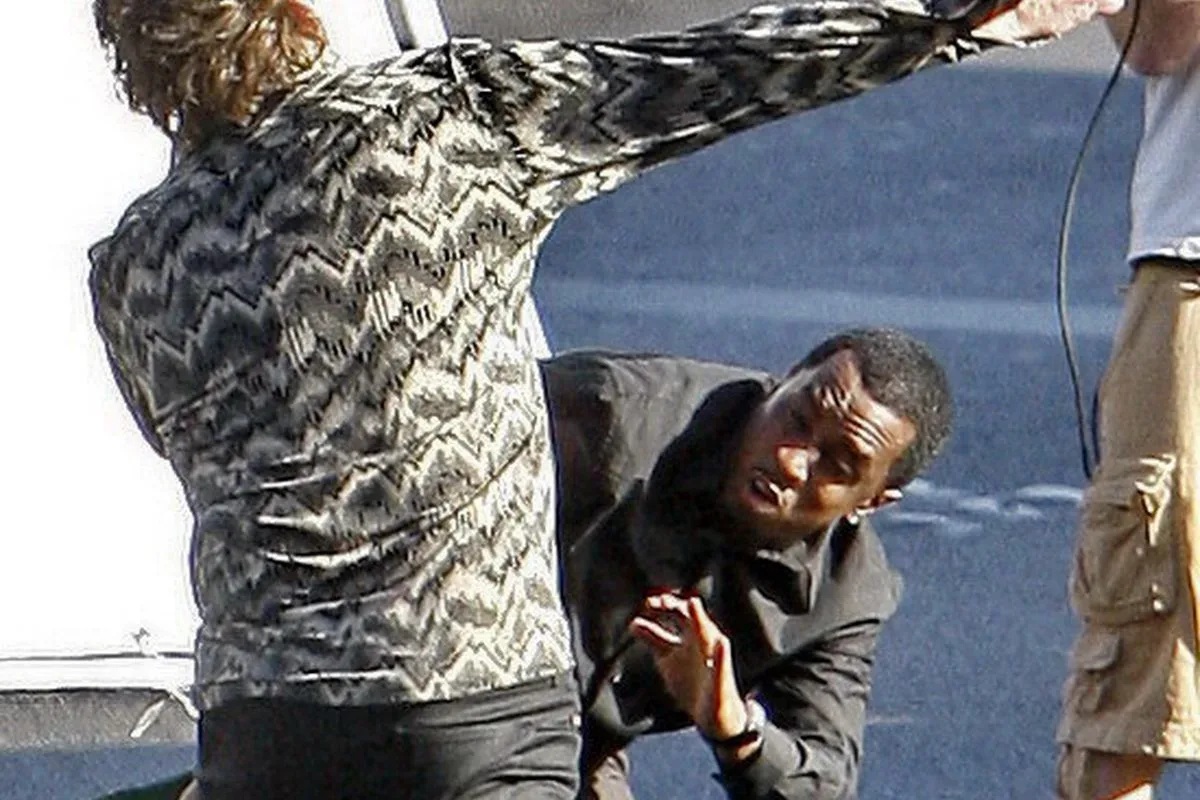
Accounts surrounding a reported altercation between Sean “Diddy” Combs and Christopher “Dudus” Coke at Fort Dix are now in direct conflict, with people described as close to Coke denying that the two men ever encountered one another at the New Jersey prison.
The denial matters because the claim has been attached to another unresolved detail: reports of a head injury suffered by Combs. Within only a few days, several incompatible explanations surfaced. One account attributed the injury to contact with a bunk bed, another alleged a fight involving Coke, and a third described a brief confrontation but maintained Combs was not hit in the head. The newest account rejects the underlying meeting altogether.
At present, none of those versions has been established through a public prison statement or confirmed medical information. The institution has declined to discuss an individual prisoner’s housing or medical circumstances, pointing to privacy, safety and security considerations. That leaves a set of claims, denials and unnamed accounts rather than a verified public narrative.
What the denial says
People close to Coke reportedly told a Jamaican broadcaster that Coke had never crossed paths with Combs at Fort Dix. The broadcaster did not identify the individuals and said it amended earlier reporting after receiving the information.
That is a categorical denial, not simply a disagreement over who started a dispute, how serious it was, or whether anyone was hurt. Its central assertion is that there was no encounter to describe.
That distinction is important in a story that has rapidly accumulated variations. A claim of a “minor skirmish” and a claim of “no contact” cannot both be true in the ordinary sense. Likewise, an explanation that Combs struck his head on an upper bunk does not establish whether a separate confrontation happened; it only offers a different possible cause for the reported injury.
A timeline of the competing accounts
The public sequence described so far is short, but it illustrates why early reports involving unnamed sources require caution.
- October 12: A representative for Combs said they were aware of reports concerning him and were working to confirm the circumstances. That statement did not identify an injury, a fight or another cause.
- October 13: An unnamed account said Combs hit his head on the bunk above him. This version did not accuse Coke or connect the injury to a confrontation.
- October 14: A separate report alleged that Combs and Coke fought at Fort Dix and linked that alleged encounter to the head injury.
- October 15: Roger Bonds, a former bodyguard for Combs, said his own contacts at Fort Dix described a minor skirmish. Bonds said Combs was not struck in the head and that the two men separated afterward.
- October 15: Sources close to Coke denied any meeting between the two men, prompting the earlier report to be amended.
The resulting picture is not a developing confirmation of one event. It is a set of competing claims that narrow neither the nature of the injury nor whether an encounter occurred. The only consistent public element is that the prison has not supplied details.
Related coverage includes Dudus-Linked Sources Deny Reported Diddy Fight at Fort Dix.
Why the wording matters in an unverified prison story
A prison incident is an especially difficult topic to report responsibly when the available information is secondhand. Housing assignments, medical treatment and internal security responses are often not made public. Institutions may have legitimate reasons to withhold those details, but that absence can also create room for rumors to travel faster than documentation.
Terms such as alleged fight, skirmish and head injury should not be treated as interchangeable facts. “Alleged” means the account has been asserted, not proven. “Skirmish” generally suggests a short or limited confrontation, but it still assumes contact occurred. “Head injury” is broad language; without medical records or an on-the-record statement from an authorized representative, it does not identify severity, cause or treatment.
It is also significant that the report describing a bunk-bed accident did not name Coke. Even if that explanation were eventually supported, it would not by itself answer whether the two men had any separate interaction. Conversely, the former bodyguard’s account explicitly preserved the claim of a confrontation while disputing the alleged connection between any fight and the injury.
The Coke-linked denial goes farther than either of those revisions. It challenges the premise that Combs and Coke were ever in the same interaction at Fort Dix.
Who Christopher “Dudus” Coke is
Coke, known as “Dudus,” previously led the Shower Posse, also called the Presidential Click. He received a 23-year federal sentence in June 2012 after pleading guilty to racketeering conspiracy and conspiracy to commit assault with a dangerous weapon in aid of racketeering.
Racketeering conspiracy is a charge involving an agreement to participate in a criminal enterprise through specified unlawful activity. The supplied case background described an organization with members in Jamaica and the United States, with drug activity reaching New York and Miami. Prosecutors said proceeds and firearms bought in the United States were sent to Coke in Jamaica.
The phrase assault with a dangerous weapon in aid of racketeering refers to an assault offense alleged to have been committed in support of, or to maintain or increase standing within, a racketeering enterprise. Coke’s past conviction history is relevant background to his public profile, but it is not evidence that the reported Fort Dix incident occurred. Treating it as proof would collapse two entirely different matters: a past federal case and an unconfirmed present-day allegation.
Combs’ sentence and the limits of relevance
Combs is serving a 50-month sentence after his federal trial. A jury convicted him on two counts of transportation to engage in prostitution. He was acquitted of racketeering conspiracy and sex trafficking.
Those verdicts should be stated precisely. A conviction on some counts does not convert every subsequent claim about a prisoner into fact, and an acquittal on other counts should not be rewritten as a conviction through loose wording. The current Fort Dix story concerns a separate, unverified allegation about a purported encounter inside a prison.
Precision is especially necessary when coverage combines prominent names, incarceration and a physical-injury claim. Public attention can make a rumor feel more certain than the underlying evidence allows. In this case, the public accounts do not presently establish who caused the reported injury, whether the injury was related to an incident, or whether Combs and Coke met at all.
What remains unknown
Several basic questions remain unanswered in the public record:
- Whether Combs had a head injury and, if so, its nature or seriousness.
- Whether the reported injury came from a bunk-bed accident, another event, or neither of the scenarios described publicly.
- Whether Combs and Coke had any interaction at Fort Dix.
- Whether there was an institutional response, incident report or disciplinary action.
- Whether either man, their authorized representatives or the prison will provide a direct, attributable account.
Until verifiable information resolves those points, the fairest description is that an alleged Fort Dix fight has been disputed by sources close to Coke. The existence of multiple retellings is not corroboration; it is evidence that the claim remains contested.
The story also arrives amid continuing attention on major figures in music and popular culture. For another recent dispute over competing accounts and personal credit in that wider conversation, see Ian Connor’s dispute of A$AP Rocky’s claim about Playboi Carti’s rise.
For now, the key development is not confirmation of a fight but the withdrawal from certainty: Coke-linked sources say no encounter happened, the prison is not publicly discussing individual circumstances, and the various explanations for Combs’ reported injury remain unresolved.