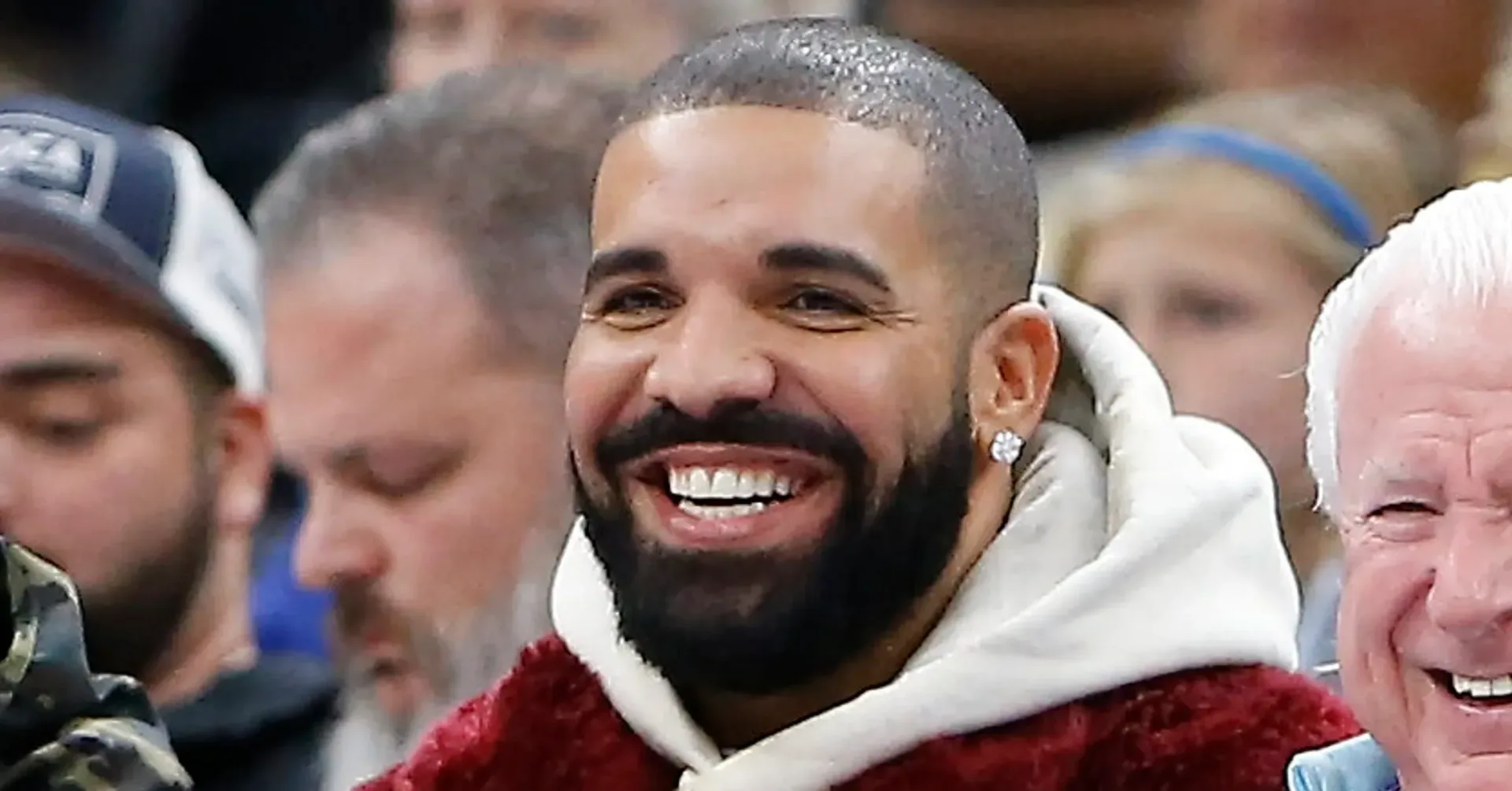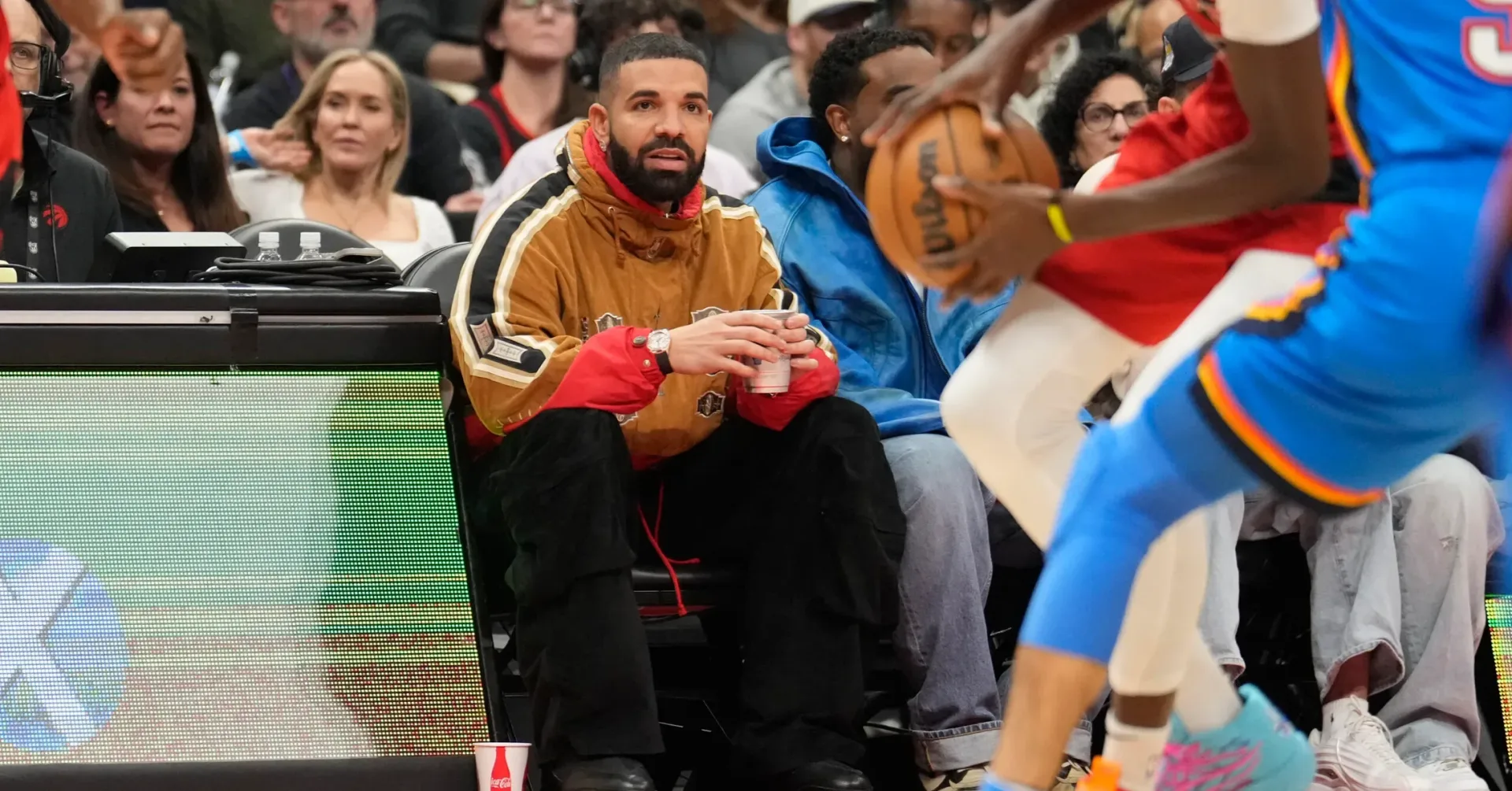
Drake’s brief “pray for Gaza” lyric during a Tuesday-night FOMO stream has become the center of a wider argument about celebrity speech, old lyrics and the expectations attached to an artist with a massive audience.
The line was widely interpreted online as an expression of support for Palestinians amid the ongoing humanitarian and political crisis in Gaza. Some listeners welcomed the statement, particularly because Drake has previously been criticized by some observers for not speaking often or directly about political issues. Others immediately revisited a very different lyric from “Middle of the Ocean,” where Drake mentioned New England Patriots owner Robert Kraft in a favorable context.
That connection has produced a familiar kind of social-media debate: one side reads the old reference as evidence that Drake’s new line is inconsistent, while the other argues that the comparison strips both songs of their context and asks an unrealistic degree of foresight from a lyric written earlier.
The dispute is less about whether people heard the new lyric correctly than about what, if anything, a passing name-check in a rap song establishes about an artist’s knowledge, loyalties or later political views.
What sparked the comparison
In “Middle of the Ocean,” Drake raps, “Robert Kraft sent the jet for us, that shit was patriotic.” The line is a boastful reference to access and status, fitting a form of rap writing where luxury travel, famous associates and high-profile experiences can become shorthand for success.
After the “pray for Gaza” bar circulated, online commenters connected that Kraft reference to claims surrounding Macklemore’s pro-Palestinian message and Ed Sheeran’s tour. The supplied reporting says Kraft was credited with helping remove Macklemore from that tour, and that several opening acts subsequently stepped away in solidarity with Macklemore and Palestinians.
Those claims explain why critics see a contradiction. Their reasoning is not that the two Drake lyrics address the same subject directly. Rather, it is that a complimentary lyric about a well-connected public figure can look different once that figure becomes linked, in public discussion, to a conflict-related controversy.
But that interpretation contains several separate steps, and each one matters. A lyrical mention can acknowledge a particular favor or event without serving as a blanket endorsement of every position held by the person named. Likewise, a later statement of concern for Gaza does not, on its own, spell out an artist’s understanding of every relationship, policy dispute or controversy that listeners may connect to it.
Why timing is central to the argument
The most important point raised by people defending Drake is chronology. “Middle of the Ocean” predates October 7, 2023. Critics may still feel that an old association carries symbolic weight, but defenders argue that it is a reach to assume Drake knew how Kraft would later be discussed in relation to the Israel-Palestine conflict.
That is a distinction worth preserving. There is a difference between saying an old lyric now creates uncomfortable optics and saying it proves an artist knowingly supported a particular political position. The former is an interpretation of how culture recontextualizes art; the latter is a factual assertion about knowledge and intent that the lyric itself does not establish.
Recontextualization is common in popular music. A line can be written as a snapshot of friendship, access, aspiration or celebrity proximity, then acquire a different meaning after later events change what a name represents to parts of the public. That does not make the initial reading irrelevant, nor does it automatically settle the new one. It means listeners are applying present concerns to a work created under earlier circumstances.
In this case, the new “pray for Gaza” phrase has effectively sent audiences back through Drake’s catalog looking for evidence of consistency. That is a powerful but imperfect way to assess political expression. Songs are not policy papers, and a single bar rarely contains all the context listeners want from a prominent performer.
A lyric is not always a platform statement
Rap lyrics often work through compression. In a few seconds, an artist may use a recognizable name to evoke wealth, prestige, a story from tour life, a private favor or a particular social circle. The result can be vivid, but it can also invite listeners to treat the reference as an endorsement far broader than the lyric’s immediate purpose.
That does not mean public figures are beyond criticism for whom they celebrate, thank or associate with. Artists benefit from the cultural force of their words, and listeners are entitled to ask questions when those words collide with urgent public issues. It does mean criticism should distinguish among several possible claims:
- Association: the artist had some connection with, or referred positively to, a person.
- Approval of an action: the artist endorsed a specific decision or conduct attributed to that person.
- Political alignment: the artist shares that person’s broader position on a conflict or cause.
- Knowledge: the artist knew relevant details at the time of the earlier reference.
These are not interchangeable. The available material supports that listeners are debating the first point and using it to infer the others. It does not provide a direct statement from Drake explaining his view of Kraft, the earlier lyric’s full intent, or the scope of his position beyond the Gaza line delivered on stream.
What the response says about celebrity scrutiny
The scale of the reaction reflects the unusual burden placed on top-tier artists. Drake is not merely evaluated for newly released music; fans and critics regularly search older songs, public appearances and celebrity relationships for clues about his values. A short phrase can be praised as meaningful, dismissed as insufficient, or tested against years of material almost immediately.
That scrutiny is intensified when the subject is Gaza. For many people, public statements about the crisis are not abstract celebrity commentary. They are moral signals with real emotional weight. Supporters may see even a concise expression of concern as important given the size of Drake’s platform. Skeptics may want a clearer, more sustained position, especially if past lyrics or associations seem to complicate the message.
Neither response can be reduced simply to fandom. One group is asking whether a public statement should be taken at face value; another is cautioning against turning an older, context-specific line into definitive proof of hypocrisy. The sharper question is not whether an artist can ever evolve or speak later than listeners would prefer. It is what standard should be used to judge that speech fairly.
A reasonable standard would leave room for both accountability and evidence. Listeners can say that a reference now feels discordant without claiming certainty about an artist’s private beliefs. They can welcome a pro-Palestinian sentiment while also wanting more clarity. And they can recognize that public figures are responsible for the impact of their words without pretending that every lyric is a complete record of political intent.
The practical lesson for reading viral music discourse
Fast-moving posts tend to flatten timelines. A lyric from one era, a later controversy involving a named individual, and a new line about Gaza can be placed side by side as if they were all made with the same information available. That presentation can be persuasive, especially in a screenshot-driven debate, but it often leaves out the very context needed to make a strong claim.
When evaluating a dispute like this, it helps to separate what is directly observable from what is inferred:
- Drake delivered a “pray for Gaza” bar during the FOMO stream.
- He previously referenced Kraft in “Middle of the Ocean.”
- Online users have connected the two in arguments about inconsistency.
- The older song predates October 7, 2023.
From there, judgments about hypocrisy remain judgments, not settled facts. That does not make the conversation meaningless. It makes precision more important, especially when an issue as serious as Gaza is being processed through celebrity culture.
For more on how public figures’ remarks can rapidly become their own pop-culture news cycle, see Michael B. Jordan’s recent anime-focused comments.
Drake’s line may be only a few words, but the response demonstrates how quickly a major artist’s catalog becomes part of a larger political argument. The current debate does not establish a definitive answer about Drake’s beliefs. It does show that, for audiences watching closely, past associations and present statements will continue to be read together—even when the connection is contested.