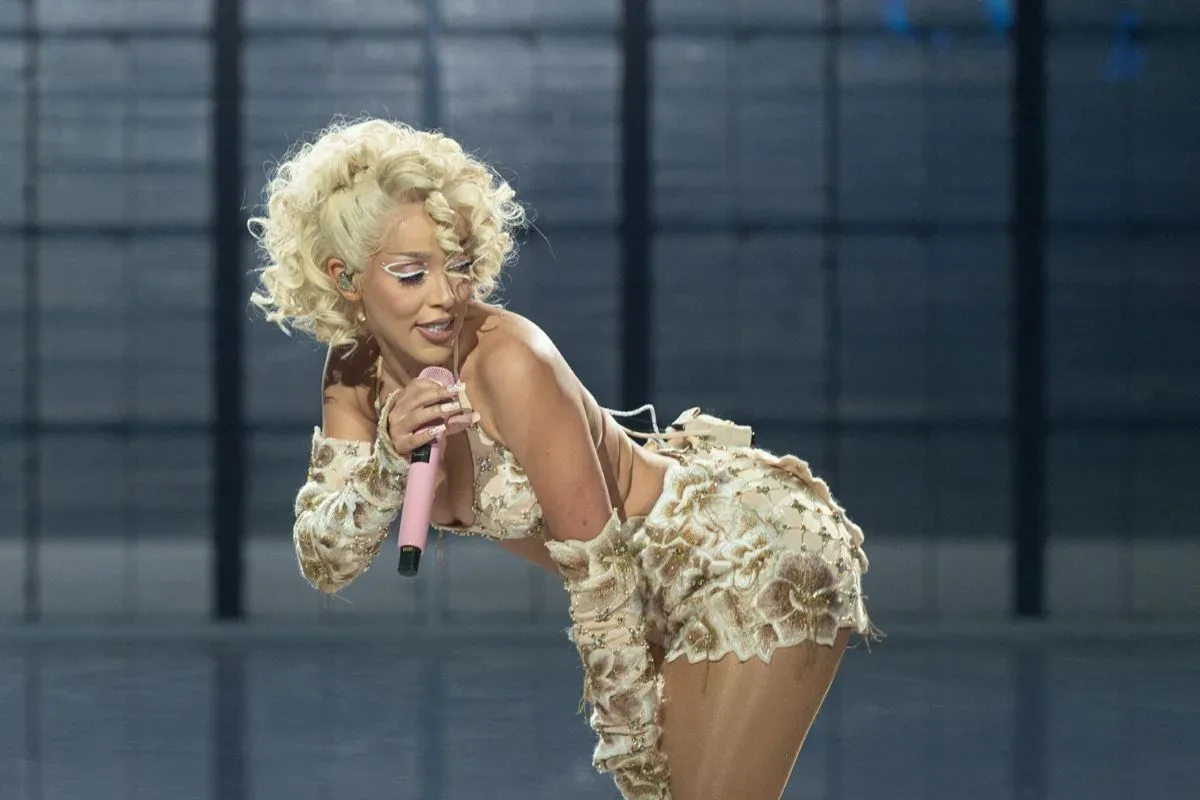
Doja Cat has publicly called on YouTube to restore the channel belonging to Kinggtonio, whom she described as her best friend, while demanding a response from a person rather than what she characterized as an automated reply.
Her posts on X, published Monday night, November 16, focused on a ban that she said followed a harassment claim. Doja Cat disputed that characterization and argued that more objectionable material remains available on YouTube. However, the public posts did not identify the specific video, behavior, or notice behind the moderation action, so the basis for the channel ban remains unclear from the information available.
YouTube’s support account, TeamYouTube, replied that the matter had been passed along for review by its policy team and that it would update Kinggtonio when there was more to share. That is a meaningful acknowledgement that the issue was escalated internally, but it is not a reversal. The reply did not promise a restored channel, offer a timetable, or explain the alleged harassment violation.
A direct demand, not a vague complaint
Doja Cat made three posts in roughly six minutes, tagging YouTube in each and making the requested outcome unusually plain: unban Kinggtonio. Her first message framed the issue around the creator’s investment in the platform, saying he had spent six years building a career and audience before the ban.
The follow-up messages sharpened the complaint. Rather than simply asking for another review, she asked for a “real” response and objected to receiving an AI or automated answer. In practical terms, her complaint has two separate parts:
- The outcome: She wants Kinggtonio’s channel reinstated.
- The process: She wants an explanation that appears to come from a human decision-maker rather than a generic support message.
Those are related but not identical requests. A platform can provide a personal reply without reinstating an account, just as it could reverse a moderation action without fully disclosing every internal detail of its enforcement process. TeamYouTube’s response only confirms that the case was forwarded to a policy team. It does not settle either question.
What a policy-team review does—and does not—mean
“Policy team” is the central phrase in TeamYouTube’s response. Here, it means the case has been sent beyond the public-facing support exchange for consideration under the platform’s rules. It should not be read as proof that the original action was mistaken, or as confirmation that a ban will be lifted.
There is also no indication in the exchange of how the initial action was made. Doja Cat’s demand for a human answer is about the response she wants now; it does not establish that an automated system made the original decision. The support account did not clarify whether automation was involved in the ban, whether a human had already reviewed it, or what review stage Kinggtonio’s account had reached before the public posts.
That distinction matters because moderation disputes often collapse several questions into one: what conduct was flagged, whether the platform applied its rules correctly, whether an appeal has been considered, and whether the affected creator has received an understandable explanation. This public exchange answers none of those underlying questions yet. It only establishes that YouTube has been asked to review the matter and says it will contact Kinggtonio with an update.
The unresolved harassment claim
The reported reason at the center of the dispute is harassment, but the available public information is limited. Doja Cat challenged the allegation in her posts, while neither the allegedly offending material nor a YouTube enforcement notice was included. As a result, it would be premature to treat either the allegation or Doja Cat’s rebuttal as a complete account of what happened.
That missing context also makes direct comparisons difficult. Doja Cat argued that worse content is still allowed on the site, but no examples or comparable enforcement decisions were provided in the exchange. Content moderation can look inconsistent from the outside, particularly when viewers only see the final status of a channel and not the full record of reports, uploads, enforcement history, or appeals. At the same time, a creator losing a channel built over years has a great deal at stake, which helps explain why a short support answer can feel insufficient.
The key point is simple: the public campaign has created pressure for a clearer answer, but it has not produced the evidence needed to independently determine whether YouTube’s harassment action was justified.
Why the request for a human response is the real pressure point
Doja Cat’s posts do more than demand an unban. They place a spotlight on the type of communication creators expect when a platform takes action against work that may represent years of audience-building. Her complaint is not phrased as a technical appeal about a particular rule clause. It is a demand for accountability in plain language: tell the creator what happened, and do so in a way that feels responsive rather than scripted.
A public support account occupies an awkward position in disputes like this. It can confirm receipt, direct users to an appeal route, and say a case has been escalated. It generally cannot use a short social-media reply to disclose a full moderation record or pre-announce a final result. TeamYouTube’s message reflects that limitation: it offers acknowledgement and a next step, but little detail.
For Kinggtonio, the substantive update will matter far more than the public reply. A useful resolution would need to clarify whether the channel will return or whether the ban stands. If it stands, the crucial unanswered issue is what explanation, if any, YouTube provides to the creator about the enforcement decision. Nothing in TeamYouTube’s post establishes what that future communication will contain.
A celebrity signal can accelerate attention, not decide the case
Doja Cat’s involvement turns a dispute affecting one creator into a much larger public conversation. Her posts directly named both the creator and YouTube, making it difficult for the platform’s support team to ignore the complaint in public. TeamYouTube responded at 10:47 p.m. Eastern, a little more than an hour after her first post.
That speed is notable as a customer-support response, but it should not be confused with a fast policy ruling. Acknowledging an escalation is not the same as completing it. The company has not announced any action restoring Kinggtonio’s account, nor has it publicly laid out its rationale for the original ban.
There is a broader practical lesson in the sequence. Public pressure can get a case noticed, especially when it comes from a high-profile figure, but it does not substitute for the information needed to resolve an account dispute. The most important updates are still missing: the alleged conduct, the relevant enforcement details, the result of the review, and any explanation shared with Kinggtonio.
What to watch next
For now, the status is straightforward: Kinggtonio’s case is under review by YouTube’s policy team, based on TeamYouTube’s public response. There is no announced reinstatement and no public explanation of the harassment claim.
The next development worth watching is not another broad expression of support but a concrete update: whether YouTube reverses the ban, maintains it, or provides Kinggtonio with a more detailed explanation. Until then, claims about the underlying violation remain disputed and incomplete.
Doja Cat has used public criticism of platforms before, including a prior push for X to restore audio posts. This case is different in a consequential way: she is advocating for someone else’s channel and livelihood, not seeking a product change for her own account. That gives the request a sharper focus—and leaves YouTube’s eventual explanation, rather than the initial social-media acknowledgement, as the outcome that will matter.
For more on how online platforms are changing social features and user controls, see Snapchat’s opt-in mutual-friends profiles rollout.