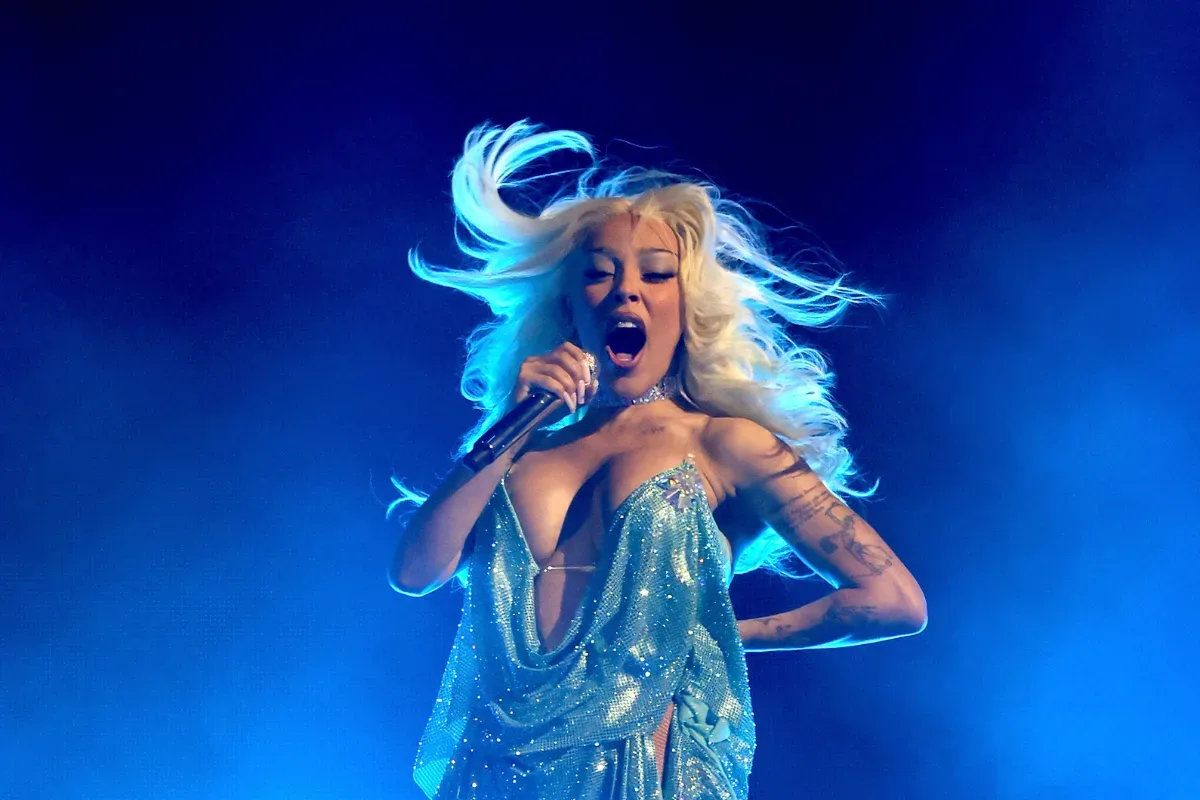
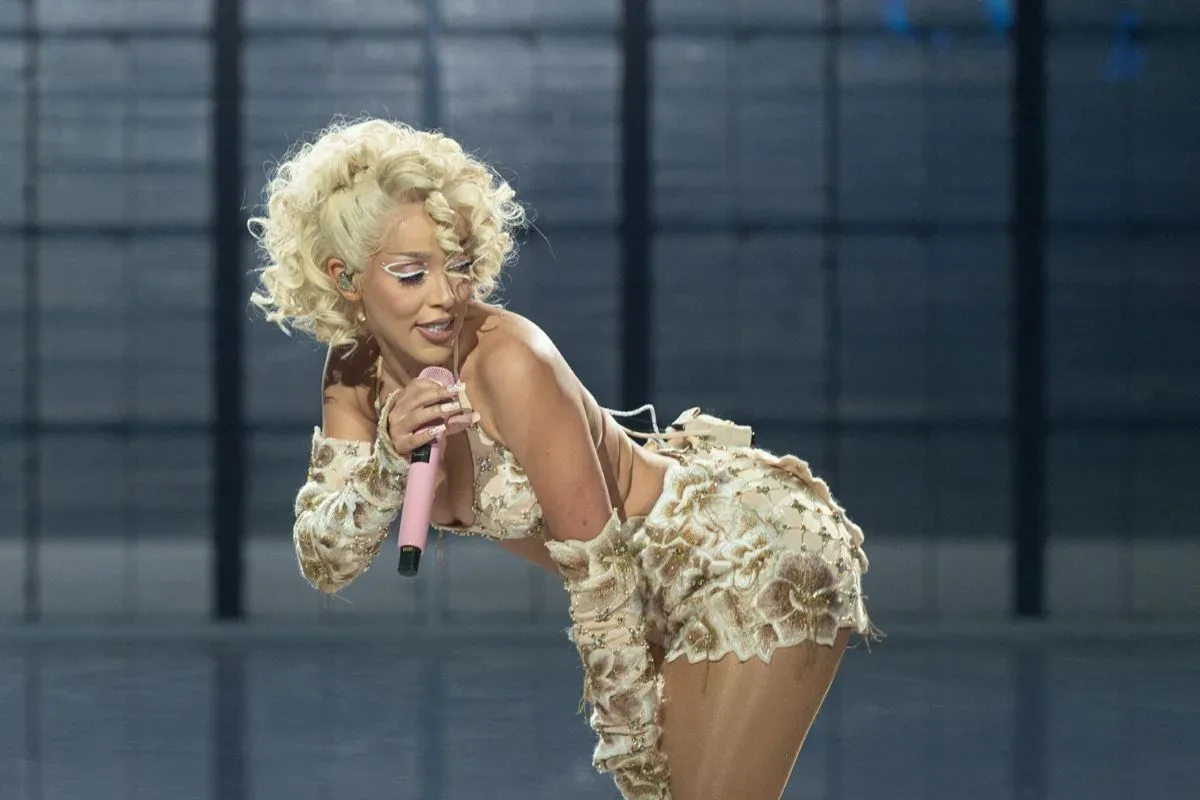
Doja Cat has framed Vie as an album about love that does not smooth over the feelings that can make relationships difficult. During a November 6 appearance on The Jennifer Hudson Show, the rapper and singer discussed jealousy, personal growth and the emotional tension that informed her fifth studio album.
“With this album I wanted to touch on the more visceral parts of relationships, the hardships of it,” she said. It is a concise description of an artistic premise with a fairly broad emotional range: love can encompass affection and attraction, but also insecurity, comparison, possessiveness and conflict. Doja Cat specifically acknowledged that she can experience jealousy while also recognizing its potential to damage a relationship.
That distinction matters. Jealousy is an emotion; it is not automatically a behavior or a verdict on a relationship. In the context Doja Cat described, the album’s interest appears to be in the friction created when an intense feeling enters a connection between people—not in treating that feeling as glamorous or harmless. Her comments position Vie as a project concerned with the complications beneath a love-song surface.
“Jealous Type” establishes the album’s emotional terrain
Vie arrived on September 26, 2025, following Scarlet. Its French title translates to “life,” and the record moves toward an ’80s-inspired pop sound while retaining the blend of singing and rapping central to Doja Cat’s work.
The lead single, “Jealous Type,” announced part of the record’s subject matter before the full album was released. The title puts a recognizable relationship anxiety at the center of the song’s presentation, aligning directly with Doja Cat’s later explanation that she wanted to explore romance’s tougher, more immediate emotions.
Jack Antonoff and Y2K produced “Jealous Type.” Its video was directed by Boni Mata and shot in Los Angeles. Those credits clarify the team behind the single and its visual, while Doja Cat’s recent comments offer a more direct guide to the thematic role the song played in the album campaign: it introduced romantic tension before listeners reached the larger project.
The use of “visceral” is also notable. In ordinary use, the word means felt at a deep, instinctive level rather than approached only intellectually. Applied to a relationship record, it suggests material that is less interested in tidy resolutions than in registering the force of difficult feelings while they are happening. That does not establish the literal story behind any individual track, and Doja Cat did not make that claim. It does, however, provide a clear lens for understanding why jealousy and hardship were part of her discussion of Vie.
Love and identity without a simple emotional label
Albums centered on love are often described through their most accessible mood: romantic, heartbroken, flirtatious or celebratory. Doja Cat’s description resists narrowing Vie to one of those labels. The supplied context identifies love and identity as recurring concerns across the project, and her remarks put the harder emotional material alongside them.
That makes jealousy significant as more than a passing keyword. It can bring questions of identity to the foreground: how someone sees themselves, how secure they feel, and how they react to another person’s attention or independence. The source material does not assign those specific meanings to individual songs, so they should not be mistaken for a track-by-track interpretation. Still, Doja Cat’s own focus on relationship hardship establishes a useful framework for the album’s broader emotional stakes.
There is also a practical difference between a song using jealousy as a dramatic hook and an artist publicly discussing the harm it can cause. The latter creates room for a more reflective reading. Doja Cat did not present jealousy as an ideal relationship state; she said she understands it can hurt a relationship. That acknowledgment gives the album’s romantic tension a measure of self-awareness.
It arrives during a particularly visible period for the artist. Doja Cat is continuing the North American leg of Tour Ma Vie with Latto, bringing the album material into arenas in the United States and Canada after overseas dates. The North American run began October 1 in Detroit and is scheduled to end December 1 at Madison Square Garden.
A tour campaign shared with Latto
Latto’s presence on Tour Ma Vie is part of a wider shared stretch between the two artists. They released a video for their collaboration “Okayyy” in July, ahead of their fall arena dates. The song appears on Latto’s Big Mama album.
The touring context gives Doja Cat’s television comments an immediate public setting, but it should not be confused with a new music announcement or a description of the concert set. No additional tour production details, guest appearances or performance changes were established here. What is clear is that the conversation happened while the North American dates were underway, tying discussion of Vie’s personal themes to its ongoing live campaign.
For audiences following current rap and pop releases, the pairing also places Doja Cat’s album cycle alongside another active collaboration. That broader music conversation has lately included moments where listeners try to decode artists’ lyrics for specific targets; for example, speculation around Drake’s “Ya Hit” verse remains unresolved. Doja Cat’s comments about Vie, by contrast, offer a defined thematic point without requiring fans to turn every song into a claim about a named real-life relationship.
Personal growth is part of the context, not a diagnosis
The Hudson conversation also touched on personal growth and mental health, subjects Doja Cat has addressed while supporting the record. Earlier, in August, she spoke publicly about past problems involving cocaine and alcohol, as well as the damage online validation could do during a period when she was already struggling.
The timeline and framing are important. Doja Cat described the issue with cocaine as years behind her. Her message centered on identifying harmful coping habits and seeking help; it was not a statement about her present condition. Responsible discussion of such remarks should preserve that boundary. A public account of past substance-related struggles is not an invitation to make assumptions about someone’s current health, treatment or private life.
“Coping habits” refers to the ways people try to manage distress, pressure or difficult emotions. Some methods can offer temporary relief while causing further harm, which is why Doja Cat’s emphasis on recognizing destructive patterns and seeking help is meaningful. The material supplied does not identify a diagnosis, a treatment plan or any current crisis, and none should be inferred.
Placed next to her comments on Vie, the discussion of growth provides context rather than a one-to-one explanation of the album. It would be inaccurate to declare the record autobiographical in every detail, or to claim a specific lyric documents a particular past event. The more supportable reading is narrower: Doja Cat has openly connected the album to difficult relationship emotions, while separately discussing lessons about unhealthy coping and the pursuit of online approval.
What Doja Cat’s comments clarify about Vie
Doja Cat’s November 6 remarks do not reduce Vie to a single thesis. They do clarify that the album’s treatment of love was meant to include discomfort as well as desire. “Jealous Type” supplied the most visible early signal, and the full project continued a pop-leaning direction that still made room for both of her core performance modes, singing and rapping.
Her explanation also gives listeners a useful guardrail. The relationship themes are grounded in feelings she recognizes as powerful and potentially harmful, not simply in a polished image of romance. Meanwhile, her comments on past struggles are framed around growth, recognizing patterns and getting help—not around sensationalizing a difficult chapter.
With Tour Ma Vie moving through its North American dates alongside Latto, Vie remains a current live-era project. For now, Doja Cat’s own description points to an album interested in how love can become complicated when identity, insecurity and emotional intensity meet.