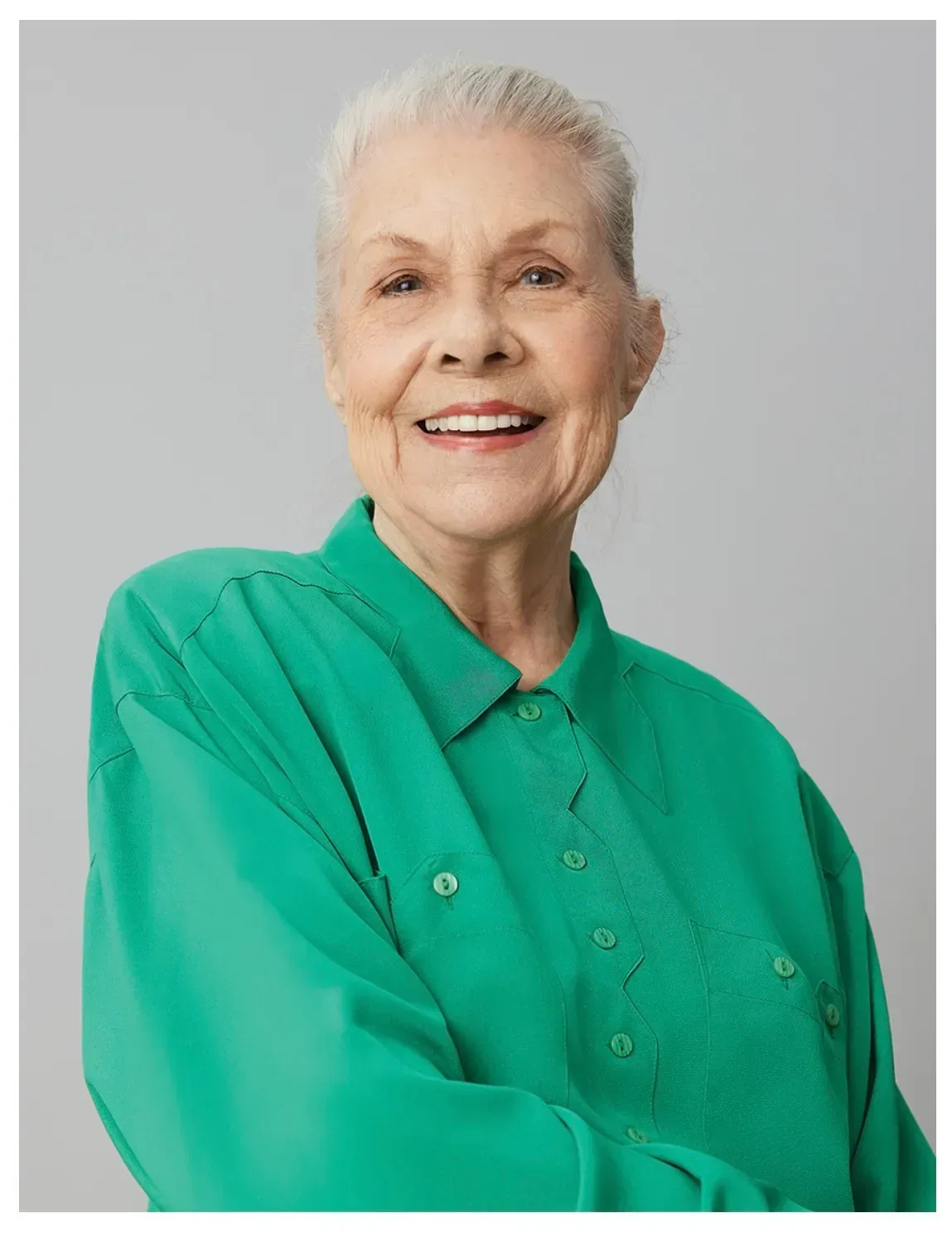
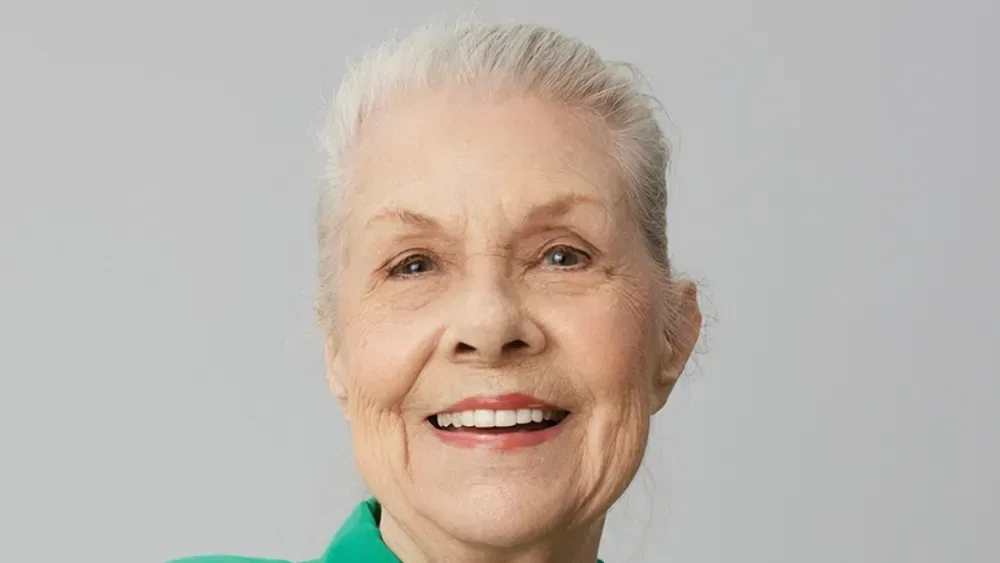
Dawn Greenhalgh, the Canadian actor whose work stretched from foundational theatre companies to film, television and animation, has died in Toronto. She was 93.
For animation viewers, Greenhalgh is especially associated with Queen Celeste in Babar, the character identified as Babar’s wife. But the role was one part of a performing life with an unusually wide reach: she worked on stages around the world, appeared in productions ranging from Anne of Green Gables to La Femme Nikita, and had film credits including Sofia Coppola’s The Virgin Suicides and David Cronenberg’s Map to the Stars.
A career rooted in Canadian theatre
Greenhalgh was born in Shanghai, China. During her childhood, she was held with her family in a Japanese prisoner-of-war camp. It was there that she found an interest in music, theatre and dance. At 14, she moved to Canada with a guardian, attended Montreal High School and began building a performing career.
In 1953, when she was 19, Greenhalgh became a founding member of Canada’s Stratford Festival. That detail places her at the beginning of an institution that would become a major home for classical theatre in the country. A founding member is not simply another early cast credit: it means helping establish the artistic identity and working culture of a new company while its traditions are still being formed.
Her Stratford work included All’s Well That Ends Well, alongside Alec Guinness, as well as Antony and Cleopatra and Love’s Labour’s Lost. The titles reflect a career comfortable with Shakespeare’s sharply different registers. Love’s Labour’s Lost is built around language, courtship and comic complications, while Antony and Cleopatra calls for the scale and emotional stakes of tragedy. An actor moving between such material needs more than a single familiar mode of performance.
Greenhalgh also became a founding member of the Neptune Theatre in Halifax and Theatre Plus in Toronto. Her legacy therefore extends beyond individual parts. Her work was connected to companies that created stages and opportunities for other artists, as well as to the productions audiences saw on those stages.
Training and a broad performance vocabulary
Greenhalgh studied in New York with Uta Hagen, Herbert Berghof and Mira Rostova. Those names help explain the serious, craft-focused throughline of her career, though they should not be treated as shorthand for a single acting style. Theatre training can involve text analysis, voice, movement, observation and scene work; the practical goal is to make a performance specific, responsive and sustainable in front of an audience.
That background mattered across the media in which Greenhalgh worked. Stage acting asks performers to shape a role in real time and maintain it across a run. Screen acting relies on the camera’s framing and the editing process, with scenes often made out of sequence. Voice acting removes facial expression and physical gesture from the viewer’s experience, putting unusual emphasis on timing, tone, rhythm and clarity. Greenhalgh’s credits across all three forms point to an actor able to adjust technique without losing a sense of character.
Related coverage includes Dawn Greenhalgh, Stage Veteran and Voice of Queen Celeste in ‘Babar,’ Dies at 93.
That versatility is particularly meaningful in a career that bridged live performance and recorded work. The same performer could contribute to a Shakespeare production, a family animation series and an adult-oriented film drama, with every form asking the audience to meet her in a different way.
Queen Celeste and the importance of voice performance
In Babar, Greenhalgh voiced Queen Celeste. Animation can make a vocal performance feel deceptively simple because audiences see a completed character rather than the studio work that helps create one. Yet a voice actor has to establish personality and relationships through sound: the pause before a response, the weight given to a name, the speed of a line and the slight changes in pitch that communicate affection, worry or authority.
For a royal character in a family series, the challenge is also balance. A queen must sound poised enough to fit the setting, while still feeling like a participant in a domestic and emotional world. The fact that Greenhalgh’s voice work remains a key part of how many viewers remember her demonstrates how animated roles can become durable parts of an actor’s public legacy.
That durability is worth recognizing. Screen performances are often preserved by the images attached to them. In animation, however, the audience may remember the character first and the performer’s name later, if at all. Greenhalgh’s career is a reminder that the familiar voices inside long-lived animated worlds are the work of actors with extensive experience, training and lives beyond the recording booth.
Film and television roles
Greenhalgh’s screen work ranged widely. Her film roles included The Virgin Suicides and Map to the Stars, placing her in projects directed by Coppola and Cronenberg. Both filmmakers are notable Canadian-linked figures in cinema, but the useful point here is narrower: Greenhalgh continued to bring her experience to films from major directors while sustaining theatre and television work.
Her television credits included Five Days at Memorial, Saving Hope and La Femme Nikita. She also appeared with her daughter, Megan Follows, in the Canadian series Anne of Green Gables. That family collaboration is a particularly resonant entry in a career defined by collaboration more generally: acting is necessarily collective, built with scene partners, directors, technical crews and companies.
Film and television coverage often focuses on central stars, while character actors and supporting performers can provide the texture that makes a fictional setting believable. Greenhalgh’s resume shows the value of that sustained professional presence. A performer need not be tied to one medium or one signature role to make a lasting contribution; in her case, the record includes classical theatre, Canadian television, international stage work, film and children’s animation.
For another look at the distinct crafts that shape what viewers experience on screen, read our feature on how cinematographer Adam Newport-Berra built intimacy in Club Kid. Greenhalgh’s work came from the performer’s side of the camera and microphone, but both disciplines depend on choices that can appear effortless only after considerable skill.
Tributes recognize an independent artist
Antoni Cimolino, artistic director of the Stratford Festival, described Greenhalgh as a “powerhouse” and “a dynamic, brilliant actress” in an Instagram tribute. He highlighted the contrast she could bring to her work, calling her both charming and unsettling, and praised a perspective shaped by broad experience, intellectual curiosity and an independent spirit.
Those qualities offer a concise way to understand why a long list of credits matters. Longevity alone is not the story. Greenhalgh’s career covered multiple generations of Canadian performance and several very different formats, while her early roles in theatre institutions connected her to their creation. Her later film, television and voice credits ensured that audiences far beyond a single theatre could encounter her work.
Greenhalgh is survived by her children Edwina Follows, Laurence Follows, Samantha Follows and Megan Follows, as well as six grandchildren and two step-grandchildren.