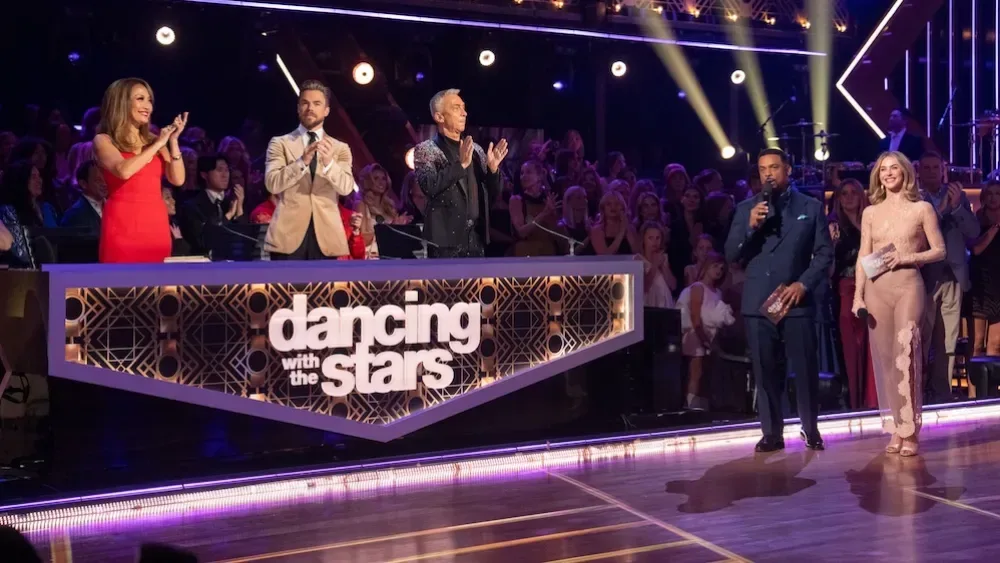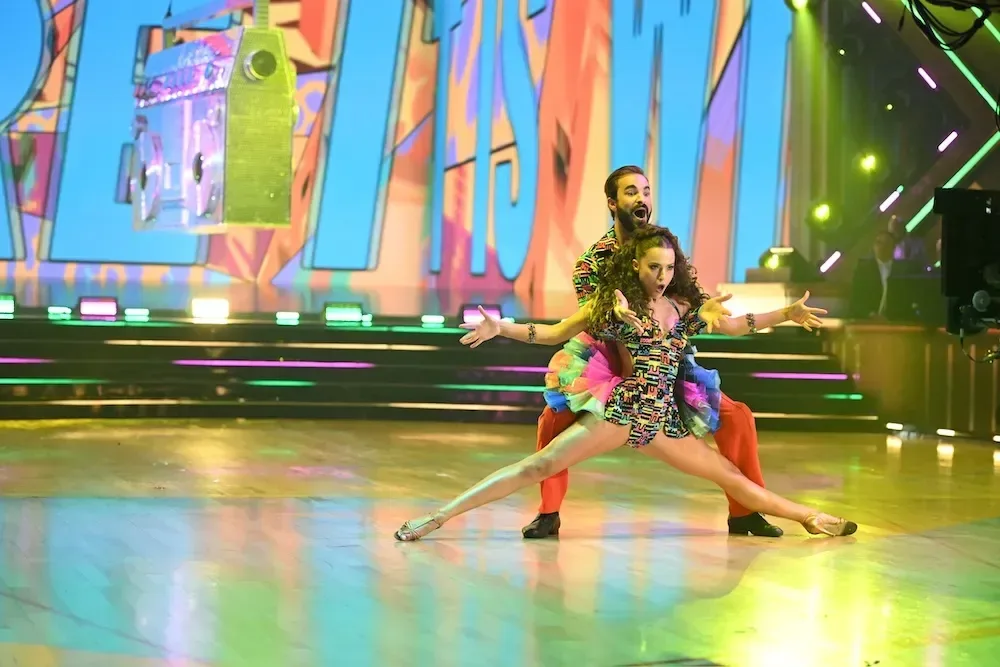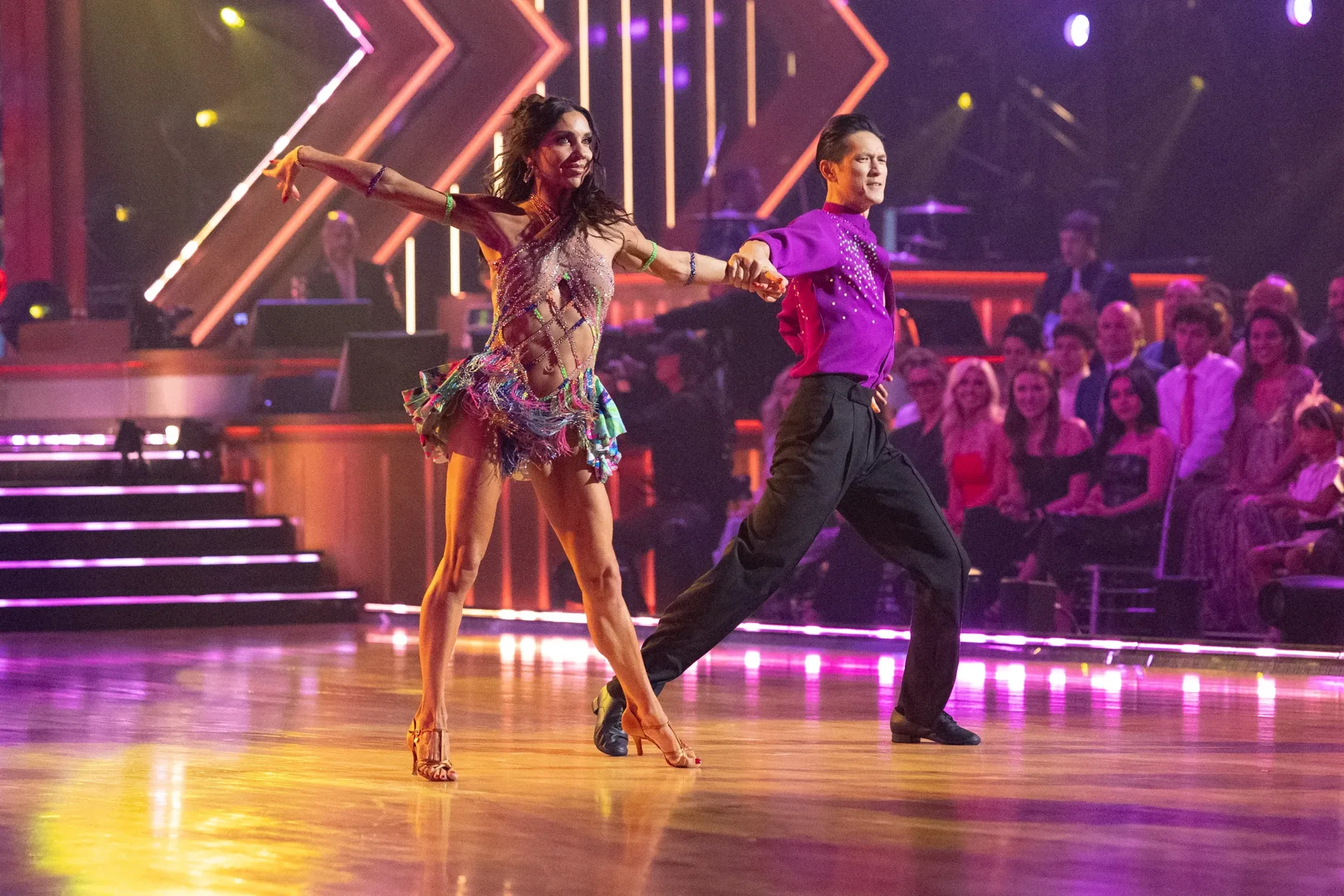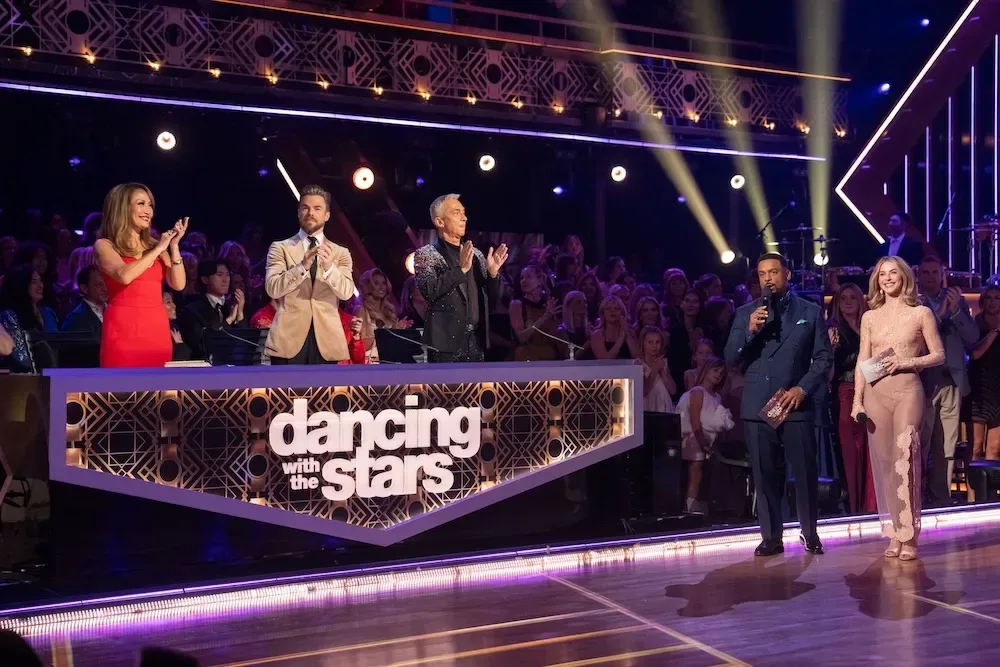
“Dancing With the Stars” Season 35 reached its finale with five celebrity finalists still in contention for the mirrorball trophy—and an opening judges’ choice round that quickly established how narrow the margins could be. Tatyana Ali, Ezra Frech, Amber Glenn, Maura Higgins and Connor Wood were each scheduled to perform three routines during the final: a judges’ choice, an instant dance and a freestyle. At the point covered here, the judges’ choice numbers had produced three perfect scores, alongside a 28 and a 27.
That is an emphatically competitive starting point, but not a final result. The supplied updates identify performances and judges’ scores from this portion of the finale; they do not identify the season winner, final placements, the remaining dance scores or a combined total. The mirrorball outcome therefore remains unconfirmed here.
What the finale format asks of the remaining pairs
The format matters because each of the three routines creates a distinct kind of pressure.
- Judges’ choice is a dance selected for the pair by a judge. It gives the judges a way to set the technical or stylistic test, while also letting a couple revisit a ballroom or Latin approach suited to its progression.
- Instant dance adds uncertainty: a pair receives a dance assignment in the moment rather than working only from a pre-established finale plan. The category can reward adaptability, musical timing and composure.
- Freestyle is the finale’s most open-ended routine type. In practical terms, it allows couples to make a broad statement about their partnership and the arc of their run, rather than staying within the expectations of one named ballroom style.
Those distinctions explain why the early scores are meaningful without being decisive. A perfect 30 in the first of three routines supplies momentum and establishes a high bar, but every finalist still had two opportunities to change the picture. A couple beginning on a 27 or 28 had not been ruled out of anything by the evidence available.
For viewers following television competition as pop culture rather than treating each score as an isolated number, that layered structure is the key detail. The finale is not simply five dances in sequence; it is a three-part test balancing assigned technique, responsiveness and a showcase performance. It is the kind of live-event format that makes score updates useful while also making premature winner calls risky. For more entertainment coverage beyond the ballroom, see this look at the Macy’s Thanksgiving Day Parade’s wind concerns.
Amber Glenn and Pasha Pashkov: first perfect score of the night
Amber Glenn and Pasha Pashkov were assigned a quickstep for their judges’ choice routine, with Derek Hough directing the selection. They performed to “Sing, Sing, Sing” and received 30 out of 30, the evening’s first perfect judges’ choice score.
A quickstep is generally associated with fast pacing and sustained movement, so the choice placed an emphasis on speed, flow and control. The perfect mark put Glenn and Pashkov immediately among the leaders in the early portion of the finale. It also established the night’s scoring ceiling before the remaining couples had all completed their first routines.
The detail worth separating from speculation is simple: this was a 30-point judges’ choice result, not a confirmation of their final standing. With an instant dance and freestyle still listed as part of the finale format, the score was a powerful opening benchmark rather than a clincher.
Maura Higgins and Mark Ballas match the standard
Maura Higgins and Mark Ballas followed with a tango assigned by Bruno Tonioli. Performing as Team Tink, they danced to “Gallo Ciego” by Orquesta Color Tango and earned another perfect 30.
The tango selection gave Higgins and Ballas a sharply defined ballroom challenge. Unlike a result that merely keeps a contestant close, a perfect mark means the judges’ choice round left them level with Glenn and Pashkov on the score referenced here. That immediate tie illustrates the practical value of the other two scheduled routines: the finale structure still had room to distinguish pairs who were inseparable after their assigned dances.
The music choice is also worth recording accurately. “Gallo Ciego” was credited to Orquesta Color Tango in the update, preserving the specific performance detail without assuming anything about staging, choreography or later scoring that was not provided.
Ezra Frech and Daniella Karagach complete a run of 30s
Ezra Frech and Daniella Karagach closed the judges’ choice segment. Tonioli assigned them a salsa to “Danza Kuduro” by Bruno, and the routine received a perfect score.
That made Frech and Karagach the third pair in the provided finale update to hit 30 points in the round. Their result is particularly important in the score context because it turned an early two-pair deadlock into a three-pair tie at the maximum available score.
A salsa, like the other judges’ choice dances, is not merely a music label; it identifies the dance framework the couple was tasked to deliver. But the available record supports only the assignment, song and perfect score. It does not provide individual judge comments, numerical breakdowns beyond the total or details from the remaining finale routines. Those omissions should remain omissions rather than invitations to fill in a narrative.
Connor Wood and Rylee Arnold stay within striking distance
Connor Wood and Rylee Arnold received a Viennese waltz recommendation from Carrie Ann Inaba for their judges’ choice dance. Their performance used Noah Kahan’s “Willing and Able” and was described as emotional, earning 28 out of 30.
The score put Wood and Arnold two points below the first three perfect results in this round. In a single-dance snapshot, that is a meaningful gap. In a finale built around three routines, it is better understood as a deficit than a verdict. Their instant dance and freestyle were still part of the announced competitive slate.
The Viennese waltz is a useful contrast to the evening’s salsa, tango and quickstep assignments. The judges’ choice field was not built around one recurring genre, meaning the finalists were asked to show different forms of dance identity. Wood and Arnold’s result added a near-perfect score to the board rather than a low outlier, reinforcing the closeness of the first-round results.
Tatyana Ali and Jan Ravnik begin with a 27
Tatyana Ali and Jan Ravnik opened the judges’ choice portion with a salsa to “Jamaican (Bam Bam),” selected under Carrie Ann Inaba’s direction. The pair scored 27 out of 30.
Ali and Ravnik then drew a jive for the instant dance. The update notes that Ali would have preferred a foxtrot, a small but revealing example of how the instant-dance component can reshape a finale plan. Rather than choosing the most comfortable remaining style, finalists must work with the category they receive.
That does not tell us how the jive was scored, whether it altered the standings or how Ali and Ravnik’s freestyle unfolded. It does establish the live challenge facing the pair: after starting three points behind the round’s perfect-score leaders, they had a jive rather than their preferred foxtrot next on the agenda.
The early scoreboard, and what it does not settle
After the judges’ choice performances described in the available update, the round’s totals were:
- Amber Glenn and Pasha Pashkov — 30/30
- Maura Higgins and Mark Ballas — 30/30
- Ezra Frech and Daniella Karagach — 30/30
- Connor Wood and Rylee Arnold — 28/30
- Tatyana Ali and Jan Ravnik — 27/30
It is a compact scoreboard with very little separation: three perfect scores, then two couples within three points of that mark. The main takeaway is not that one contestant had secured the trophy. It is that the judges’ choice round gave Season 35 a finale in which the next two dances were essential to the story.
That is especially true because the instant dance and freestyle measure different things. The former can expose how a couple responds to an assignment they did not ideally want; the latter provides a much broader platform for a finale-defining performance. Until those routines, their scores and the ultimate result are available, the responsible reading is that the competition remained alive after an exceptionally high-scoring first section.