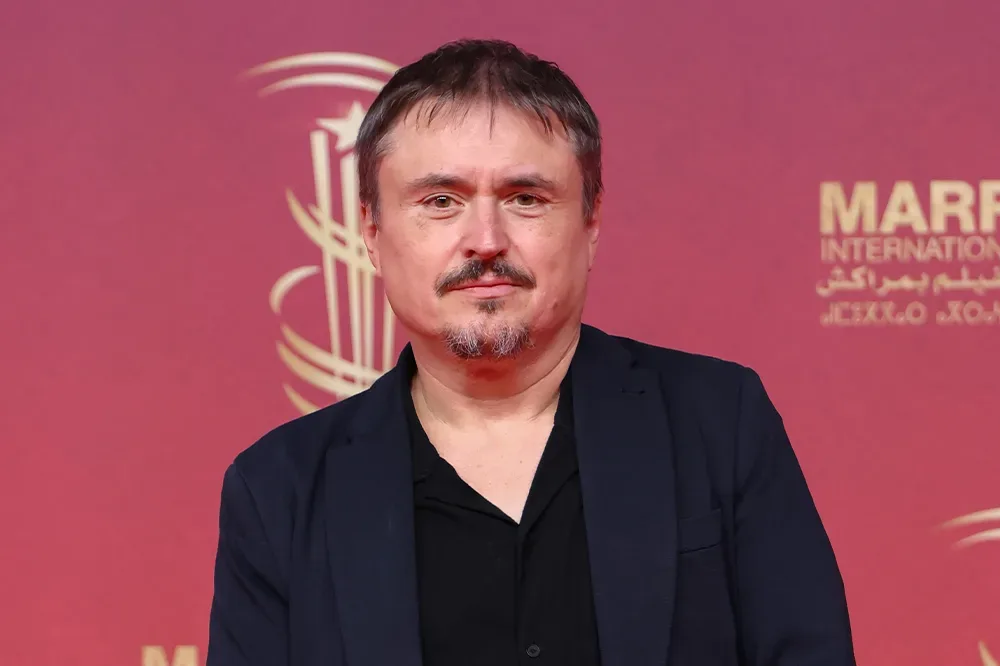
Cristian Mungiu does not appear interested in rescuing Fjord from argument. The Romanian filmmaker’s latest drama won the Palme d’Or at Cannes, yet it has also prompted intense disagreement over what, exactly, it believes. For Mungiu, that friction is not a defect to be explained away after release. It is central to the movie’s subject.
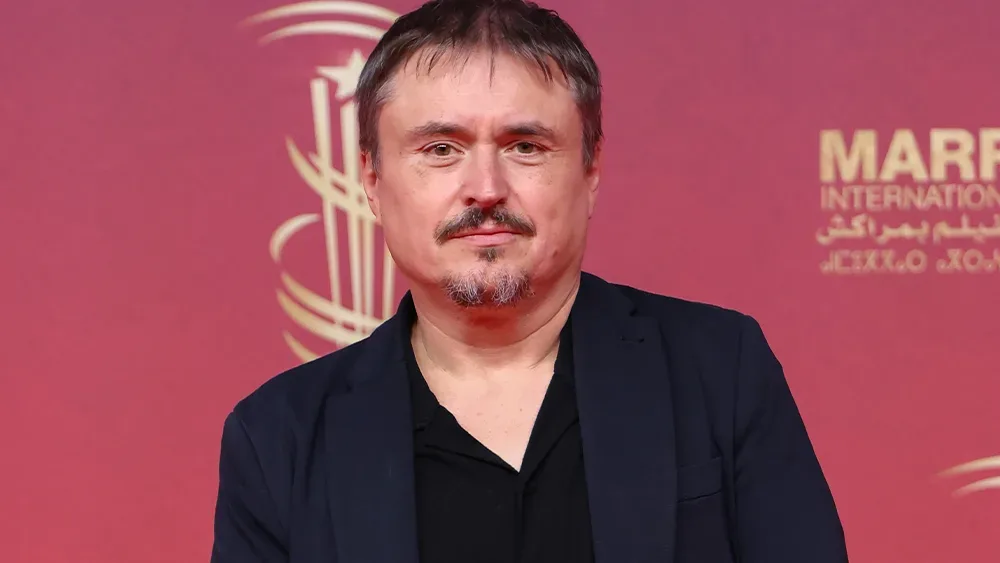
Speaking at the Marrakech Film Festival, Mungiu argued that the film itself is not inherently divisive; rather, viewers are encountering a story about a society already fractured by incompatible convictions. His stated aim is for audiences to do the hard work of judgment instead of receiving a pre-approved moral answer from the screen.
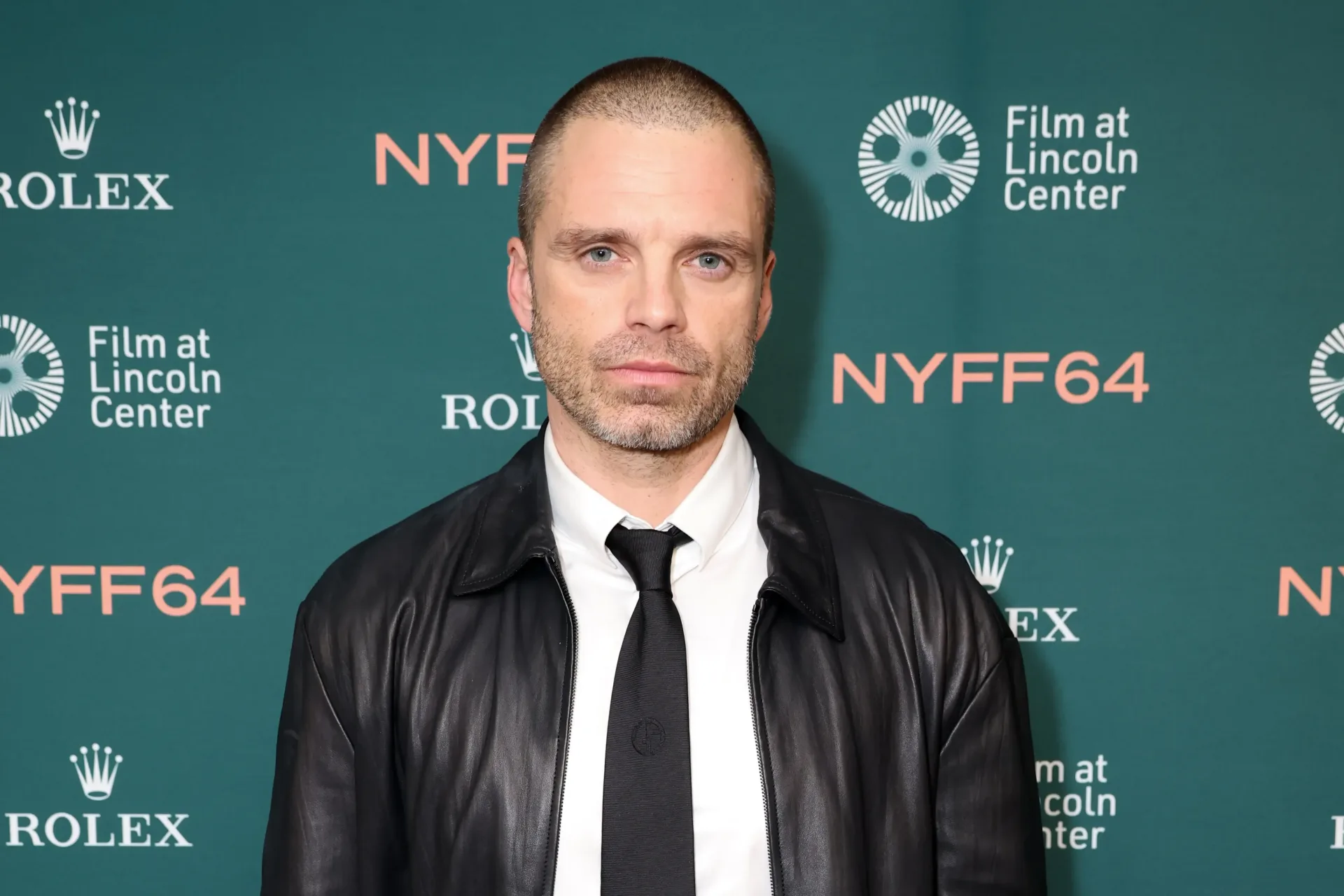
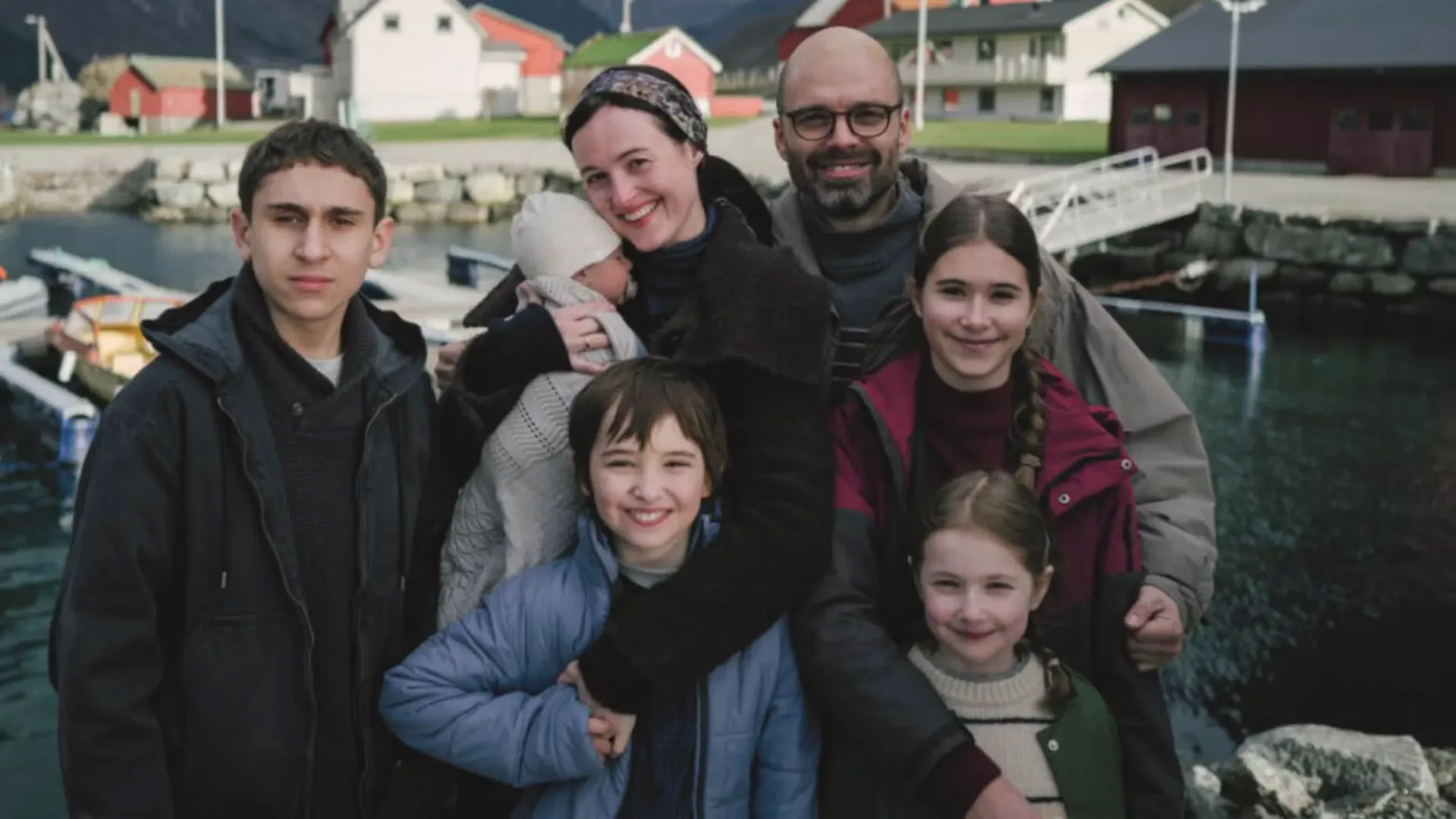
That approach gives Fjord an unusually charged premise. Sebastian Stan plays Mihai and Renate Reinsve plays Lisvet, an Evangelical Christian couple raising five children. They leave Mihai’s native Romania and relocate to Lisvet’s Norway, settling in a small village in search of a more peaceful, gentler life for their family. Their hopes collapse into a confrontation with Norway’s child-protection system after their eldest daughter arrives at gym class with bruises. A child-abuse case follows, and authorities seek custody of the children.
The conflict is therefore not merely personal. It sets a religiously conservative family against institutions associated with a more socially progressive outlook. That is combustible material by design, particularly when a film declines to make one side feel obviously safe or obviously monstrous.
A drama built around competing values
Mungiu has described Fjord as a story involving “two different slates of values”: the conservative perspective embodied by the parents and the liberal-progressive values represented by the social system around them. The distinction matters because the director is not presenting the dispute as a tidy puzzle with a single cinematic solution.
In practical storytelling terms, a film can establish a question and then guide the audience firmly toward its answer through point of view, framing, dialogue and consequences. Mungiu is arguing for another model: a drama that withholds a final instruction. Viewers may still reach strong conclusions, but those conclusions are theirs, rather than a verdict announced by the filmmaker.
That does not mean a movie becomes neutral simply because it is ambiguous. Every choice in a drama can affect the way its characters and institutions are understood. But Mungiu’s public explanation suggests that Fjord is intended to make room for discomfort—especially the discomfort of recognizing that different people may watch the same events and feel certain that different moral failures are most urgent.
“The film is not divisive. The society is divided,” Mungiu said, describing the story as an examination of the difficulty of sharing a society with people whose views differ sharply from one’s own.
His argument also addresses the film’s mixed reception. Some critics have debated whether Fjord ultimately favors its protagonists’ conservative values or the Norwegian system’s progressive assumptions. Others have tried to place it more explicitly in contemporary ideological camps, including labeling it a “MAGA film.” Mungiu’s response was blunt: some viewers, he said, misread reality.
Why the lack of an answer is the point
Mungiu’s broader case is that cinema can encourage thought without telling people what to think. He contrasted this with films where the audience is assured from the outset that it occupies the righteous side of a dispute and where the director specifies what is right and wrong.
There is a useful distinction here between ambiguity and indifference. Ambiguity means a work deliberately leaves meaningful questions open, allowing multiple readings to coexist or compete. Indifference would mean the work has little to say or little interest in the stakes. Mungiu’s comments point to the former. The bruises, the family’s religious life, the state’s intervention and the threat of losing children are not minor details. They are the high-stakes terms through which the film asks audiences to weigh authority, parental autonomy, faith, safety and social responsibility.
His criticism of filmmaking that speaks only to a creator’s own “bubble” is also a criticism of easy consensus. A film made to affirm an audience that already agrees with it may offer comfort, but Mungiu says it is less likely to create dialogue across a real divide. Fjord, by contrast, is constructed around the possibility that neither a conservative viewer nor a progressive viewer will be able to claim it without resistance.
That is a risky proposition. Audiences often ask difficult dramas to clarify their position, especially when the subject involves alleged violence against a child and the powers of the state. Yet the director’s position is that a movie can be meaningful precisely because it does not convert such a conflict into a lecture. His version of engagement is not agreement; it is sustained argument.
A Palme d’Or winner with a particular kind of pressure
The Cannes jury’s embrace of Fjord has given that argument a major platform. Mungiu is now the tenth filmmaker to win the Palme d’Or twice, doing so 19 years after his earlier win for 4 Months, 3 Weeks and 2 Days. The Palme d’Or is Cannes’ top prize, and its prestige can make a film an international reference point even before its wider awards-season path is clear.
Fjord also continues a seven-year run of Cannes Palme winners for its U.S. distributor, Neon, beginning with the eventual Oscar winner Parasite in 2019. Romania has selected Mungiu’s new film as its entry for the best international feature race, positioning it for a potential awards campaign.
Those milestones should not be mistaken for a guarantee of universal approval. In fact, the gap between jury recognition and sharply split critical reactions is part of what makes the film notable. A prize validates the artistic seriousness of a work; it does not settle its interpretation. Fjord appears likely to remain the kind of film people use to test their own assumptions—and then debate whether the other person missed the point.
That dynamic is not limited to art-house cinema. Pop-culture conversation frequently turns on competing readings of what a work is doing, whether the subject is a prestige drama or a massive franchise; even the debate around whether an Avengers: Doomsday trailer reframes Steve Rogers’ farewell shows how strongly audiences can contest authorial choices and implications. Mungiu’s film simply makes that interpretive struggle its stated terrain.
The Marrakech appearance and what comes next
Mungiu introduced Fjord to a full audience at Marrakech before discussing the film with Sydney Film Festival director Nashen Moodley. He is among the participants in the festival’s Conversations series, alongside John Turturro, Jeff Goldblum, Rian Johnson, Luca Guadagnino and Monica Bellucci. Turturro and Goldblum are receiving tribute awards during the event.
The Marrakech Film Festival runs from November 20 through November 28. For Mungiu, it has provided another setting to make a case for Fjord on his own terms: not as a partisan statement waiting to be claimed by a team, but as a drama built to expose the strain of living beside people whose deepest values do not match our own.
Whether audiences accept that framing will remain part of the conversation. Mungiu’s position, however, is clear. The lack of a supplied conclusion is not an evasion. It is the film’s challenge.