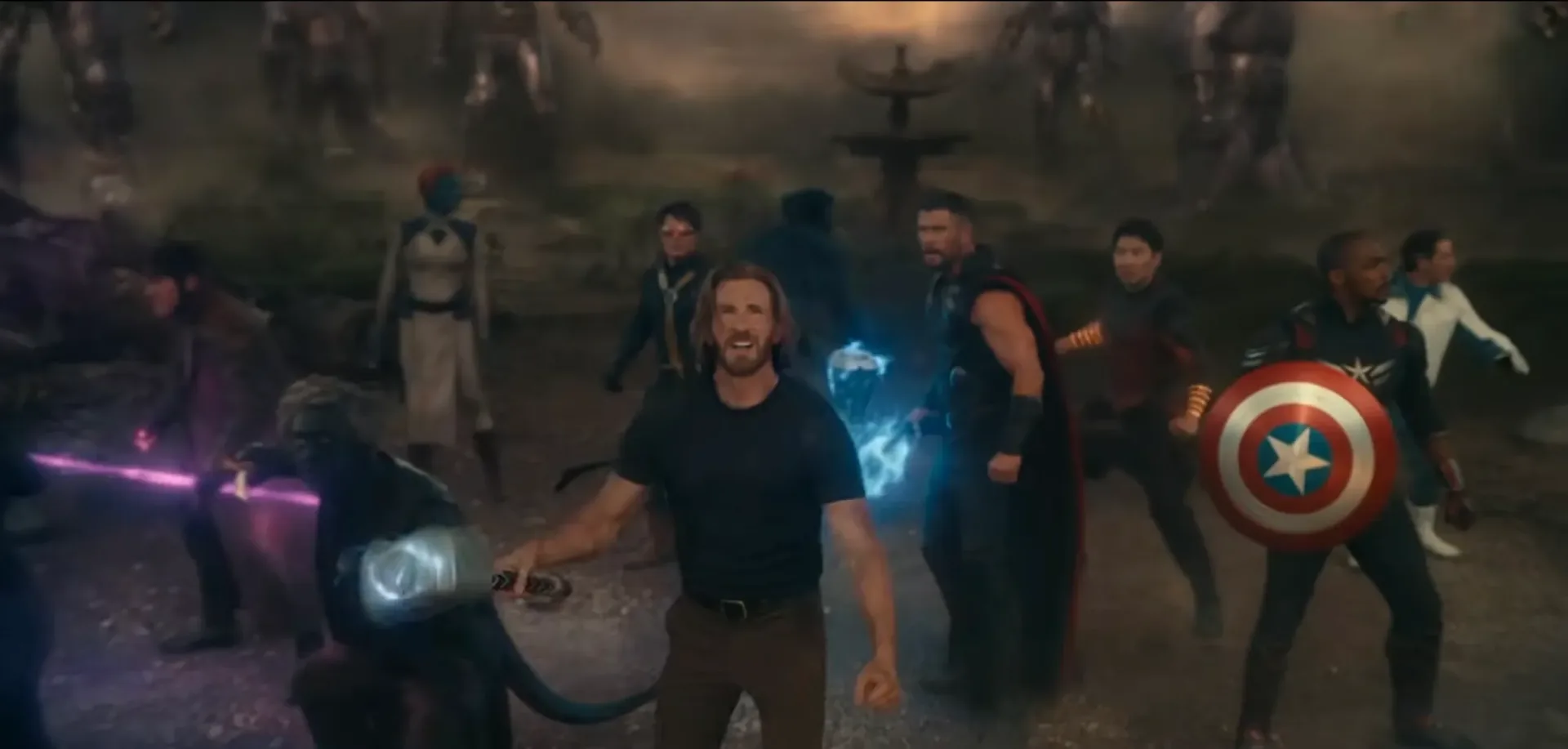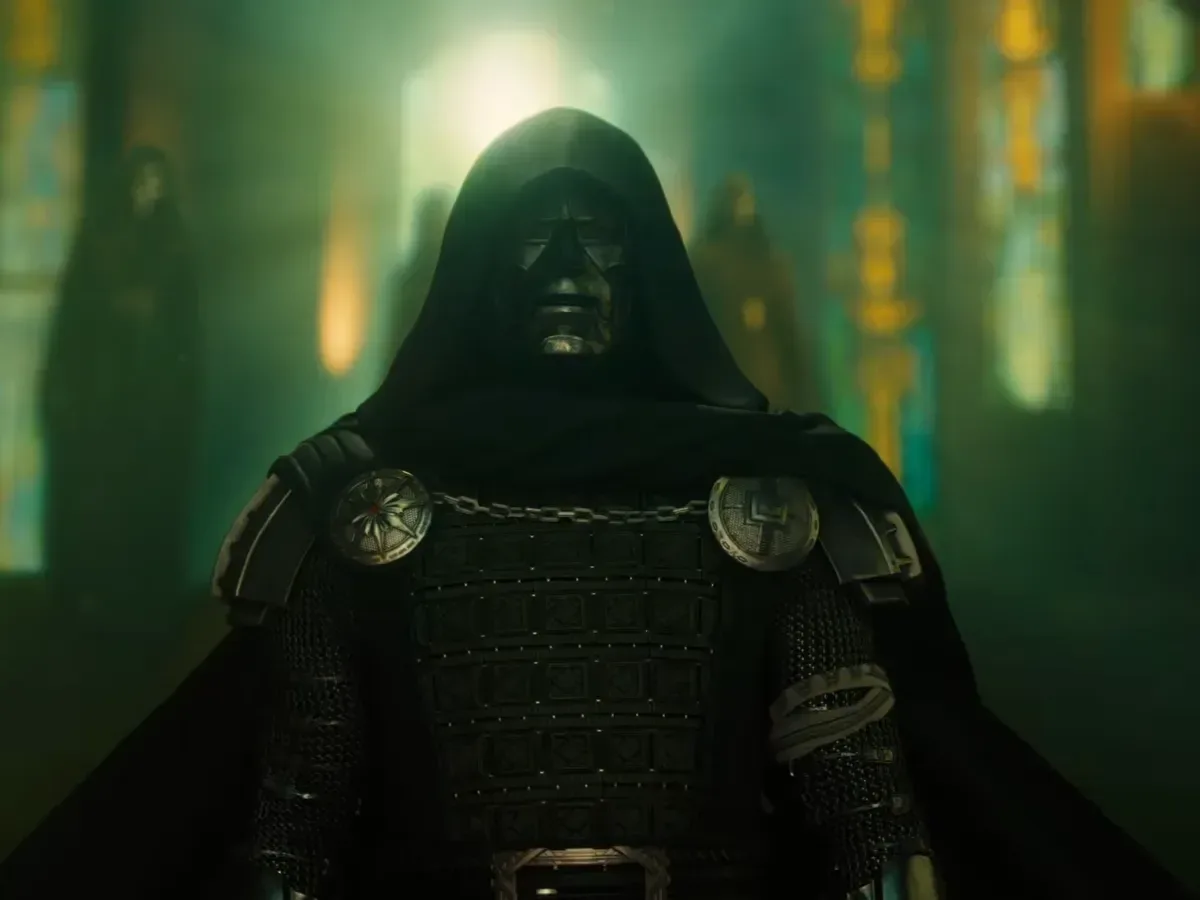
Avengers: Doomsday is positioning Steve Rogers’ seemingly peaceful Avengers: Endgame exit as anything but settled. Its final trailer revisits his reunion with Peggy Carter, shows him building a family life and then sends him toward a confrontation involving Thor, the original X-Men and Robert Downey Jr.’s Doctor Doom. But its most interesting material may be the quieter footage before the large-scale action begins.
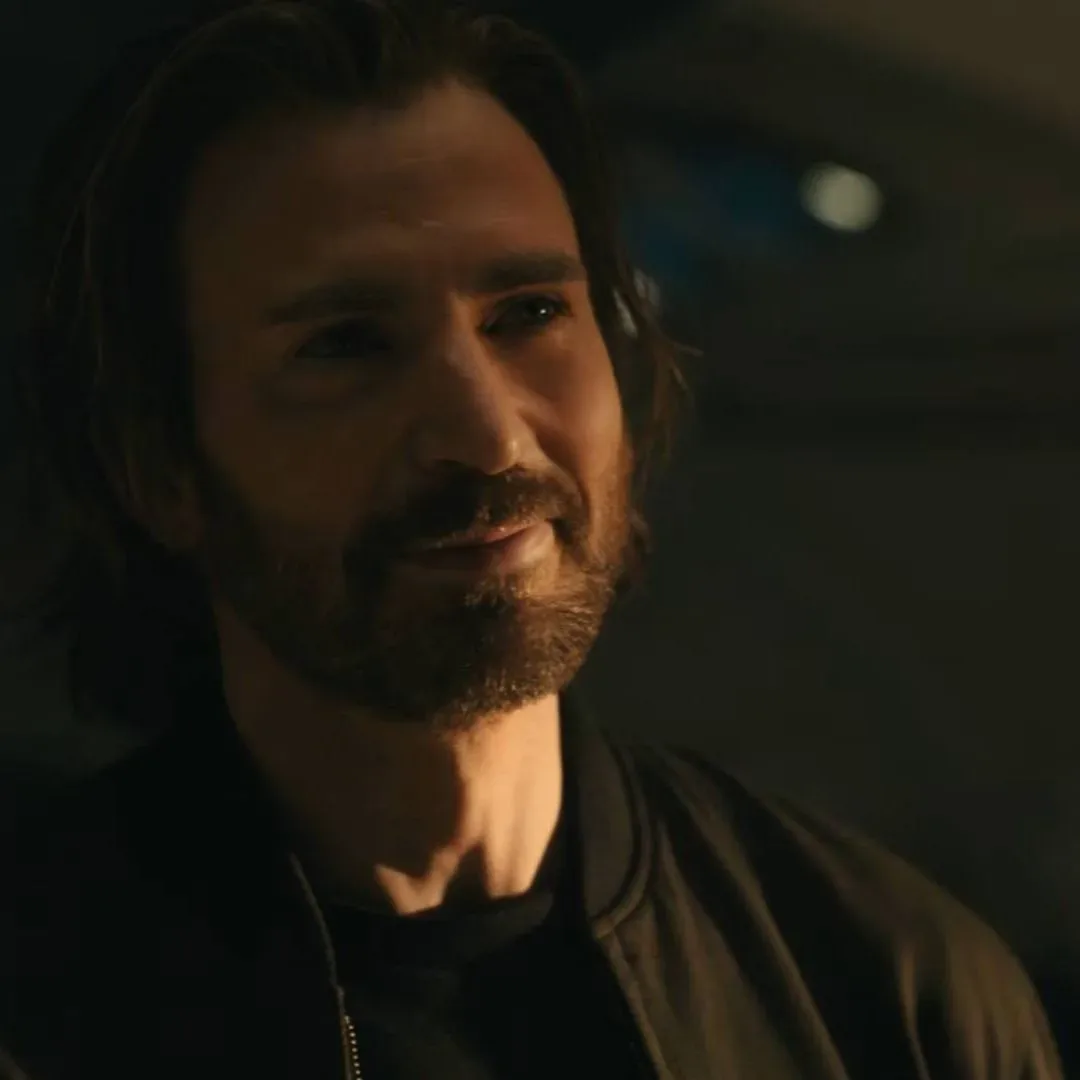
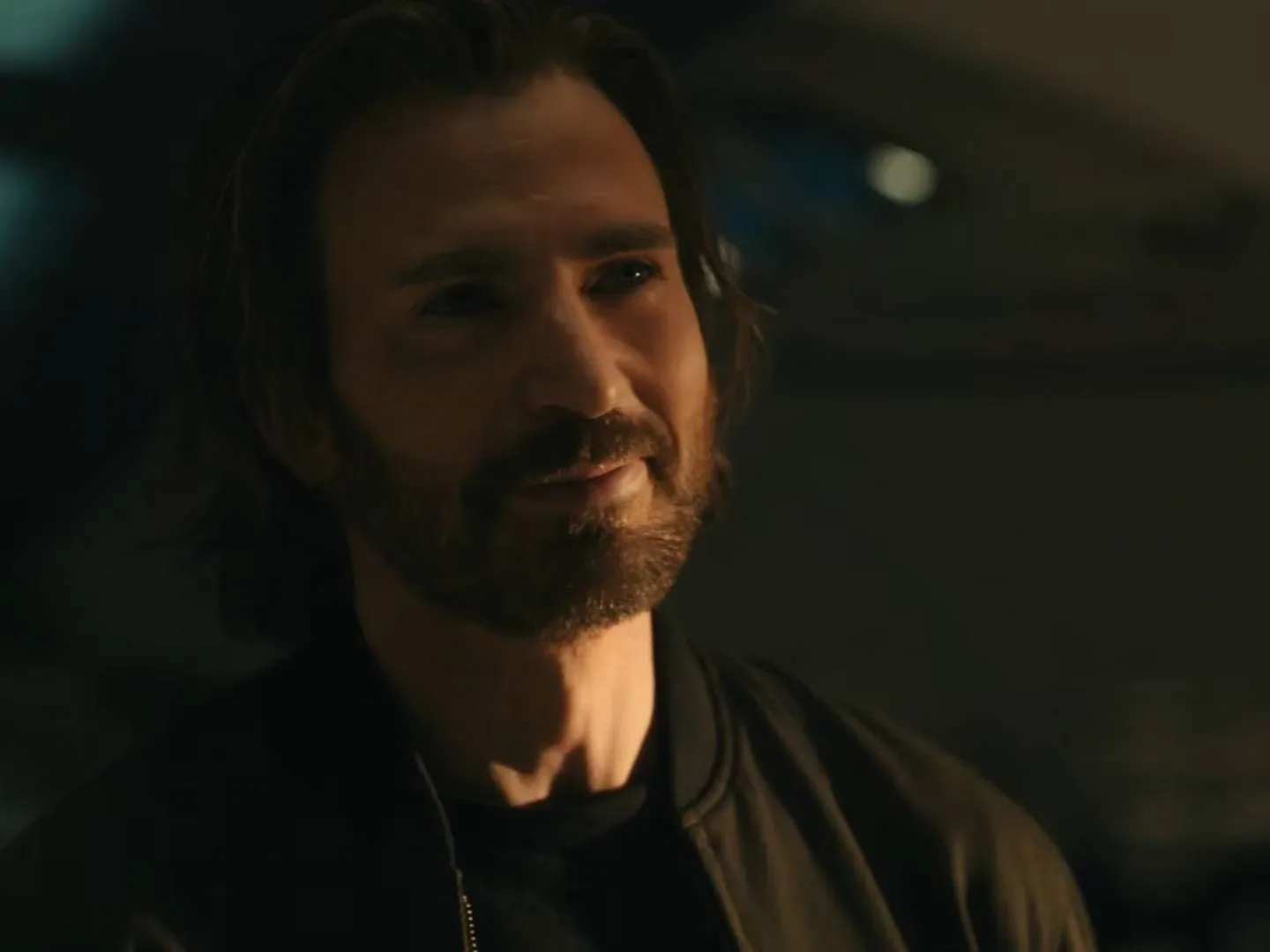
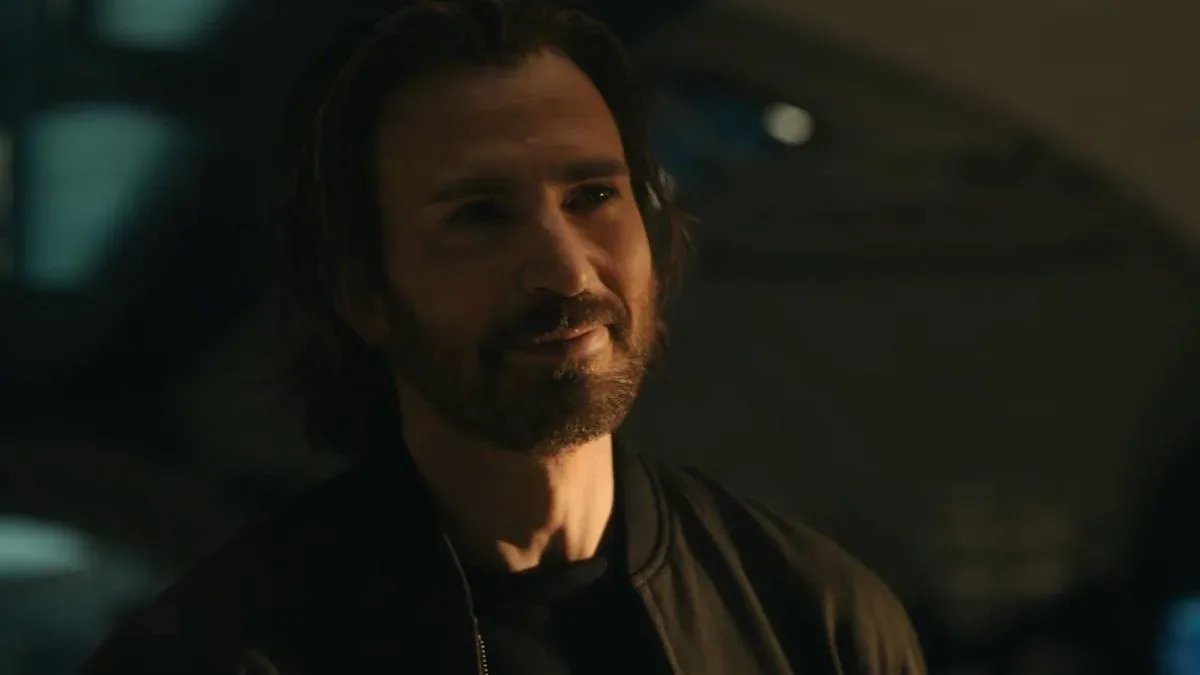
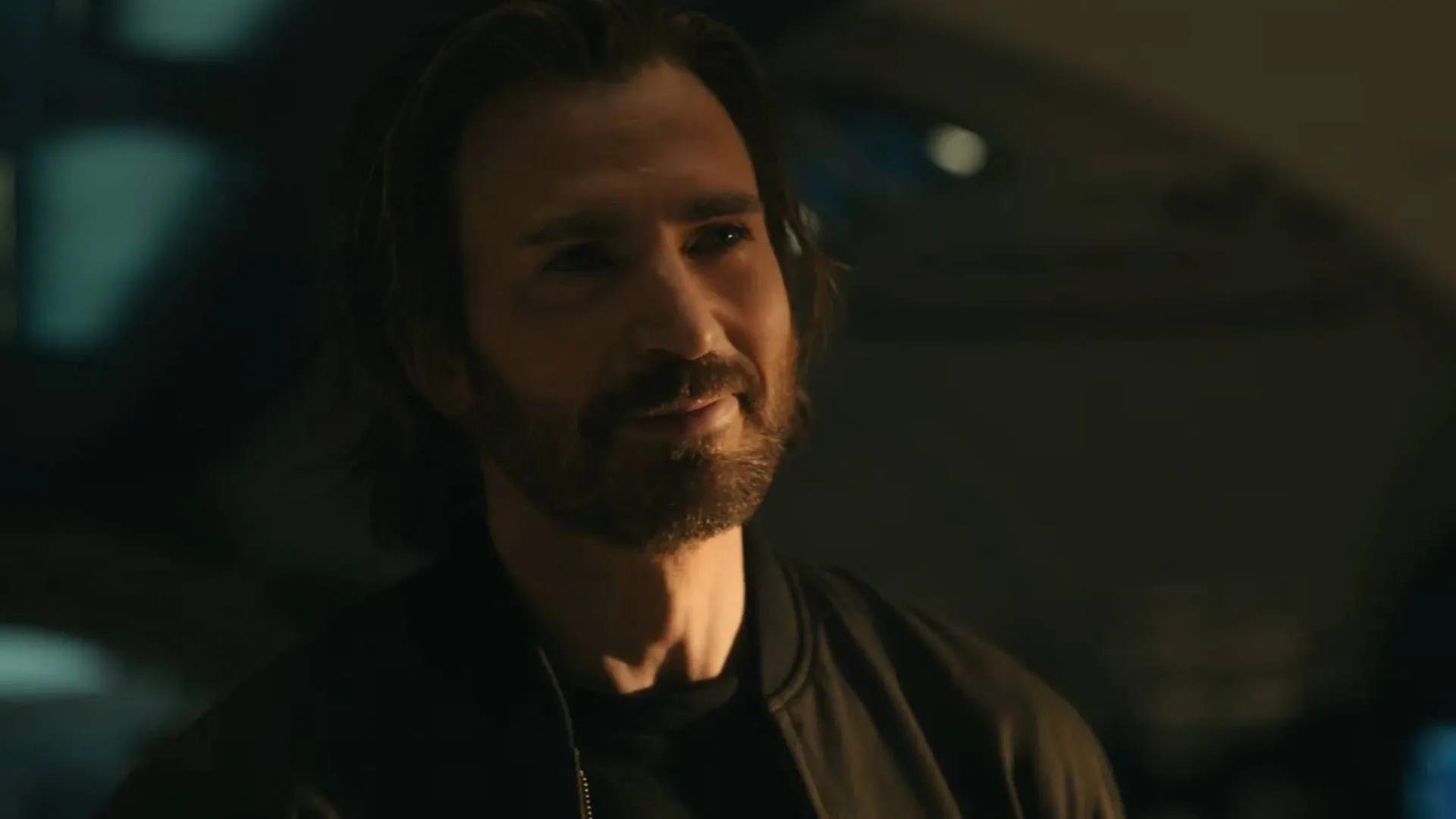
The trailer appears to present two versions, or at least two sharply different moments, of Steve’s post-Captain America life. One is clean-shaven, putting away his Captain America equipment, holding a baby and teaching his young son to ride a bicycle. Another Steve, seen in footage elsewhere in the trailer, has longer hair and a beard—including when the Fantastic Four arrive outside his home.
That disconnect is not confirmation of a twist. Trailers routinely compress scenes, omit context and cut together footage from different points in a story. Still, the contrast gives viewers a legitimate question to carry into the film: is this simply a passage of time, or is Steve Rogers living somewhere—and perhaps somewhen—that he was never meant to be?
The trailer’s Steve Rogers mystery, explained
The central reading suggested by the footage is that Steve’s return to Peggy did not end in the same reality he left. The trailer indicates that Steve and Peggy have a teenage son by the early 1960s. It also makes it look as though the Fantastic Four are not arriving from another universe to meet Steve; rather, they appear to be visiting him where he already is.
One interpretation is that Steve went to Peggy on the Fantastic Four’s Earth-828. If so, that would recast the emotional final image of Endgame. Rather than a hero retiring to a private life after returning the Infinity Stones, he may have crossed a boundary between realities and stayed there.
It is important to separate what the trailer shows from what remains speculative:
- Shown or strongly indicated: Steve and Peggy’s reunion is revisited; they have a son; the family’s story reaches at least the early 1960s; Steve is depicted with notably different appearances; and the Fantastic Four come to his doorstep.
- Suggested, but unconfirmed: that Steve is on Earth-828, that his decision is responsible for damage to the multiverse, or that he directly caused the crisis drawing Doctor Doom’s attention.
- Still unknown: whether the contrasting Steve footage represents alternate universes, different stages of one life, intentionally misleading editing, or a reveal the movie is withholding.
Those distinctions matter because multiverse stories can make a visual mismatch look more conclusive than it is. A beard, a different outfit or an altered domestic setting is a clue, not a complete answer. The trailer’s job is to establish tension; the film will need to explain the rules.
Why Steve’s Endgame choice suddenly looks consequential
Steve’s decision at the end of Endgame was framed as a personal reward after years of sacrifice. Following the battle against Thanos, he used time travel to return the Infinity Stones. He then chose to remain in the past with Peggy rather than immediately return to the present, later reappearing as an older man.
Related coverage includes Avengers: Doomsday Trailer Raises a Dark Question About Steve Rogers' Endgame Ending.
Doomsday now introduces a harsher possible reading. Steve says that those involved in the time-travel plan did not understand the consequences of their choices. In the context of a movie featuring worlds appearing in the sky and a threat connected to reality-spanning collapse, that line is difficult to treat as casual reflection.
If the film argues that Steve’s later trip through time was a mistake, it does not erase the heroism of the Infinity Stone mission. The stakes in Endgame were immediate: undo the devastation caused by Thanos and protect Earth. Instead, it would add a delayed cost to the choices made after that battle—especially the choice to stay.
That would be a meaningful dramatic shift for Steve Rogers. He has often been defined by his willingness to accept personal loss for everyone else’s benefit. The trailer’s implied tragedy is that he finally made a choice for himself, only for it to carry consequences he could not foresee. His family life with Peggy and their son would not become morally simple evidence of wrongdoing; it would become the intimate human reason the coming conflict hurts.
What an “incursion” means in this theory
The key technical term around this reading is incursion. As used in the trailer discussion, an incursion is a collision or destructive overlap between universes. The image of other worlds appearing in the sky points toward realities no longer remaining safely separate.
Under the trailer theory, Steve’s actions may have helped set that process in motion: first by travelling through time during the Infinity Stone mission, and then by returning to the past to live with Peggy. The more specific possibility is that he crossed into the wrong Earth, potentially Earth-828, and his continued presence there contributed to the wider instability.
However, the evidence supplied by the trailer goes only so far. It establishes consequences as a theme and puts Steve near the center of the story. It does not establish a complete chain of cause and effect. A multiversal collapse could have several causes, and Doctor Doom’s motives, knowledge and role in the crisis remain unclear from these details.
That uncertainty is actually why the theory works as a trailer hook. Steve has direct emotional ties to the past, to Peggy and now to a son. A threat to reality becomes more than a sky full of visual effects when it can be traced to a decision audiences once understood as a happy ending.
The son changes the stakes of Steve’s return
The trailer’s addition of Steve and Peggy’s son is not just background for a domestic montage. It changes the emotional geometry of the situation. Steve is not merely confronting the possibility that he broke a rule of time or crossed a line between universes. He is confronting the fact that correcting the damage, if damage exists, could threaten the life he created after leaving his old one behind.
That makes his apparent reunion with Thor, the original X-Men and the wider hero roster more complicated than a straightforward return to duty. Steve may be joining a battle because he is needed, because he is being pursued, because he wants to protect his family, or because all of those motives overlap. The trailer supports the broad fact that he enters the conflict; it does not yet settle why.
There is also a deliberately uncomfortable implication in the theory that his son “should never have existed.” That is not a statement the trailer itself proves, nor a useful way to reduce the character to a plot error. It is shorthand for the potential instability of a life created by an unplanned divergence. The film could instead reveal that this family belongs naturally in its own timeline, and that someone else—or something else—is exploiting the situation.
Why the different looks may matter—and why they may not
The clean-shaven Steve handling his old gear and raising a small child versus the bearded Steve greeting the Fantastic Four is the trailer’s most visible continuity puzzle. There are several plausible storytelling functions for it.
- A normal time jump: Steve’s appearance changes as years pass, while his family grows from a baby into a household with a teenager.
- Two timelines or realities: the trailer could be juxtaposing separate outcomes for Steve’s decision to go back.
- A fragmented memory or reconstruction: scenes may be presented as recollections rather than in strict chronological order.
- Trailer misdirection: footage can be arranged to invite assumptions that the completed film later overturns.
The first explanation is the simplest, and it should not be dismissed. A long-lived domestic life naturally provides room for both a clean-shaven younger father and a bearded older version. Yet the trailer’s larger multiverse framework gives the visual contrast extra weight. If there were no incursions, no Fantastic Four arrival and no warning about consequences, the beard might be just a beard. Here, it reads like an invitation to scrutinize the timeline.
Doctor Doom’s place in Steve’s possible bad ending
Doctor Doom is the looming figure who turns a continuity question into an immediate threat. The trailer places Steve on a path to battle him alongside Thor and the original X-Men, but it does not provide a confirmed explanation for why Doom is focused on Steve or what Doom intends to do with a collapsing multiverse.
That gap encourages a compelling possibility: Doom sees Steve not just as another hero, but as someone linked to the fracture at the heart of the crisis. Such a connection would give the villain a personal pressure point. It would also allow the movie to transform the sentimental ending of Endgame into a conflict over responsibility, family and the limits of changing history.
For now, that remains analysis rather than established plot. The trailer has supplied the pieces—Steve’s altered life, his warning about consequences, worlds visible in the sky, the Fantastic Four’s arrival and the looming clash with Doom—but not the finished picture.
Avengers: Doomsday is scheduled for cinemas on December 14 in the UK and December 16 in the US. Until then, the strongest takeaway is not that Steve Rogers definitely doomed the multiverse. It is that the film wants audiences to question whether his long-awaited happy ending was ever as safe, simple or self-contained as it appeared.
For another entertainment-franchise casting story, see Charlie Cox’s account of pursuing a James Bond audition.