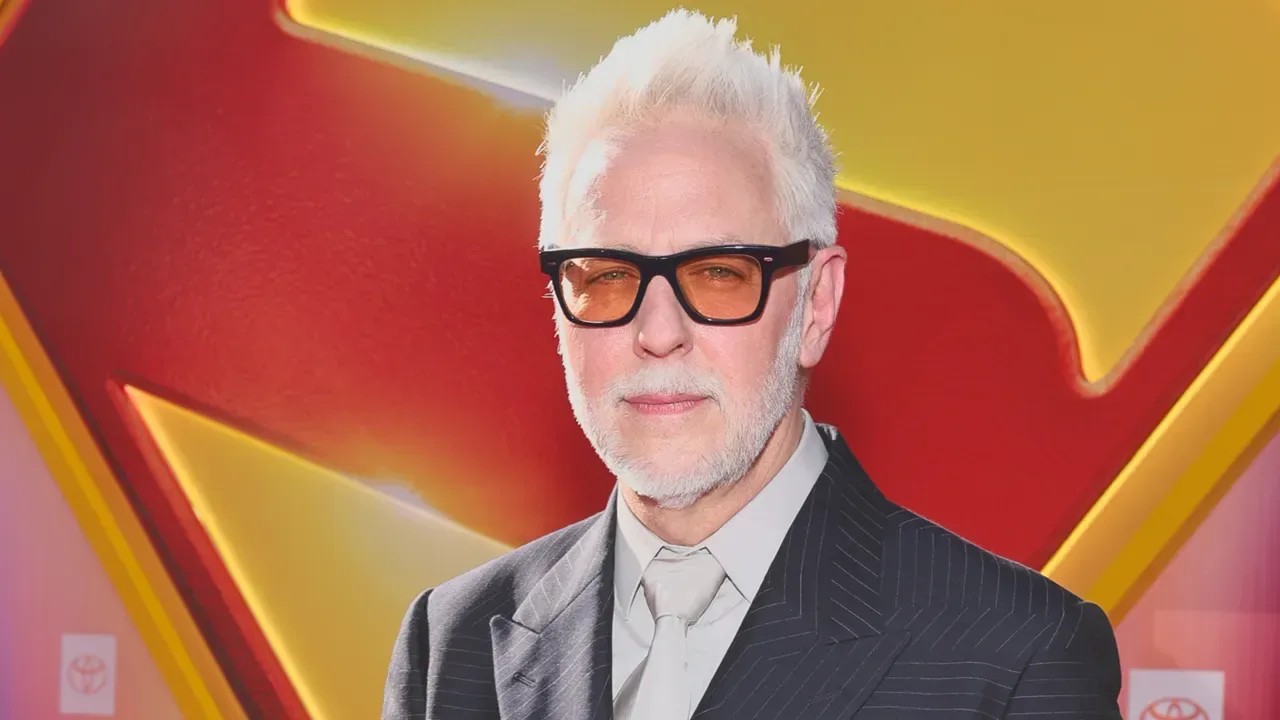
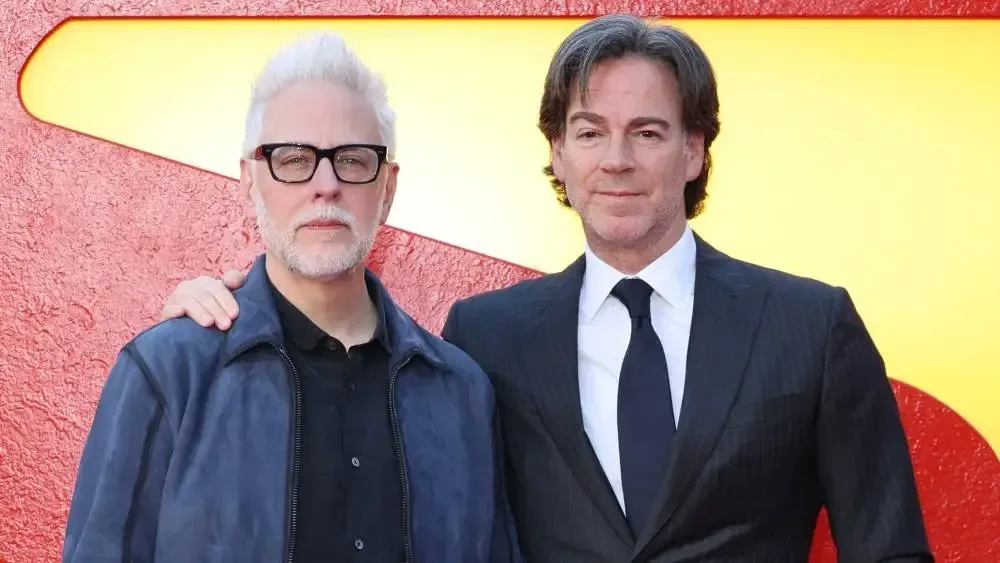
DC Studios is changing captains again. James Gunn and Peter Safran have been dismissed from their leadership posts, ending a comparatively brief effort to remake the company’s superhero film and television operation around a connected, decade-long plan. Jeremy Latcham, a veteran of Marvel Studios, is set to take over as DC Studios president and chief creative officer.
The change does not erase every project developed under Gunn and Safran. Gunn is still directing next summer’s Superman: Man of Tomorrow, while both former chiefs remain producers on the 2027 series The People v. Gorilla Grodd and another season of Creature Commandos. But it does put the overarching strategy—and the degree to which its planned sequels, spinoffs and standalone stories survive—into the hands of a new executive.
For DC, that is the central plot twist. This is not simply a filmmaker moving on from a franchise. Gunn and Safran were hired in 2022 to set the creative course for valuable characters, oversee a slate, and restore momentum after the previous group of DC films struggled. Their removal leaves the company navigating yet another leadership reset at precisely the point where a shared universe is supposed to become easier for audiences to recognize and follow.
A promising Superman did not settle the bigger business question
Gunn and Safran’s first major theatrical test was Superman, starring David Corenswet. It earned $618 million against a reported $225 million production budget and was positioned as a hit. That result matters: Superman is DC’s foundational hero, and the film had to persuade audiences that another reboot could work.
Yet a healthy gross is not, by itself, proof that an interconnected franchise has found durable momentum. Production budgets are only one part of the financial picture; theatrical revenue is split with exhibitors, while marketing and distribution add further costs. A film can look successful at the box office while still leaving difficult questions about profitability and, more importantly for a franchise, whether viewers are eager for the next chapter.
The subsequent results supplied a harsher answer. Supergirl, centered on Kara El-Zor, reached $126 million worldwide against a $170 million budget. Clayface, a body-horror thriller built around a Batman antagonist, earned $109 million on a $44 million budget. The latter was a much smaller gamble, but the available assessment is that it would still need downstream revenue to break even.
Downstream revenue refers to money generated after, or beyond, the initial theatrical run: home entertainment, licensing, streaming arrangements and other later uses. It can improve a project’s financial outcome, but it also means a studio cannot judge a film’s final result solely by its ticket sales. The distinction is particularly important for a company attempting to finance an entire universe of expensive productions rather than one isolated movie.
Sources familiar with the decision framed the problem in blunt terms: too much spending on titles that were not connecting strongly enough with audiences. That diagnosis does not mean every smaller character is inherently a mistake. It does mean DC’s choices were judged against the extraordinary costs and expectations attached to a major superhero studio.
The lesser-known-character gamble met a difficult market
One defining feature of the Gunn-Safran approach was a willingness to look beyond DC’s most obvious headliners. Supergirl is closely connected to Superman, but she is not Superman. Clayface has longstanding comic-book history, but is far from the conventional starting point for a massive film brand. Their slate suggested an ambition to make the universe feel broader, stranger and less dependent on the same icons.
There is a creative logic to that model. Shared-universe storytelling can give supporting characters room to become leads, shift genres between entries, and make a comic-book world feel populated rather than confined to its most famous capes. Clayface being framed as body horror is an example of the potential benefit: a DC label can theoretically cover more than a single tonal template.
The commercial risk is clearer now. Lesser-known protagonists require audiences to buy into both a character and a premise, often without the automatic pull of Batman, Superman or Wonder Woman. That challenge becomes harder when superhero films are no longer assumed to be reliable global events.
Recent superhero successes demonstrate that audience appetite has not disappeared, but they also underline the power of instantly recognizable names. Spider-Man: Brand New Day reached $2.5 billion and became the third-biggest movie in history, while December’s Avengers: Endgame, built around a gathering of major heroes, could challenge that record. These results do not establish a universal rule that only familiar characters can succeed. They do illustrate the comparison DC leadership was facing when its less established bets failed to deliver at a similarly convincing scale.
“Higher budgets don’t equal quality storytelling,” one studio insider said.
That observation is less a formula than a warning. Budget can fund visual effects, casts, reshoots and marketing support, but it cannot guarantee that a premise feels essential. For DC, the practical question is how much experimentation can coexist with a need for dependable tentpoles—the large-scale releases expected to support a wider slate.
Television brought uneven signals, too
DC’s television picture was mixed rather than uniformly bleak. The Penguin, the Colin Farrell-led Batman spinoff, emerged as the company’s major small-screen success, though it had been approved before Gunn and Safran assumed their studio roles. Peacemaker, starring John Cena, began in 2022 before Gunn took the executive job; its first season was popular, while its second season, arriving three years later, did not generate the same level of buzz.
Lanterns, described as the first live-action show of the Gunn-Safran era, posted decent viewership. But it was not renewed for a second season. The absence of a renewal is meaningful in a streaming environment where a clear breakout usually creates urgency for more episodes. A show can be competently received and still fall short of becoming a defining cultural event.
That distinction matters because television was supposed to be part of the connective tissue of DC’s plan. A shared universe asks audiences to maintain interest across formats: cinema, streaming series, animation and stories starring characters with different levels of fame. If individual series fail to generate sustained excitement, they may not provide the engagement that makes the wider architecture feel valuable.
The lesson is not that every show must be a sensation or that a second season is the only measure of quality. It is that DC’s leadership was evaluated on a portfolio. The successes and disappointments were being read together, alongside budgets, film grosses, and a company ownership transition.
A corporate reorganization changed the terms
The exit followed Paramount’s $111 billion acquisition of Warner Bros. Discovery, which closed in October. Gunn and Safran had been told they would be included in the business leadership team under David Ellison’s Skydance operation. But the proposed organizational structure would have shifted their reporting line.
Previously, Gunn and Safran reported directly to former Warner Bros. Discovery chief executive David Zaslav, rather than to movie co-chairs Michael De Luca and Pamela Abdy. Under the new arrangement, they would have reported into Dana Goldberg and Josh Greenstein, who were slated to lead the Skydance Motion Picture Group. Even if the pair had remained, that would have represented a reduction in their independence and authority.
Corporate reporting lines may sound like boardroom vocabulary rather than fan-facing news, but they determine who has final control over budgets, release strategies, staffing and creative approvals. In a franchise operation, creative authority and financial accountability are inseparable. The person deciding whether to introduce a new hero also has to answer for the scale of the investment.
Entertainment companies and game publishers alike have been confronting that tension between expensive projects and shifting audience demand. The dynamics are not identical, but the broader pressure on creative businesses can be seen in developments such as Tripwire’s recent restructuring and cuts. DC’s situation is its own, shaped by blockbuster filmmaking and a corporate acquisition, yet it reinforces how quickly a strategy can be reassessed when costs and results diverge.
Gunn’s dual role was always an unusually demanding arrangement
Safran arrived with experience on the financial and producing side of franchise filmmaking. He had helped oversee New Line’s profitable Conjuring universe and produced Shazam! and Aquaman. Gunn brought a different résumé: he was known primarily as the director behind Marvel’s Guardians of the Galaxy trilogy and as a creatively hands-on storyteller.
That combination was intended to balance creative direction and producer discipline. But the job required Gunn to keep directing while helping run a studio slate, a tension he acknowledged after the leadership change. He wrote that his ADHD hyperfocus struggled with dividing attention between projects that inspired him most, projects that did not, and the corporate responsibilities of being a studio head.
It is a candid explanation of the difference between making an individual film and managing a studio. A director can devote years to shaping one project. A studio chief must decide among many projects, assess material they did not originate, coordinate releases and talent, and make choices that may disappoint creators or fans. Doing both roles can provide unusually strong creative continuity, but it also creates a severe demand on time and focus.
That does not reduce DC’s outcome to one person’s workload. The reported concerns include spending, audience response, television performance and the new ownership structure. Still, it explains why the Gunn-Safran era was a particularly ambitious experiment: a high-profile filmmaker was asked not only to make a new Superman movie, but also to help build and administer the larger machine around it.
What remains on DC’s board
The immediate slate is narrower than a decade-long blueprint might imply. Gunn’s Superman: Man of Tomorrow is still scheduled for next summer, bringing back Corenswet’s Superman and Nicholas Hoult’s Lex Luthor. Beyond that, The Batman Part II is the only other film identified as being in the pipeline. Following multiple delays, the Robert Pattinson sequel is scheduled for 2028, six years after the first film.
The intended Wonder Woman reboot did not get off the ground. Gunn has also indicated he is writing another DC-related project, but whether it proceeds is now Latcham’s call. The same applies to the broader status of the previous regime’s interconnected plan.
For fans, the most important near-term point is continuity without certainty. The projects already underway have not vanished, and Gunn and Safran retain producer roles on select titles. However, the person now responsible for defining the next phase is Latcham. His Marvel Studios background will inevitably invite comparisons, but his mandate at DC has not been fully spelled out.
Internal hopes are reportedly centered on a back-to-basics approach. That could mean clearer emphasis on character recognition, sharper control of spending, more selective expansion, or simply a stronger effort to make each entry stand confidently on its own. Those are possible interpretations, not announced policies.
DC has changed leadership several times over the past decade, following earlier tenures involving Geoff Johns and Jon Berg, then Walter Hamada. The latest reshuffle therefore extends a familiar pattern rather than resolving it. Latcham inherits recognizable heroes, several active projects and enormous potential—but also the difficult task of persuading audiences that a new DC plan is more than another reset button.