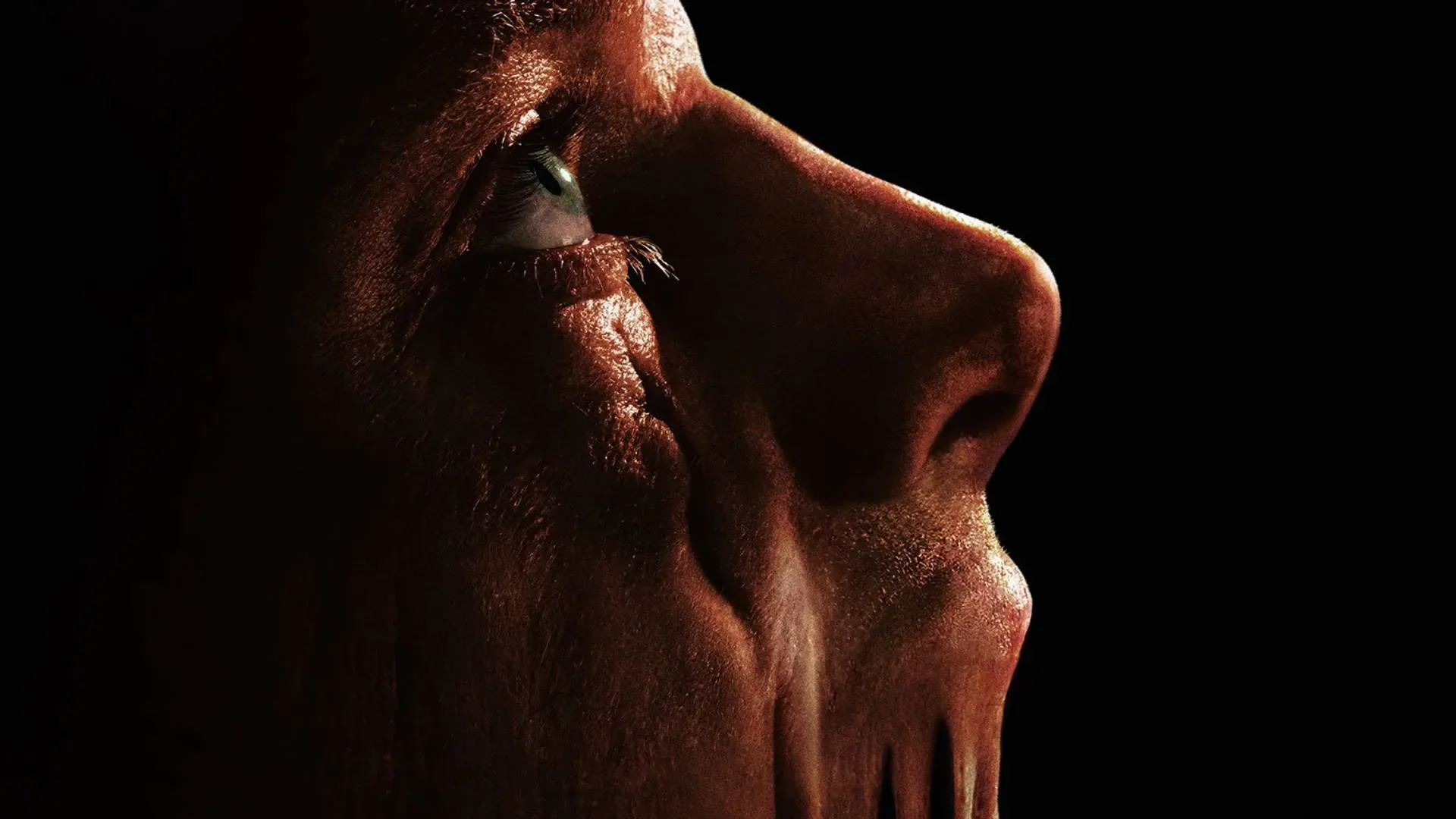
Clayface takes one of DC’s most mutable villains and uses that instability as its central advantage. Rather than positioning Matt Hagen as a piece on a larger superhero chessboard, the 108-minute, R-rated film builds a contained horror story around an actor whose career, appearance and sense of self collapse at once. The result is an unusually grimy proposition for a comic-book adaptation: less capes-and-continuity spectacle than grotesque movie-star tragedy, with a lot of deliberately revolting transformation work along the way.
Directed by James Watkins from a screenplay by Mike Flanagan and Hossein Amini, based on a story by Flanagan, the film stars Tom Rhys Harries as Hagen. Naomi Ackie plays experimental scientist Dr. Caitlyn Corr, with David Dencik, Max Minghella, Eddie Marsan, Joshua James and Joana Ribeiro also in the ensemble. It is a DC Studios production released by Warner Bros. Pictures, with Matt Reeves, Lynn Harris, James Gunn and Peter Safran producing.
The important selling point is not deep-cut lore. Clayface has taken several names and forms across a long DC Comics history, but this version does not demand that viewers arrive armed with a character guide. Its premise is legible in a single sentence: a performer whose face has been ruined submits to an untested cellular treatment, gets his looks back, and discovers that the repair has turned his body into something increasingly uncontrollable and dangerous.
A villain origin rooted in vanity, desperation and consequence
Matt begins the film in the best moment of his career. He is a young actor on the verge of becoming a genuine star, coming off an Oscar nomination and working the talk-show circuit while being driven to set in Coast City, DC’s Los Angeles analogue. Yet the story gives him flaws before it gives him powers. He spends time with his less successful actor friend Corey, played by Joshua James, but he also makes a spectacularly bad personal choice when he hooks up with Mia, played by Ribeiro.
Mia is the girlfriend of Szabo, a Gotham City mobster portrayed by Dencik. Szabo’s response is not subtle: he attacks Matt with a switchblade, destroying the face on which both Matt’s livelihood and public identity depend. The fall-out is swift. The film connects the physical assault to a career collapse, including a damaging public scandal, making Matt’s desire to reverse the damage more than simple narcissism. For a screen actor at the point where recognition is becoming currency, a disfigured face is presented as the loss of work, status and an imagined future.
That pressure puts him in the orbit of Caitlyn Corr. Her research concerns cellular replacement technology intended for degenerative diseases, but it remains experimental. Matt volunteers to become the test subject. At first, the procedure appears miraculous: his face gradually returns to its former state. Then the cells keep changing.
From there, the film leans unapologetically into what can best be called movie science. The mechanisms are not treated as a clinically rigorous prediction of regenerative medicine. They are the ignition switch for a horror fantasy in which Matt can assume unstable human and monstrous forms, and in which people who have wronged him are exposed to the violent results. That distinction matters for expectations. Clayface is not interested in explaining every molecular step; it is interested in the terror, temptation and practical complications of a man who can no longer trust the boundary of his own body.
What body horror means here
Body horror is horror built around transformations, violations or failures of the body itself. The fear is not merely that a monster might attack from outside. It is that the flesh of the protagonist may become alien, unreliable or impossible to control. Clayface’s shapeshifting premise makes that genre fit especially naturally: its scares are tied to melting, reconstructing and misbehaving facial features rather than to a standard costumed-villain power set.
Related coverage includes Clayface Review: A Gruesome DC Body-Horror Detour That Stands on Its Own.
Watkins reportedly approaches that material with both humour and a willingness to be nasty. The tone is described as closer to cartoonish 1990s horror such as Darkman and Thinner than a familiar, polished superhero formula. That means the film has room to be knowingly silly about its wild premise without withdrawing from the sickening parts. A story about a man with a mutable face could easily become broad comic relief; Clayface instead finds tension in the fact that every new transformation is a loss of control.
The R rating is a significant practical signal. Comic-book films often aim for the broadest possible audience, which can place limits on how far violence and physical grotesquerie go on screen. Here, the material is allowed to be explicitly unpleasant. The film uses prosthetics for its transformations, and its effects are framed as a major part of the experience rather than a background tool used only to set up digital action scenes.
Prosthetic makeup refers to physical appliances, such as sculpted pieces attached to an actor’s face or body, that alter a performer’s appearance in-camera. In a body-horror movie, that tactile quality can be crucial. It lets distorted skin, fused features or malformed shapes occupy the same physical space as the actor and the camera. Clayface’s transformations have been characterized as grisly and tactile, with the makeup work helping sell the film’s throwback creature-feature energy.
One standout set piece involves fused eyelids, nail scissors and severe turbulence on an airplane. Even without detailing every turn of the sequence, the ingredients explain the movie’s approach: take an ordinary fear, make it physically intimate, then put it in an environment where escape is impossible. It is a particularly direct expression of body horror’s appeal. The threat is not abstract; it is uncomfortably close to the viewer’s own nerves, eyes and skin.
The people around Matt keep the madness grounded
A shapeshifter story needs characters who can respond to the impossible without becoming mere victims or exposition machines. Ackie’s Caitlyn is positioned as more than the stock “sexy scientist” often found in pulp thrillers. She has curiosity about her work and a conscience about its risks, which makes the doctor-patient connection more complicated than an uncomplicated romance or a simple cautionary tale about unethical research.
The relationship between Caitlyn and Matt carries romantic tension, but it is intrinsically compromised by the treatment that links them. She has developed the experimental technology. He has chosen to use it while desperate and vulnerable. As Matt changes, the question is not only whether the science can be controlled, but whether either of them can separate compassion, responsibility and attraction from the escalating consequences.
Minghella plays Caitlyn’s suspicious police-officer boyfriend, a role shaped with an old-fashioned comic-noir stiffness. That choice helps establish the film’s mixed genre language. Clayface is a superhero-world story on paper, but its emotional components pull from crime melodrama, Hollywood rise-and-fall narratives, mad-science thrillers and monster movies. Dencik’s Szabo, meanwhile, supplies the criminal menace that triggers Matt’s ruin in the first place. His presence makes clear that Matt’s initial victimhood does not erase his earlier recklessness—or guarantee that his revenge will be justified.
Harries is central to whether the strange blend holds together. Matt has to begin as someone credible as a rising leading man, become recognizably desperate after the attack, and retain enough inner conflict once he acquires monstrous abilities that the film is more than a collection of effects sequences. The role benefits from an actor whose face does not arrive burdened by a universally fixed screen persona. The premise is, after all, about a performer whose identity is tied to his looks and then blown apart by his ability to change them.
A standalone model inside a shared universe
Clayface arrives as the third film in the current DC Universe, after Superman and Supergirl, but it appears deliberately less dependent on the promise of an interconnected saga. Coast City and Gotham provide the expected comic-book geography, and the character comes from DC, yet the film’s core conflict does not require an audience to keep track of other heroes, multiverse rules or a post-credits roadmap.
That independence is more than a convenient entry point. It seems central to the film’s identity. Matt’s story is narrow in the best sense: a wounded actor, a scientific gamble, criminal enemies, a doctor carrying the weight of her research, and the escalating horror of shapeshifting. Those pieces are enough to establish stakes without importing a larger cosmic threat. The movie can concentrate on mood, practical effects and a character’s ugly spiral rather than pausing to introduce future franchises.
For viewers who have felt daunted by franchise homework, that is the practical takeaway. Clayface is designed to work as its own genre piece. Familiarity with decades of comic-book incarnations is not necessary, and its plot is not built around recognition of previous installments. It is still a DC adaptation, but one that treats the label as a foundation for a distinct horror experiment rather than as the entire reason to watch.
The approach also creates a useful contrast with superhero cinema’s usual scale. Instead of answering how a hero will save a city, Clayface asks what happens when a man’s face becomes both the thing he most wants to preserve and the instrument of his destruction. Its fears are personal, vain, violent and deliberately gooey. That is a good match for a character defined by unstable identities.
Why the B-movie sensibility is a strength
Clayface does not appear to confuse being a large studio comic-book film with needing to be self-important. Its science is knowingly implausible; its criminal confrontations have bite; and its gross-out moments are treated as attractions rather than embarrassing detours. The script’s sharper dialogue and the cast’s commitment give the premise enough human footing, while Watkins pushes the transformations with the freedom of an R-rated horror movie.
Calling that a B-movie sensibility is not a dismissal. In this context, it describes a film willing to prioritize a clean, nasty genre hook and follow it through with confidence. The character’s cellular condition escalates, the effects get uglier, and the morality grows murkier. The movie does not need to pretend its premise is plausible in order to make its consequences feel immediate.
At 108 minutes, Clayface has the shape of a focused horror romp rather than a sprawling continuity chapter. Its key creative figures are Watkins behind the camera, Flanagan and Amini on the screenplay, Rob Hardy as cinematographer, Jon Harris as editor and Volker Bertelmann as composer. The production’s strongest argument is that a shared comic-book universe can accommodate something small-scale, gross, funny and tonally specific without sanding off the qualities that make it unusual.
For a related look at a very different corner of entertainment news, see Tom Cruise’s upcoming AFI Life Achievement Award.