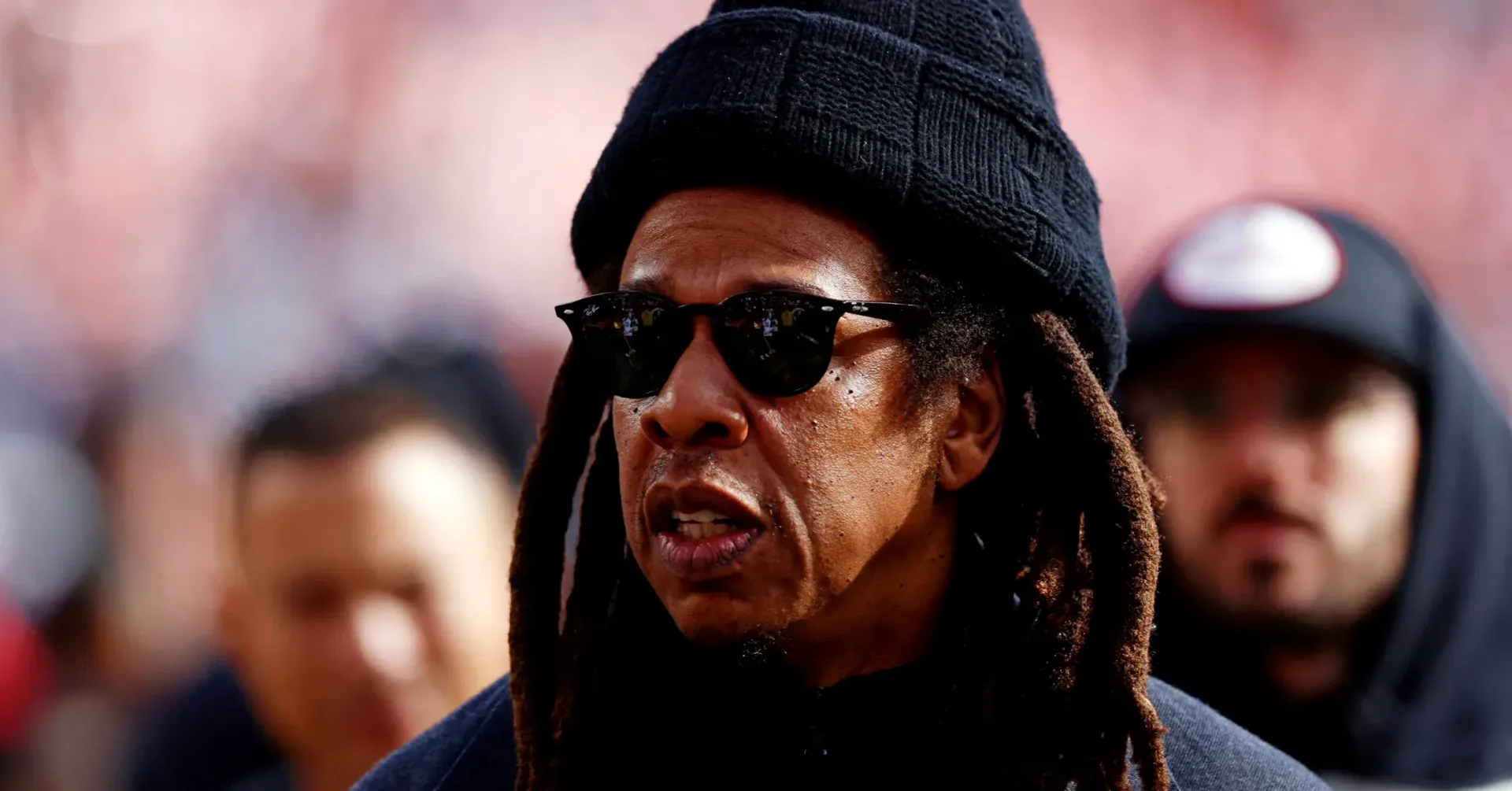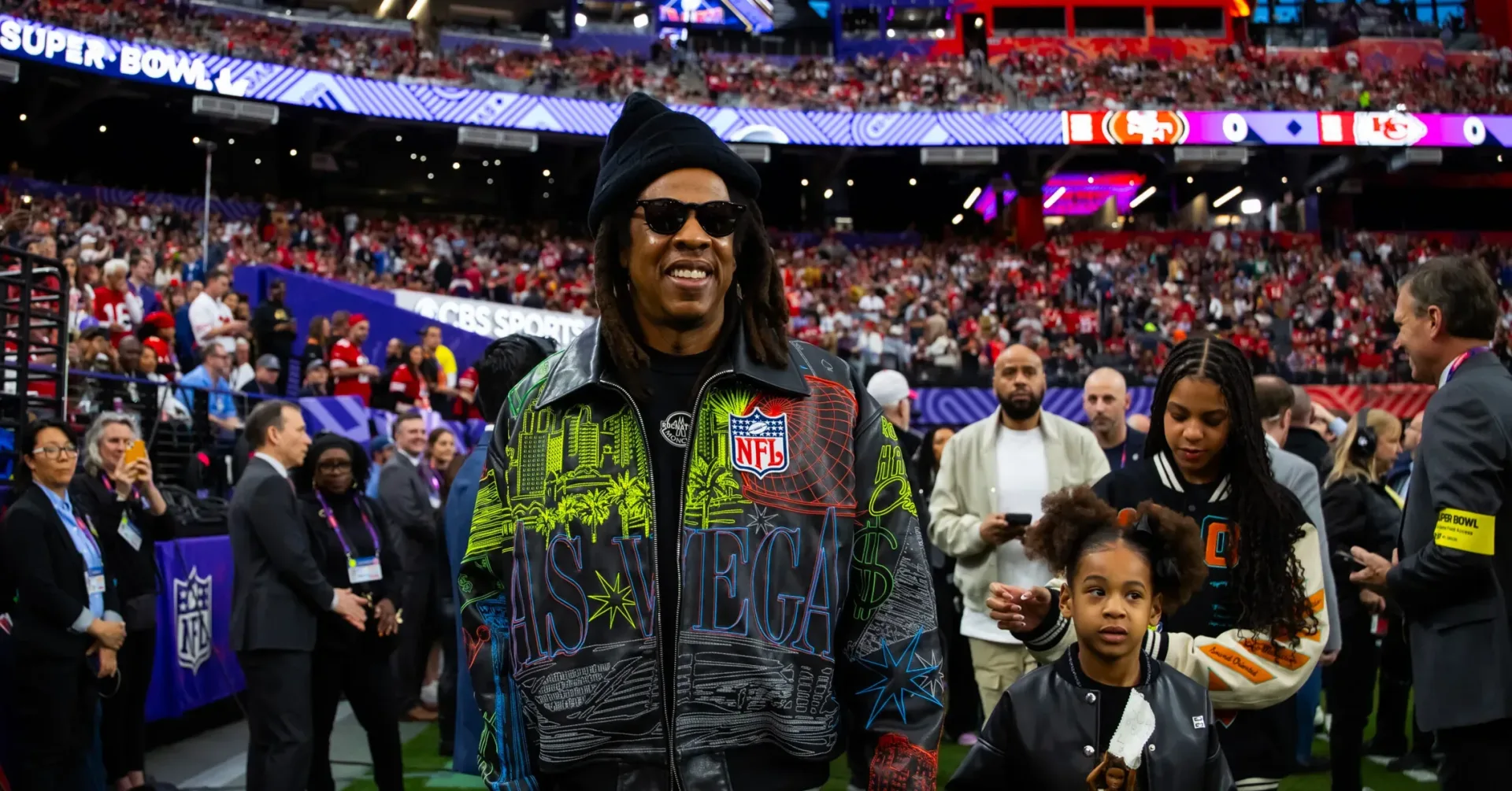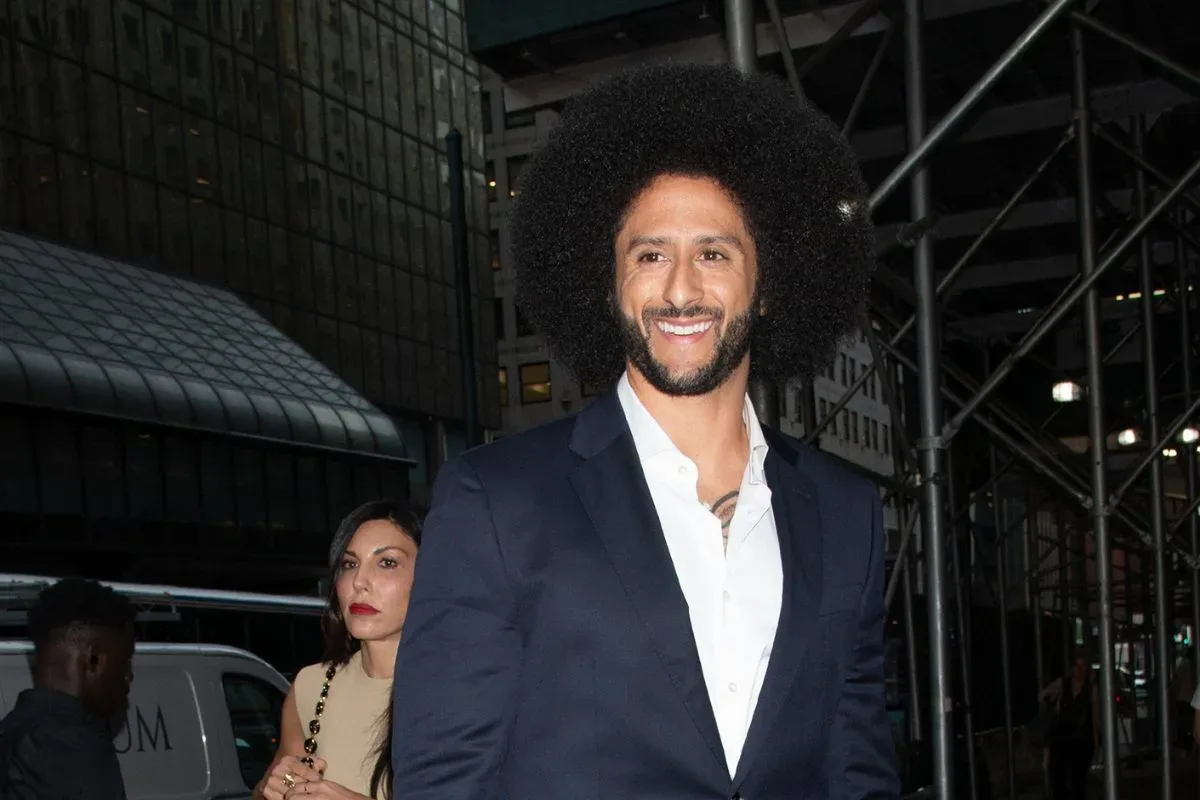
Colin Kaepernick has again challenged the NFL’s handling of player activism, directing particularly sharp criticism at Jay-Z and the league’s long-running partnership with Roc Nation. In comments from a recent interview, Kaepernick argued that powerful institutions often seek to absorb, redirect or neutralize dissent rather than address the conditions that prompted it.
His remarks return to the central tension that has surrounded the NFL since his protest during the national anthem: whether highly visible institutional gestures amount to meaningful change, or whether they can function primarily as reputation management. Kaepernick’s view is clear. He maintains that the league sidelined him while subsequently embracing a more marketable version of social-justice messaging.
The comments are substantial because they do not merely revisit a dispute between a former quarterback and the league. They raise a broader question for entertainment, sport and corporate culture: who gets to define activism once it becomes a major-brand issue?
Kaepernick’s critique of co-option
Kaepernick described a recurring effort to “co-opt” people working for the public good. In this context, co-option means bringing an oppositional message, movement or figure inside an established power structure in a way that can reduce its independence or blunt its challenge to that structure.
That is different from saying any collaboration is inherently cynical. Partnerships can fund causes, expand access or put important messages before larger audiences. But Kaepernick’s criticism is that institutional involvement must be judged against its results, its power dynamics and what it asks activists to give up. An activist’s visibility may rise while their original demand becomes less central; a corporation’s image may improve while its fundamental practices remain intact.
He connected that critique to his own football career, asserting that NFL owners offered him a social-justice role while he remained outside the league as a player. The supplied account presents that offer as a key point in Kaepernick’s argument: he saw a proposed off-field role as insufficient when the question of returning to football had not been resolved.
That distinction matters. A league initiative and a roster spot are not interchangeable forms of participation. The former can make a former player a representative of a program; the latter recognizes the player as a competitor with a place in the sport itself. Kaepernick’s argument is that accepting the former under those circumstances would have changed the meaning of his protest without addressing what he sees as the consequences he faced.
Why Jay-Z and Roc Nation are central to the disagreement
Jay-Z’s Roc Nation partnered with the NFL on entertainment, including Super Bowl halftime-show production. That arrangement placed one of music’s most influential business figures at the center of the league’s cultural presentation. It also created a lasting point of conflict for Kaepernick, who views the partnership as part of an effort to make the NFL look more responsive to concerns about race and social justice.
In the supplied account, Kaepernick used the phrase “black face” to describe what he believes owners sought in the aftermath of the kneeling protests. It is a provocative characterization of representation as public relations: the concern is not simply that Black artists appeared on the NFL’s biggest stage, but that their visibility could be used to signal progressiveness while the league’s relationship with the protest movement remained unresolved.
That framing is Kaepernick’s allegation and interpretation, not an independently established account of the NFL’s internal intentions. The available material does not include a response from the league, Roc Nation or Jay-Z to these specific comments. Still, the dispute illustrates why symbolic representation can be contested. Representation can be meaningful, but it does not automatically settle questions about who holds decision-making power, whose criticism is welcome or what concrete changes follow.
The argument intensified after Jay-Z referenced Kaepernick and his NFL settlement during a May 2026 freestyle at the Roots Picnic in Philadelphia. Kaepernick answered by suggesting the recurring references reflected discomfort with Jay-Z’s continuing relationship with the league. The exchange has turned their disagreement into more than an abstract debate about halftime entertainment; it is now a public conflict over strategy, compromise and accountability.
For readers looking for broader context on the artist’s creative career beyond this political dispute, see this look at Jay-Z’s catalog-spanning conversation with Rick Rubin.
The halftime-show numbers and the image question
The scale of the Super Bowl halftime show helps explain why Kaepernick sees the partnership as consequential. The supplied figures say Dr. Dre and Snoop Dogg’s 2022 set peaked at 137.7 million viewers, Kendrick Lamar’s 2025 performance reached 133.5 million, and Bad Bunny’s 2026 performance reached 135.4 million.
Those are enormous cultural platforms. A halftime booking can affirm an artist’s legacy, put a genre before a vast audience and create a shared entertainment event that is discussed far beyond the game. It can also help a league associate itself with performers and audiences it wishes to reach. Both things can be true at once.
Kaepernick’s analysis puts the emphasis on that second function. He argues that blockbuster performances serve as image rehabilitation for a league he believes suppressed player activism. The technical term image rehabilitation is useful here: it refers to efforts that improve public perception after a controversy, often through highly visible actions, partnerships or messaging. It does not necessarily imply that every artist involved endorses every institutional decision. Rather, it describes the public effect that a major association can have.
There is a practical lesson for audiences, too. Cultural success and institutional accountability are not the same measurement. High viewership proves attention; it does not prove that an underlying dispute has been settled. A popular show can be artistically successful and culturally important while continuing to sit inside an unresolved conflict over power and protest.
Claims involving political and business power
Kaepernick also used the interview to describe the NFL as part of a larger corporate system that, in his view, rewards compliance and punishes dissent. He referenced Donald Trump, Robert Kraft and Jerry Jones while discussing the relationship between political influence, wealthy owners and institutional control.
The supplied material attributes several serious claims to Kaepernick, including claims that team owners acted in response to political pressure and that stadium owners coordinated to limit Macklemore’s opportunities to perform due to his pro-Palestine statements. It characterizes the latter as a boycott organized by Kraft and quotes Kaepernick calling it “openly colluding.”
These are allegations and interpretations presented by Kaepernick. The material provided does not offer corroborating evidence, responses from the people named, or details establishing that such coordination occurred. It would therefore be wrong to present them as verified fact. What can be said is that Kaepernick is using Macklemore’s reported situation as an example of the same pattern he says affected him: institutions exercising control over who receives a platform when political speech becomes inconvenient.
Collusion, in ordinary usage, means secret or coordinated cooperation for an improper purpose. In legal and business settings, it can carry more specific meanings and often requires evidence of an agreement among parties. That is why the term should be handled carefully. A claim of collusion is more than a criticism of a decision; it alleges coordinated conduct. The supplied account does not independently establish it.
What the dispute says about activism in commercial spaces
Kaepernick’s position rejects the idea that visibility alone should count as victory. His criticism asks tougher questions: Does an institution support the substance of a protest, including the people who made it costly? Does it permit criticism after the headlines fade? Can it celebrate socially conscious art while retaining control over the terms on which political speech is allowed?
These questions apply far beyond football. Sports leagues, music companies, game publishers, streaming services and technology firms all rely on public trust while working with artists, athletes and communities whose politics may be sharper than corporate messaging. The business incentive is often to embrace broadly popular language while avoiding positions that could create conflict with owners, sponsors or political allies.
That does not mean every branded social-impact program is empty, nor does it mean every partnership should be dismissed. It means audiences should distinguish between access and agency. Access is being invited into a powerful space. Agency is retaining a meaningful ability to set terms, criticize the host and pursue the original goal. Kaepernick’s account argues that the NFL offered access while withholding agency.
His forthcoming book, The Perilous Fight, is described as arriving this month. Based on these comments, its central concern appears likely to be the mechanics of institutional power: how dissent is managed, how narratives are reshaped, and why public-facing commitments should be evaluated by more than their star power.
For now, the Kaepernick-Jay-Z conflict remains a clash of competing readings of engagement with power. One reading sees major cultural partnerships as a route to influence from within. Kaepernick’s reading is that working within the institution can become part of the institution’s defense. Neither the halftime-show audience figures nor a corporate social-justice label can resolve that disagreement by themselves. The harder measure is whether the people who risk the most to speak out retain a real place in the conversation after their message becomes commercially useful.