Warning: This article discusses the ending of The Odyssey, as well as major thematic elements of Oppenheimer and Dunkirk.
Christopher Nolan has offered a rare direct window into how he views the ending of The Odyssey. In a Q&A moderated by Robert Downey Jr., the filmmaker said the finale grew into a deliberate connection with Oppenheimer—and, by the time he had finished writing it, seemed to him to contain traces of his work as a whole.
“I was finding Oppenheimer [and] I was finding a little bit of [my other films] in there,” Nolan said.
He went further when describing the writing process: “As I wrote the end, I suddenly found a bit of Oppenheimer in there—that sort of connection.” Nolan said a note in one of his notebooks characterized the conclusion as “the ending of all my films rolled into one.”
That is a substantial statement from a director who is generally not inclined to extensively unpack final scenes. It also gives audiences a useful lens for revisiting The Odyssey: not simply as an epic about a homeward journey, but as a story concerned with what a person carries after history-changing violence has already occurred.
Why the Oppenheimer comparison fits
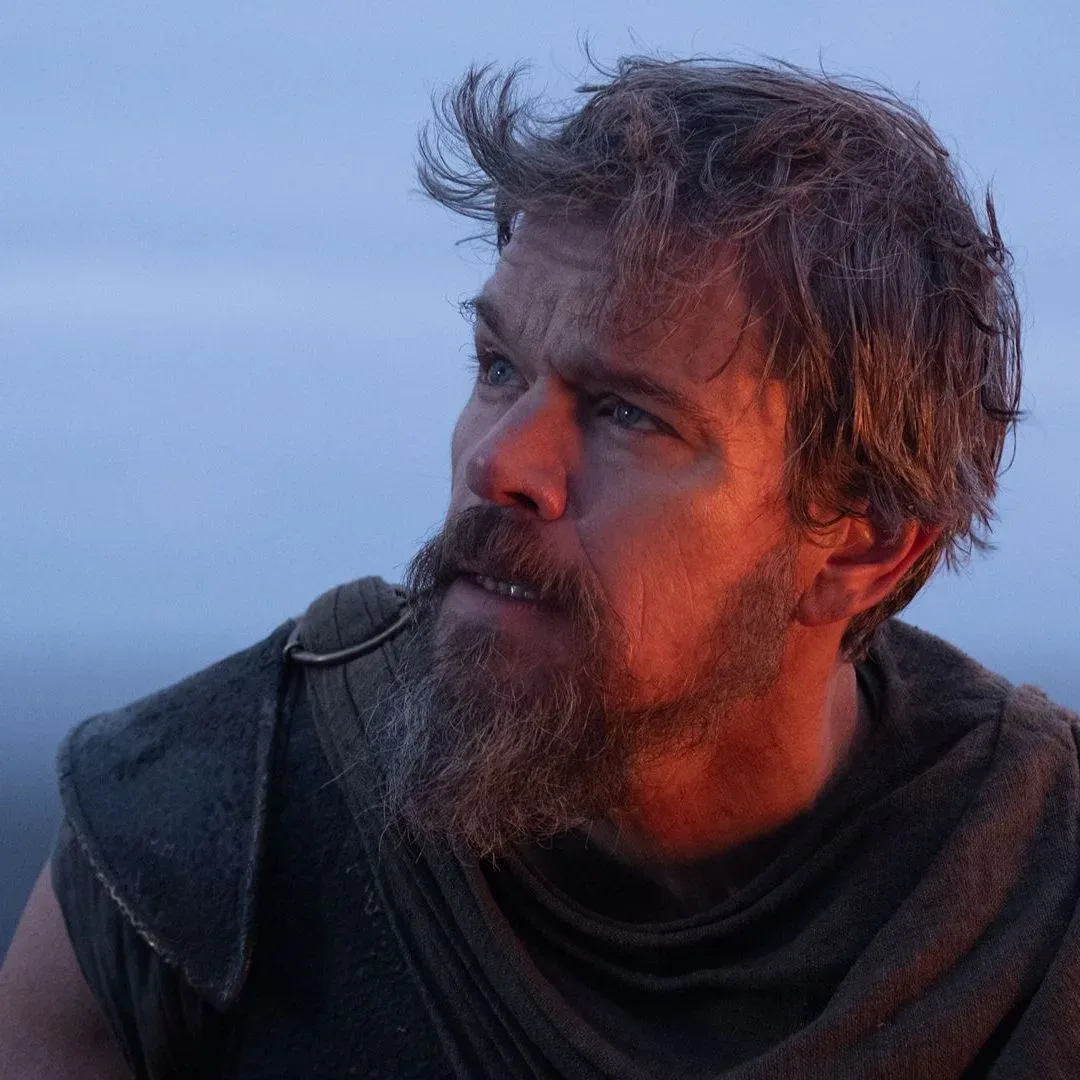
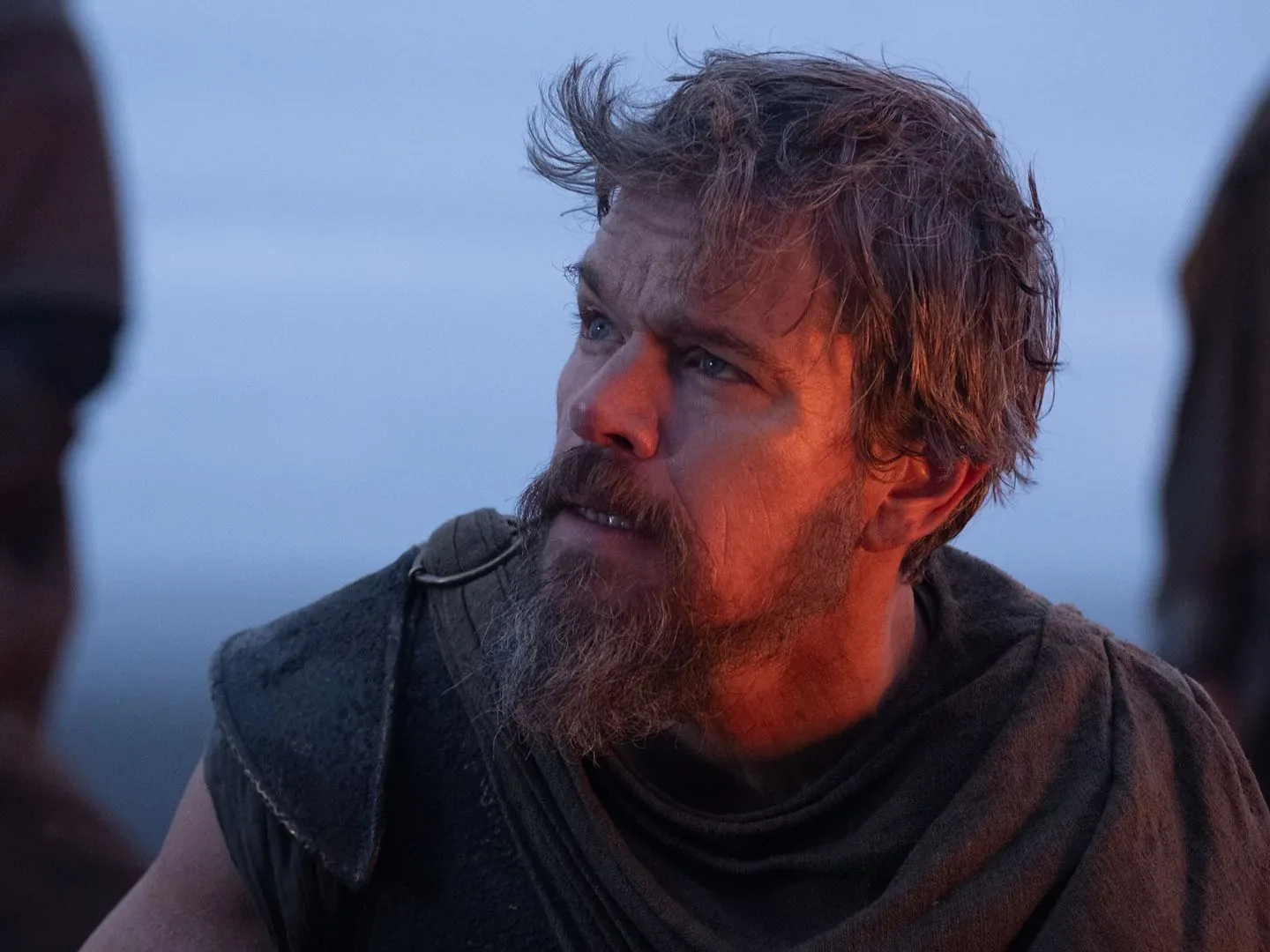
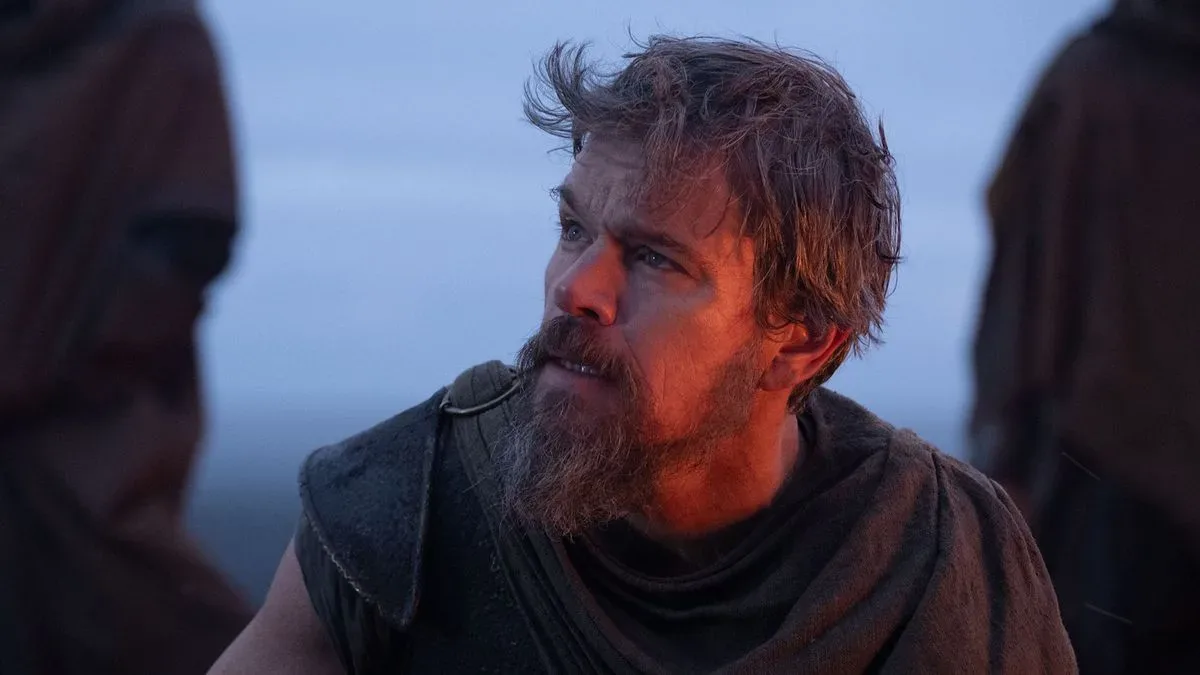
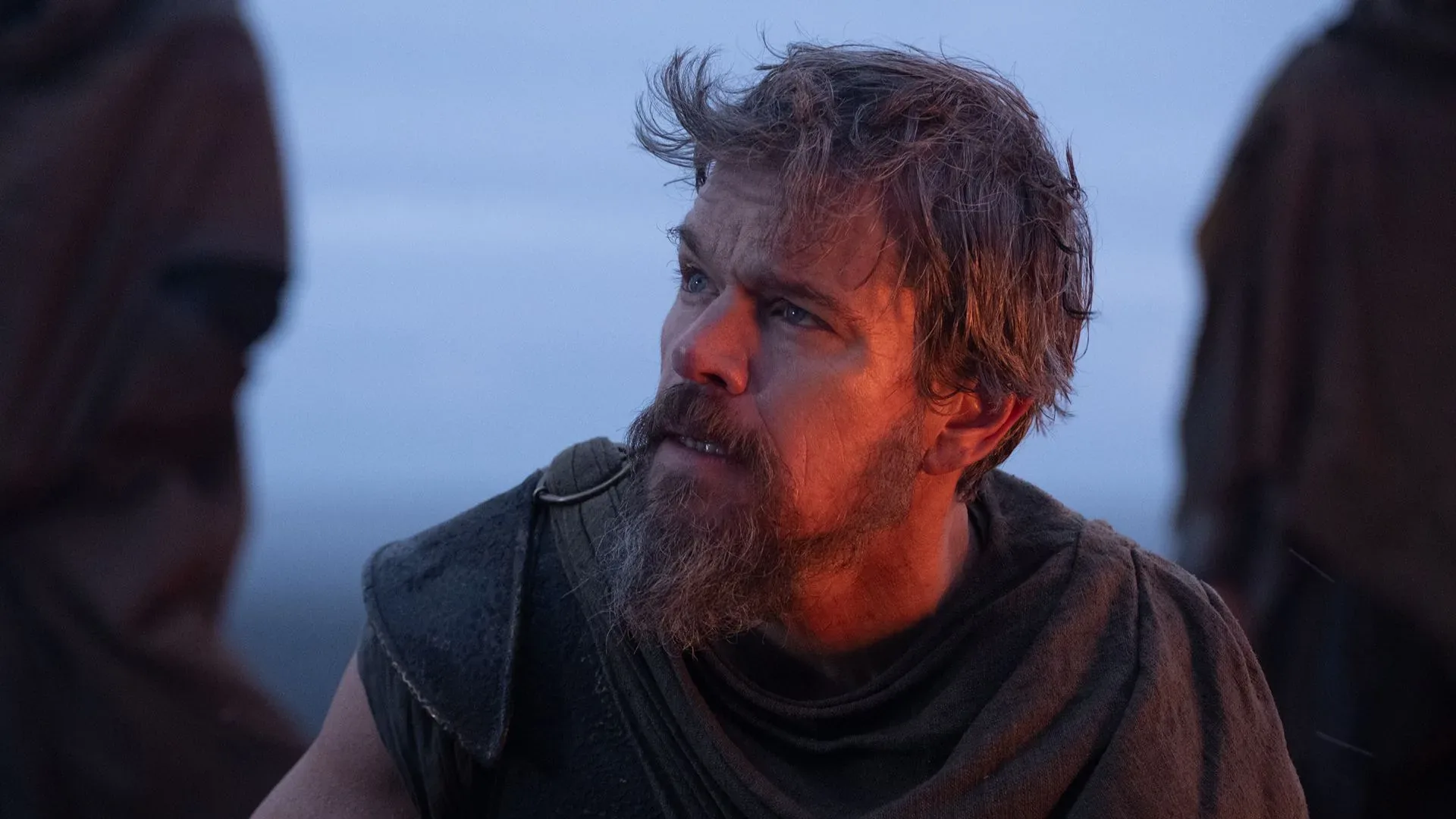
The Odyssey ends with Odysseus sailing away from Ithaca, unable to leave behind the actions of himself and his men at Troy. The story places him at a moment when the boundaries holding society together appear to be weakening. The voyage is therefore not a clean release from the past. Even as Odysseus departs, the memory of Troy—and the consequences of what happened there—travels with him.
Nolan’s comparison to Oppenheimer is grounded in that burden. In the earlier film, its central figure confronts profound guilt alongside an irreversible transformation in the world around him. The two films operate in different settings and at very different points in civilization, but the emotional architecture Nolan identifies is similar: an individual recognizes that the world has crossed a threshold, while also recognizing his own participation in reaching it.
That distinction matters. A character feeling guilty is not automatically the same thing as a film examining responsibility. The ending described here appears to widen Odysseus’ private memory into a larger social crisis. His experiences at Troy are not presented only as personal trauma or heroic legend; they sit beside a sense that civilization itself has reached an unstable turning point.
In that reading, the ending’s power is not about whether Odysseus can physically move on from Ithaca. It is about whether movement is possible when the moral and political consequences of Troy remain unresolved. Nolan’s remarks make clear that this is the connection he saw with Oppenheimer: both endings leave their protagonists facing a future altered by acts they cannot mentally—or ethically—contain.
An ending built from recurring Nolan concerns
Calling the finale “the ending of all my films rolled into one” does not mean Nolan is saying each prior project arrives at precisely the same conclusion. Instead, it suggests that the themes he recognized while writing The Odyssey felt cumulative.
Downey Jr. described that recurrence as “concentric circles,” an image that neatly captures the idea of repeated concerns that return in new forms rather than simple repetition. The observation is especially relevant to Nolan’s own comparison: he can find a connection to Oppenheimer in an ancient-war narrative without reducing either movie to the other.
For viewers, that opens up a more precise way to think about thematic repetition. A repeated image, moral conflict, or ending structure is not necessarily a recycled plot beat. It can be a filmmaker returning to a question that has not become easier: What happens when extraordinary action permanently changes ordinary life? What does accountability look like when an event is too consequential to be understood by one person? And can an ending provide closure without pretending that the damage is gone?
The ending of The Odyssey, as Nolan describes it, appears determined to resist easy closure. Odysseus is sailing onward, but the narrative does not treat that departure as freedom from the past. The final state is closer to reckoning than resolution.
The burning Trojan Horse and the Dunkirk parallel
Downey Jr. also identified a visual connection between Oppenheimer, Dunkirk, and The Odyssey. He pointed to the burning plane in Dunkirk, an image that he sees echoed by Nolan’s focus on the Trojan Horse in flames during the Troy flashbacks in The Odyssey.
The comparison is notable because it links the movies through an image of destruction rather than through direct narrative equivalence. A burning plane and a burning Trojan Horse belong to very different conflicts and eras. Yet both can function as concentrated visual reminders that war’s momentum does not vanish at the moment a decisive act is completed.
In The Odyssey, the flaming Horse is tied to flashbacks of Troy, meaning it exists in the film not merely as a historical object but as part of the memory Odysseus cannot escape. That places the image in conversation with the ending’s broader concern: the past is not safely behind the protagonist simply because he has left the battlefield.
Downey Jr.’s point also helps explain why Nolan’s statement about recurring material should not be mistaken for an admission of self-imitation. The director’s approach, in this description, is one of returning to imagery and questions at different depths. A visual rhyme can establish an emotional association across films while allowing each story to keep its own stakes and context.
What “echoes” mean for viewers
Nolan did not lay out a scene-by-scene map between The Odyssey and the rest of his filmography. His comments should therefore be read as an authorial reflection, not a checklist of hidden references. The clearest supported link is the one he made himself: Odysseus’ final reckoning shares a connection with the guilt and world-changing consequences at the heart of Oppenheimer.
That leaves room for audiences to notice other resonances, but it also calls for some restraint. An echo is a relationship in mood, image, structure, or theme; it is not proof that two scenes have identical meanings. The burning imagery highlighted by Downey Jr. is a particularly useful example. It can invite viewers to think about destruction, aftermath, and memory across Nolan’s work without requiring every flame to stand for one fixed idea.
The most revealing phrase remains Nolan’s notebook note. If the ending felt like a convergence of his films, that likely reflects the scope of the question it poses. Odysseus is not only a survivor of war. He is a person who must continue living after participating in events that seem to signal a rupture in the larger order of the world.
For a story rooted in Troy and Ithaca, that is an unusually expansive ending. It turns the final departure into something larger than the next stage of a journey. It asks audiences to look at the weight of the previous journey—and at the possibility that the consequences are still unfolding.
The Odyssey’s place in the conversation
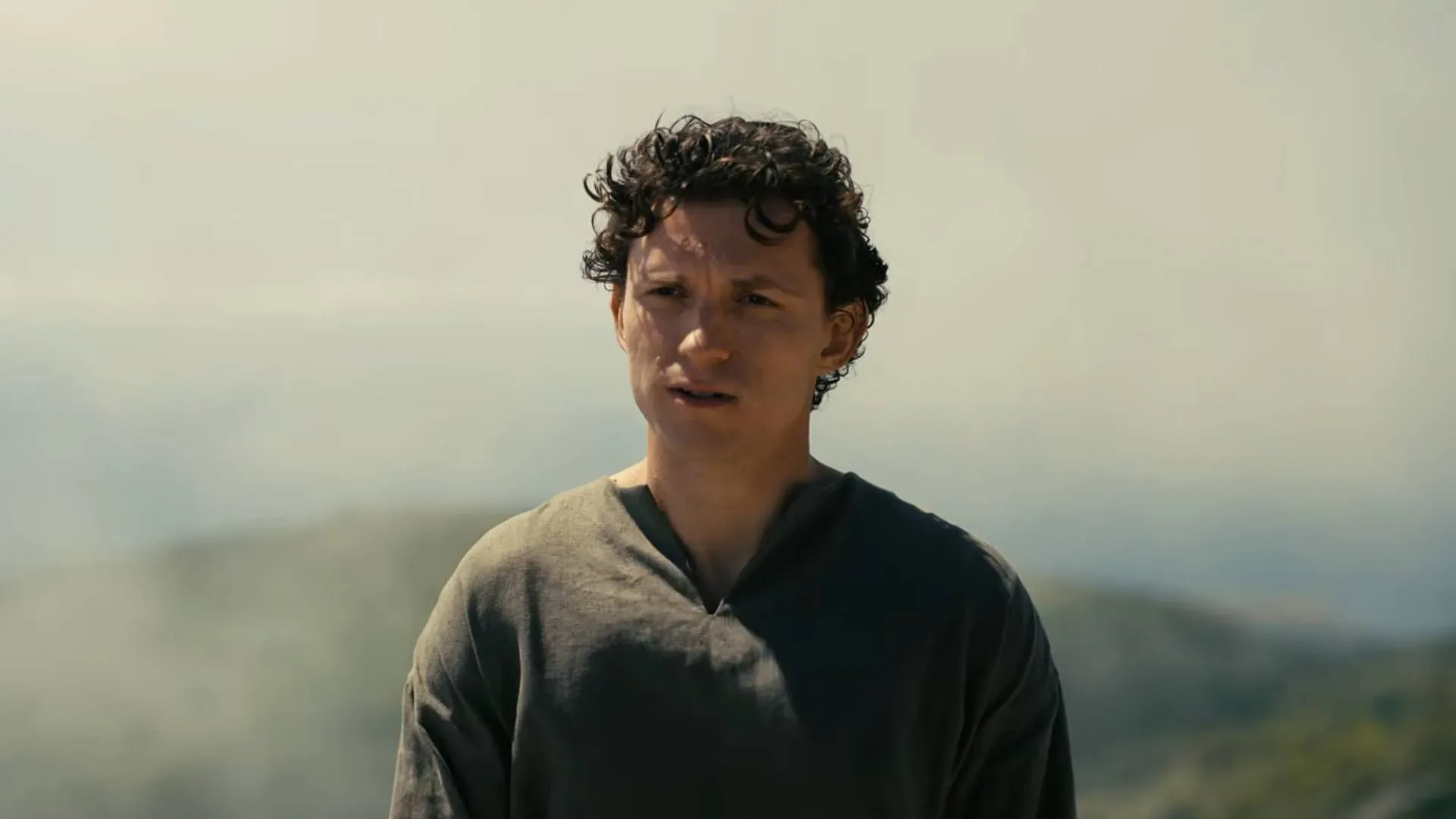
The Odyssey stars Matt Damon, Anne Hathaway, Robert Pattinson, Zendaya, and Tom Holland. It has become Nolan’s biggest box-office success, taking in more than $1.8 billion, and is scheduled for home release on November 17. Early awards conversation has also positioned the film as a potential Best Picture contender at the next Academy Awards, though that remains speculation rather than an outcome.
For Tom Holland, the project has already been described as a creatively significant experience; he has spoken about the confidence and ambition it gave him as an actor in his reflections on working on The Odyssey.
Nolan’s own new comments give the film’s ending a sharper interpretive frame. The final image of Odysseus leaving Ithaca is not presented as a simple final page after Troy. It is an acknowledgment that history has a long wake: personal guilt, collective violence, and a civilization that may not return to what it was. If Nolan saw Oppenheimer in that moment, he also saw a culmination of the questions his films keep bringing back into view.