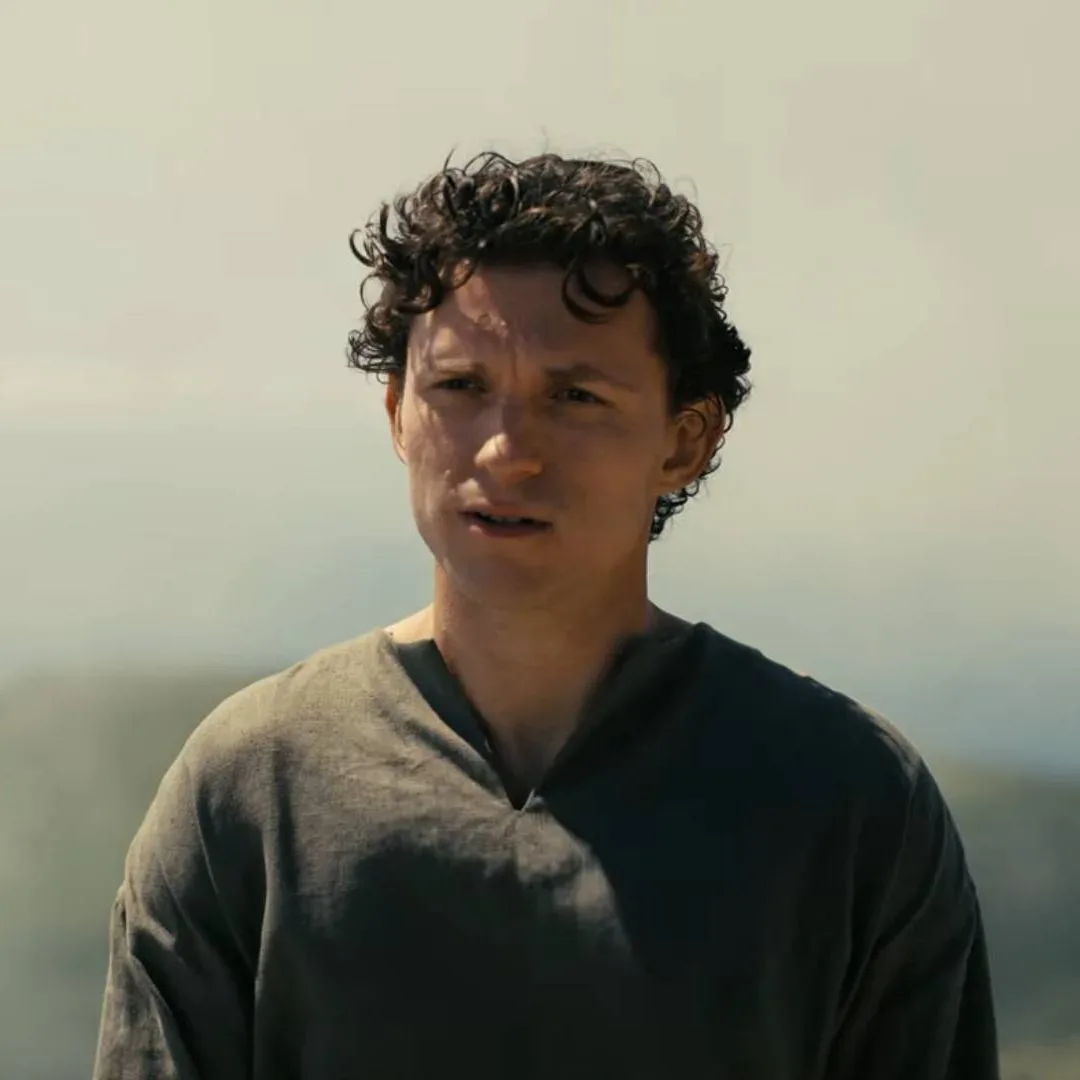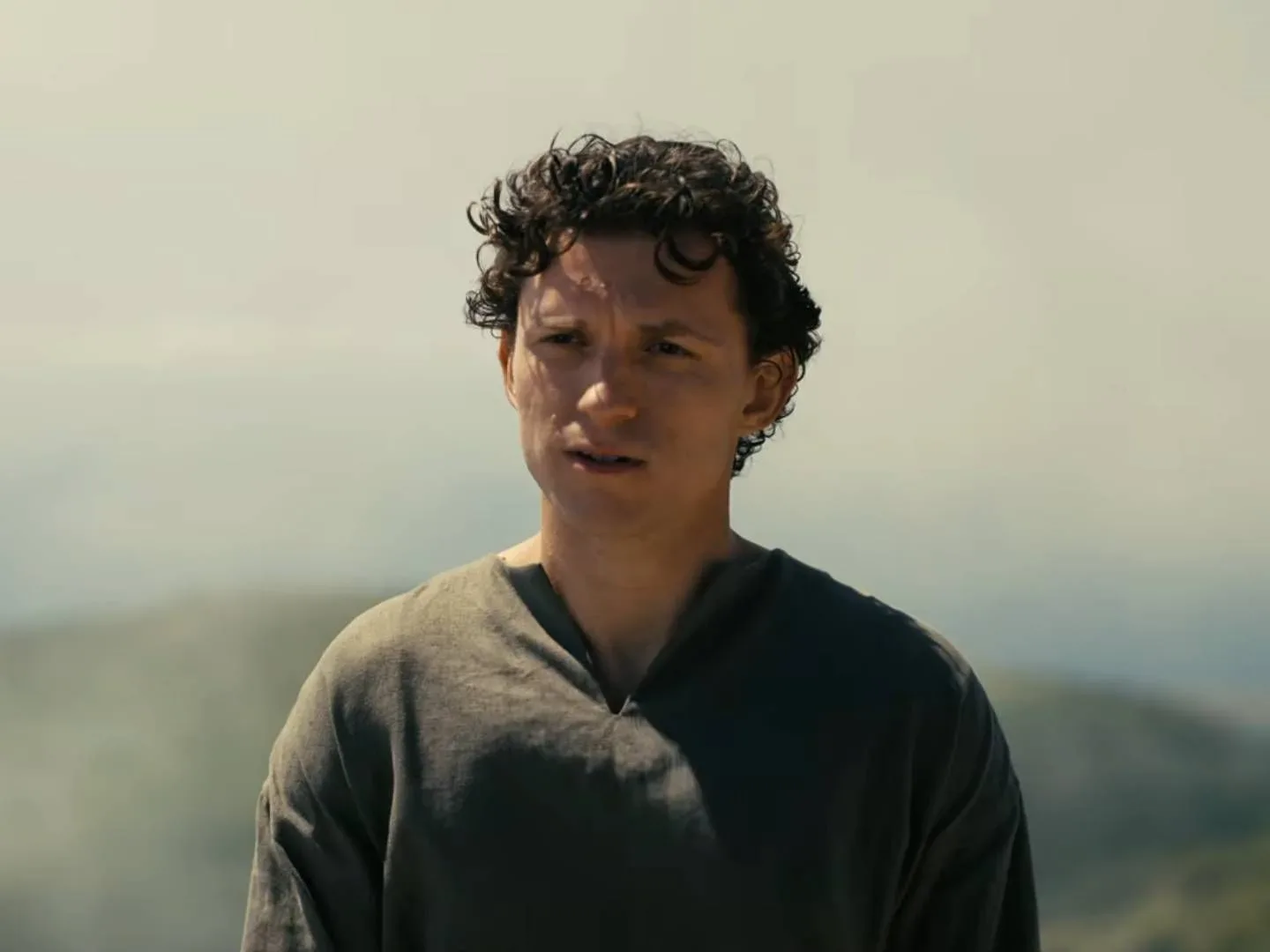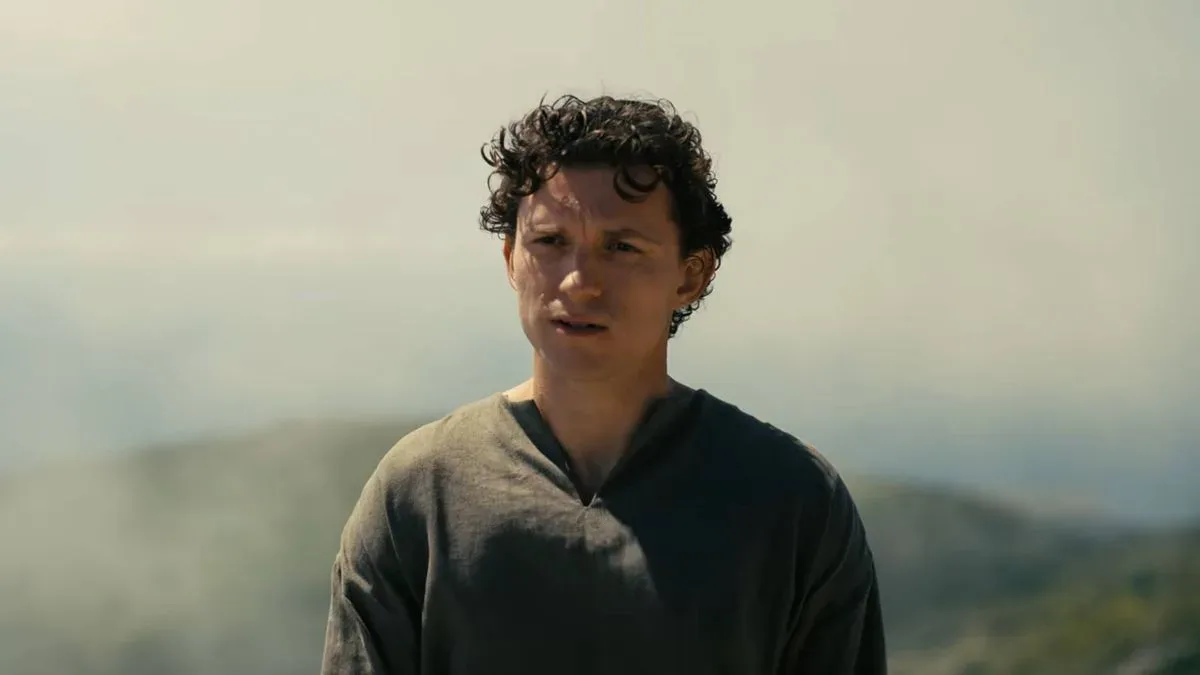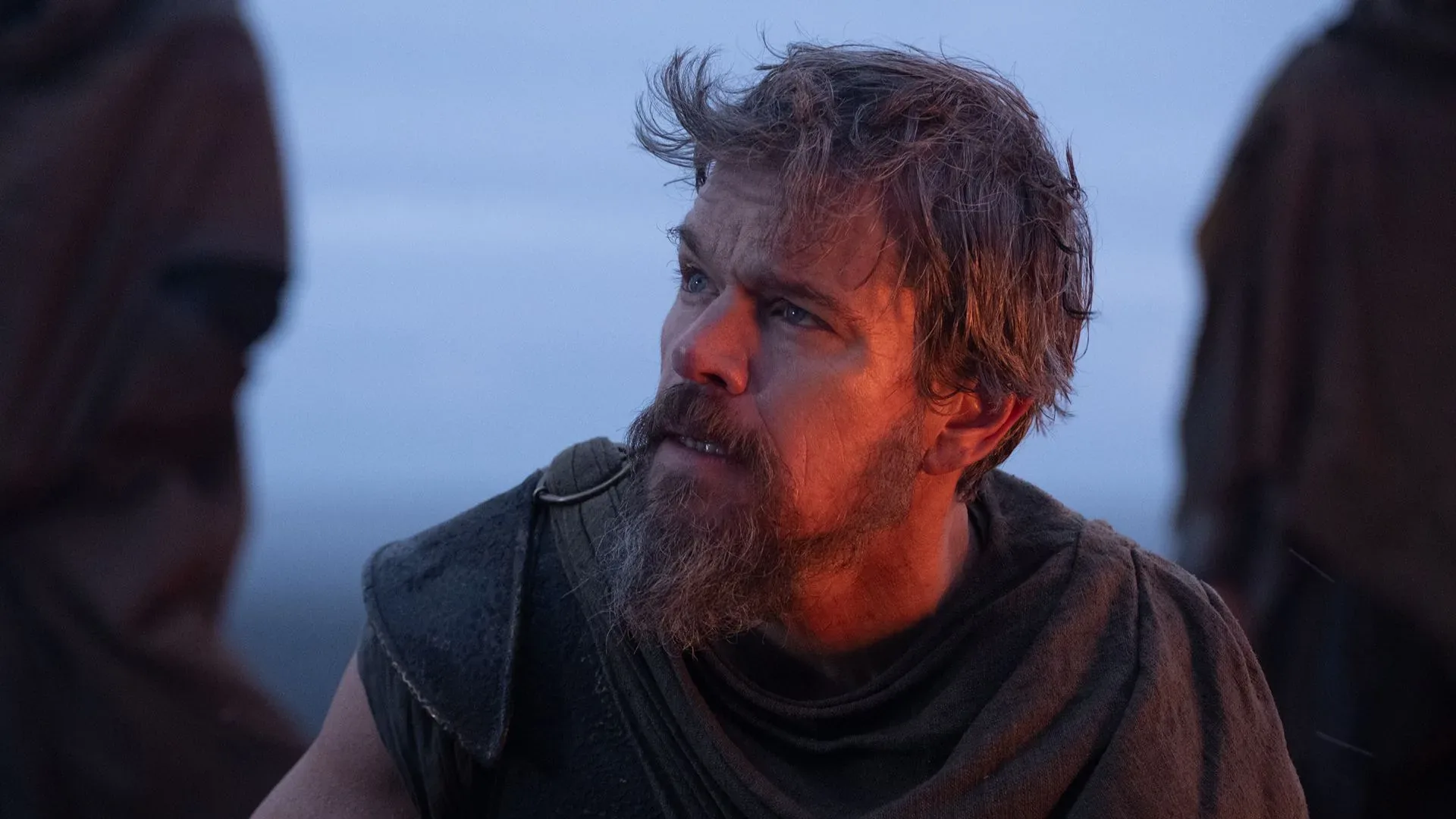
Tom Holland says his work on Christopher Nolan’s The Odyssey has changed how he views his own range as an actor. Speaking at a London Q&A for the film, Holland described the project as a meaningful professional turning point—not simply because of the movie’s enormous reception, but because it gave him confidence he intends to carry into whatever comes next.
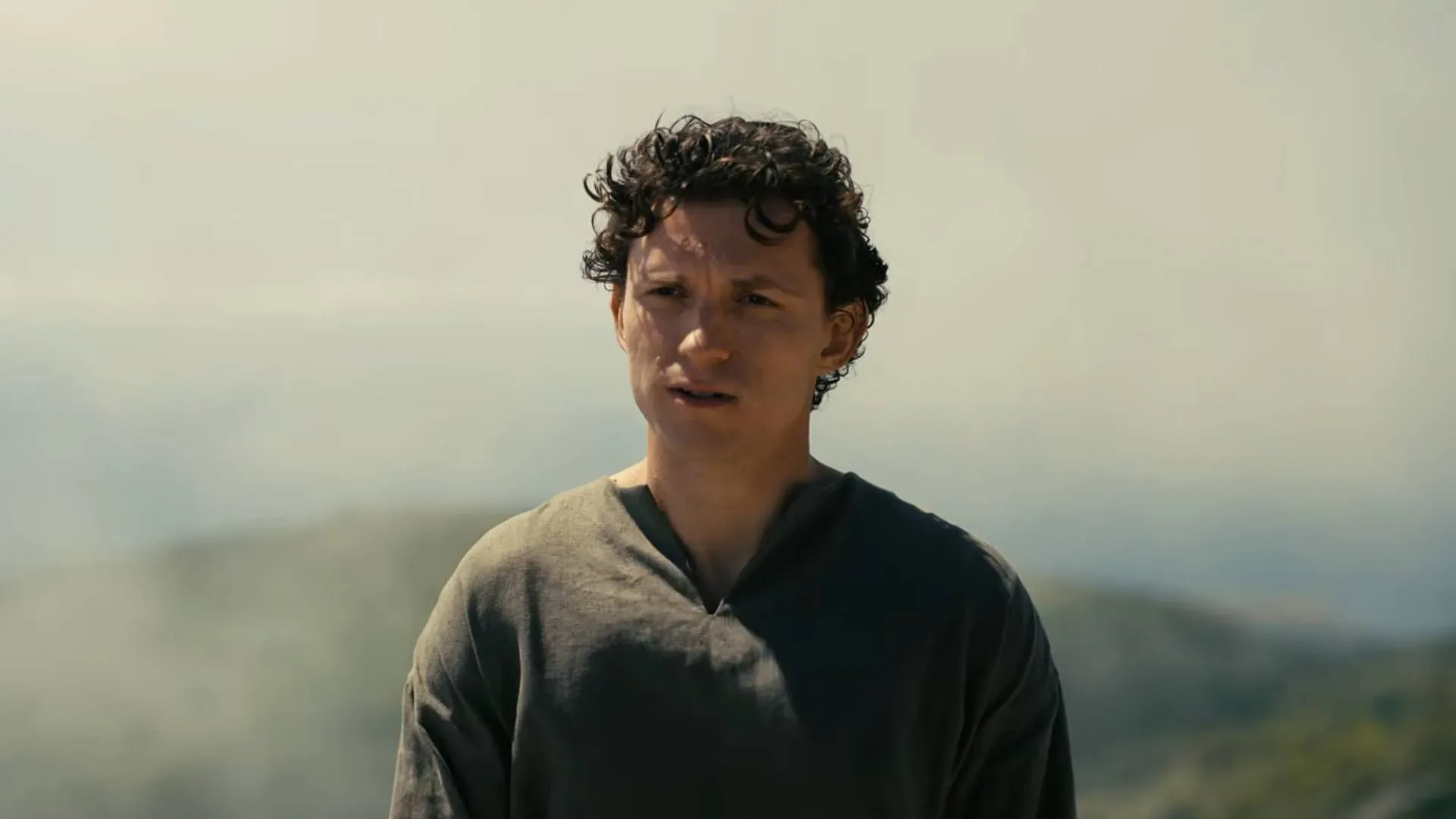
Holland plays Telemachus, the son of Matt Damon’s Odysseus, in Nolan’s adaptation of Homer’s ancient Greek epic. The character occupies a crucial part of the story away from Odysseus’ long voyage: he remains in Ithaca, where the absence of its king has created a dangerous political vacuum.
For Holland, the experience of working with a filmmaker he had admired for years appears to have mattered as much as the scale of the production. He said Nolan’s encouragement gave him “a level of confidence as an actor” that he did not feel he possessed before.
“It’s confidence and ambition to see what else is out there for me,” Holland said of the experience.
That is a revealing way to frame a major studio film. Holland is already one of the most recognizable young performers in blockbuster entertainment, largely through his long-running role as Peter Parker in Marvel’s Spider-Man films. But recognition and confidence are not interchangeable. His comments suggest that playing Telemachus—and doing so within Nolan’s unusually large-scale historical-mythological production—has made him feel readier to pursue roles beyond the expectations attached to his most famous superhero character.
Telemachus is not Spider-Man with a sword
The contrast between Telemachus and Peter Parker is part of what makes Holland’s response understandable. Peter Parker is commonly defined by agility, quick wit, youthful anxiety and a hero’s escalating responsibility. Telemachus faces a very different kind of pressure. He is the son of a missing ruler, living in a kingdom where men seeking to marry his mother are also eyeing his father’s position and power.
In Homer’s poem, and in the film’s stated setup, Odysseus has been away from home for a decade after the Trojan War. Telemachus is left to confront a threat that is social and political as much as physical. The suitors are not merely unwanted visitors; their presence challenges the order of the household and the future of Ithaca itself.
When a mysterious traveller tells Telemachus that Odysseus is alive, he begins working toward his father’s safe return and restoration. That gives the character a clear dramatic movement: a young man who has grown up in uncertainty has to decide what action, loyalty and courage look like when there is no obvious protector to rely on.
It is a role that can demand restraint as well as intensity. Epic stories are often remembered for monsters, voyages, battles and gods, but Telemachus’ thread is grounded in a son trying to preserve a home and a family legacy. Holland’s character is not simply adjacent to the central quest. His circumstances give the story stakes at the destination Odysseus is trying to reach.
Why Nolan’s approval carried weight
Holland spoke warmly about the significance of receiving Nolan’s approval after the work was finished. He described being invited to Nolan’s home to watch the completed film and receiving what he characterized as a reassuring pat on the back. For an actor, that sort of validation can matter because filmmaking is collaborative but fragmented: performers may build scenes over a long shoot without seeing how the final edit will shape their work.
“A sense of achievement” is how Holland described the feeling he now takes toward his next project. It is a useful distinction. Confidence here does not necessarily mean believing every future role will be easy. It means having completed something challenging enough to revise one’s sense of what is possible.
Nolan’s productions are associated with exacting logistical demands, ambitious visual scale and actors working within tightly constructed narratives. The Odyssey was shot on locations around the world, including remote Greek caves and the open sea. Nolan used 400 miles of film during production, emphasizing the unusually physical, large-format nature of the undertaking.
Film stock is the light-sensitive material used by a film camera to record images. Stating a total in miles does not, by itself, explain the final runtime or how much footage audiences see; productions shoot numerous takes, angles and scenes that never appear in the final cut. What it does communicate is the size of the material handled during the shoot and the scale of Nolan’s process.
Matt Damon, who plays Odysseus, has also characterized the experience as difficult but joyful, saying he went without sleep for days while embracing the unpredictability of a production he felt was unlike anything he would make again. That perspective gives additional context to Holland’s remarks. The film’s lasting impact on its cast seems connected not solely to commercial success, but to the challenge of making it.
A giant hit is not the whole story
The Odyssey opened to strong reviews and earned $1.8 billion worldwide. Its demand was also substantial enough that IMAX screenings sold out for months. Those figures make the movie a major theatrical success, but Holland’s comments carefully point somewhere more personal than box-office status.
A hit can increase an actor’s visibility, yet it does not automatically change how they approach their craft. Holland instead highlighted a feeling of growth: the confidence to enter another production with a new belief in what he can do. That is a more durable takeaway than attaching his career ambitions to one result.
There is also a practical career dimension. Audiences who know Holland mainly from the Marvel Cinematic Universe have seen him perform in a modern comic-book framework with its own rhythms, continuity and global franchise profile. Telemachus places him in a very different dramatic register: a classical character in a story of war, absence, inheritance and a threatened kingdom.
Taking on distinct material does not mean abandoning popular franchises. It does, however, give performers opportunities to avoid being reduced to one familiar image. Holland’s comments do not announce a specific next role or a change in direction. They express an ambition to discover what other opportunities might be available now that he has worked through this particular kind of project.
For superhero-film followers, the comment is especially interesting because Holland’s Peter Parker remains such a defining part of his public identity. The broader Marvel conversation continues to generate speculation around returning characters and future crossover possibilities; recent discussion around another MCU veteran can be found in this look at questions surrounding Gwyneth Paltrow’s Pepper Potts. Holland’s own remarks, though, are focused on an artistic takeaway from The Odyssey, not on a newly announced franchise plan.
What the role represents for Holland
The story of Telemachus is fundamentally about someone coming into agency under difficult circumstances. His father’s absence has left him with a name and an inheritance, but not with security. He must respond to people exploiting that absence and act on the uncertain possibility that Odysseus may still be alive.
There is an understandable resonance between that character arc and Holland’s description of his professional moment. This is not to say that actor and character have the same journey; they plainly do not. But Telemachus is a role built around finding the capacity to act, and Holland has said the production made him feel more capable of stepping toward bigger possibilities.
That makes his praise for Nolan more specific than a routine compliment after a successful release. He credits the collaboration with helping him see himself differently as a performer. His statement also leaves the door open rather than claiming to have found a final destination: he has gained ambition to find out “what else is out there.”
For now, the clearest result is that The Odyssey has become an important marker in Holland’s career. The film paired a blockbuster-sized audience with a character far removed from his signature web-slinger, placed him in a demanding location-based production, and gave him an experience he says he will bring forward into his next job. Whatever that project proves to be, Holland has made clear that he approaches it with more confidence than before.