
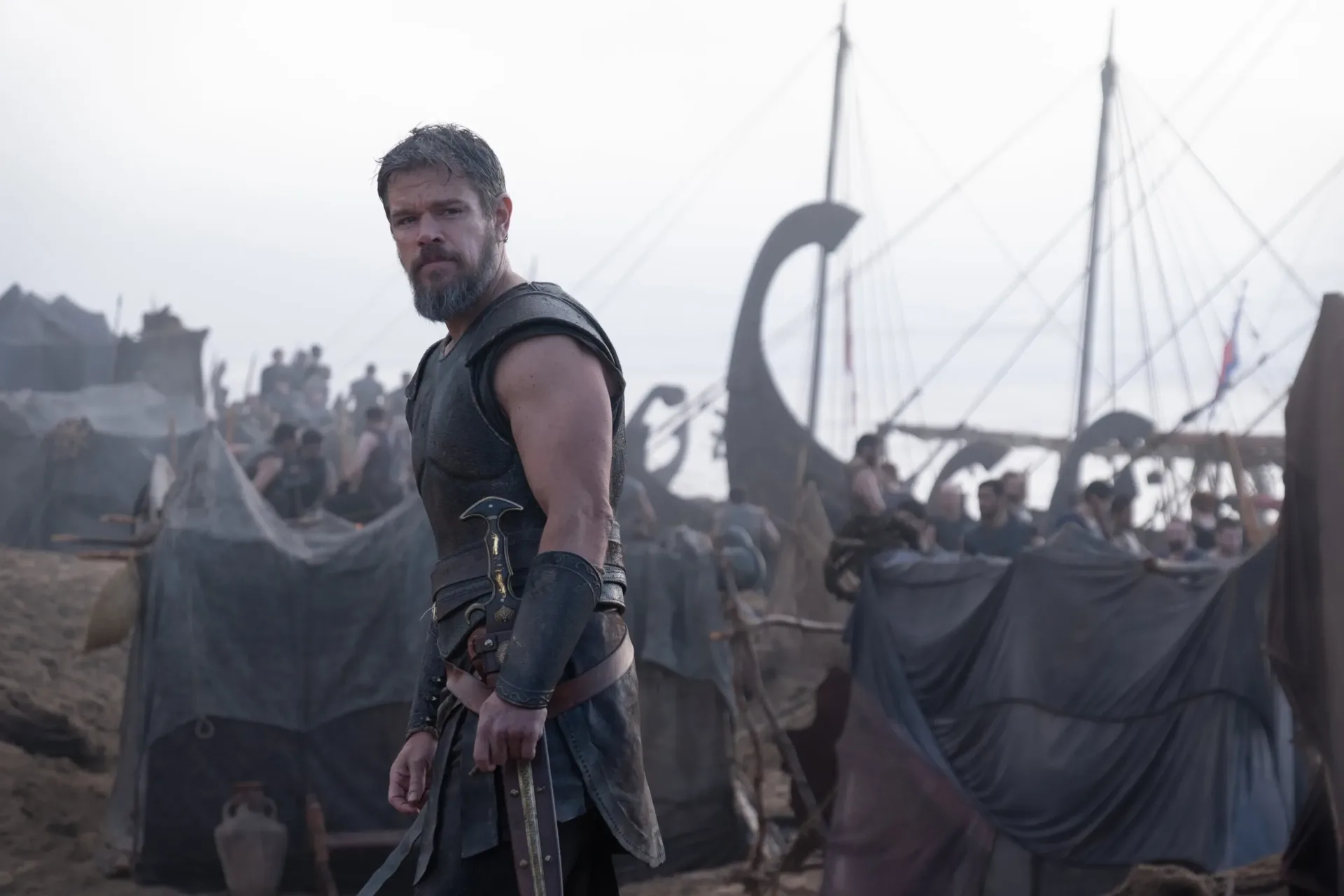
Christopher Nolan’s The Odyssey is making another trip to theaters on Dec. 11, returning across more than 1,000 screens in the United States and Canada. Universal’s new run will include all available formats, from conventional presentations to Imax and Imax 70mm.
That format detail is the big one for moviegoers who missed the film’s earlier large-format engagements. Imax 70mm is not simply an Imax logo attached to a regular screening: it refers to a large-format film projection presentation, and it requires specialized equipment that is not available at every Imax venue. The renewed release gives audiences another opportunity to seek it out, though a theater’s individual listings will determine which formats are actually being shown at that location.
The re-release follows a limited Imax and Imax 70mm return in early October. This December expansion is substantially broader, covering more than 1,000 venues across the two countries while retaining the premium options that became central to the movie’s theatrical identity.
A massive theatrical run for an adult historical epic
First released July 17, The Odyssey has already built a remarkable box-office record. The three-hour, adult-oriented historical drama earned $626 million domestically and $1.8 billion worldwide. Those totals made it both Universal’s highest-grossing film and Nolan’s highest-grossing film, while placing it second among 2026 releases behind Spider-Man: Brand New Day.
Those numbers help explain why the film is returning so soon and so widely. A theatrical re-release is not necessarily just a victory lap: it gives people who could not attend an initial premium-format screening another window, while also giving returning viewers a chance to see a format that may not have been accessible in their region during the original run.
For a film this long, the choice of format is also a practical consideration rather than mere collector-style bragging rights. A three-hour movie asks audiences to commit an afternoon or evening. Viewers deciding between a standard showtime, digital Imax and Imax 70mm may want to weigh the available times, travel involved and the sort of presentation they most value. The new release is broad, but the rarest format still depends on local theater capability.
What “shot entirely in Imax” means here
The Odyssey was the first feature shot entirely in Imax. In basic terms, that means the production used Imax cameras for the whole film rather than reserving the format for selected sequences. It is an important distinction because movies often mix formats, with some scenes framed or photographed differently from the rest.
That production choice does not mean every screening is projected from 70mm film. The December engagement includes multiple formats, and each is its own presentation path. A standard screen, an Imax screen and an Imax 70mm screening can all be legitimate ways to see the same movie; they are not interchangeable labels, however. The Imax 70mm option is the specifically limited one because it relies on specialized film projection infrastructure.
Related coverage includes Christopher Nolan’s The Odyssey Set for Dec. 11 Imax 70mm Return.
It is worth resisting a common shorthand here: “Imax” and “Imax 70mm” are related, but they are not the same term. Imax can describe a theater presentation and branded screen system. Imax 70mm identifies a particular large-format film presentation. The distinction matters for anyone traveling for a screening, particularly when showtimes or ticket pages use broad premium-format language.
The film’s format-focused rollout has also produced major results for Imax itself. Over a three-month period, The Odyssey generated $550 million worldwide in Imax ticket sales, making it the company’s highest-grossing film. It also set the record for the biggest domestic opening in Imax 70mm.
Odysseus’ homeward journey, with an expansive cast
Nolan’s film adapts the ancient Greek poem about Odysseus, the king of Ithaca. Having emerged victorious from the decade-long Trojan War, Odysseus faces an arduous journey home and seeks to reclaim his throne.
Matt Damon stars as Odysseus. The cast also includes Tom Holland, Anne Hathaway, Robert Pattinson, Zendaya, Lupita Nyong’o, Charlize Theron, John Leguizamo, Elliot Page and Jon Bernthal.
That combination of classical source material, a large ensemble and technical spectacle helps clarify why the theatrical format has remained part of the conversation around the release. The story itself is an ancient journey narrative, but the presentation is built around a contemporary premium-cinema event. The scale is not a substitute for the narrative; it is the delivery system for it.
There is a useful parallel with games, where technical presentation can shape the way an audience approaches a work without changing the core text. A player may choose between performance and visual settings, while a filmgoer may choose between available screens and projection formats. Neither decision makes one person’s encounter automatically more valid. But each can change what the audience notices and how it experiences scale, image detail and sound. Screen storytelling also remains an active part of game culture, as seen in the planned documentary examining BioWare’s final years.
How to approach the Dec. 11 return
For people primarily interested in seeing the film—not necessarily making a special trip—the expanded release should provide far more options than the earlier limited Imax engagements. Since the return includes more than 1,000 theaters in the U.S. and Canada, standard and non-70mm premium presentations may be the most convenient route in many areas.
For viewers specifically looking for Imax 70mm, the sensible approach is to confirm the exact format on the theater’s listing before making plans. A venue may offer Imax screenings without offering Imax 70mm, and availability can vary by city. The early-October limited run demonstrated the demand for those screenings; the Dec. 11 re-release creates another chance, but it does not turn every participating cinema into a 70mm location.
- Release date: Dec. 11.
- Territory: United States and Canada.
- Scale: More than 1,000 screens.
- Formats: All formats, including Imax and Imax 70mm.
- Important check: Verify the individual theater’s listed presentation format rather than assuming every Imax location is showing 70mm film.
A re-release with awards season in view
The return arrives as The Odyssey enters the wider awards conversation. One awards forecast has the film in contention across nearly every major category, including best picture, supporting actress, casting, cinematography, editing, sound and original score, with projected wins in those fields. Those projections are expectations rather than results, but the film’s commercial performance and format profile give it unusual visibility for a historical drama of its length.
The Dec. 11 run therefore serves several audiences at once: newcomers who missed the summer release, viewers who could not reach an Imax 70mm theater during the first run, and fans who want to revisit the film before awards season develops further. In a theatrical year where premium screens can be difficult to access, another wide release is the straightforward part. Finding the exact projection format desired is still the quest.