Christopher Abbott has looked back candidly on his time in Kraven the Hunter, saying he felt during production that the Spider-Man spin-off was not going well—and that he was never fully clear on how his own character’s powers were meant to work.
Abbott played The Foreigner in the 2024 film, opposite Aaron Taylor-Johnson’s Kraven. In remarks about the experience, Abbott said he did not understand what he was doing in the role, describing it as a difficult learning curve rather than a part he remembers fondly. His confusion centered on the character’s hypnosis-related ability, including the significance of removing his glasses.
“I didn’t understand what the superpower was; I didn’t know what was going on,” Abbott said. “I take off my glasses? What happens? I feel like no one really had a good answer.”
Abbott also said he felt in the moment that the production was not going well. Reflecting on the costume and performance, he added that he has “sort of buried that deep,” while characterizing the project as a learning experience.
What Abbott’s criticism actually says
The striking part of Abbott’s recollection is not simply that an actor disliked a finished film. Performers can have mixed feelings about any production, especially after it has reached audiences. His comments instead point to a more basic issue: uncertainty about the character’s internal rules while making the movie.
In a superhero story, an audience can accept almost any power if the movie makes its cause, limits, and consequences readable. “Hypnosis,” in this case, is the stated concept attached to The Foreigner’s ability. At its simplest, hypnosis in fiction describes one character influencing another person’s perceptions, choices, or state of mind. That can be visually dramatic, but it also needs a clear screen language. Viewers and performers need to understand what triggers it, what it changes, and why a particular gesture or prop matters.
Abbott’s mention of taking off his glasses is revealing because it identifies a visual action without a settled dramatic meaning. A superhero costume detail can function as a cue for the audience: a mask may signal a secret identity, a device may activate a weapon, or a change in appearance may indicate that a power is in use. If the performer cannot tell what that cue is communicating, the risk is that the audience will be asked to infer rules the film has not sufficiently established.
That does not mean every unanswered question is automatically a flaw. Mystery can be valuable, and ambiguity is sometimes intentional. But Abbott did not frame the issue as deliberately mysterious. He described a lack of answers around a key aspect of his character. That is a notably different problem from leaving viewers room to speculate.
A comic-book adversary brought into a struggling spin-off
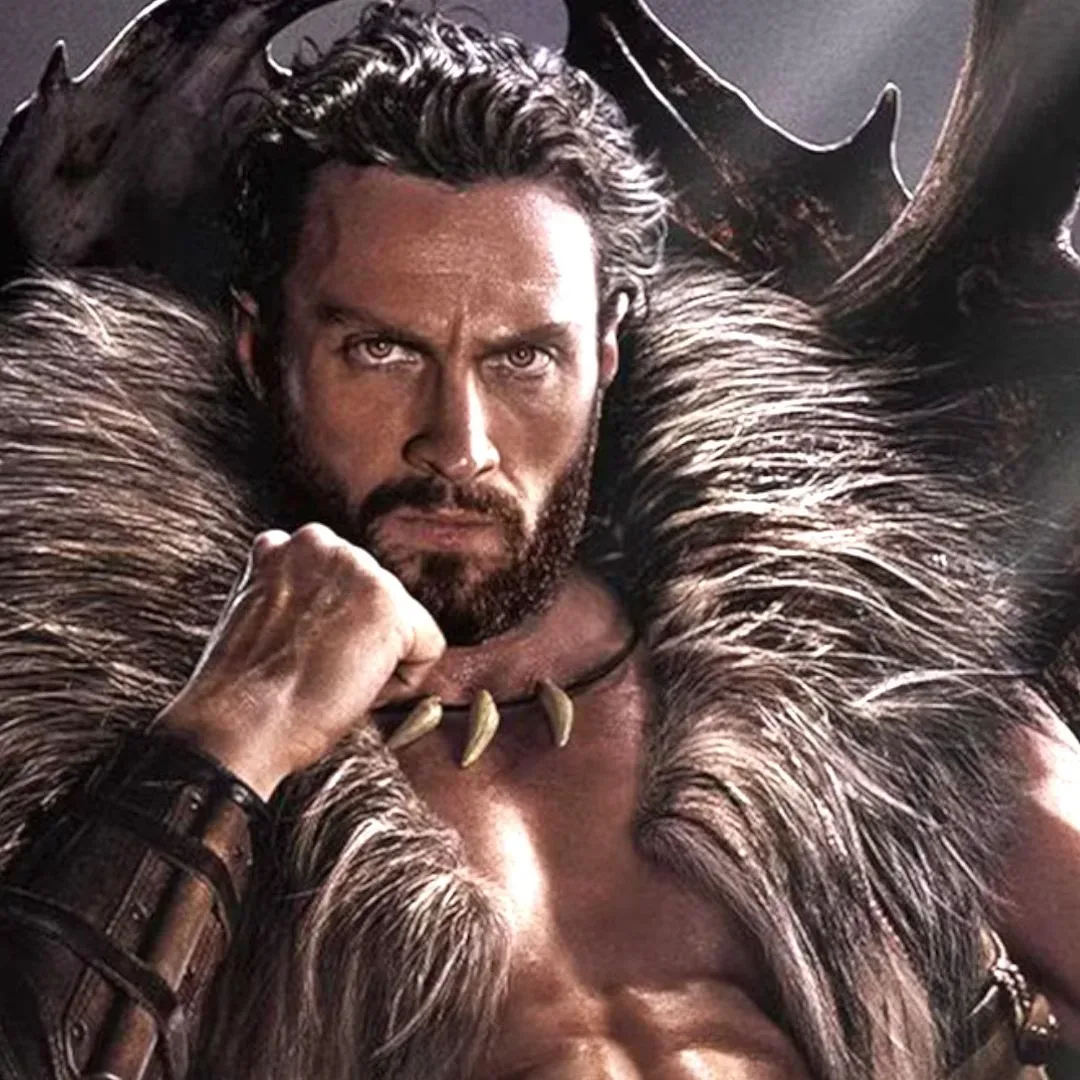
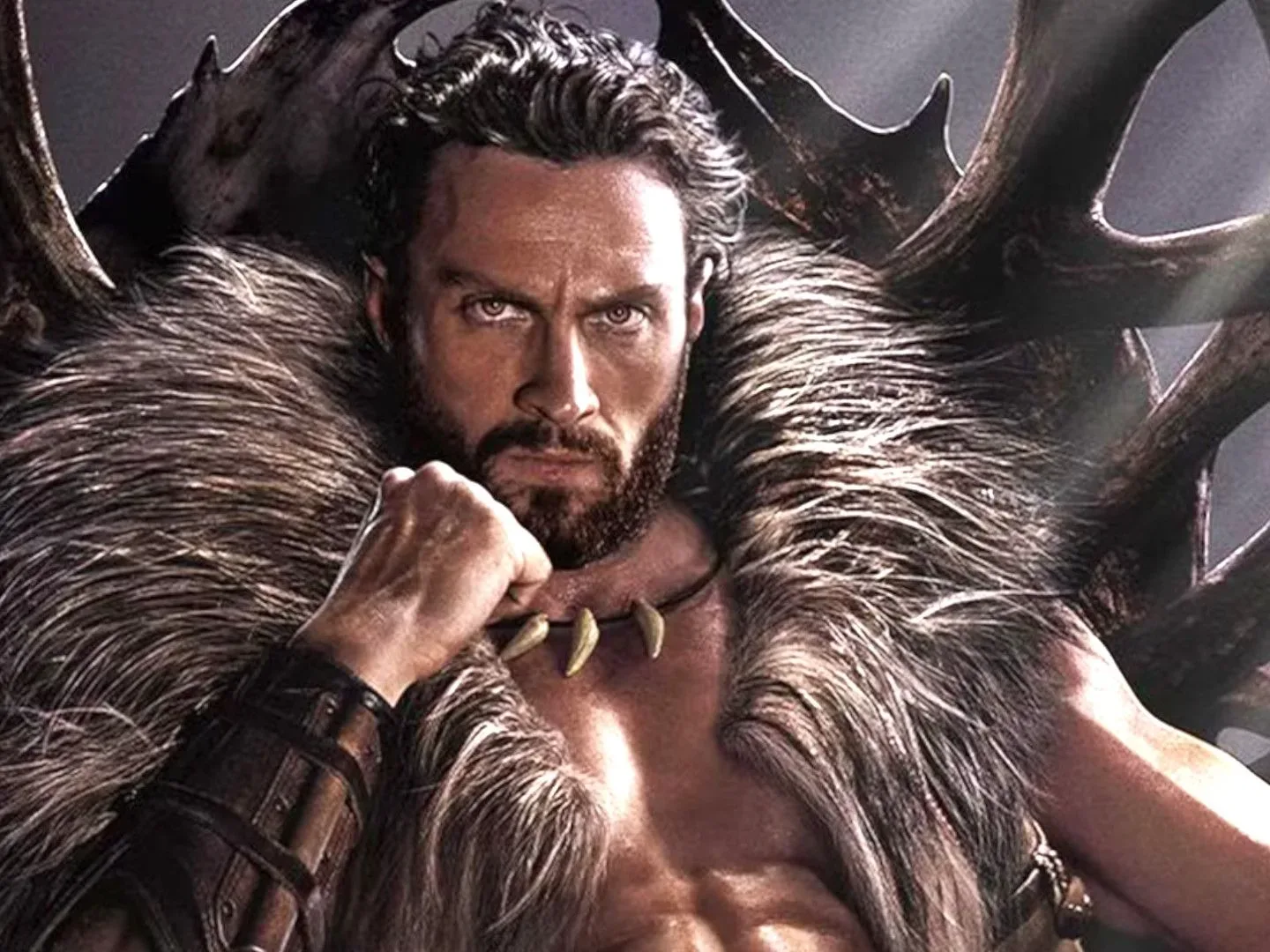
Kraven the Hunter put Taylor-Johnson in the title role as the hunter who has long been a Spider-Man antagonist in Marvel comics. The project was a Spider-Man spin-off, meaning it was built around a character connected to Spider-Man rather than Spider-Man himself. That approach can give a familiar comic-book rival more room to lead a story, but it also raises a difficult creative question: what makes the supporting character compelling once removed from the hero who helped define them?
For a spin-off to land, it generally has to make the central figure feel complete on their own terms while still honoring the connection that made audiences recognize the name. Abbott’s comments do not answer whether Kraven the Hunter solved that challenge. They do, however, describe uncertainty at the character level, where clear motivation and understandable powers are especially important.
The film generated $60 million worldwide. That result was described as a box-office bomb on release. The figure alone does not explain every reason a movie performs the way it does, and it should not be used to pin a film’s outcome on one actor, one sequence, or one creative decision. Still, Abbott’s retrospective offers a performer’s perspective on a release that struggled commercially: he says the uncertainty was present before audiences ever saw the finished movie.
Why “learning curve” is the key phrase
Abbott’s language is harsh, but it is not solely dismissive. Calling the experience a learning curve suggests he views it as part of his professional development, even if it was an uncomfortable one. There is a practical distinction between saying a project was disappointing and saying it taught an actor something about the kind of preparation, clarity, or creative communication a role requires.
Film performances depend on more than an actor being told where to stand or what dialogue to say. In a genre production, performers may need to calibrate reactions to effects, powers, costumes, and scenes that will take their final shape later. They still need a shared understanding of the dramatic stakes. If a character has an unusual ability, the actor benefits from knowing not only the mechanical trigger but also what the power means emotionally: is it intimidation, control, seduction, fear, confidence, or vulnerability?
Abbott’s account implies that this foundation did not feel firm to him on Kraven the Hunter. His comments about not knowing what he was wearing underline the same point. Costumes in superhero cinema are not merely decorative; they frequently carry story information and can shape how a performer moves, holds themselves, and relates to the role. When the purpose of a look or action is unclear, the performance can become an exercise in executing isolated instructions rather than playing a coherent character.
That is analysis of the issue Abbott describes, not evidence of a single confirmed cause for the film’s reception. A finished feature involves many departments and countless decisions. But the clarity of a character’s powers is not a trivial detail. It is often part of the audience’s route into the story.
Abbott is heading to X-Men as Professor Xavier
Abbott’s next move in comic-book cinema is a dramatically different one. He is set to play Professor Xavier in X-Men, which is scheduled to reach cinemas on May 5, 2028.
Professor Xavier is a substantial assignment in any X-Men story because the character’s presence naturally carries ideas of leadership, guidance, responsibility, and the larger purpose of the team. The supplied information does not offer plot details, character specifics, or a description of the new film’s version of Xavier, so there is no basis to assume how Abbott will approach the role. What is known is that he will be part of the cast and that the release date is set for 2028.
Abbott has already discussed an uneasy moment connected to his public cast reveal. He said he initially walked out enthusiastically before feeling that many people present did not know who he was, causing his energy to shift almost immediately. It is a smaller, more personal anecdote than his Kraven comments, but it fits the same forthright tone. Abbott has been willing to describe discomfort rather than retroactively turning every professional milestone into an effortless victory lap.
That candor should not be mistaken for a prediction about X-Men. Abbott’s experience on one superhero production does not determine the outcome of another, and there is no evidence here that the films share the same creative circumstances. The connection is simply Abbott himself: an actor openly processing one challenging comic-book role as he prepares to take on another, much more prominent one.
What audiences can—and cannot—take from this
Abbott’s remarks provide a valuable reminder that the polished logic of a fictional power often has to be built from practical decisions during production. When that logic is clear, it can feel effortless. When it is unclear to the people creating the scene, it can become visible in awkward exposition, uncertain reactions, or images that are striking but hard to interpret.
- Confirmed: Abbott played The Foreigner in 2024’s Kraven the Hunter and said he did not understand aspects of the character’s hypnosis-based power.
- Confirmed: He said he felt during production that the film was not going well, and called the experience a learning curve.
- Confirmed: Kraven the Hunter generated $60 million worldwide, while Taylor-Johnson played the title character.
- Confirmed: Abbott is set to play Professor Xavier in X-Men, scheduled for May 5, 2028.
- Not established: Abbott’s remarks do not prove why the film performed poorly or reveal any specific behind-the-scenes decision-making process.
There is also a broader franchise context worth watching. Big-screen universes continue to lean on characters with existing recognition, whether through spin-offs, reboots, or shared-world expansion. Other long-running film brands are taking similar routes, including the planned Fast & Furious television spin-off and 2028 film target. Familiar names may create an opening, but a project still has to communicate what its characters want, what they can do, and why their story stands on its own.
For Abbott, the immediate contrast is clear. His Kraven the Hunter memories are defined by uncertainty around The Foreigner and a feeling that the work was going awry. His upcoming Professor Xavier role is a fresh opportunity, but one that will be judged only when X-Men arrives in 2028.