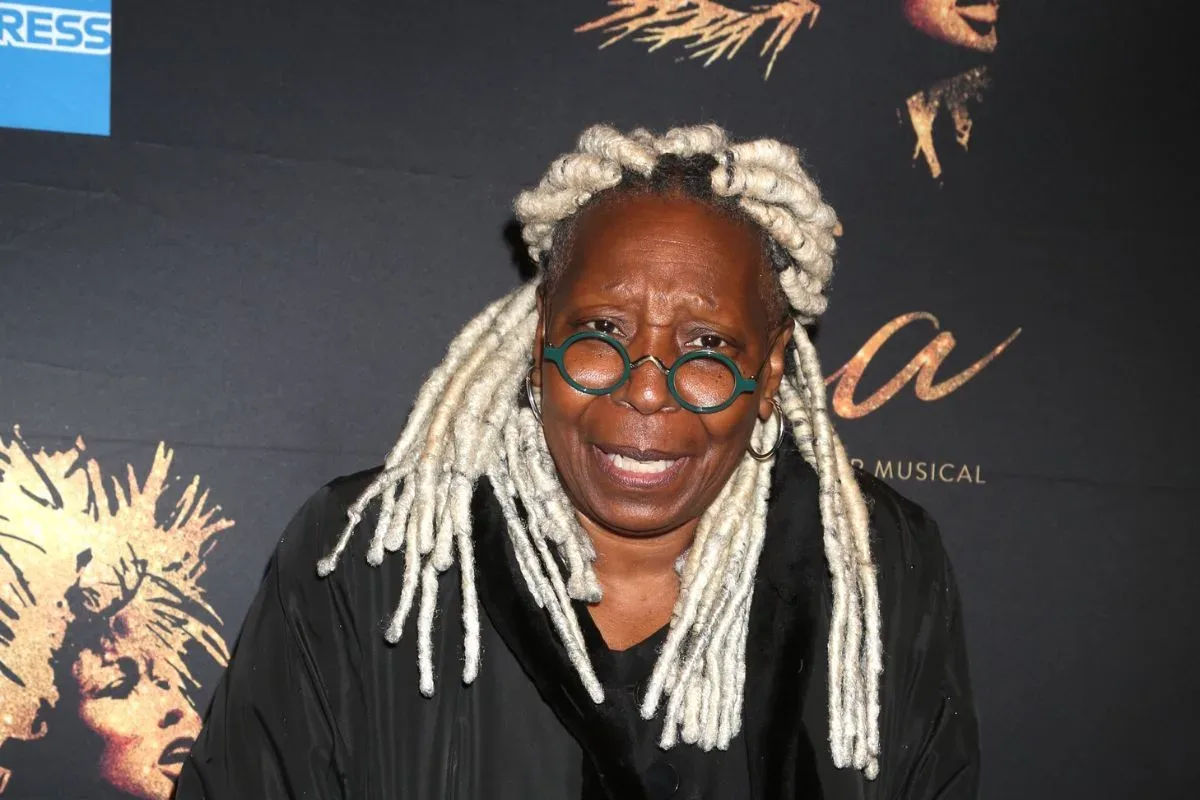
Christina Applegate’s disclosure that she was misdiagnosed with multiple sclerosis has prompted a pointed on-air defense from Whoopi Goldberg, Sara Haines, Ana Navarro and Sunny Hostin after Megyn Kelly criticized Applegate’s public health advocacy.
The central fact of Applegate’s account is easy to lose amid the ensuing television feud: a new medical finding did not mean that her health problems disappeared. Applegate said that new technology led to the discovery that she does not have MS, but she remains ill, says she has not improved and is now trying to understand what is causing her symptoms.
“This may come as great news, but to me, I’m back at square one,” Applegate said on the Oct. 21 return of MeSsy, the podcast she co-hosts with Jamie-Lynn Sigler. She said she had become worse in some respects and remains in shock at having to restart the search for a diagnosis.
That distinction became the focus of the response to Kelly’s comments. Kelly suggested on her talk show that Applegate might be upset because she could no longer be “the face” of the disease, and characterized celebrities discussing their medical circumstances as a problem.
Why the word “misdiagnosis” does not mean recovery
A misdiagnosis means that an earlier diagnosis was incorrect. It does not, by itself, identify the correct condition, erase symptoms or provide a treatment. In Applegate’s case, the information available is especially clear on that limited but vital point: she said she is still unwell and does not yet know what is happening to her.
MS is a disease that causes damage to the central nervous system. Applegate publicly shared her MS diagnosis in 2021, then later stepped away from acting following the conclusion of Dead to Me. Her experience subsequently became part of her public work. Alongside Sigler, she launched MeSsy to discuss life with illness and raise awareness.
Applegate took a seven-month break from the podcast before returning with the updated diagnosis. Rather than framing the news as liberation, she described the emotional disruption of learning that the explanation she had lived with was wrong while the underlying health issues remain unresolved.
She also said she felt as though she had let down people in the MS community after becoming an advocate. That reaction speaks to the personal stakes of public advocacy: even when a diagnosis changes, the relationships formed through shared experiences and support do not simply become meaningless.
Related coverage includes The View Condemns Megyn Kelly’s Remarks on Christina Applegate’s Diagnosis.
The View co-hosts reject Kelly’s framing
Goldberg responded directly to the implication that Applegate had wanted the condition or had benefited from it. “You think Christina wanted to have MS so she could have a good time?” Goldberg asked, calling the premise absurd.
Haines similarly challenged the idea that anyone would seek to become publicly associated with MS. She argued that Applegate had used her platform to help others after receiving a diagnosis, and said the actor is now dealing with the difficult uncertainty of not knowing what illness is behind her ongoing symptoms.
Goldberg’s broader argument was about why people disclose illness in public at all. She said people connect with one another by explaining what they are going through, and urged Kelly to reconsider her position.
Navarro declined to dwell on the comments at length, saying Kelly deliberately generates outrage around sensitive issues. Haines called Kelly a bully, while Hostin described her as an ugly person. The criticism from the panel was blunt, but their shared objection was specific: Applegate’s update should not be mistaken for proof that her medical difficulties were performative, trivial or over.
Advocacy is not invalidated by changed medical information
There is an important difference between claiming expertise and recounting lived experience. Applegate’s advocacy was rooted in what she had been told about her health and in the effects she was experiencing. The later finding that MS was not the correct diagnosis changes the medical label; it does not retroactively make her symptoms unreal or undo the support that listeners may have drawn from her openness.
Her statement also illustrates why a definitive-sounding diagnosis can become deeply intertwined with a person’s sense of identity and future. A diagnosis can offer a framework for explaining symptoms, communicating needs, finding a community and making decisions about work. When that framework falls away without a replacement, uncertainty can be as destabilizing as the original news.
Applegate retired from acting after the finale of Dead to Me in 2022. Her work on MeSsy continued the public-facing part of her health journey, now alongside Sigler, known for The Sopranos. The podcast’s return makes clear that Applegate’s story has shifted into a new and more unsettled chapter rather than reached a tidy resolution.
Celebrity health disclosures often produce fast, simplified narratives: diagnosis, struggle, inspiration, recovery. Applegate’s situation does not fit that arc. The available facts point instead to an ongoing search for answers, made more complicated by the reversal of a diagnosis that had shaped several years of her life.
What the dispute says about public conversations around illness
The exchange is not merely another disagreement among television personalities. It raises the practical question of what public figures owe audiences when their personal medical information evolves. In this case, Applegate did disclose the change directly and explained its emotional consequence: she is not declaring herself cured. She is reporting that a prior explanation for her symptoms no longer stands.
That candor is especially significant because public awareness work is often judged through certainty. People may expect advocates to embody a single, stable narrative. But medical uncertainty is itself a real experience, and Applegate’s comments recognize the gap between a changed diagnosis and an improved condition.
There is also no indication in Applegate’s account that she intends to abandon the empathy and community-building that accompanied her earlier advocacy. Her feeling that she has let people down is a statement of concern for others, not evidence that the prior connection was insincere.
For audiences, the responsible takeaway is straightforward: “not MS” is not the same thing as “nothing is wrong.” Applegate has said that she continues to face symptoms and does not know their cause. Treating a medical correction as an instant happy ending dismisses precisely what she says she is confronting.
The episode arrives within a television culture that is constantly recirculating celebrity statements and panel debates; Joking Joystick has also covered how networks continue to build their unscripted and personality-driven slates in recent reality-TV renewal news. But the substance here deserves more care than a fleeting clash-of-commentators headline. At issue is a person describing continued illness after learning that the name once assigned to it was wrong.
Applegate’s next diagnosis, if and when she receives one, remains unknown. For now, the accurate account is the one she gave listeners: the MS diagnosis has been overturned, her symptoms have not simply gone away, and she is back at the beginning of the effort to understand them.