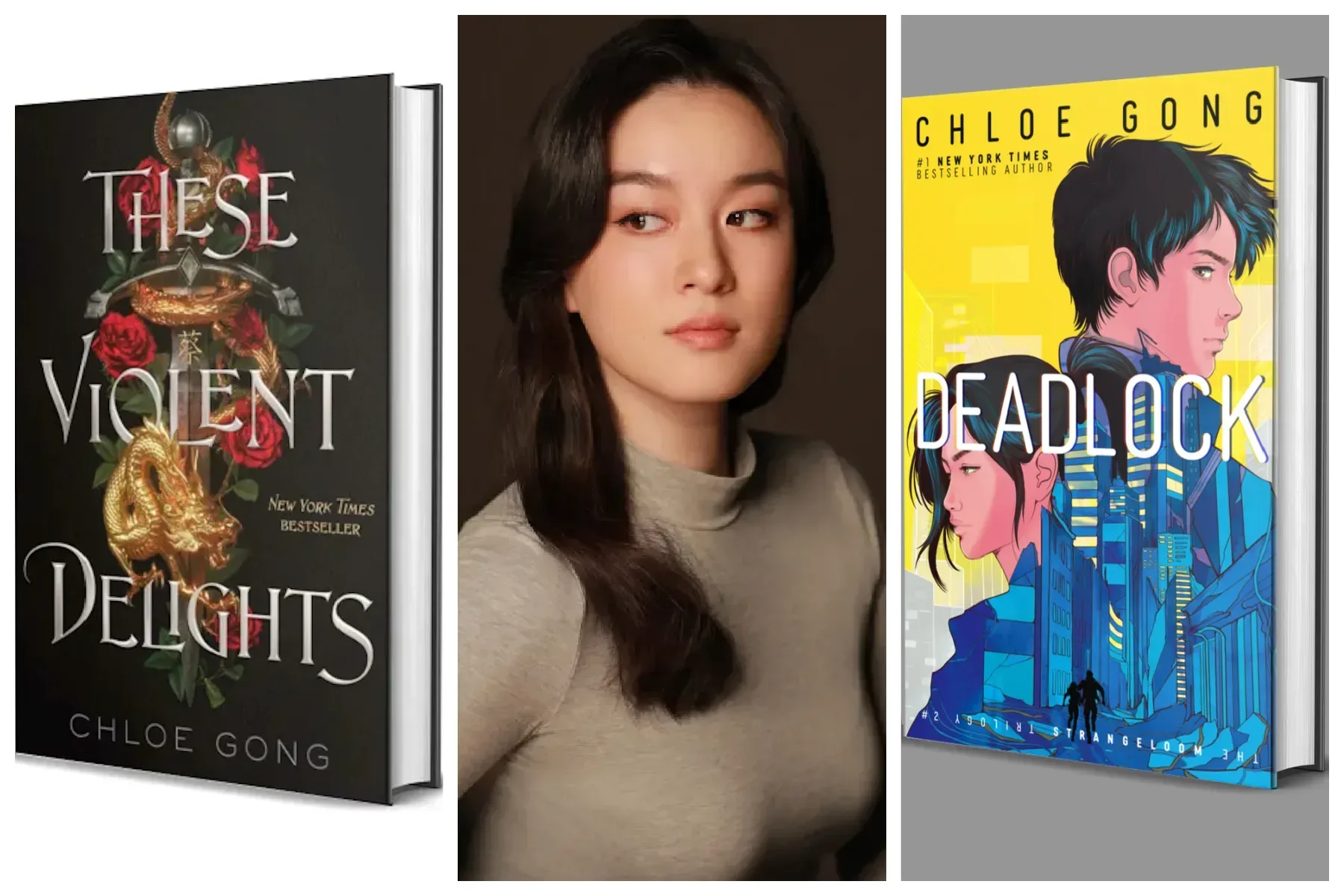
Chloe Gong’s current schedule has the shape of a carefully engineered final boss rush: one series has just ended, another is about to continue, its finale is already being written, and a completely new project is waiting just beyond the fog of publishing secrecy.
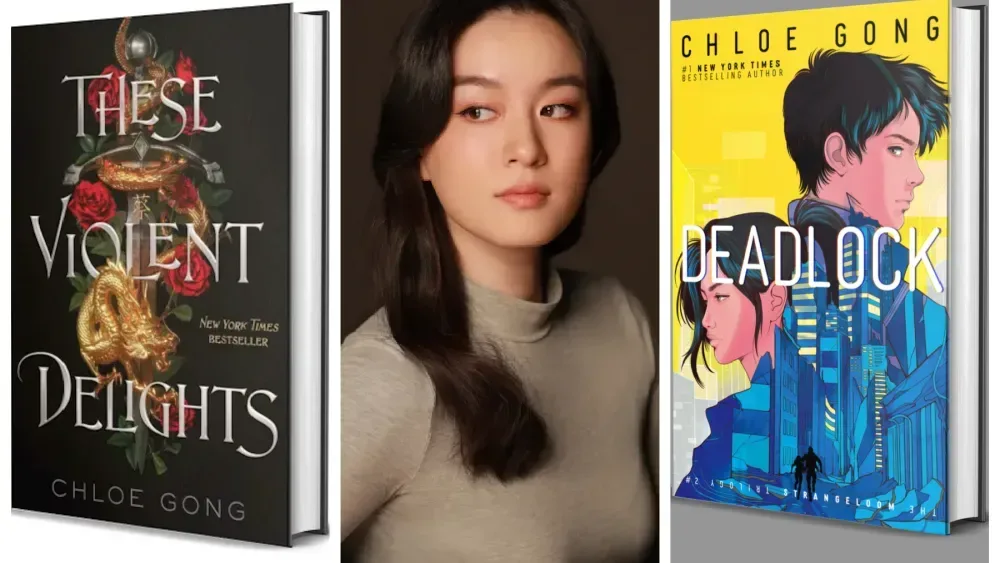
The author’s adult epic fantasy Eyes of Kings arrived on August 4 as the conclusion to the Flesh & False Gods saga. Next up is Deadlock, due November 17, the sequel to 2025’s Coldwire. At the same time, Gong is working on the as-yet-untitled third and final installment of the StrangeLoom trilogy, while also revising a separate, unannounced novel.
For readers, that is a useful clarification of what is firm and what remains under wraps. Deadlock has a release date; the StrangeLoom finale is in progress; and the secret book is not a new entry in Gong’s earlier fictional worlds. It is, instead, her first move into contemporary fiction.
A new genre lane, with zombies in it
Gong has described the unannounced contemporary project as a meeting point between an Emily Henry-style love story and a zombie apocalypse. That is a compact pitch, not a detailed synopsis, so it does not establish characters, setting, plot mechanics, or a publication date. But it does clearly mark a change of lane for an author whose work has included historical reimaginings and epic fantasy.
“Contemporary” in publishing generally means a story set in a recognizable modern-day world rather than a historical era or invented secondary world. The zombie-apocalypse part of the description adds an obvious speculative disruption to that framework. The promised combination suggests a romance-forward setup placed under survival pressure, though readers should treat any more specific expectation as speculation until the book is formally announced.
That distinction matters because Gong is managing two different kinds of anticipation at once. Deadlock continues an existing series, so its audience has a clear starting point in Coldwire. The third StrangeLoom book is a finale, meaning its job is to resolve a story readers will have followed over multiple volumes. The secret project, by contrast, is positioned as an entry point: a new genre direction and a new premise without the need to know any previous continuity.
Why trilogy finales create their own pressure
Gong has said she enjoys writing final books because they can be explosive and must account for everything built into the world earlier in the series. That is the core challenge of a trilogy finale. It is not simply the largest chapter. It has to pay off character arcs, conflicts, setting rules, and questions that previous books deliberately left open.
For the forthcoming third StrangeLoom book, no title or plot details have been shared. Still, Gong’s comments make clear that she is deep into the work rather than merely planning it. Her framing also captures why the last installment can be demanding: a series conclusion is where an author has to decide which promises need direct answers, which mysteries should remain textured, and how forcefully the ending changes the characters and their world.
Related coverage includes Chloe Gong Balances Deadlock, StrangeLoom Finale and Adaptation Hopes.
That same sense of a decisive ending is already central to Eyes of Kings. The completed Flesh & False Gods trilogy draws inspiration from Shakespeare’s Antony and Cleopatra, and Gong had warned readers from the first volume that the adult epic-fantasy story would not be gentle. The final book’s tagline, “At the end of this war, there can only be one king,” leaves little room for a consequence-free finish.
Gong has enjoyed fan responses to that intensity, including readers sharing emotional videos and book photographs online, but she does not actively hunt down reactions. That is a practical boundary in an era when authors can encounter immediate commentary on every major plot turn. She can see reactions that readers choose to tag her in without turning the entire response cycle into a constant feedback feed.
These Violent Delights remains an adaptation possibility, not a confirmed show
Gong is still hopeful that These Violent Delights could reach the screen, but there is no adaptation announcement to report. The novel, released in 2020, is a Romeo & Juliet retelling set in 1920s Shanghai. Interest and conversations around a project are not the same thing as a cast, production start, network, streamer, release window, or even a confirmed film-versus-television format.
That gap between interest and an actual green light is worth keeping in view. Screen adaptation is a multi-stage process, and Gong’s comments only support the modest conclusion that potential remains. No production details have been disclosed, and none should be inferred from the existence of long-running rumors.
Her perspective on the creative side is notably flexible. Gong says she is open to collaboration and to the changes involved in translating a novel to television or film. Rather than setting out a rigid list of demands, she has emphasized the appeal of seeing the work realized in a visual medium by people who share its vision.
That attitude does not make adaptation simple. Gong points specifically to the challenge of bringing fantasy to screen, particularly when characters use abilities that effectively function like magic, even if the books do not label them that way. CGI, or computer-generated imagery, refers to visuals created or substantially enhanced digitally. It can be used for environments, creatures, physics-defying action, and powers that would be difficult or impossible to capture practically.
More CGI does not automatically mean a stronger adaptation; it means the production needs the resources and creative approach to make fantastical elements feel coherent alongside performers, sets, costumes, and emotional stakes. Gong’s emphasis is on the potential of those visual moments, while her own immediate focus remains the page.
That wider adaptation conversation is relevant to current genre television, where translating a beloved work involves its own expectations around fidelity, interpretation, and collaboration. For another recent example of adaptation casting news, see The Last of Us Season 3’s newly added cast members.
What readers can actually put on the calendar
For now, the clearest date in Gong’s forward-looking slate is November 17, when Deadlock is scheduled to arrive. It follows Coldwire, released in 2025. Readers catching up have a straightforward route: begin with the earlier book before moving to its sequel.
Those who have completed Eyes of Kings are at a different point in the cycle. Its story is now finished, and Gong’s description of the response suggests that the intended impact of the ending is landing with readers—even if “happy” is not necessarily the word for the reaction.
Beyond that, the final StrangeLoom novel and the contemporary zombie-romance project are reasons to watch for future announcements, not titles to preorder or screen productions to track just yet. Gong has multiple worlds in motion, but the facts are refreshingly clear: one completed saga, one November sequel, one trilogy finale being written, one new genre experiment in revision, and an adaptation hope that has not turned into a formal production.