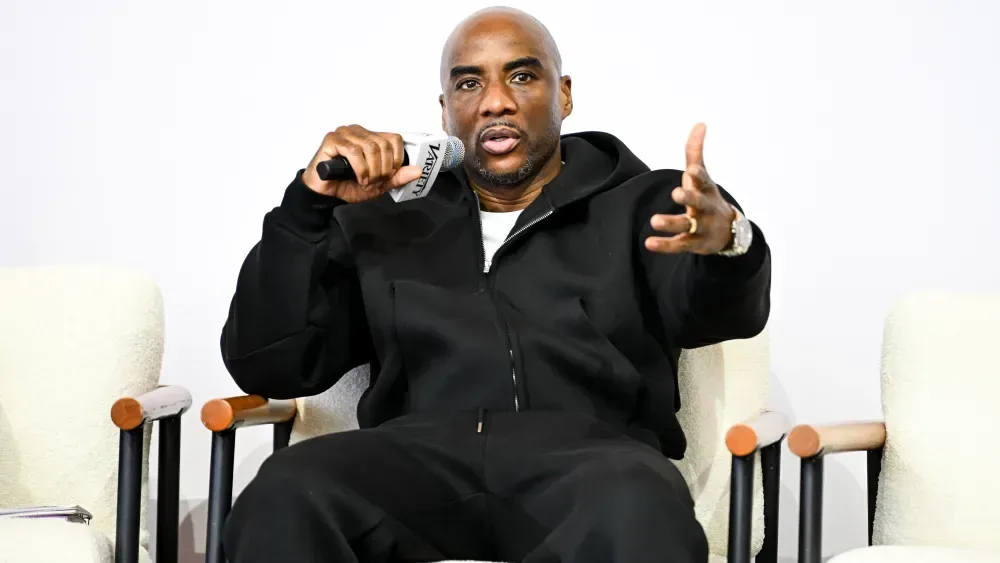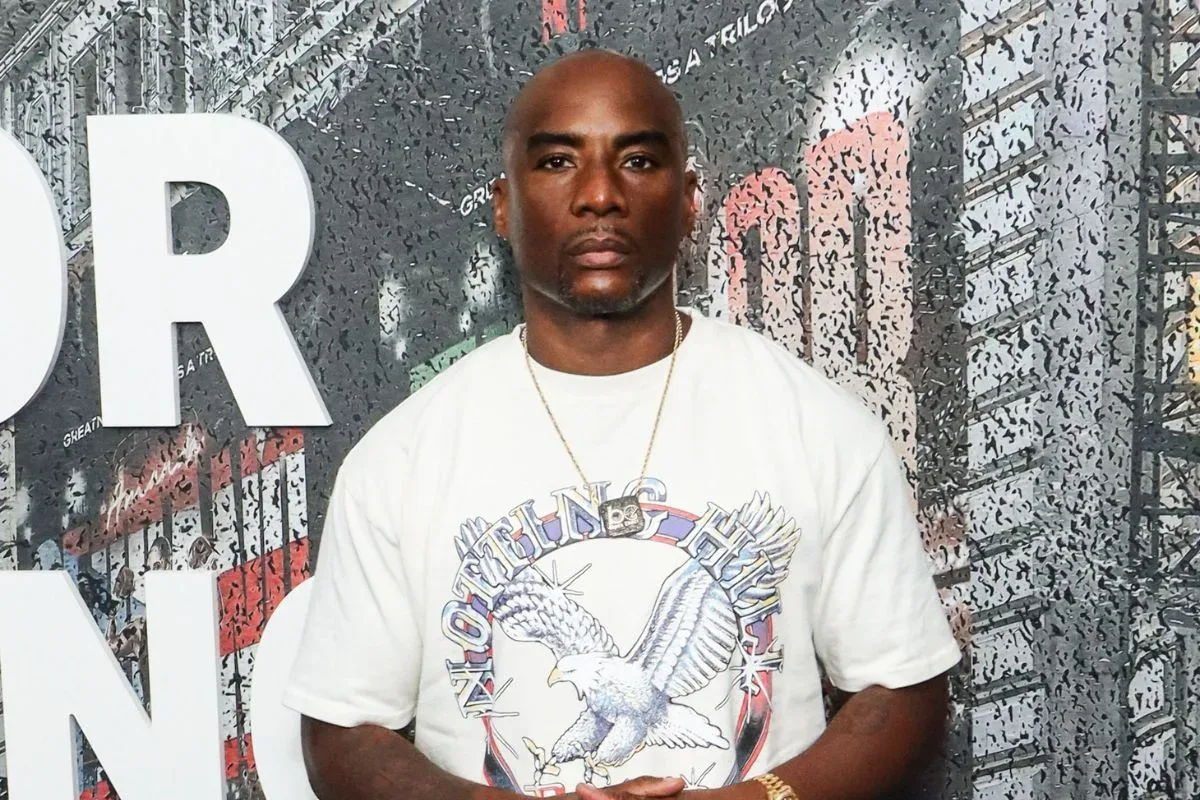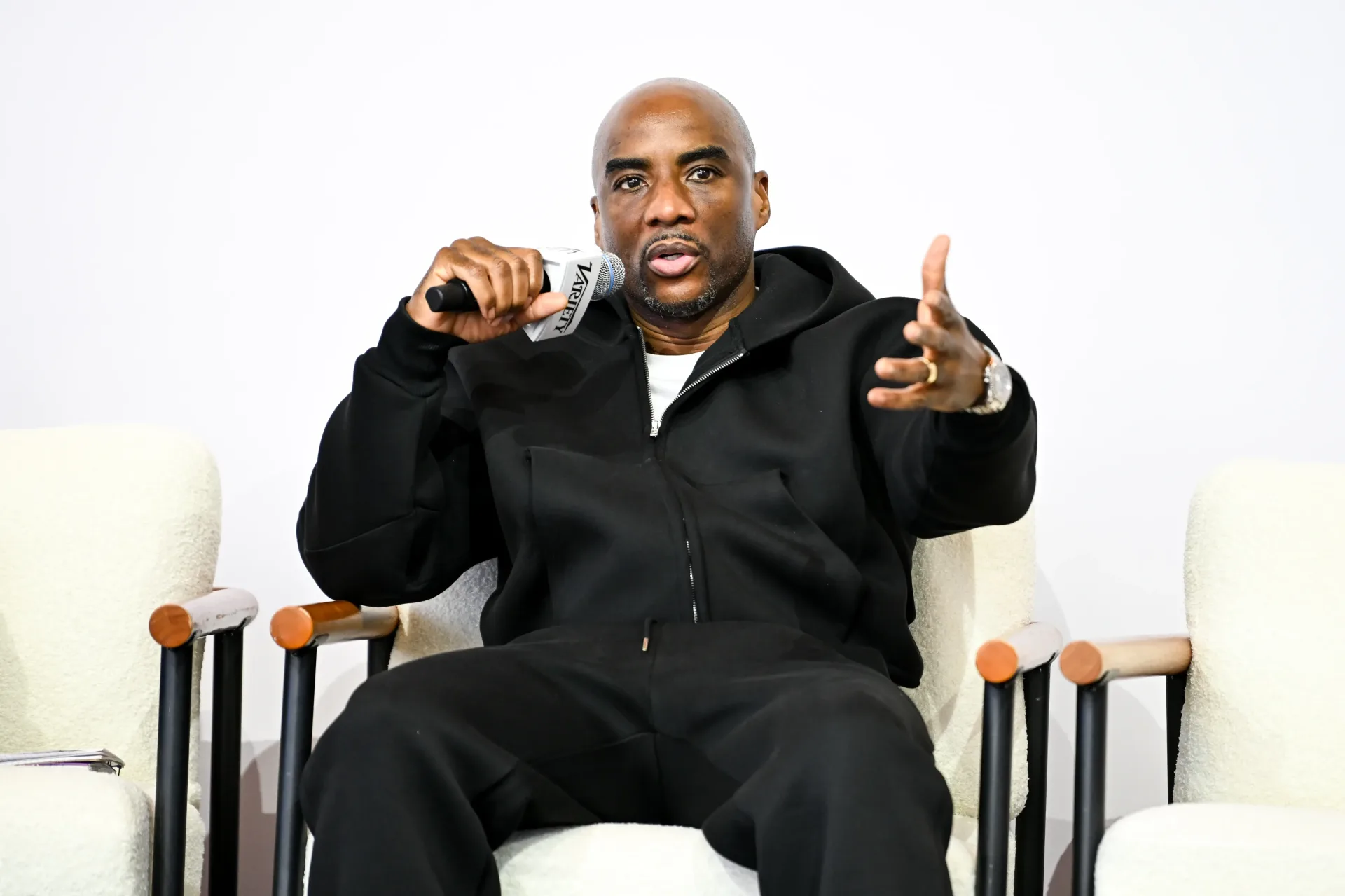
Charlamagne tha God’s career has crossed radio, television, podcasting and advocacy, but the through line in his recent comments is remarkably consistent: reach matters most when it leads to an actual human connection. The longtime The Breakfast Club co-host argued that audio remains a powerful daily medium, while also making a broader case for community spaces, mental-health access and more intentional relationships with social platforms.
It is an outlook built around a useful tension. Digital platforms can bring huge audiences together, put overlooked creators in front of new listeners and carry free resources beyond the walls of a single venue. Yet a follower count, a stream or a viral clip is not quite the same thing as being present with other people. Charlamagne’s point is not that the internet is useless. It is that the measurable parts of online culture should not be mistaken for the whole of culture.
Audio’s strength is its place in a routine
Charlamagne has co-hosted the nationally syndicated The Breakfast Club since 2010. He and his fellow hosts entered the Radio Hall of Fame in 2020 for their work on the program. When discussing his work across formats, he stressed that “audio is still king,” a concise defense of a medium that has adapted rather than disappeared amid video-first feeds.
The practical advantage he identified is habit. “Every morning I know that I’m a person’s habit,” he said. That is a different kind of relationship from the one created by a piece of content that flashes through a feed and vanishes. A radio show can be part of a commute, a work shift, a morning routine or another repeatable moment. Podcasts can serve a similar role: listeners choose when to begin, but often return to a familiar voice, format and community.
Terrestrial radio refers to conventional over-the-air broadcasting received through a radio tuner, rather than an on-demand stream delivered through the internet. It remains central to Charlamagne’s view of audience connection, even as his work encompasses channels and live events with far more obvious digital components. The value is not merely technical distribution. It is the dependable ritual that distribution can support.
That foundation also helps explain why interview programming retains cultural and political relevance. The Breakfast Club has hosted conversations with figures including Kamala Harris, Zohran Mamdani and former presidential candidate Vivek Ramaswamy. A show with a daily audience can become a recurring stop for public figures trying to meet people in a setting they already trust and use.
Charlamagne also offered a political observation looking toward November’s midterm elections: he expects many voters to weigh gas prices and grocery costs and to feel they were misled. That is his assessment, not a forecast supported by polling in the material at hand. But it fits his broader emphasis on everyday life: audiences do not experience politics only as debate-stage spectacle. They encounter it through expenses, routines and the pressures that shape a household’s week.
Why free mental-health information is central to the mission
In 2019, Charlamagne founded the Mental Wealth Alliance, a nonprofit that holds an event on Oct. 10, World Mental Health Day. The event gives attendees an opportunity to hear from mental-health professionals at no cost. Its focus includes improving access to resources and information for Black and brown communities.
The free model is not a decorative detail. Charlamagne has said that this kind of information and these resources should be free. In an area where access can be shaped by cost, awareness and whether a person sees their community’s needs reflected in the conversation, making an event free removes at least one straightforward barrier to participation.
He has discussed anxiety in his 2018 book, Shook One: Anxiety Playing Tricks on Me. That personal experience informs the way he speaks about the issue, but the event’s stated role is more specific than personal storytelling: it creates space for mental-health professionals to share information directly with the public.
There is an important distinction here. Public educational programming can expand awareness and introduce people to ideas, language and professional perspectives. It is not automatically equivalent to individual care. The information provided describes an event where people can hear professionals; it does not establish diagnosis, treatment or an ongoing clinical relationship for attendees. Keeping that difference clear helps preserve the value of both approaches. Community education can be meaningful, while professional care remains its own essential category.
The event is streamed live on YouTube, often through The Breakfast Club channel, which has more than 6.1 million followers. Streaming broadens the possible audience beyond the people who can be in the room. It also shows how audio brands can use video platforms without abandoning the core of what made them resonate in the first place: conversation, expertise and repeat engagement.
Still, Charlamagne pushed back on treating “IRL”—short for “in real life”—as though it were a strange novelty. People live real lives every day, he noted. The phrase is common internet shorthand for activity away from screens, but his point is a useful corrective. Online spaces are part of life; they should not eclipse the relationships and material circumstances outside a device.
Live podcasting is a community test, not just a content format
Charlamagne also founded the Black Effect Podcast Network, which runs an annual Atlanta festival with live podcast tapings. The festival held its fourth iteration in April. His clearest takeaway was simply seeing people attend.
That may sound modest beside the language of metrics, trend lines and audience growth, but it is meaningful. A person arriving at a live event has made a decision that cannot be reduced to passive scrolling. They have set aside time, entered a shared venue and become part of an audience that can react together. A live taping is still media, but it also makes the audience visible to itself.
Live podcast tapings are recordings made in front of an audience rather than solely in a studio. Their importance in this context is not just that they generate another episode. They turn listening, usually a private activity, into a shared occasion. That shift can help cultivate the sense of community Charlamagne says media projects need to rebuild.
This concern connects to his criticism of how people interact with phones and social media. He compared that relationship to a verbally abusive one: the platforms can be useful, but people need to “weed out” their own gardens. The gardening metaphor matters because it suggests curation rather than total withdrawal. A garden is maintained by deciding what gets attention, what is removed and what has room to grow.
Applied to social feeds, that means users can recognize the utility of the platforms while being deliberate about their inputs. Charlamagne did not frame the answer as abandoning every app. His argument was that a relationship with social media needs boundaries and maintenance, especially when it begins to shape people’s sense of attention, self-worth or connection.
For audiences, creators and media companies alike, there is a practical implication: online distribution is valuable, but it works best when it serves a purpose beyond endless engagement. A stream can direct people to useful information. A channel can bring an audience to a live gathering. A daily audio show can create familiarity over time. The tool is not the community by itself; the actions people take around it are what make it communal.
A related conversation about vulnerability and creative work can be found in this look at Questlove’s perspective on creative reinvention and history.
Small creators deserve attention before the numbers arrive
Charlamagne’s view of platforms is not purely skeptical. He also sees genuine opportunity in the creator economy, particularly for people who have made work online before transitioning into larger projects. He cited former YouTubers Curry Barker, associated with Obsession, and Kane Parsons, associated with Backrooms, as examples of creators finding success this year.
His larger point was aimed at the habit of waiting for numerical validation. There may be a creator making exceptional work for an audience of only around 100 viewers per video, he argued, and audiences should not wait until that person has 10 million followers or views before paying attention.
The creator economy is the broad ecosystem in which individuals produce and distribute work through online platforms, building audiences around videos, audio, writing or other formats. In common conversation, it can sound like a synonym for fame. Charlamagne’s comments offer a different framing: the ecosystem should be a place for discovery, not merely a leaderboard that tells people whom they are allowed to value.
That observation lands because platform metrics are public and easy to understand. Views, followers and likes can act as shortcuts, but shortcuts can also flatten judgment. They signal scale, not necessarily originality, care or future potential. Attention given earlier can be more useful than attention delivered only after an artist’s work has become an established phenomenon.
There is no guarantee that every low-view project will become widely known, and Charlamagne did not claim otherwise. The point is more modest and more constructive: audiences can practice curiosity before consensus forms. For creators, it reinforces the value of continuing to make the work even when the dashboard is unimpressive. For established networks and listeners, it suggests looking past the most visible names.
The common thread: build places people can use
Radio, YouTube streams, a nonprofit event, a podcast network and a live festival might look like separate lanes. Charlamagne’s comments connect them through a shared question: does a platform help people feel informed, seen or connected?
His answer favors access over gatekeeping, consistent habits over fleeting attention, and intentional participation over unmanaged scrolling. Free mental-health programming prioritizes usable information. Radio and podcasts build familiar routines. Live tapings let an audience gather in the same place. Creator discovery challenges the assumption that popularity must come before recognition.
None of that requires treating technology as the villain. On the contrary, the Mental Wealth Alliance’s livestream shows the positive role a large digital channel can play. The sharper argument is that online reach has to lead somewhere worthwhile. In Charlamagne’s formulation, the goal is not simply to accumulate an audience. It is to support a community that exists beyond the metrics.