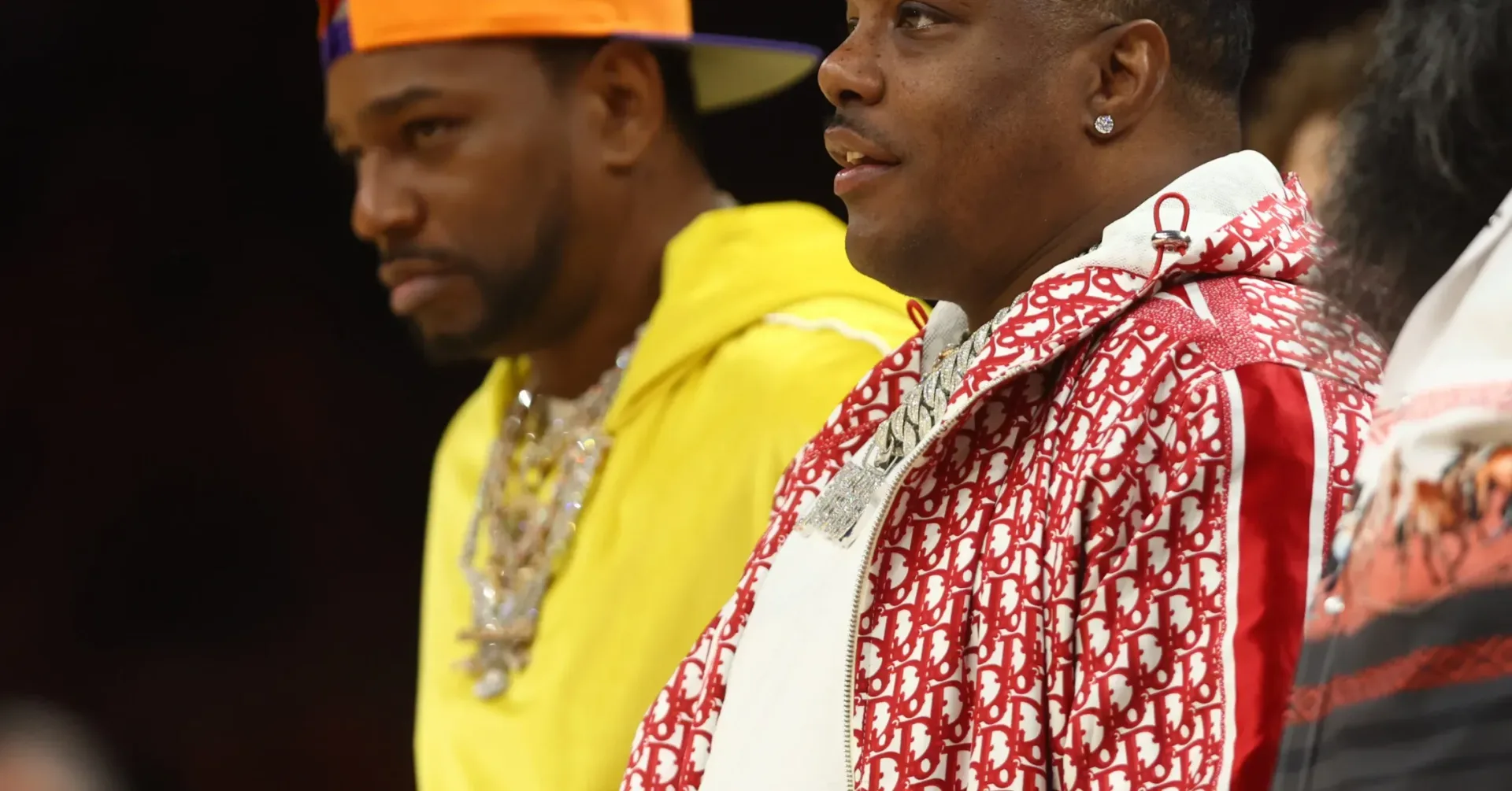
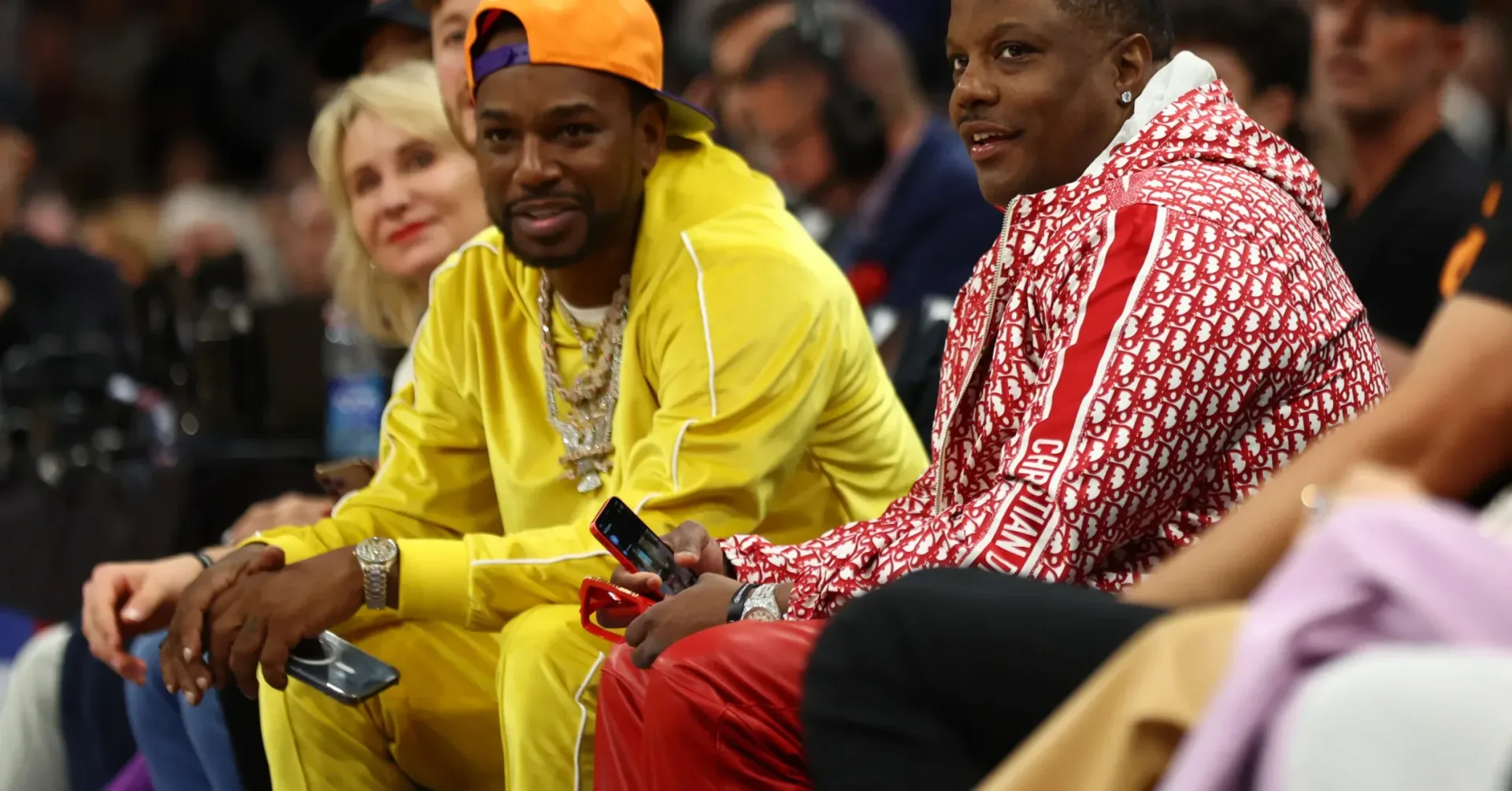
Cam’ron says his appearances on First Take were not about collecting a guest fee. In comments made during an appearance on Talk With Flee, the Harlem rapper explained that he was willing to go on ESPN’s debate show without being paid because he viewed the exposure as an investment in the media platforms he controls.
The calculation, as Cam’ron described it, is straightforward: ESPN reaches roughly 100 million homes, placing a guest in front of a vast sports audience that may not already know their work outside the network. Rather than treating that audience as a one-time television moment, he saw it as a chance to show viewers what he brings to sports conversation and direct interested people toward his own programming.
“I don’t want no money right now. I want to show my value,” Cam’ron said, explaining his approach to the appearances.
That distinction matters. An unpaid appearance can sound, at first, like an argument over compensation or an undervaluing of a guest’s contribution. Cam’ron framed it differently: he was choosing immediate exposure over immediate payment. The intended return was not a network check but greater awareness, perceived credibility and, potentially, a larger direct audience for his shows.
Exposure, credibility and audience ownership
Cam’ron’s explanation rests on a familiar media-business idea: the value of a platform is not limited to what it pays a guest. A major outlet can offer reach, while a creator’s own channel can offer more control over what happens after that reach is earned. For a personality building an independent show, the important question becomes whether the network appearance gives new viewers a clear reason to seek out the creator afterward.
In this case, Cam’ron said the sports audience was especially meaningful. He described the appearances as a way to bring credibility back to his shows. Credibility here does not simply mean approval from a television network. It means that appearing in a nationally recognized sports-discussion setting can signal to viewers that a host belongs in the conversation. That recognition can be useful when the same host is asking people to spend time with programming produced beyond the network’s walls.
The strategy depends on conversion: turning casual viewers into returning viewers. “Conversion” is a marketing term for the point at which someone takes a desired next step. For a media personality, it could mean a viewer searches for a show, follows an account, watches an episode or becomes part of the regular audience. ESPN’s reach may create the initial introduction; Cam’ron’s own platforms are where he hopes that interest becomes a relationship he can sustain.
There is also a clear difference between borrowed reach and owned reach. Borrowed reach is the audience available through a major broadcaster’s program. It is powerful, but the broadcaster determines the format, scheduling and distribution. Owned reach is the audience a creator can address through their own shows and channels. Cam’ron’s comments indicate that he regarded First Take as a bridge between the two rather than as the final destination.
The real cost was more than a missing appearance fee
Cam’ron did not describe the strategy as effortless. He recalled the demanding travel tied to early-morning television. After filming in Las Vegas at night, he said he would drive to Los Angeles with PT, sleep in the car, appear on First Take, then return for another shoot the following day.
That detail changes the meaning of “free.” He may have declined payment for the television appearance, but the commitment still carried significant personal and professional costs: travel, lost sleep and time that could have been spent on other work. In practical terms, he was putting those resources into audience building. His story is therefore not a broad claim that creators should work without pay; it is a specific account of why he thought this particular audience and platform could justify the effort.
The distinction is worth keeping sharp. Exposure is only valuable when there is a credible path from visibility to a creator’s broader goals. A guest appearance with no connection to a person’s existing work, no way for viewers to find it, or no follow-up can amount to little more than a fleeting moment. Cam’ron’s account presents the opposite model: use a recognizable setting to establish relevance, then make sure viewers know there is more content available elsewhere.
Why sports television fit the plan
Cam’ron’s existing sports-media work gave the move a logical foundation. He pointed to the value of appearing before a large sports audience, and his own show It Is What It Is sits directly in that broader sports-conversation space. His role on First Take was not a random celebrity crossover; it connected to the kind of discussion he was already making.
That overlap is crucial for audience-building. A musician or entertainer can draw interest from fans in many settings, but an audience is more likely to follow when the appearance matches the subject matter of the creator’s next destination. Viewers watching a sports debate may be more inclined to seek out another sports show featuring a memorable guest than they would be to follow an unrelated project.
It also helps explain why spirited debates can have value beyond the segment itself. Disagreement is a central feature of shows built around sports opinion. A strong argument, a distinctive perspective or an unexpected take can make a guest memorable. Cam’ron has had high-profile exchanges with Stephen A. Smith, including a debate involving LeBron James and Michael Jordan. Those moments give viewers a concrete sense of his on-air voice, not merely his celebrity status.
Sports and entertainment crossovers have a broad cultural footprint, as seen when Knicks guard Jalen Brunson’s television appearance turned a running joke into an on-screen role in a recent Law & Order: SVU cameo. Cam’ron’s approach is different in purpose: he is describing a deliberate effort to use mainstream sports TV to strengthen an ongoing, independently run media presence.
A long-game argument, not a blanket rule
Cam’ron’s account is best understood as a long-game argument. He was not saying compensation has no worth. He was saying that, at that stage and in that context, he placed more value on demonstrating what he could do before a major audience. The hoped-for payoff was cumulative: each appearance could reinforce his standing as a sports-media personality and introduce his work to more potential regular viewers.
That approach also emphasizes narrative control. When a creator builds direct channels to an audience, they have more room to decide how their work is presented and what topics they pursue. National television can provide validation and discovery, while a creator-owned program can serve as the place where that identity is developed over time. Cam’ron’s remarks suggest he sees those functions as complementary.
His relationship with ESPN has not been entirely smooth. Earlier this year, he discussed how an ESPN opportunity fell apart after his CNN interview concerning Diddy. His latest comments do not erase that complication, but they clarify how he evaluated the earlier First Take appearances: not as isolated bookings, but as part of a larger effort to expand the audience for his own work.
The practical lesson from Cam’ron’s reasoning is narrower than a slogan about working for exposure. A creator has to know what the exposure is for. In his case, the answers were a large sports audience, a recognizable television stage, an established sports show of his own and a desire to bring viewers back to a platform he can shape. With those pieces in place, he believed an unpaid appearance could carry value well beyond the segment’s airtime.