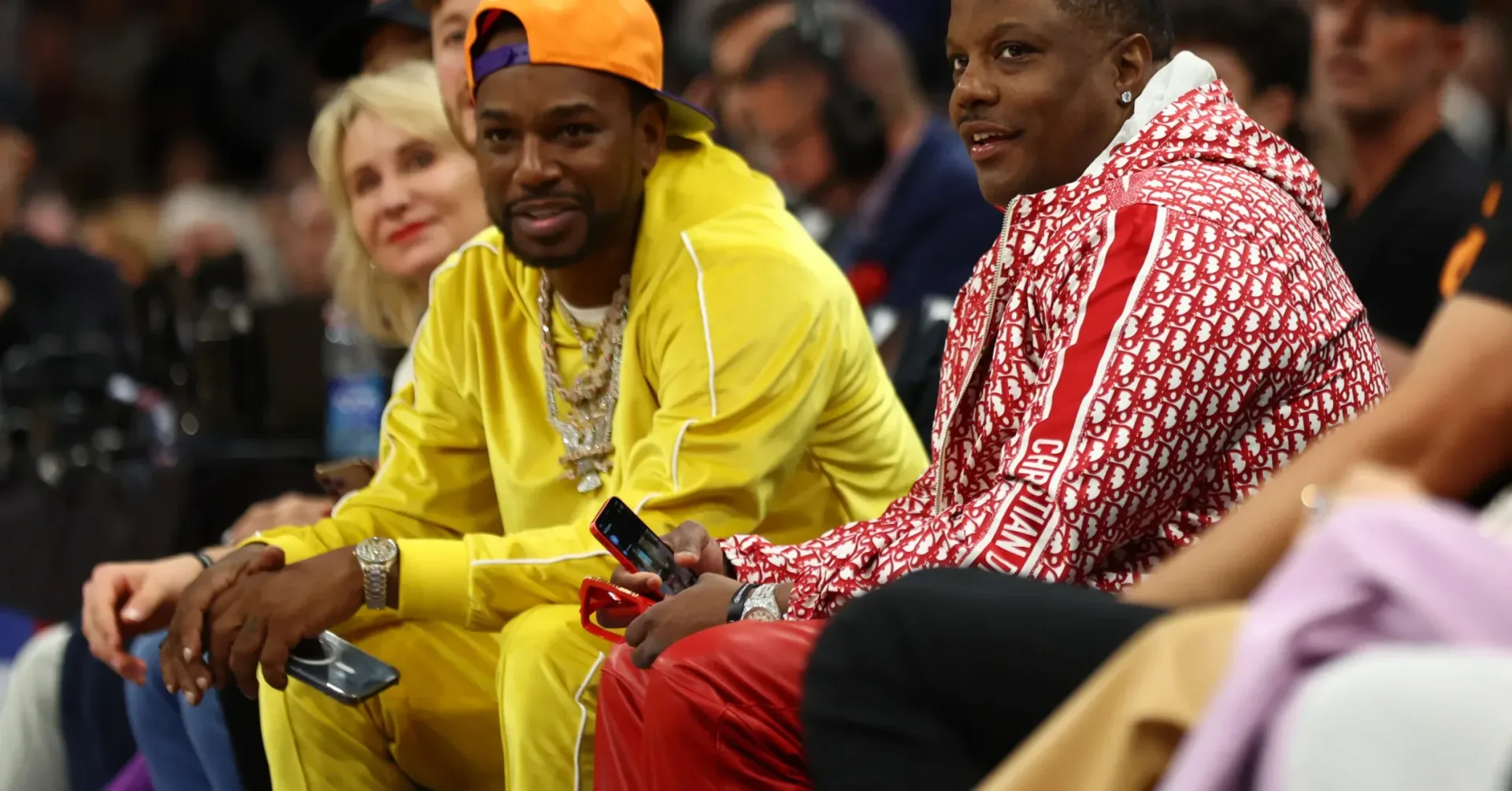
Ma$e turned a weekend party appearance into the latest running joke on It Is What It Is, teasing Treasure Wilson, better known to viewers as Stat Baby, about attending Drake’s 40th birthday celebration in New York City.
The setup was simple and deliberately playful. Ma$e asked Wilson about her weekend while already aware that she had been at the party, effectively giving her a chance to volunteer the detail before bringing it up himself. He then invoked Kendrick Lamar and the phrase “They Not Like Us,” a reference to Lamar’s song Not Like Us. Cam’ron laughed through the exchange as Ma$e kept the bit moving.
“What happened to ‘They Not Like Us’? Shoutout to Iceman, ‘They Not Like Us’… She ain’t gotta explain herself. Sometimes she ‘They Not Like Us,’ sometimes she Iceman,” Ma$e said.
The joke had a specific premise: Wilson had previously been seen dancing to Not Like Us. In Ma$e’s framing, that made her attendance at Drake’s party an amusing contradiction worth interrogating on camera. Wilson took the exchange in stride, and the conversation did not escalate beyond the hosts ribbing one another.
Why the joke worked
This was less an attempt to demand loyalty than an example of the show’s conversational style. It Is What It Is is powered by the longtime rapport between Cam’ron and Ma$e, with Wilson an important part of the on-screen dynamic. The hosts regularly leave room for quick reactions, interruptions and friendly needling rather than treating every music-world reference as a serious debate.
Here, Ma$e connected two public-facing moments involving Wilson: dancing to a Kendrick Lamar song and going to a Drake birthday party. The humor depends on the audience recognizing those moments as separate social contexts, then watching Ma$e pretend they require an explanation. His question about whether Lamar had given Wilson “permission” pushed that mock-serious premise even further.
That is also why the moment does not establish any real conflict between Wilson and either artist. Attending a birthday party is not evidence of a stance in a music rivalry, and enjoying a song is not a binding declaration of allegiance. The clip’s punchline is precisely that Ma$e acts as though ordinary social behavior must be reconciled with the rigidest possible reading of fan loyalty.
What “They Not Like Us” means in the exchange
Ma$e’s wording refers to Not Like Us, Kendrick Lamar’s song. In the conversation, the title becomes shorthand for the public rivalry surrounding Lamar and Drake. Rather than unpacking that history, Ma$e uses the reference as a comic label: if Stat Baby danced to the song, he can jokingly cast her as being on one side before contrasting that image with her presence at Drake’s celebration.
His “Iceman” line expands the gag. Ma$e presents Wilson as someone who can be “They Not Like Us” in one setting and “Iceman” in another, underscoring the idea that no serious consistency test is needed. The wording lets him tease her without suggesting that she actually owes anyone a defense.
For viewers, the exchange illustrates how song titles and famous lines can become cultural shorthand beyond the recordings themselves. In a sports-and-entertainment talk-show setting, the reference is useful because it communicates a lot quickly: the audience understands why attending Drake’s party gives Ma$e material, while Wilson and Cam’ron’s reactions signal that the segment is a joke rather than a confrontation.
Stat Baby’s role in the group chemistry
Wilson is not merely a bystander in the format. As Stat Baby, she has become a core presence alongside Cam’ron and Ma$e, and the on-camera relationship works because each person can be the target of a joke as well as the person delivering one. The birthday-party segment relies on that familiarity. A host asking a guest a loaded question might feel awkward; Ma$e asking Wilson what she did over the weekend plays as a setup between colleagues who know the rhythm.
Cam’ron’s laughter matters to the scene as well. It confirms the tone without needing an additional argument or explanation. The result is a compact bit built on shared knowledge: Ma$e knows where Wilson was, Wilson knows he knows, and the audience is invited to follow the reveal.
That kind of chemistry has helped make the program culturally visible beyond straightforward sports discussion. Cam’ron has also been offered a part-time role on First Take, reflecting the broader reach of his current media work. But the party conversation is a reminder that the appeal is not only formal analysis. It is the ability to turn a small piece of weekend news into a character-driven exchange.
A party appearance is not a scoreboard
The larger practical takeaway is uncomplicated: celebrity events gather people from overlapping entertainment circles, and a guest list should not be treated as a definitive statement about every headline surrounding the host. Drake’s birthday celebration drew many attendees. Wilson’s presence gave Ma$e an easy angle because of the prior video of her dancing to Lamar’s song, not because the clip demonstrated a new development in the artists’ relationship.
There is a tendency for online discussion to turn every photograph, party appearance or song choice into a permanent team assignment. This segment gently exposes how silly that tendency can be. Ma$e makes the contradiction sound huge, then undercuts it by saying Wilson does not have to explain herself. The joke lands because the alleged offense is so minor.
That context is especially useful when a viral clip is reduced to a caption. The substance is not that Stat Baby was confronted in a hostile sense; it is that she was playfully put on the spot by a co-host who knew exactly how to frame the question for laughs. Wilson found it funny, and the group moved on.
Drake’s birthday has also produced other chatter around who did and did not belong in tense party interactions, including a separate discussion about whether the celebration was an appropriate place for a confrontation. Wilson’s moment belongs at the far lighter end of that spectrum: a brief studio joke, not a dispute.
The appeal of a well-timed tease
Ma$e’s tease works because it is specific. He did not simply remark that Wilson attended a major birthday party. He paired that fact with a recognizable earlier moment, then structured his questions so the audience could anticipate where he was going. That is a familiar technique in conversational entertainment: begin with a harmless question, wait for the obvious omission, and then reveal that the questioner already knows the answer.
It also leaves Wilson room to laugh rather than defend herself. The line that she does not need to explain herself is important. It keeps the segment inside the boundaries of playful banter and acknowledges the obvious point that people can enjoy music, attend events and have friendships without turning those choices into public pledges.
For It Is What It Is, that balance is part of the format’s strength. The show can draw from sports, music and celebrity culture, but its most shareable moments often come down to how the people at the table react to one another. In this case, Drake’s milestone party supplied the premise, Kendrick Lamar’s song supplied the callback, and Stat Baby’s rapport with Cam’ron and Ma$e supplied the payoff.