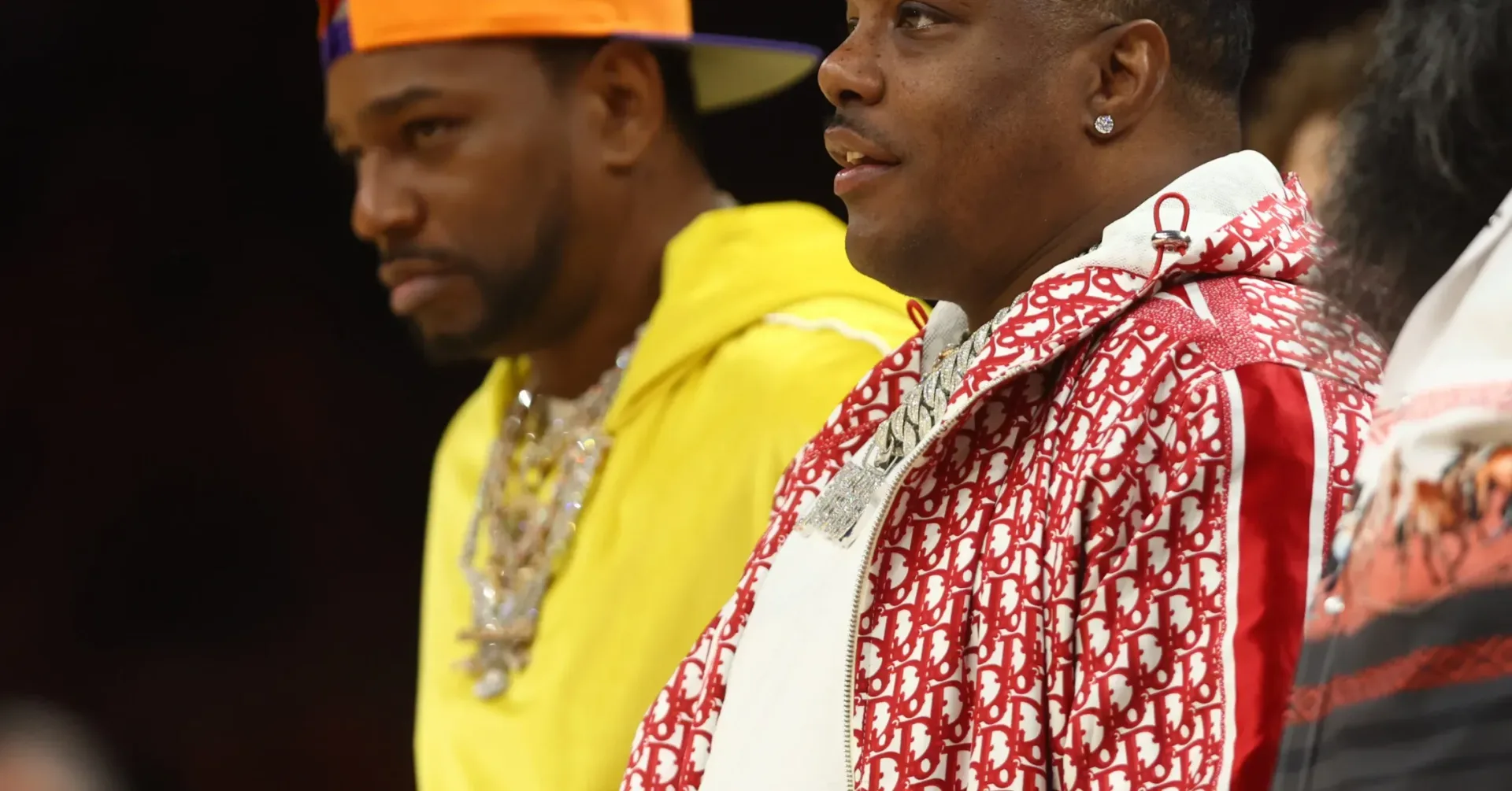

Cam’ron and Ma$e have made a career-long habit of making a conversation sound unmistakably like it came from Harlem. So when It Is What It Is took up a question about whether New York’s accent is fading, it was never likely to stay a small matter of pronunciation.
Treasure “Stat Baby” Wilson raised the subject during the show’s November 5 episode, opening a discussion that touches on neighborhood identity, social mobility and the way local speech travels through music and media. The premise is simple: do New Yorkers still sound as recognizably New York as they once did in ordinary conversation?
The available evidence does not support a tidy answer that the accent has vanished. A February survey placed New York City at No. 12 among American cities where residents report hearing less of a local accent in daily life. That ranking is better understood as a measure of perception and change, not proof that one unified city voice has disappeared.
In a city as large and varied as New York, the phrase “the New York accent” can itself obscure the issue. New York has never spoken with one permanently fixed voice. Neighborhood, family background, migration, school, workplace and social setting can all shape how a person sounds. What listeners may be noticing is that some familiar cues are less dominant or less immediately obvious than before.
A debate bigger than pronunciation
Cam’ron and Ma$e make compelling figures for the question because their voices are part of their public identities. Their delivery, slang and comedic rhythm carry a Harlem perspective into a show that moves freely between sports talk and loose barbershop-style conversation. Their partnership on It Is What It Is has also transformed that chemistry into a media business with a national audience.
That context matters. An accent is not merely a collection of vowel sounds or a list of local expressions. In public life, listeners often read speech as a cue for belonging, confidence, credibility, class or geography. Those assumptions can be unfair, but they influence how people decide when to emphasize their natural way of speaking and when to adjust it.
Dr. Gail August, chair of language and cognition at Hostos Community College, has described one side of that pressure plainly: some speakers seek “the opportunities that come with standard speaking.” The observation does not frame local speech as deficient. Instead, it recognizes that people may feel professional or educational incentives to use language they believe will be judged more favorably.
There is a documented example of that impulse from Brooklyn: students took speech classes in 2005 intended to help them sound less like New Yorkers. The example is useful because it shows the current discussion is not simply a social-media-era panic over a supposedly dying accent. People have been negotiating the social value placed on different ways of speaking for years.
Related coverage includes Cam’ron and Ma$e Put New York’s Changing Accent in the Spotlight.
What “standard speaking” means—and what it does not
“Standard speaking” generally refers to speech patterns treated as more neutral or more acceptable in formal institutions such as schools and workplaces. It is not a scientific designation for speech that is inherently clearer, smarter or more correct. It is a social standard, and social standards are shaped by power, expectations and circumstance.
That distinction helps keep the Cam’ron and Ma$e conversation grounded. A person may switch registers—meaning they alter their vocabulary, rhythm or pronunciation depending on the room—without abandoning where they are from. A local manner of speaking can remain important in family, community, music or humor while another style is used in a job interview, classroom or broadcast setting.
Likewise, fewer instantly recognizable accent features in a workplace or school do not necessarily mean younger New Yorkers lack ties to the city. It may mean they are navigating more varied audiences. The supplied context identifies immigration, migration, class pressure and social media as forces that continue to reshape how New York sounds. None of those forces points in only one direction.
Immigration and migration bring new language patterns and regional influences into neighborhoods. Class pressure can encourage speakers to minimize features they expect others to judge. Social media exposes people to an enormous range of voices and speech habits, while also giving regional slang and delivery new pathways to travel. The result is change, not a clean erasure.
Why rap and talk media keep the question alive
New York rap has long brought neighborhood language into national culture. Regional speech is part of rap’s texture: it affects cadence, punchlines, character and the sense of place carried by a voice. When performers speak without sanding down local identity, audiences hear more than words. They hear a relationship between a person and the place that shaped them.
That makes Cam’ron and Ma$e’s discussion relevant beyond a narrow linguistics debate. Their show demonstrates that a pair of distinct Harlem voices can remain central to mainstream media rather than an obstacle to it. The appeal is not built on pretending local specificity is universal; it is built on allowing specificity to be the point.
If younger speakers alter the cues associated with New York, rap and other forms of city-rooted media will alter with them. That should not be confused with decline. New forms of speech can produce new rhythms, expressions and identities. But it does mean that listeners who associate New York with a particular set of older signals may eventually need to update what they think the city sounds like.
The same broader question of voice and cultural movement appears when artists cross stylistic lines, including in BigXthaPlug’s discussion of moving across genres. Genre, region and speech are not identical subjects, but each involves an artist deciding which parts of their background to carry forward as their audience expands.
Less audible is not the same as gone
The most useful takeaway from the survey and the on-air conversation is restraint. “Less audible” does not mean absent. It can mean that a listener encounters a wider spread of voices, that familiar signals are changing, or that speakers are adapting to different social situations. It can also reflect nostalgia: people often remember the sound of a place through the voices that mattered most to them.
Cam’ron and Ma$e’s exchange works because it leaves room for that uncertainty. Their own public presence is evidence that deeply local voices can reach far beyond a neighborhood. At the same time, the conversation acknowledges that the city around those voices continues to move.
New York’s next recognizable sound may not match the version some listeners expect. It may combine older local patterns with influences brought by new residents, new communities and a media environment where every voice can circulate far beyond its block. The question is not whether language should be frozen in place. It is whether the changing city will still sound like itself when the next generation answers back.