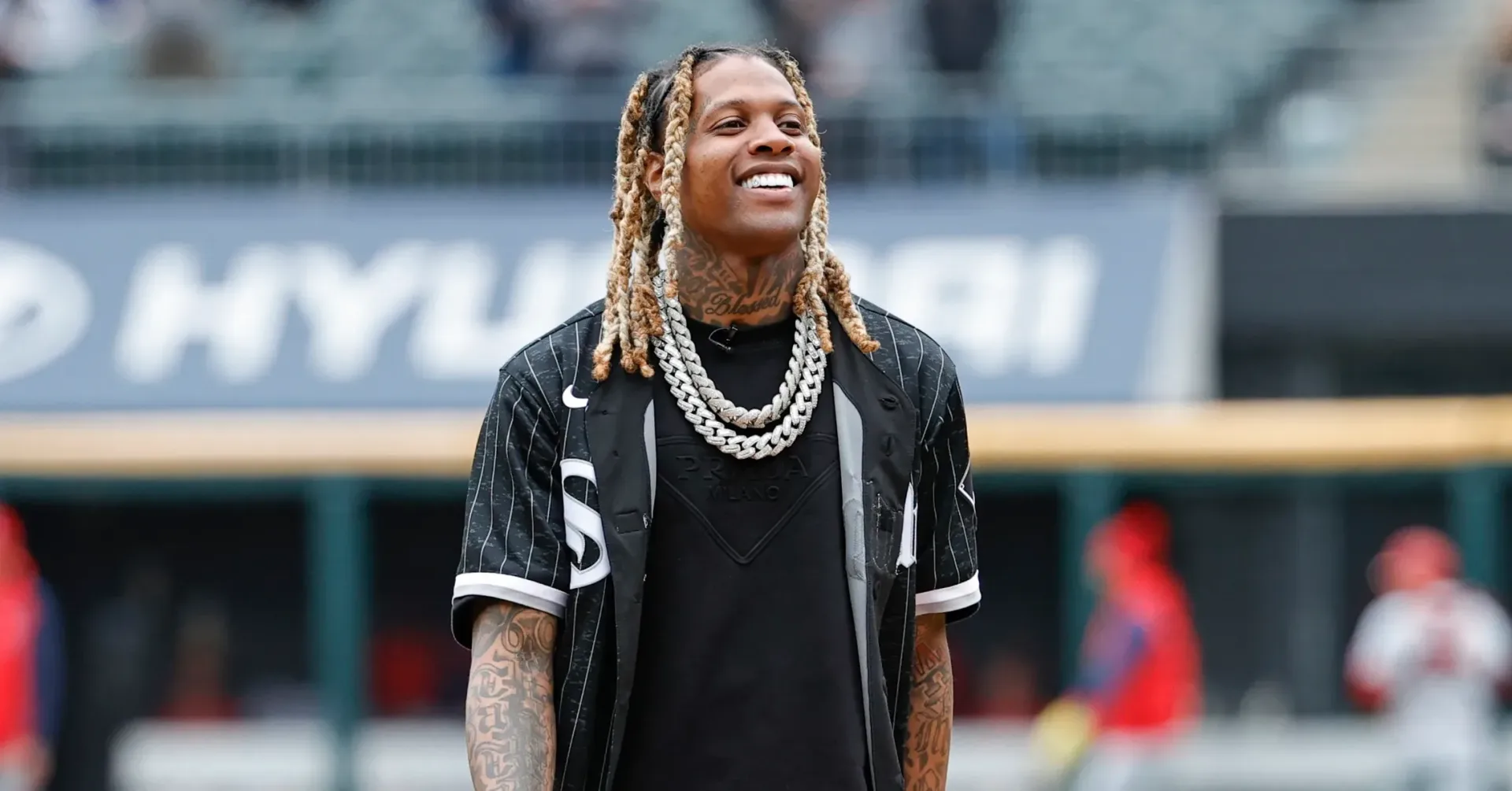
Hip-hop’s ongoing discussion around the criminal case involving Lil Durk has expanded well beyond music, drawing in fans, fellow performers and attorneys offering public readings of the legal stakes. In a recent livestream conversation with DJ Akademiks, defense attorney Bradford Cohen laid out a view of the case that was notably cautious: he did not present a firm verdict forecast, but argued that the jury’s confidence in cooperating witnesses could become the central hinge for every major count.
Lil Durk, the Chicago rapper also known as Smurk, faces allegations including conspiracy to commit stalking; stalking resulting in death; conspiracy and use of interstate facilities to commit murder-for-hire resulting in death; and possession, use, carrying and discharging of firearms and a machine gun in furtherance of, during and in relation to a violent crime. These are allegations, and the charges have not been resolved by a jury verdict.
Cohen’s assessment was that the apparent choices before jurors may be more interconnected than a casual reading of the count list suggests. His basic theory was straightforward: if jurors reject the accounts from cooperating witnesses, the defense could be in position for acquittals across the board. If jurors accept those witnesses, meanwhile, Cohen said it could be difficult to credit the testimony only enough for a lesser stalking-related finding while rejecting its implications for the alleged murder-for-hire scheme.
The witness question at the center of Cohen’s analysis
Cooperating witnesses are often a flashpoint in high-profile criminal proceedings. Their evidence can be vital to the prosecution’s account, while the defense can challenge motivation, reliability, consistency and the benefits a witness might hope to receive. Cohen focused on that basic credibility contest rather than treating the case as a simple menu where a jury picks isolated charges one at a time.
He described the case as potentially “all or nothing,” while also acknowledging that real jury deliberations are rarely so mathematically clean. A jury could, in principle, view some evidence as persuasive and other evidence as insufficient. Cohen explicitly allowed for that possibility, even as he characterized it as difficult given the way he sees the allegations fitting together.
“You’re really relying on them either believing or not believing the cooperators,” Cohen said during the livestream, arguing that disbelief could lead to a broad set of not-guilty verdicts.
That is an attorney’s opinion about how a jury could interpret the evidence, not a determination of guilt or innocence. It is also important not to mistake pre-verdict commentary for a preview of what jurors will decide. Jurors must evaluate the evidence and instructions presented in court, while the burden remains on the prosecution to prove each charge beyond a reasonable doubt.
Cohen also suggested that the prosecution’s first two witnesses had not made a strong impression in his view. He specifically pointed to perceived issues surrounding jail calls attributed to OTF Vonnie, including language Cohen interpreted as trying to influence the judge. Those observations are part of Cohen’s public case analysis; they are not findings by the court.
Why lesser-count outcomes are still part of the conversation
Even though Cohen leaned toward a more sweeping outcome in either direction, he did not rule out a split verdict. Criminal juries can reach different conclusions on separate counts, particularly where they believe the evidence clears the legal threshold on one allegation but falls short on another. His example involved the possibility of an aggravated-stalking conviction without a conviction on the murder-for-hire allegation.
In Cohen’s telling, some jurors might see a compromise-like route as a way to avoid a complete acquittal while remaining unconvinced on the most serious theory. He stressed that he was not saying this result was impossible. Rather, his view was that accepting the cooperators on the stalking issue would make it harder to wholly dismiss them on the allegations that are more directly tied to the claimed murder-for-hire plot.
The distinction matters because online legal discussion frequently reduces a complex case to a binary scoreboard. That framing leaves out the fact that each charge has its own elements, evidence and instructions. A jury is not supposed to convict because it wants to ensure somebody does not “walk,” nor acquit because a defendant is a public figure. It must decide whether the prosecution met its burden for each count.
At the same time, Cohen’s comments reflect why people are watching this case so closely: a trial can have both a broad narrative and highly specific legal questions. Public conversation may focus on the biggest allegation, but deliberations can turn on witness credibility, the meaning of communications, corroboration, intent and whether legal requirements were proven for each separate count.
The maximum-sentence point needs careful context
Cohen also said he did not expect jurors to deliver a maximum life sentence if they found Lil Durk guilty. That phrasing requires some care. Juries generally decide guilt or acquittal; sentencing is ordinarily handled later by a judge under the applicable statutes, guidelines and case-specific facts. The charges listed in the case do not all carry the same sentencing consequences, either.
So the useful takeaway from Cohen’s point is not that a jury can simply choose a sentence in the way a viewer might choose a difficulty setting. It is that different convictions, if any occur, can carry substantially different consequences. What counts are proven, the statute attached to each count, and the eventual sentencing process all matter. Cohen’s discussion was a high-level prediction, not a sentencing ruling.
This is where celebrity-case coverage can become especially messy. A short social clip may blend allegations, potential penalties, verdict questions and sentencing into a single dramatic headline. The more accurate approach is to keep those stages separate. First comes the presentation of evidence and jury decision-making. A sentencing phase, if needed, is a distinct legal process. Public speculation should not be treated as a substitute for either.
Closing arguments and deliberations are the next major stages
At the time of Cohen’s remarks, closing arguments and jury deliberations were expected the following week. Closing arguments give both sides an opportunity to organize their interpretation of the evidence, highlight what they believe the testimony establishes and emphasize the gaps they believe remain. They are advocacy, not evidence themselves.
Then comes deliberation: the private process in which jurors work through the judge’s instructions and the evidence admitted at trial. It is tempting to imagine a deliberation room as a reality-show reunion with a foreperson slamming a stack of exhibits on the table. In practice, the work is narrower and more procedural. Jurors must consider the individual counts and apply the required standard of proof, despite the outside noise surrounding a famous defendant.
Cohen’s remarks are therefore best understood as one lawyer’s map of the possible pressure points in the case. His argument is that the cooperating witnesses may operate as a key credibility gateway. If jurors find them untrustworthy, he sees that as a major obstacle for the prosecution. If jurors find them credible, he sees a stronger chance that the linked allegations rise or fall together—though he still recognizes that a partial outcome is possible.
A familiar divide in hip-hop’s public courtroom
The discussion also arrives amid a recurring problem in music-world commentary: treating legal analysis as fandom warfare. Cohen has previously offered views on the matter that put him at odds with 6ix9ine, who accused Lil Durk of snitching. Those disagreements can generate attention, but they do not decide facts in court.
For audiences following the story, separating cultural debate from the legal proceeding is crucial. Music rivalries, old clips, social-media reactions and arguments about who is credible in the public eye may fuel conversation, yet the jury’s task is controlled by the evidence introduced at trial and the law explained by the judge. That is a much less flashy framework than the internet’s running commentary, but it is the one that governs the result.
There is plenty of adjacent rap-world conversation happening outside the courtroom, including the anticipation surrounding Drake’s teased September 15 livestream. But the Lil Durk case demands a different kind of attention: careful language, respect for the presumption of innocence and patience for the formal process to play out.
As closing arguments and deliberations approach, Cohen’s “all or nothing” framing supplies a clear lens through which to watch the next stage, without settling the matter in advance. The verdict, whether comprehensive, split or otherwise, remains for the jury—not livestream pundits, social media factions or any attorney speaking outside the courtroom.