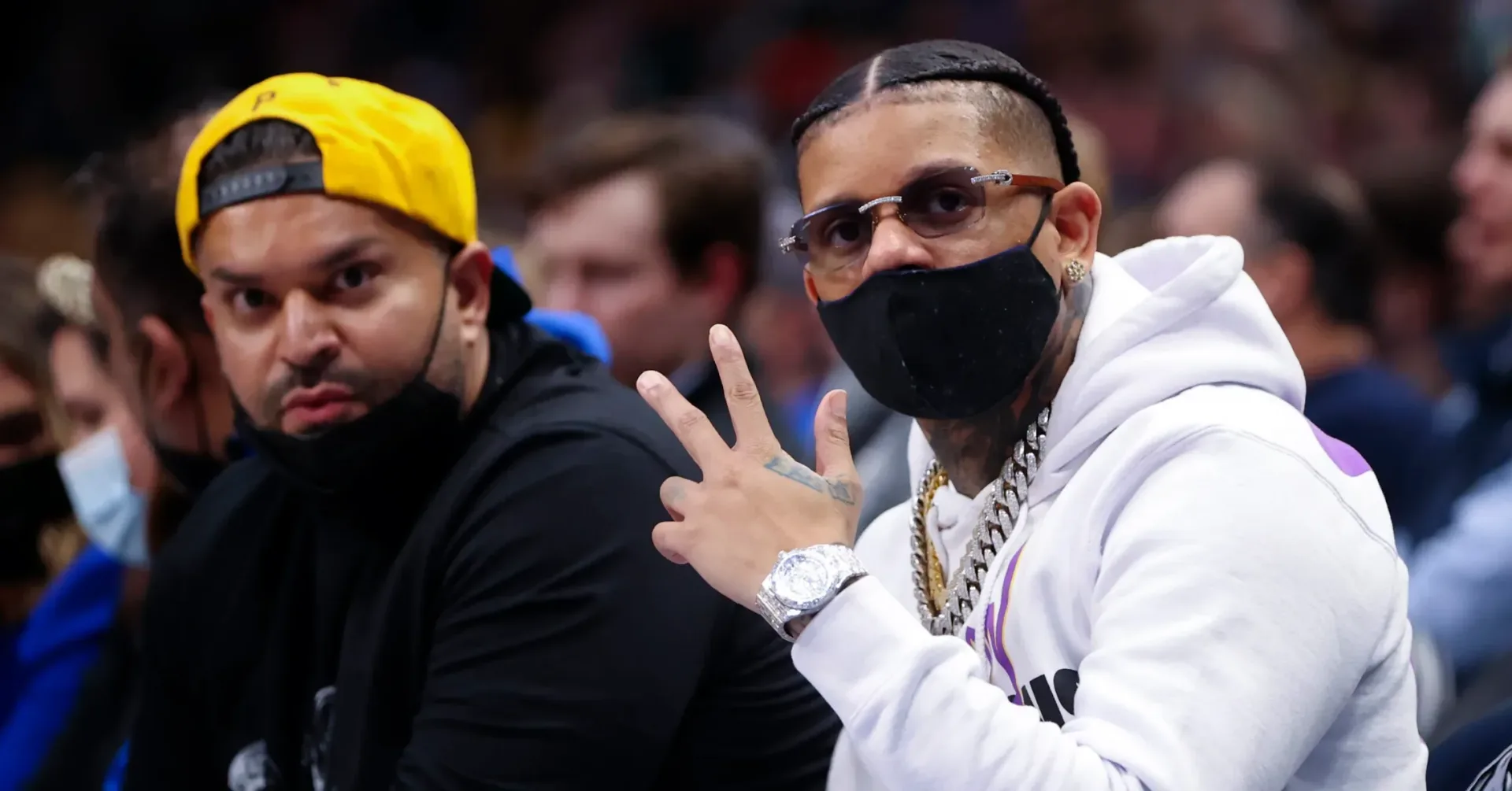
Attorney Bradford Cohen says he has been asked to review Yella Beezy’s case for possible appellate work, arguing that questions surrounding testimony and an alleged payment arrangement could become central to any challenge of the conviction.
Yella Beezy received a sentence of life in prison without parole on a capital murder conviction connected to the death of Texas rapper Mo3. The case alleged that Yella Beezy paid Kewon White to kill Mo3. White had previously been convicted of murder and also received a life-without-parole sentence.
Cohen’s public comments do not constitute an appeal filing, and they do not establish that a court will overturn the verdict. They do, however, identify the areas he believes could be litigated if he formally joins an appellate effort: the credibility of a witness who allegedly lied before a grand jury, the witness’s reported federal deal to testify, and White’s reported assertion that Yella Beezy never paid him for the killing.
What Cohen is challenging
In a post on X, Cohen argued that the stated circumstances leave room for reasonable doubt. He wrote:
“Yella Beezy convicted on the word of a witness who admitted he lied to the grand jury and got a federal deal to testify, while the shooter says Beezy never paid him. That isn't proof beyond a reasonable doubt. This fight moves to appeal.”
He later said he had been asked to look at the matter “for appellate purposes,” adding that more information would follow.
The distinction matters. A lawyer publicly identifying possible appellate issues is not the same thing as a court finding an error. It is also not a substitute for a filed brief laying out the trial record, the specific rulings being challenged, and the relief being sought. At this stage, Cohen’s remarks express an assessment of what he sees as vulnerabilities in the prosecution’s case rather than a judicial determination.
Why witness credibility could matter
Witness credibility refers to how believable and reliable a fact-finder considers a witness to be. It can be affected by inconsistent prior statements, admitted dishonesty, possible personal motives, promises of favorable treatment, or conflicts with other evidence.
The claims Cohen highlighted concern several of those areas at once. A witness’s alleged admission of having lied to a grand jury would plainly be significant because a grand jury is part of the pretrial process used to consider whether criminal charges should proceed. If that witness later testified at trial, attorneys could focus closely on the inconsistency and on whether jurors had enough information to judge the witness’s reliability.
The reported federal deal is similarly important in a credibility argument. An agreement that benefits a witness can give defense lawyers grounds to argue that the person had an incentive to provide testimony helpful to the government. That fact alone does not mean testimony is untrue. Courts and juries may still accept testimony from a cooperating witness. But the existence, scope, and disclosure of any deal can be important when evaluating whether a conviction rests on evidence that was fairly presented and adequately tested.
Cohen also pointed to White’s reported statement that he was never paid by Yella Beezy. That assertion goes directly to the alleged arrangement at the center of the case. But it should be treated carefully: the supplied account does not provide the full trial transcript, the evidence offered by prosecutors, the jury instructions, or White’s complete testimony. Without those materials, outside observers cannot determine how the jury weighed that statement against the rest of the record.
Appeals are not a second trial
An appeal is a request for a higher court to review whether legal errors affected a case. It is generally not a chance to simply retry the facts because a new lawyer believes the jury should have reached a different result.
That makes the difference between a persuasive public argument and a viable appellate claim especially consequential. An appellate challenge normally needs to connect a disputed issue to an identifiable legal problem: for example, an improper ruling, an error involving evidence, a jury-instruction problem, or a process that unfairly affected the outcome. The reviewing court then considers the record and the applicable legal standard.
In practical terms, a defense team pursuing the themes Cohen raised would likely need to examine how the witness’s grand-jury statement, any federal arrangement, and White’s alleged denial of payment were handled at trial. Key questions would include whether those matters were disclosed, whether the defense was able to question witnesses about them, how the prosecution characterized them, and what other evidence supported the verdict. Those are questions for lawyers working from the record and, ultimately, for the courts—not questions answered by a social-media post.
“Reasonable doubt” is the prosecution’s burden of proof at trial. It means the prosecution must prove guilt to the required high standard; it does not mean every conceivable doubt must be eliminated. On appeal, a court’s task is different. It looks at the legal basis of the challenge and whether an alleged error warrants relief under the relevant rules. Cohen’s use of reasonable doubt explains why he sees the witness issues as important, but an appeal would still require a legal pathway beyond a broad disagreement with the jury’s conclusion.
What is known, and what remains unresolved
The available information establishes several major developments: Yella Beezy was sentenced to life without parole in connection with Mo3’s death; the allegation was that he paid White to commit the killing; White had already been convicted and sentenced to life without parole; and Cohen says he has been asked to assess the case for appellate purposes.
It also establishes the basis of Cohen’s stated concern: a witness allegedly lied to a grand jury and received a federal deal to testify, while White reportedly said no payment was made by Yella Beezy.
What remains unresolved is just as important. There is no supplied filing from Cohen, no court schedule for an appeal, no description of the complete evidentiary record, and no ruling by an appellate court. There is likewise no basis here to predict whether an appeal will be filed, what arguments it will contain, or whether it will succeed.
Cohen himself acknowledged the uphill nature of the process, even while expressing confidence that this case may offer meaningful issues for review. Appeals are often difficult because convictions carry the weight of a completed trial and because reviewing courts apply defined standards to claimed errors. Still, cases involving cooperating witnesses, alleged prior falsehoods, and disputed evidence can receive intensive scrutiny when counsel believes those issues were handled improperly or materially affected the verdict.
A case that will likely move from headlines to paperwork
For now, the next meaningful developments would be procedural rather than rhetorical: the identification of appellate counsel, an actual notice or brief, the arguments presented from the trial record, and a response from the other side. Until then, Cohen’s remarks should be understood as an early outline of a possible defense strategy, not proof that the conviction is already in jeopardy.
The story also sits within a wider hip-hop news cycle, alongside unrelated music-focused coverage such as Eminem’s archival Infinite EP and vinyl release. But the legal stakes here are of an entirely different order: a life-without-parole sentence, the death of Mo3, and the prospect of a closely examined appellate record.