
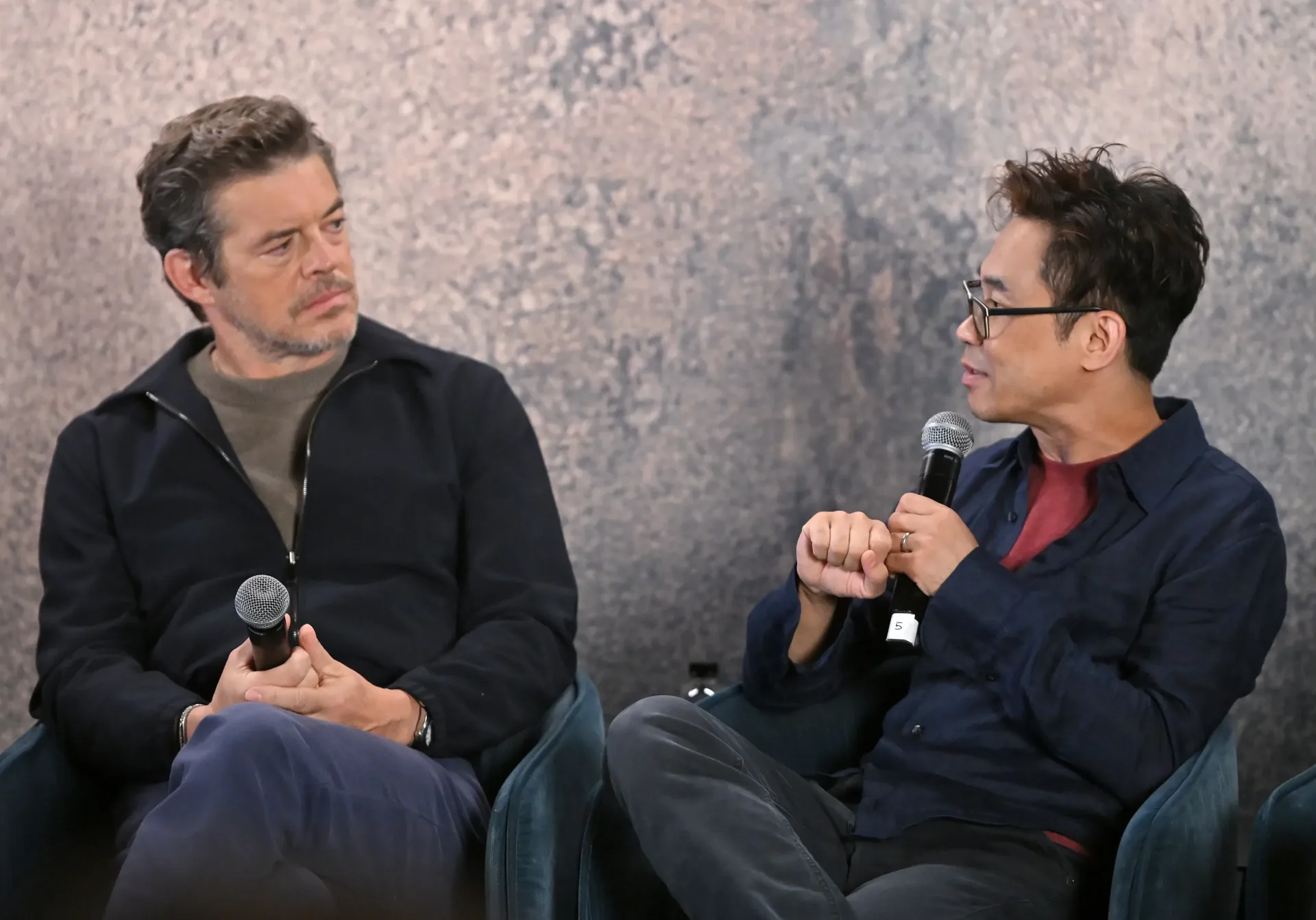
Jason Blum and James Wan have used a strong year for theatrical horror to explain both a corporate identity change and a broader creative shift in the genre. Their combined banner, previously called Blumhouse Atomic Monster after the companies merged in 2024, was renamed Blumhouse Atomic in early November.
The shorter name is intended to give the shared organization a clearer identity without erasing the individual labels that audiences know. That distinction matters: Blumhouse and Atomic Monster remain separate banners for the films they release, even as they operate within one company. In practice, a project may be presented under the umbrella name while retaining its individual Blumhouse or Atomic Monster branding at the start of the film.
For moviegoers, this is less a signal that two horror brands have become creatively indistinguishable than a clarification of how they coexist. For the business, it offers a parent identity while preserving two established label names that can be used for projects that best suit each banner.
The companies are also developing more genre work, including the previously reported Blumhouse horror film ‘Sleepover’. But the discussion around the name change focused on a larger point: horror has become unusually effective at bringing audiences back to theaters.
Horror’s attendance result stands apart
A figure presented during the discussion put 2026 theater attendance for horror films at 7% above pre-pandemic levels. That result was contrasted with declines for other genre categories, including action, science fiction and romantic comedies.
Attendance is not the same thing as box-office revenue. It measures the number of visits or tickets rather than the amount of money brought in, and it can be affected by ticket pricing, premium formats and release volume in different ways than gross revenue. Still, the stated comparison is meaningful because it describes audience behavior: horror has apparently not merely recovered its previous theatrical audience but surpassed it, while the other cited genres have not done the same.
Blum’s explanation is rooted in the particular way horror plays in a room full of people. He characterized the experience as participatory and collective—closer in some respects to the shared energy of a concert or sporting event than to a solitary stream at home. A scare, laugh, gasp or moment of tension can travel through an audience immediately. That response becomes part of the entertainment rather than background noise.
His argument also places horror in the post-lockdown context. People returned quickly to live events such as sports and concerts, while moviegoing took longer to regain its place in the routine. Horror may have had an advantage because its rewards are unusually difficult to replicate in isolation: a phone, a pause button and a quiet living room can change the rhythm of a suspense sequence, while a packed auditorium intensifies it.
Related coverage includes Blumhouse Atomic Explains Rebrand as ‘Obsession’ Powers Horror’s 2026 Run.
That does not mean every horror movie is automatically a theatrical event, or that other genres cannot create communal reactions. The available figures do not establish a single cause for the attendance gap. They do, however, support the narrower observation that horror has been especially resilient in cinemas, and Blum’s explanation offers a plausible account of why its social dimension may matter.
‘Obsession’ provides the year’s most dramatic example
The conversation also turned to Obsession, the summer breakout that earned more than $500 million worldwide from a budget below $1 million. Blum became an executive producer shortly after Focus Features acquired the film.
The scale of that reported result is striking not simply because the gross is large, but because of the starting budget. A film made for under $1 million has a dramatically different financial risk profile from a conventional studio tentpole. Its eventual worldwide revenue, as reported, makes it an extraordinary outlier. It should not be read as a guarantee that tiny budgets produce giant hits; it instead demonstrates the upside when a modestly made movie finds a subject and style that audiences strongly embrace.
Blum identified two ingredients behind the film’s momentum. The first was subject matter: the experience of being obsessed with someone, or realizing that someone is obsessed with you, was described as broadly relatable for younger viewers. That framing points to a useful horror principle. The genre often works by taking an ordinary emotional concern and making it immediate, physical and threatening. The audience does not need to share every detail of a character’s situation to recognize the underlying fear.
The second ingredient was director Curry Barker’s background making material for YouTube and social platforms before arriving in Hollywood. Blum’s assessment was not that social-media experience is a replacement for filmmaking craft. Instead, he argued that Barker developed an ongoing feedback loop with an audience: make short-form or online work, observe the reaction, then refine the next piece.
What an audience feedback loop can mean
An audience feedback loop is the cycle in which a creator publishes work, receives an audience response and applies that information to later work. Online platforms can make this faster and more direct than traditional film distribution, because creators can release many pieces, see which ideas connect and adjust their approach repeatedly.
Blum described Barker’s filmmaking as having an unusually direct feeling, as though the director is communicating small, funny details directly to the viewer. That is an interpretation of style rather than a technical checklist, but it identifies a possible bridge between online creators and theatrical horror: a filmmaker who has learned timing, attention and viewer response in digital spaces may bring a particularly intimate sense of audience awareness to a feature.
It is important not to overstate that theory. The information available does not describe Obsession’s plot mechanics, marketing plan, release strategy or full production circumstances. Nor does it prove that a YouTube background alone caused its success. Blum’s comments offer an explanation for why Barker’s work may feel distinct, alongside the film’s relatable central premise and the wider hunger for communal horror.
Why the genre’s changing reputation matters
Wan framed the moment as a cultural change for horror filmmakers. Looking back to his own effort to break into the industry with Saw, he said horror was once treated as a lower-status corner of filmmaking and supported by a narrower audience. His view is that the stigma has weakened, particularly among younger viewers, and that making horror is now regarded as creatively desirable rather than professionally limiting.
That change has practical implications beyond one hit or one studio banner. When a genre is treated as legitimate creative territory, more emerging filmmakers may be willing to enter it. That can broaden the pool of voices and ideas pursuing scary stories. Wan specifically connected the success of Obsession to a new generation that wants to make horror.
Of course, greater interest also means a more crowded field. A healthy genre does not eliminate the challenge of distinguishing a movie from the rest of the release calendar. What the cited attendance trend and the performance of Obsession suggest is that the potential audience is there when a film offers a clear enough reason to see it with other people rather than wait for a home viewing option.
Blumhouse Atomic’s rebrand arrives at a useful moment for that proposition. The parent company has a more concise name, while its constituent labels remain visible. The theatrical case being made is equally straightforward: horror is not just surviving in theaters; in the figures discussed, it is doing something other genres have struggled to achieve—turning a movie ticket into a social occasion.