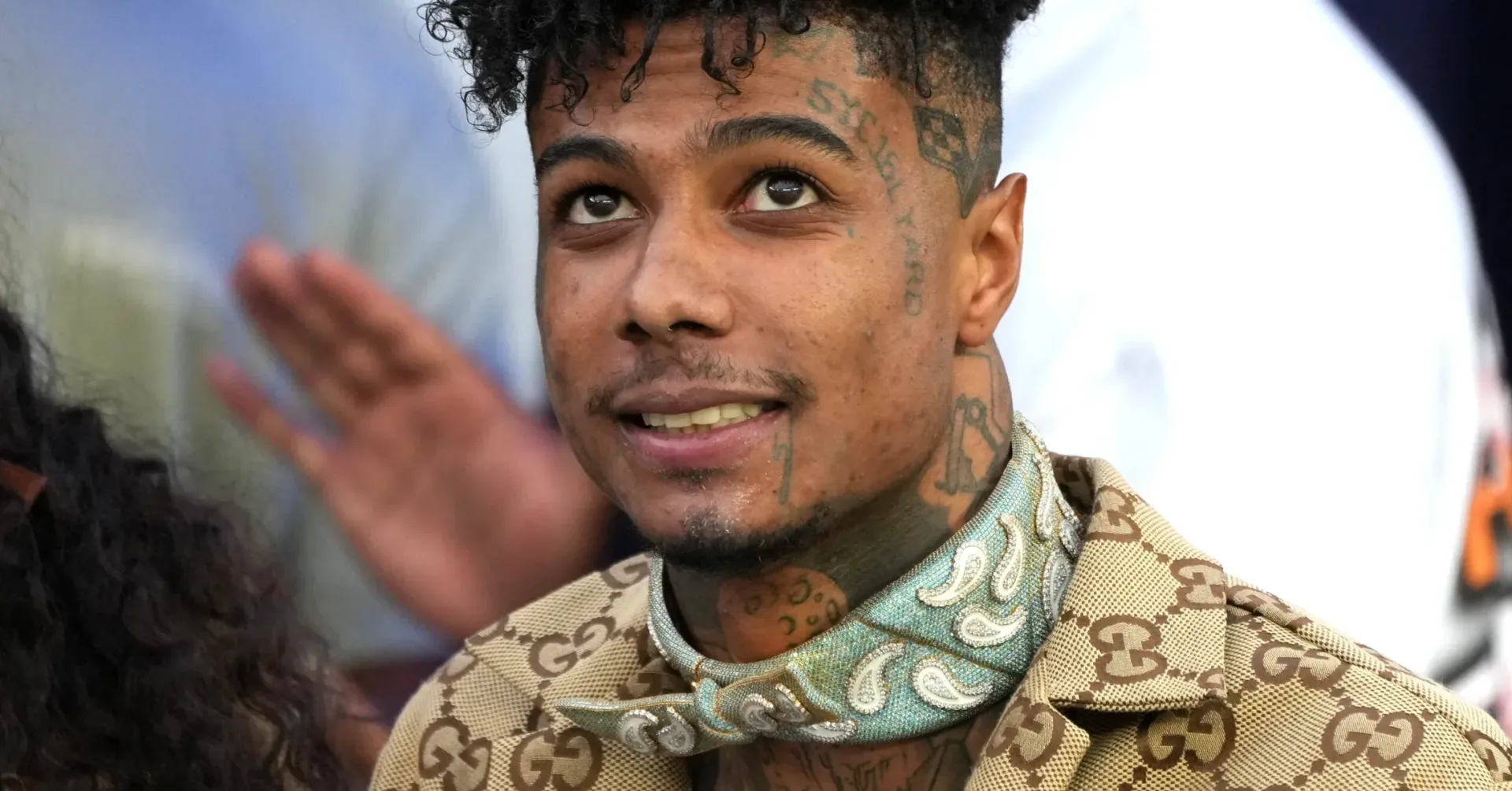
Blueface’s latest livestream activity has put several threads of his highly public personal life back into circulation at once. The rapper addressed what appears to be a split from Nevaeh Akira, reacted after she tattooed his name on her back, and made fresh comments about his long-running dispute with Chrisean Rock. The result was another fast-moving social-media episode in a personal saga that has repeatedly unfolded in public rather than behind a carefully managed press statement.
The central point involving Akira was direct: Blueface indicated that he did not want to continue the relationship. The discussion followed a period in which the pair had recently welcomed a child, making the apparent breakup especially notable to followers who have watched their connection develop amid regular online attention. During a livestream, Akira called to ask what had changed, while Blueface maintained that he wanted distance and asked to be left alone.
One especially visible part of the exchange concerned Akira’s tattoo of Blueface’s name. Tattoos can carry enormous symbolic weight in celebrity relationship discourse, particularly when a relationship’s status is unclear or actively contested in public. Here, the timing intensified the conversation: the tattoo was discussed after Blueface said the relationship had ended. Neither a tattoo nor a livestream can settle the private realities of a relationship, but both are easily transformed into major talking points when the people involved have large online audiences.
A breakup discussed in real time
Public figures routinely face the difficult overlap between private relationships and public-facing platforms. In Blueface’s case, livestreams have become a familiar setting for immediate, unfiltered exchanges. That format is built for reaction rather than reflection. A call can become a clip within minutes; a clip can be recirculated without its full context; and viewers can quickly turn incomplete information into theories, timelines, and sides to take.
That does not mean the emotions expressed in these situations are performative or unimportant. It means the format creates pressures of its own. Audiences receive fragments, participants may be speaking in the heat of the moment, and the line between a personal conversation and content can vanish almost instantly. The wisest reading of any relationship statement made online is often the narrowest one: it records what was said at that time, not necessarily a permanent verdict on a complicated situation.
Blueface and Akira’s situation has drawn additional attention because they share a child. Co-parenting, relationship status, and online commentary are separate matters, even when the internet treats them as one giant ongoing storyline. The available public discussion indicates a split, but it does not establish how the pair will handle their family arrangements moving forward. Those details remain personal unless either party chooses to share them clearly and consistently.
Chrisean Rock returns to the conversation
Blueface also used the moment to revisit his contentious history with Chrisean Rock. Their relationship and subsequent conflicts have generated years of online debate, including arguments surrounding their son. In the recent comments, Blueface told Rock not to use his name for content and again disputed paternity.
That claim is an allegation voiced by Blueface, not a fact established by the material available here. It is particularly important to maintain that distinction when public arguments concern a child. Blueface has taken differing positions on the matter in past public discussions, at times appearing to retreat from the claim and at other times repeating it. No verified resolution is provided in the current information, and Rock had not publicly responded within the material at hand.
The public back-and-forth between Blueface and Rock has long been a magnet for social-media engagement. But high engagement is not the same thing as clarity. Reposted clips tend to reward the sharpest line, the biggest reaction, or the most inflammatory interpretation. They rarely create a reliable record of private family circumstances. For viewers, that makes restraint more valuable than instant certainty.
There is also a larger pattern worth recognizing. Celebrity relationship arguments are often packaged by platform mechanics as serial entertainment: an argument yields clips, clips lead to response videos, response videos create a fresh round of speculation, and the loop continues. The human consequences can be obscured by the pace. In disputes involving family and children, responsible coverage means accurately identifying what has been claimed while declining to turn unverified assertions into settled truth.
More livestream controversy around Blueface’s circle
The relationship discussion arrived amid other chaotic material connected to Blueface’s online orbit. A recent moment associated with “Blue Girls Club,” the dating-style programming linked to the rapper, reportedly involved Wack 100 in a physical confrontation with one of the participating women. That incident added another layer of controversy to a stream of content already marked by volatile exchanges and frequent audience reaction.
It is worth separating the threads rather than treating every headline as one event. The reported confrontation involving Wack 100 is distinct from Blueface’s comments about Akira and Rock. What connects them is the environment in which they have circulated: livestreams, social posts, reposted footage, and a viewer culture that expects a new escalation whenever these names trend.
That environment can make it difficult to understand even basic developments. Are two people reconciling, arguing, co-parenting, collaborating, or simply responding to old clips? Online audiences often expect a clean answer, while the public record offers only disconnected moments. Blueface’s personal life has repeatedly produced that kind of uncertainty, with relationships and disagreements playing out in overlapping bursts of public content.
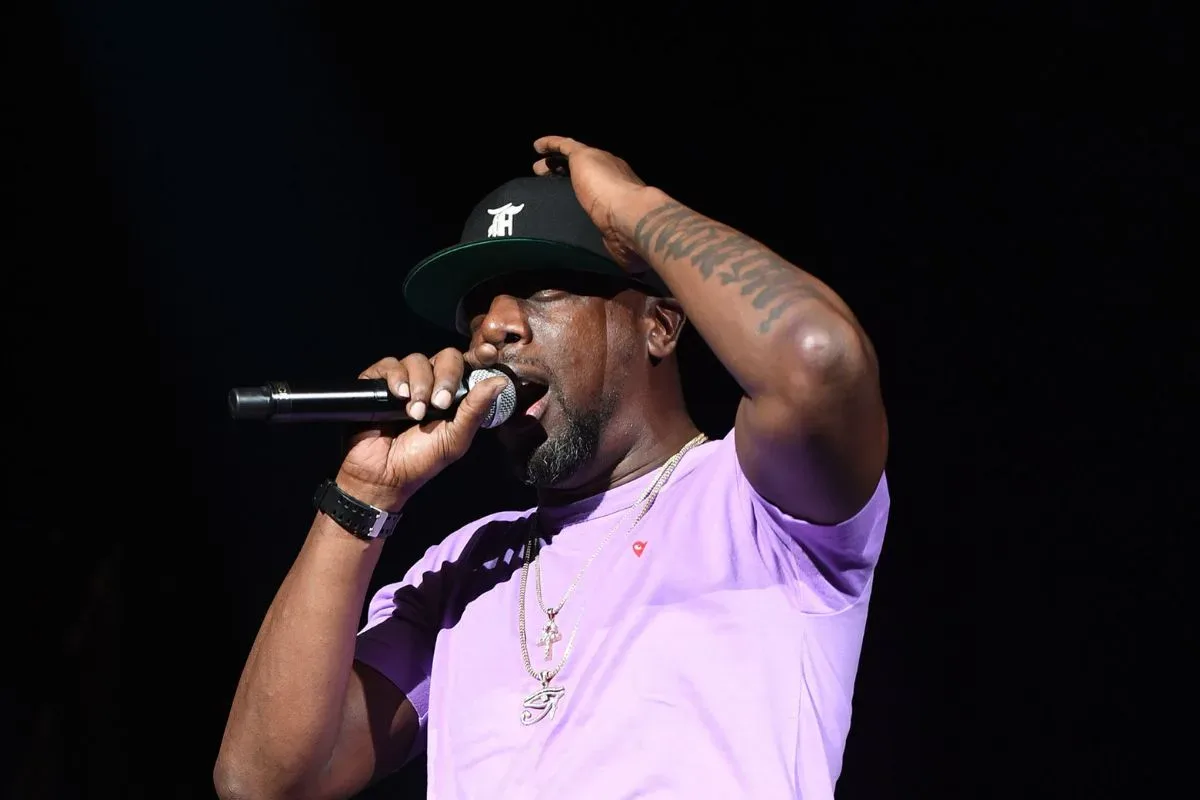
Readers interested in hip-hop’s broader relationship with public messaging may also find value in this discussion of Inspectah Deck’s call for a wider range of messages in hip-hop. The contrast is instructive: viral conflict is one highly visible part of online music culture, but it is far from the only kind of conversation artists can create.
What is publicly known about Blueface’s children
Blueface is publicly described as having four children with three women. Javaughn and Journey are associated with Jaidyn Alexis. He also shares a son, Chrisean Jr., with Chrisean Rock, while Johnathan Jamall Porter Jr. is associated with Nevaeh Akira. Because the discussion around Rock includes Blueface’s renewed paternity denial, it is necessary to note again that this is his public assertion and that the information provided does not independently substantiate it.
Names, family connections, and relationship statuses are frequently pulled into social-media debates with little regard for how permanent a digital trail can be. In this case, the attention is being driven by a mix of a reported breakup, an emotionally charged tattoo, a livestream call, and an old dispute brought back into the spotlight. Each element is click-friendly on its own. Combined, they have produced another major round of conversation around Blueface.
Why the cycle remains so difficult to follow
Blueface’s public persona has often been connected to provocation, unpredictability, and a willingness to speak candidly on camera. That approach keeps viewers watching, but it can also leave the surrounding narrative in constant motion. Statements that sound definitive in one livestream may be challenged, reinterpreted, or replaced by later developments. The only responsible approach is to avoid treating any single clip as the complete account.
For now, the clearest takeaway is limited. Blueface publicly signaled that he and Nevaeh Akira are no longer together and said he wanted no further contact. He also revived his dispute with Chrisean Rock by telling her not to invoke his name in content and repeating a paternity allegation that remains unverified in the information available. Separately, controversy tied to the “Blue Girls Club” sphere has kept the wider circle under attention.
Whether Akira, Rock, or anyone else involved responds publicly remains to be seen. Given the history of these intertwined online disputes, new clips and reactions may well appear. Still, the most useful way to follow developments is to distinguish between a person’s livestream claim, a confirmed fact, and the speculation that rapidly grows in the space between them.