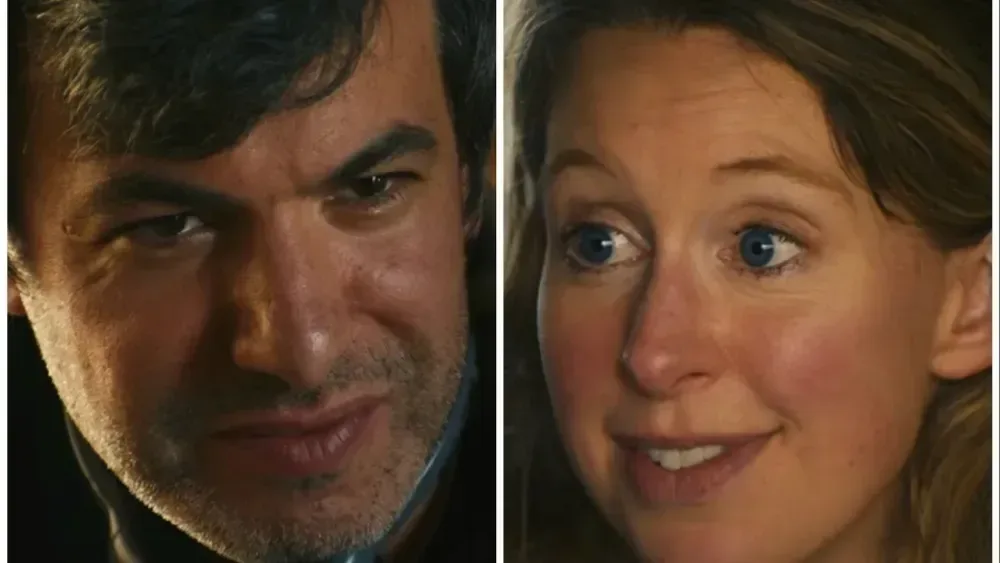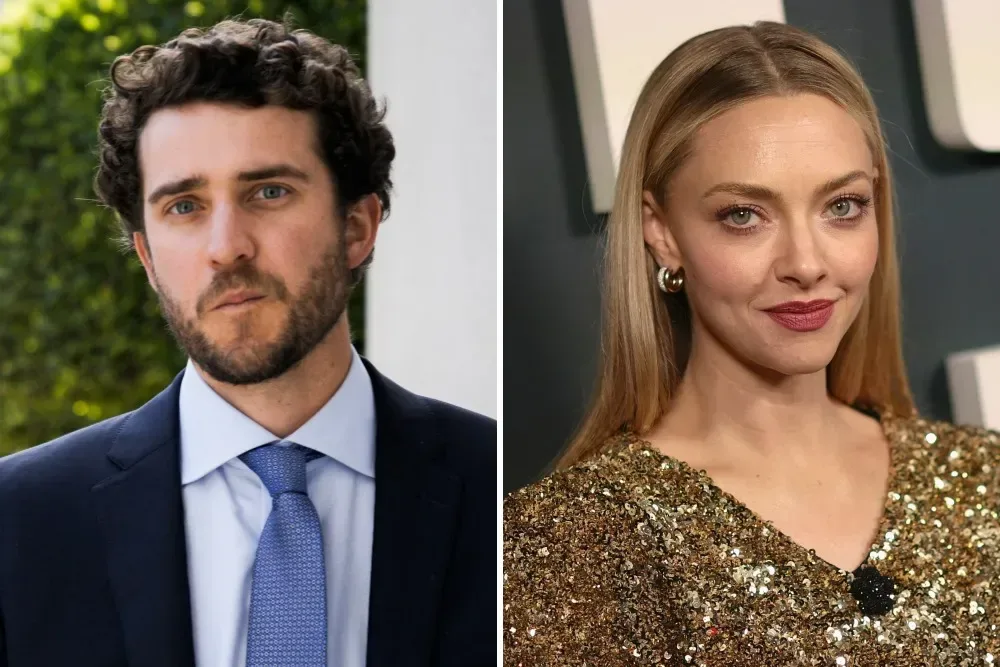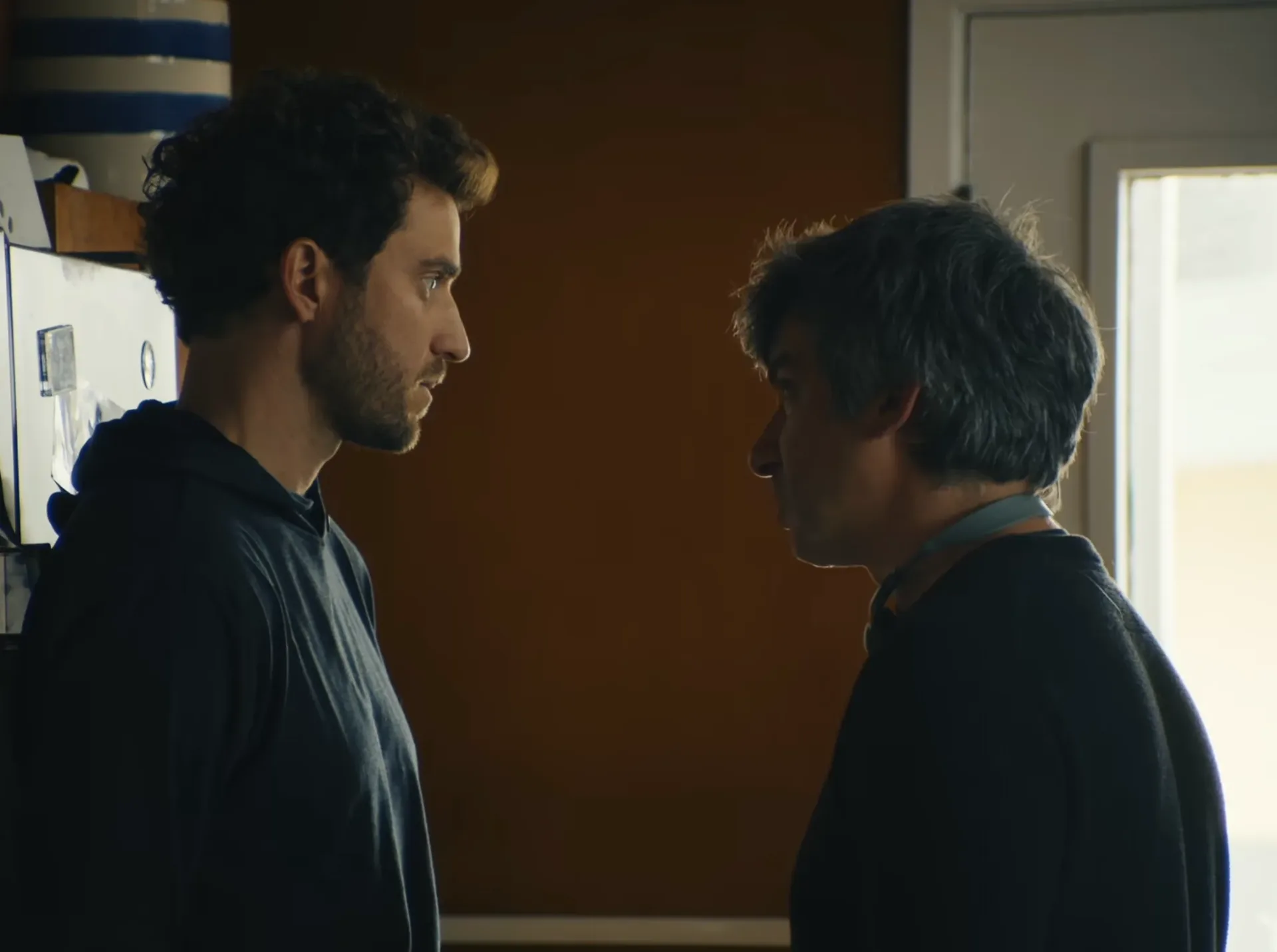
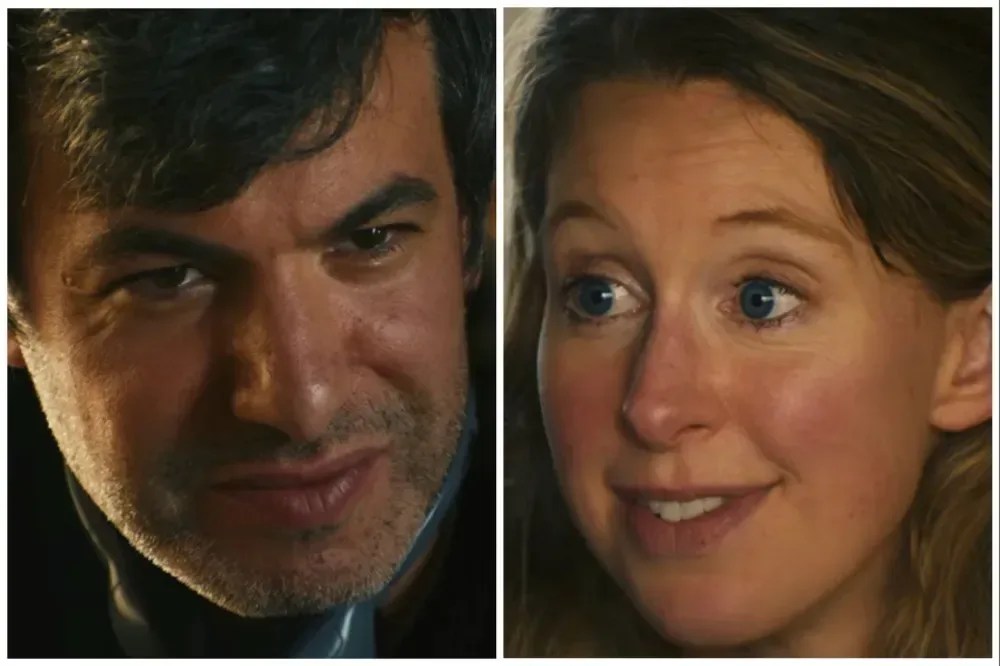
Billy Evans has addressed one of the more speculative readings of You Can See Everything, saying he did not believe director Nathan Fielder’s relationship with Elizabeth Holmes was romantic.
In his first interview since A24 released the documentary last month, Evans was asked whether the film left him with the sense that Fielder was “infatuated” with Holmes. His answer was direct: “No, not in real life.”
That distinction matters because Evans did not argue that the documentary leaves no room for viewers to wonder. Instead, he suggested the material may be intentionally shaped to confront Fielder’s own perspective and the audience’s confidence in it. Evans characterized the film as being about what can be trusted, adding that nothing is entirely clear.
In other words, the apparent ambiguity is not necessarily evidence of an off-camera romance. It may be part of the documentary’s method.
Evans draws a line between care and romance
Evans said he believes many people are fascinated by Holmes, but he did not interpret Fielder’s interest in her as romantic. He said Fielder cares deeply about Holmes, while stressing that he never got the impression that those feelings were romantic.
The comments are a useful reminder of the difference between a viewer’s interpretation of a filmed relationship and the knowledge held by someone present around the people involved. Documentaries can make that divide especially pronounced. A nonfiction film can use editing, framing, music, pacing, and the order of scenes to emphasize uncertainty or emotional tension without making a straightforward factual claim about what happened away from the camera.
That does not make audience reaction invalid. A viewer is responding to the version of events placed on screen. But it does mean that interpreting a charged scene as proof of a relationship can go beyond what the scene itself establishes.
Evans also addressed a water sequence that has fueled some of that reading. He said he was in the water roughly five feet away when the shot of Fielder and Holmes was taken. His account places the moment in a different context from the isolated image some viewers may have taken from it: it was not, as he describes it, a private encounter between the two.
Related coverage includes Billy Evans Says Nathan Fielder and Elizabeth Holmes Were Not Romantic.
What “nothing is clear” means in a documentary context
Evans’s description of the project as a film about trust is important because it frames ambiguity as a theme rather than a loose end waiting for a definitive romantic answer.
Documentary storytelling often asks an audience to assess people, images, and narratives at the same time. The presence of real people and recognizable events can create an expectation of total transparency. Yet a documentary remains a constructed work: filmmakers decide what footage is included, what is withheld, where an interview answer appears, and how long the camera stays on a reaction. Those decisions can guide emotion and raise questions, even when the people in the film disagree about the implications.
Evans’s remarks suggest that You Can See Everything may be engaging with that very problem. If parts of the film are heightened to criticize Fielder’s own bias, as Evans believes, then the audience is being invited to notice the filmmaker as a participant with his own assumptions—not merely as an invisible observer recording someone else’s story.
That is a meaningful distinction. Bias, in this context, does not necessarily mean a deliberate lie. It means a tendency or perspective that can influence how somebody sees another person and presents that perception. A work can acknowledge bias while still being emotionally persuasive, which is exactly why viewers may emerge with sharply different readings of the same moments.
For audiences, the practical takeaway is simple: a feeling suggested by a scene is not automatically a confirmed fact about the people in it. Evans’s firsthand account is not a comprehensive explanation of the documentary, but it is a clear rejection of the idea that Fielder and Holmes had a romantic relationship.
Evans says there has been no contact with Fielder since release
Evans also said that he and Fielder have not spoken since the documentary came out. Asked about the lack of contact, Evans speculated that Fielder and those around the film may be concerned that he could sue. Evans said he has no intention of doing so.
His wording stops short of alleging that anyone has threatened or expected litigation. It describes his own belief about why communication has not resumed, paired with his statement that he does not plan to bring a lawsuit. That distinction is worth maintaining: the interview establishes no lawsuit and no declared legal dispute.
The episode nevertheless highlights a familiar tension when documentaries involve people with personal stakes in the story. Participants and people close to participants may recognize themselves in a finished film while disagreeing with what a scene conveys, what it omits, or what viewers infer. Those disagreements can exist even if there is no legal action.
They can also become part of the public conversation around a film. Once an audience starts debating intent, attraction, manipulation, or reliability, people connected to the production are often asked to clarify what they saw. Evans has now offered his answer on the central question: he saw care, not romance.
His response to Amanda Seyfried’s portrayal
During the interview, Evans also discussed Amanda Seyfried’s portrayal of Holmes in the documentary. He said he was glad she was included because, in his view, her appearance illustrates a contrast between the real person and an actor eager to play a character.
Evans declined to speak harshly about Seyfried. He said he would do his best not to speak poorly of others because he has recently experienced people speaking poorly about him and knows how that feels.
That response fits the restrained tone of his wider comments. He did not use the interview to escalate the speculation surrounding Fielder and Holmes, and he did not present his view of Seyfried as a personal attack. Instead, he emphasized the difference between a real individual and a performance built around that individual.
It is also a distinction audiences frequently blur. An actor’s portrayal can become so memorable that it affects how viewers picture a public figure, particularly when the person portrayed has already been the subject of extensive attention. Evans’s comments point back to a basic separation: a screen performance is an interpretation, while a documentary subject remains a person whose relationships and motives may be more complicated than any one depiction can show.
Why this clarification may not end the debate
Evans’s comments offer a firm personal account, but they are unlikely to eliminate discussion of the film’s presentation. That is partly because his explanation accepts the premise that some moments can look more charged than they were. It is also because he characterizes the documentary as a work interested in uncertainty.
For viewers, that makes two ideas possible at once: the film can invite questions about Fielder’s feelings or judgment, and there can still have been no romance between Fielder and Holmes in real life. The first is an interpretation of the work; the second is Evans’s stated view as someone who says he was present for at least one widely discussed moment.
Screen stories regularly create this sort of interpretive friction, whether they are documentaries, dramas, or franchise films such as the anticipated X-Men crossover in Avengers: Doomsday. The major difference here is that You Can See Everything concerns real people, so the gap between what a scene suggests and what participants say happened carries more personal weight.
Evans’s clarification does not ask viewers to ignore the film’s ambiguity. Rather, it argues against treating that ambiguity as confirmation. His position is that Fielder cared about Holmes, that the documentary may deliberately complicate how viewers assess such care, and that the relationship was not romantic.