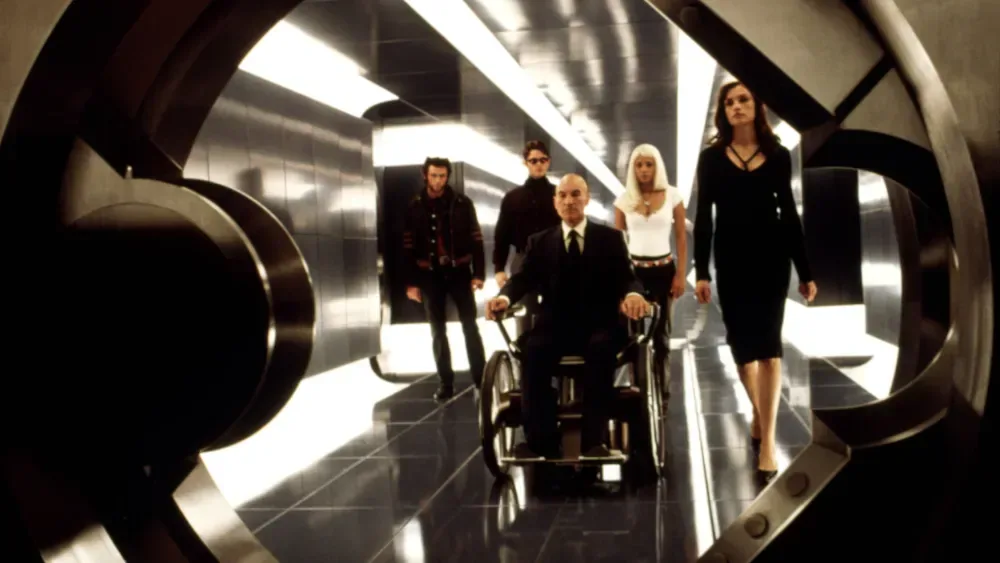
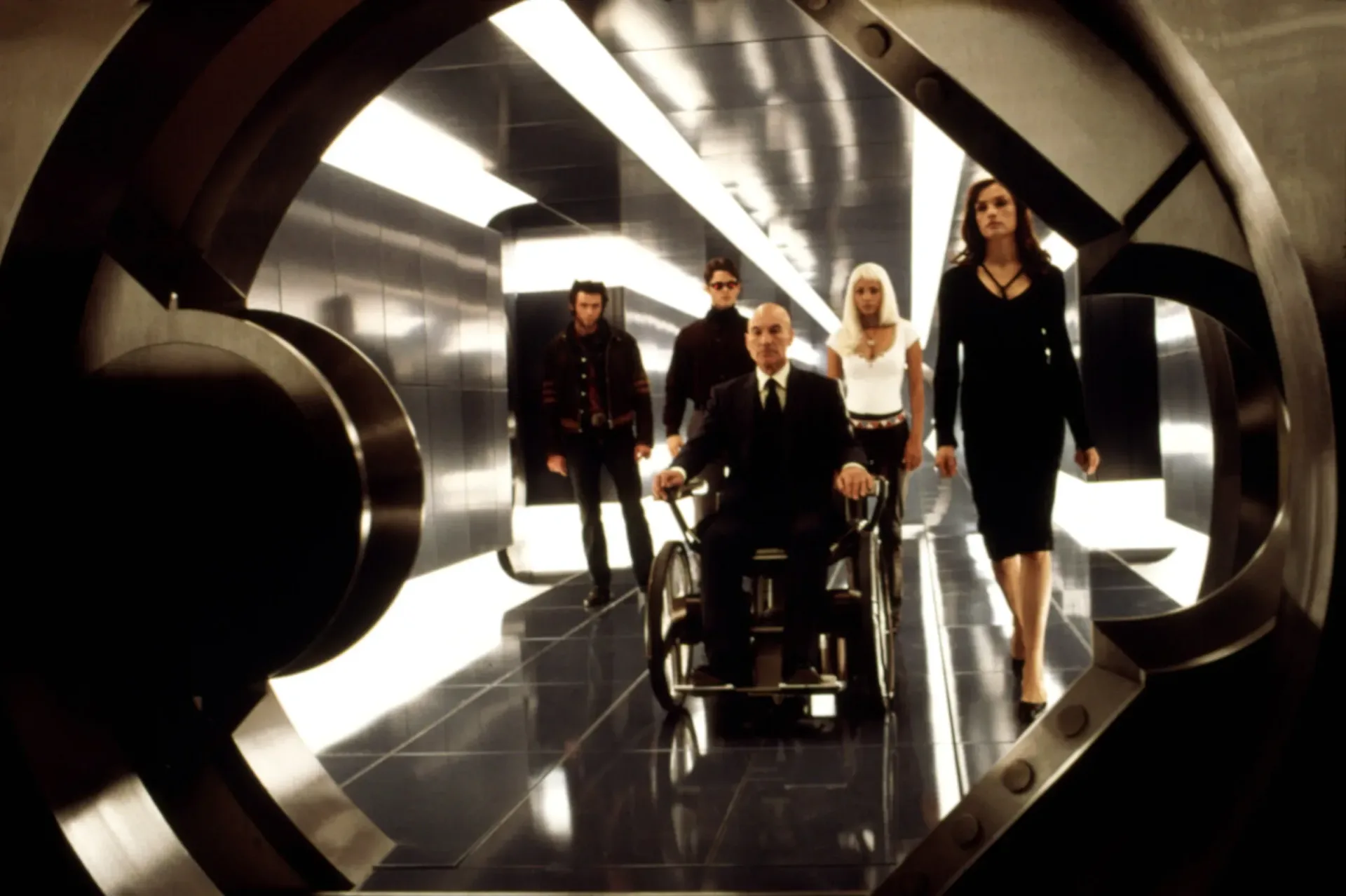
Avengers: Doomsday is being positioned as more than another superhero team-up. Kevin Feige has described the film as a chance to bring a 25-year span of Marvel storytelling into conversation with itself, using the original X-Men film characters as a major part of that idea.
The movie is due in theaters on Dec. 18 and will bring several characters associated with the early X-Men films into the Marvel Cinematic Universe. James Marsden’s Cyclops, Rebecca Romijn’s Mystique, Professor X, Magneto and additional X-Men figures are part of that return. For Feige, the connection is particularly personal: he worked as an associate producer on X-Men in 2000.
That makes Avengers: Doomsday a crossover with an unusually long runway. The Avengers and X-Men have shared comic-book history for decades, but their cinematic paths were built separately. The new film’s hook is not simply that famous heroes may occupy the same frame. It is that performers and character versions from an earlier era of Marvel movies are being folded into the MCU’s ongoing continuity.
A crossover once treated as impossible
Feige pointed to old comments from Hugh Jackman about the possibility of the X-Men and Avengers eventually appearing together. The basic appeal is easy to understand. A meeting between the two teams was long treated as an exciting hypothetical, especially while their movie franchises existed on separate tracks.
Feige’s description of the project as a culmination of a quarter-century of storytelling suggests that Doomsday is looking backward as well as forward. Rather than treating the earlier X-Men films as detached relics, the movie can use their characters and actors as part of a larger Marvel screen legacy.
That distinction matters for expectations. “Original X-Men” does not necessarily mean every person, plot point or continuity detail from those films is being recreated. It means that recognizable versions of important characters are crossing into the MCU. What the movie does with their histories—and how explicitly it connects them to present MCU events—remains to be seen.
What is confirmed about the returning cast
The reported character list already establishes a broad spread of X-Men roles. Cyclops is one of the team’s defining field leaders; Mystique is a shape-shifter often positioned on morally complicated ground; Professor X is the telepathic mentor and founder figure; and Magneto is one of Marvel’s most enduring ideological opponents and occasional ally. Bringing those figures into an Avengers movie opens a range of dramatic possibilities beyond a simple cameo parade.
It also means the returning X-Men presence is not limited to one corner of that world. Professor X and Magneto represent a foundational conflict over how mutants should live alongside humanity. Cyclops brings the perspective of an X-Men leader. Mystique, meanwhile, has a distinct relationship to identity, loyalty and survival. Those are character functions, not confirmation of any particular storyline in Doomsday, but they show why this group could matter to the film’s larger stakes.
Related coverage includes Kevin Feige Frames Avengers: Doomsday as an X-Men Reunion 25 Years in the Making.
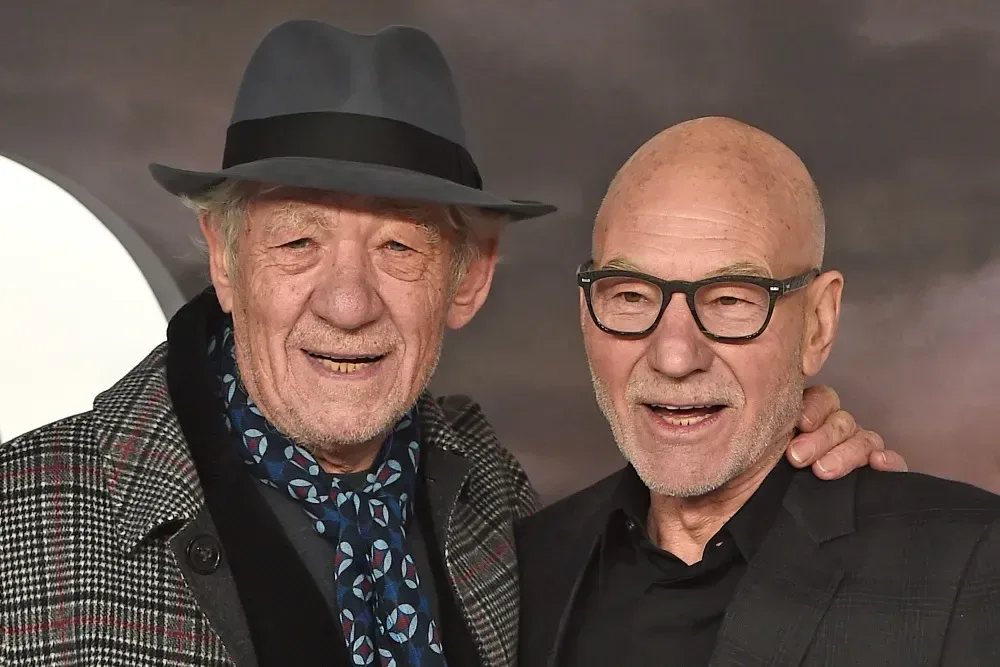
Patrick Stewart’s Charles Xavier is confirmed to appear in what is described as his ninth turn as Professor X and his final on-screen role. Stewart first played the character in 2000’s X-Men, establishing a calm, authoritative screen presence for the telepathic mutant mentor. The tribute language surrounding his return gives that appearance extra weight: it is being presented not merely as another familiar face, but as a closing chapter for a performance that has spanned more than 25 years.
For viewers, that creates two overlapping reasons to watch. There is the immediate question of what Professor X does in an Avengers-scale conflict. There is also the significance of seeing Stewart revisit a role with which he has been closely identified for decades.
Ryan Reynolds and Hugh Jackman are credited as writers—but the screen does not yet tell the whole story
One of the more intriguing details around Avengers: Doomsday is the presence of Ryan Reynolds and Hugh Jackman among the film’s 10 credited writers. Because both actors are strongly associated with Deadpool and Wolverine, fans have understandably wondered whether the credits signal a major appearance for their characters.
There is an important limit to what can be concluded from that information. A writing credit confirms contributions to the screenplay; it does not, by itself, confirm the size of an actor’s role, a character’s exact scenes, or even whether a contribution centered on a particular character. Reynolds and Jackman may have assisted with dialogue associated with their X-Men characters, but how much either actor appears in the finished film is unclear.
That is worth separating from confirmed casting. Speculation can turn a production credit into an assumed plot reveal very quickly, particularly with a crossover movie. At present, the sensible reading is narrower: Reynolds and Jackman are among the writers credited on the film, and their level of on-screen participation has not been established.
Why dialogue contributions could matter
In blockbuster filmmaking, a performer’s writing input can be valuable even when a movie has a large credited writing team. An actor who has inhabited a character over several projects may have a strong sense of the character’s rhythm, humor, voice and boundaries. That does not make every line autobiographical or improvised, but it can help maintain continuity of personality when a character moves into a much larger ensemble.
For Deadpool and Wolverine in particular, voice is central to the audience relationship. Deadpool’s comedic perspective and Wolverine’s blunt intensity are highly specific qualities. If either character appears, dialogue input could be one way of preserving that identity inside an Avengers story. Still, that remains an explanation of why such collaboration can be useful—not proof of the characters’ exact role in Doomsday.
What “MCU” integration can mean
The MCU, or Marvel Cinematic Universe, is the connected film-and-series setting that links many Marvel characters and storylines. Integrating the older X-Men characters into it does not automatically require every previous X-Men movie to become a straightforward chapter of one uninterrupted timeline. Modern superhero storytelling has multiple ways to connect familiar characters, and the available details do not specify the mechanism that Doomsday will use.
That uncertainty is not a flaw in the information; it is one of the movie’s central open questions. The appeal of a crossover rests partly on recognition—seeing established performers return—but the narrative work is in giving their arrival a purpose. A character should affect the choices, tensions or consequences of the main story rather than only trigger applause.
Feige’s framing points toward the X-Men’s inclusion being thematic as well as commercial. A 25-year celebration naturally invites audiences to remember the early 2000s X-Men film as part of the road that led to today’s interconnected superhero landscape. In that sense, the crossover is a form of retrospective: a current Avengers feature acknowledging an earlier generation of Marvel cinema.
It also arrives at a moment when legacy casting is increasingly meaningful to audiences. Familiar actors can provide emotional shorthand, but they also bring expectations. People do not only remember the costumes or powers; they remember how a performer made a character feel. Stewart’s composed Xavier, Marsden’s Cyclops and Romijn’s Mystique come with that accumulated audience memory.
The practical expectation for fans
For now, the clearest takeaway is that the original X-Men film legacy will have a meaningful place in Avengers: Doomsday. Cyclops, Mystique, Professor X, Magneto and more are being brought into the MCU, while Stewart’s appearance is being treated as a final return to Charles Xavier.
Beyond that, some restraint is warranted. The Reynolds and Jackman writing credits are real points of interest, but they do not settle whether Deadpool or Wolverine have large roles. Nor do the confirmed returns explain the precise story structure, the extent of the X-Men’s involvement, or how the film will handle the histories attached to these characters.
That mix of confirmation and uncertainty is likely part of why Doomsday has become such a consequential Marvel project. Its premise joins characters that many viewers spent years imagining together, while its use of returning X-Men performers turns the event into a recognition of Marvel’s own movie history. The film has a difficult balance to strike: honor the past without letting nostalgia become the entire plot, and make the crossover feel earned rather than merely inevitable.
Feige’s comments suggest the creative rationale is rooted in timing. The Avengers and X-Men sharing a movie is no longer just a hypothetical from interviews years ago. With Avengers: Doomsday, it is being built as a centerpiece of a 25-year Marvel milestone.
For more entertainment coverage, read our update on the expected final season of Slow Horses.