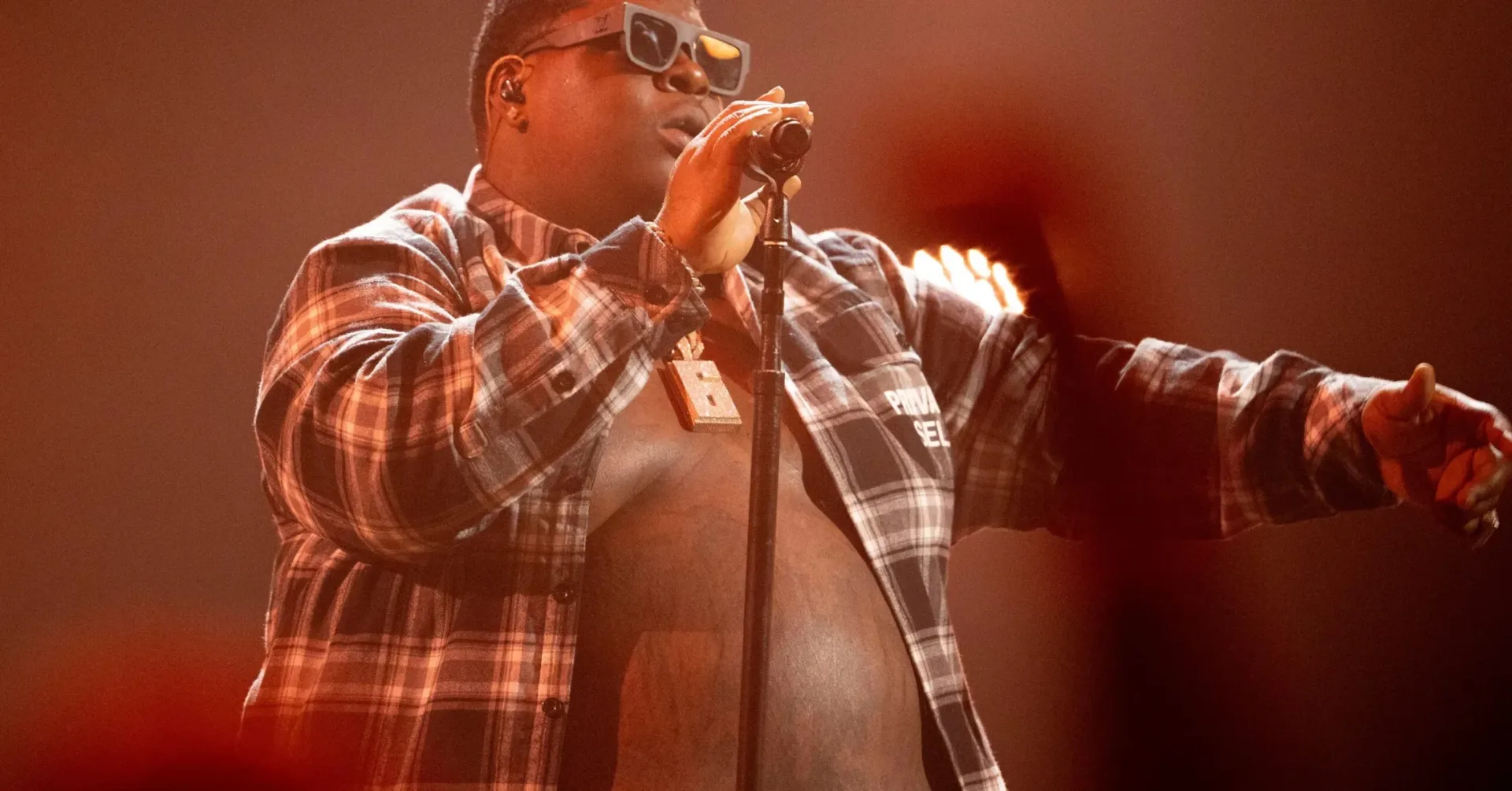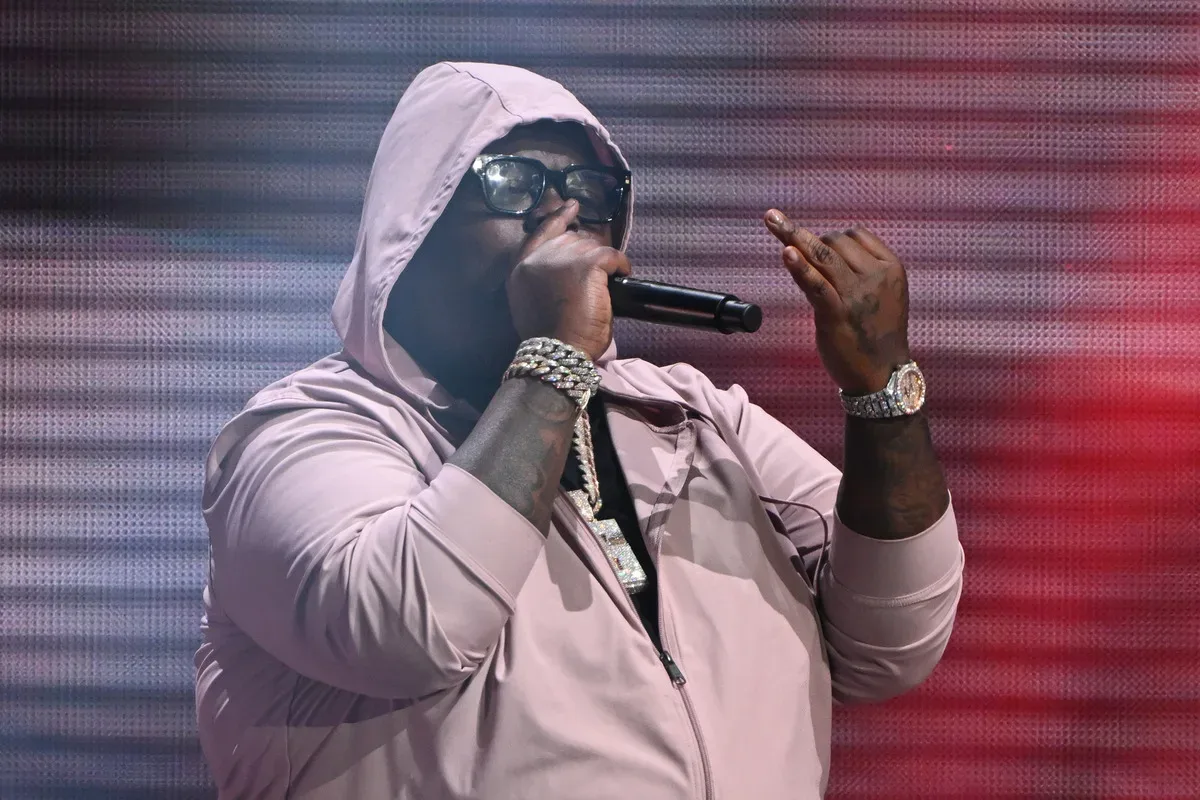
BigXthaPlug is making a case for a larger, less guarded version of rap. The Dallas artist believes the genre has lost some of its fun, not because artists lack ability, but because too many feel boxed into projecting the same hard-edged image.
During a conversation with Shannon Sharpe, BigXthaPlug was asked whether rap was dying. His answer did not frame the genre as finished. Instead, he questioned a modern music environment in which rapid online momentum can propel an artist into major commercial spaces before they have had much time to develop.
“I been rapping five years. Ain’t no way I should be at the top,” BigXthaPlug said.
The remark was not an attempt to downplay his own work. It was a blunt description of how quickly attention, money and visibility can move when songs catch fire. His concern is that fast success may create a distorted expectation: newer performers can feel pressure to immediately fit a marketable rap identity rather than take risks, learn publicly or follow the sounds that suit them.
For BigXthaPlug, that pressure is tied in part to drill’s influence on the broader mood around hip-hop. Drill is a rap style often associated with stark, aggressive production and direct street-centered writing. He did not argue that drill artists should be dismissed, nor did he propose replacing one dominant sound with another. His point was about the effect of a popular style becoming an informal expectation for artists who may not naturally work within it.
“It need to be fun again,” he said.
This is an argument about creative permission
“Fun” can be misunderstood as a request for lightweight music. BigXthaPlug’s argument is more expansive. He is asking for rappers to have permission to be playful, melodic, sentimental, experimental or unexpected without facing an automatic challenge to their credibility.
That matters because rap credibility is often treated as a fixed test rather than an artistic relationship between an artist and their audience. A rapper can be expected to maintain a particular sound, emotional posture or public image even as their interests change. The result is not simply fewer pop records or crossover tracks. It can also mean fewer detours into storytelling, softer R&B-inflected material, regional styles and collaborations that do not follow a familiar rap formula.
Related coverage includes BigXthaPlug Says Rap Needs More Room to Have Fun.
BigXthaPlug pointed to Snoop Dogg’s pop collaborations as a useful example of an era when a major rapper could stretch into other lanes without every deviation being treated as an abandonment of rap. The comparison is not necessarily a claim that the past was freer in every way. It illustrates the flexibility he wants to see: an artist should be able to make a surprising record and still be recognized as the same artist.
That distinction is important. Genre expansion does not require an artist to leave their home genre behind. It can mean using rap as a foundation while changing the instrumentation, guest list, songwriting approach or audience entry point. A crossover is not automatically a surrender of identity; it can be an extension of it.
His own releases give the argument real stakes
BigXthaPlug is not making this point from a distance. His career has already put the question into practice. His country-inspired project I Hope You’re Happy entered the Billboard 200 at No. 7. The track “All The Way,” with Bailey Zimmerman, reached No. 1 on Billboard’s Hot Country Songs chart.
Those outcomes do not prove that every rap artist should pursue country music, and BigXthaPlug is not arguing for that. They do show that audiences can respond when an artist moves beyond the boundaries people expect them to observe. Country, pop and rap are distinct traditions, but a collaboration can create room for listeners who might not otherwise have encountered an artist’s work.
There is a practical lesson for artists in that result. Experimentation can bring risk: longtime listeners may not like a shift, and new listeners may only connect with one particular song. But refusing to experiment carries its own risk. If public expectations become too narrow, an artist can end up repeating an image that no longer reflects their interests or potential.
BigXthaPlug has now moved back into a rap-focused release with Better Over Time, an 18-track album that includes GloRilla, Lil Yachty, Leon Thomas, Ava Max and other collaborators. The project’s featured artists point toward multiple possible directions within a single album: rap, R&B and pop-adjacent approaches can coexist without demanding one uniform sound.
A Dallas preview for the album paired the music with a short film and a surprise parking-lot performance. That presentation reinforces the wider creative framing around the project. Music releases are often experienced through videos, live moments, guest appearances and social media clips as much as through an album sequence. An artist trying to broaden what rap can contain may therefore be broadening the presentation as well as the songs themselves.
Virality can accelerate success, but it cannot replace development
BigXthaPlug’s observation about his quick rise also deserves attention beyond the usual debate over whether social platforms are good or bad for music. Viral success is not inherently hollow. A song still needs something that connects: a hook, a voice, a lyric, a beat, a memorable moment or a cultural spark. But virality changes the speed at which that connection turns into industry opportunity.
In this context, “commercial conversation” means the level where artists are treated as significant competitors for charts, streams, festival positioning, collaborations and major audience attention. BigXthaPlug’s concern is that newcomers can reach that level beside artists who spent years building catalogs and learning how to sustain a career.
That gap can complicate artistic decision-making. A newer act who suddenly has widespread visibility may be incentivized to reproduce the exact kind of song that broke through. Labels, listeners and online commentary can all reward repetition because it is easy to understand and easy to market. Taking a turn toward a less aggressive, more melodic or genre-blending track can seem dangerous when the first hit appears to have defined the entire business model.
But a hit is a doorway, not necessarily a complete identity. BigXthaPlug’s comments suggest that artists need space to determine what comes after the initial rush. If the system treats early momentum as proof that a performer must stay in one emotional or sonic lane forever, it may restrict the development that turns a viral name into a durable artist.
The issue is especially relevant in a genre with enormous internal variety. Rap can hold regional scenes, personal narratives, club records, technical lyricism, melodic songs, political writing and pop collaborations at the same time. No single subgenre has to disappear for another to have room. BigXthaPlug’s criticism is aimed at the idea that only toughness can validate an artist’s place within hip-hop.
What BigXthaPlug is—and is not—asking for
His position is not a broad dismissal of drill, nor a claim that serious music has no place in rap. Aggression, tension and hard circumstances have always been legitimate subjects for artists. The concern is cultural narrowing: the idea that artists feel obligated to present aggression regardless of whether it fits their actual voice.
Likewise, his answer is not that every rapper needs a country collaboration or a pop single. His own examples point to choice rather than a prescribed new formula. One rapper may lean into Texas rap; another may make a story-driven record, work with an R&B singer or write something deliberately fun. The important part is that the genre’s audience leaves room for those choices.
This is also why his career is a compelling example rather than a simple blueprint. The country-informed success of I Hope You’re Happy and “All The Way” demonstrated one form of range. Better Over Time represents another move: returning to rap while bringing collaborators from several corners of contemporary music. Neither direction cancels the other.
For listeners, this kind of openness can make it easier to approach a record without demanding that it answer a loyalty test. A country-influenced BigXthaPlug song need not be judged only by whether it resembles his hardest rap material. A rap album with pop or R&B guests need not be read as a retreat. The more productive question is whether the song serves the artist’s voice and the idea it is trying to express.
Questions about technology are also part of the broader creative climate surrounding music, including debates over who owns and controls the tools artists use. That tension is explored in the ongoing discussion of AI as a music and film creative tool. BigXthaPlug’s comments address a different but related problem: even where new tools and distribution channels widen what can be made, audience expectations can still limit what artists feel safe releasing.
The larger point: range should not require permission
BigXthaPlug’s message lands because the evidence sits in his own catalog. He has seen a country-facing collaboration reach the top of the Hot Country Songs chart, watched a country-inspired project debut in the Billboard 200 top 10, and then returned with an 18-track rap album shaped by a varied guest roster.
That does not settle the debate over rap’s direction, and it is not intended to. It does offer a practical counterpoint to the notion that artists must preserve one rigid public identity to grow. His success suggests that movement between styles can build an audience rather than betray one.
Whether rap becomes “fun again” will not be decided by one artist, one subgenre or one crossover record. BigXthaPlug’s contribution is a reminder that freedom is part of the genre’s strength. Rap can be sharp, hard, funny, reflective, loud, melodic and surprising—sometimes within the same artist’s body of work. The more room artists have to pursue those possibilities, the less any single image has to carry the entire genre.