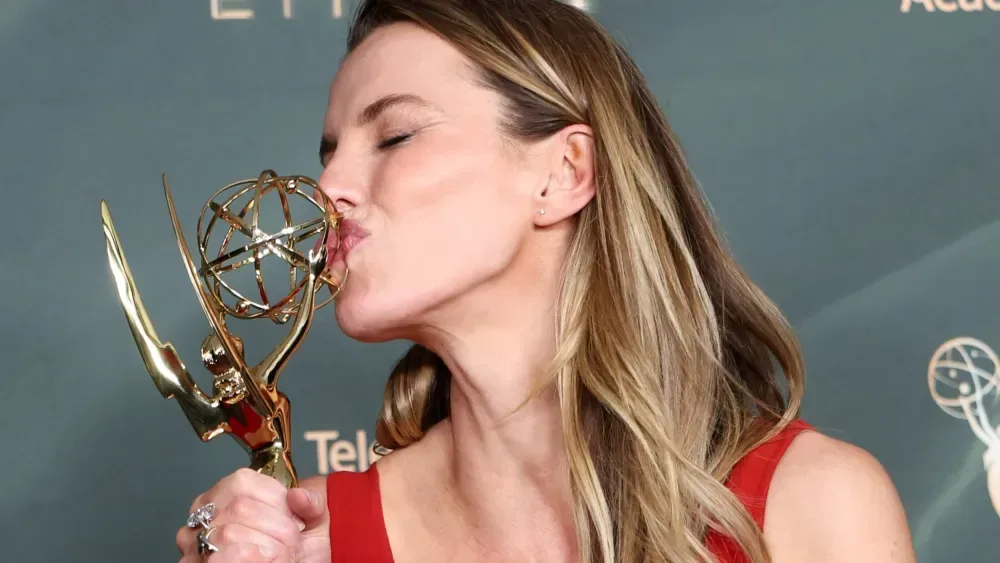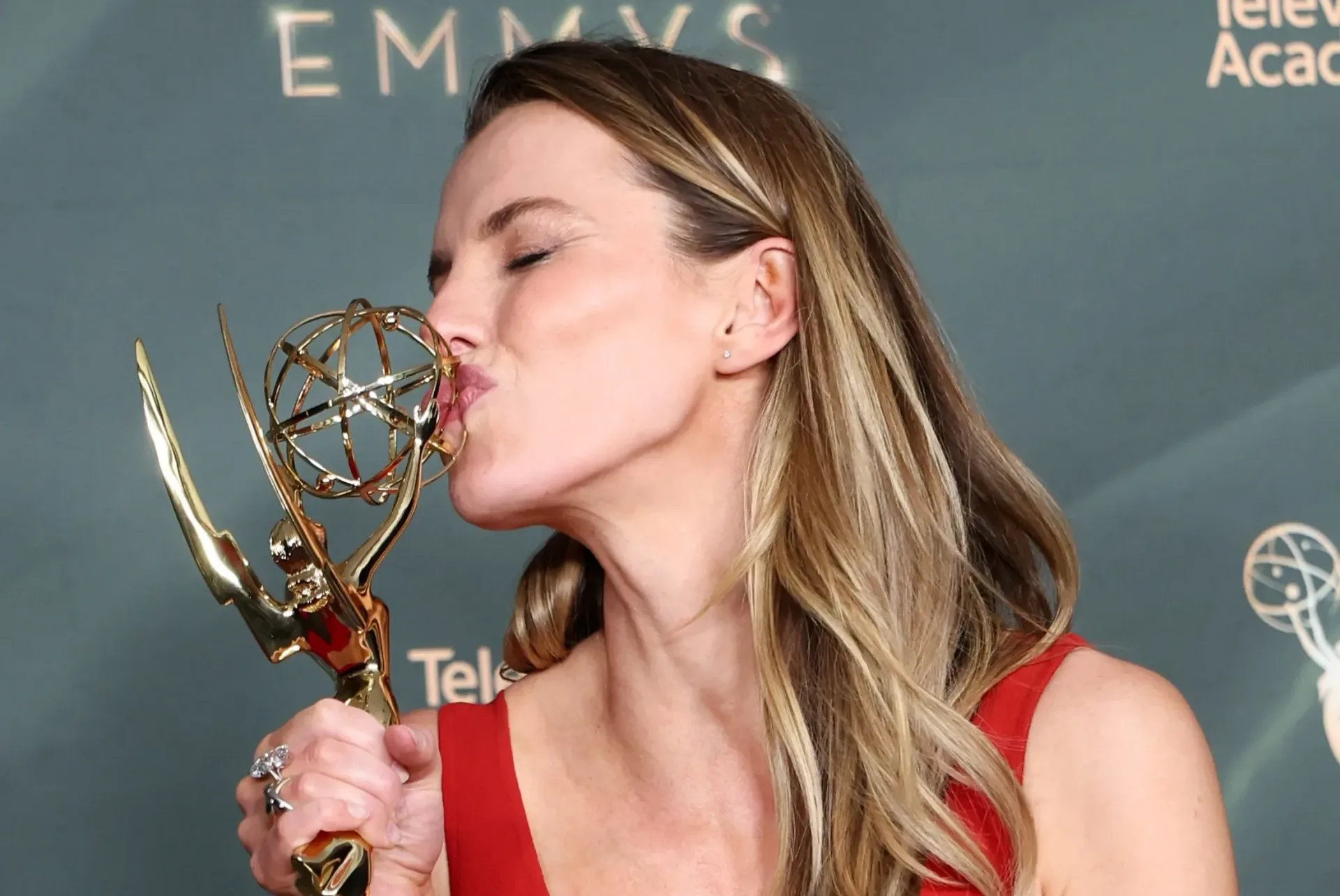
Betty Gilpin turned an Emmy acceptance speech into a compact comic performance on Night 2 of the 78th Emmys, winning outstanding guest actress in a comedy for her work on Widow’s Bay. Her choice was not the standard page of names followed by a speed-run to the orchestra cue. Instead, Gilpin read a rhyming poem written in preparation for the possibility—however unlikely she had considered it—that she might have to walk to the stage.
The memorable line was also the sharpest: a call to lean more toward playwright Sam Shepard and less toward tech executive Sam Altman. The Peacock Theatre audience responded loudly, and the line has understandably become the speech’s headline-ready piece. It is brief, funny and pointed, but it also fits the larger thrust of what Gilpin said: affection for eccentric artists, fellow actors, live theater and projects that are strange enough to feel risky.
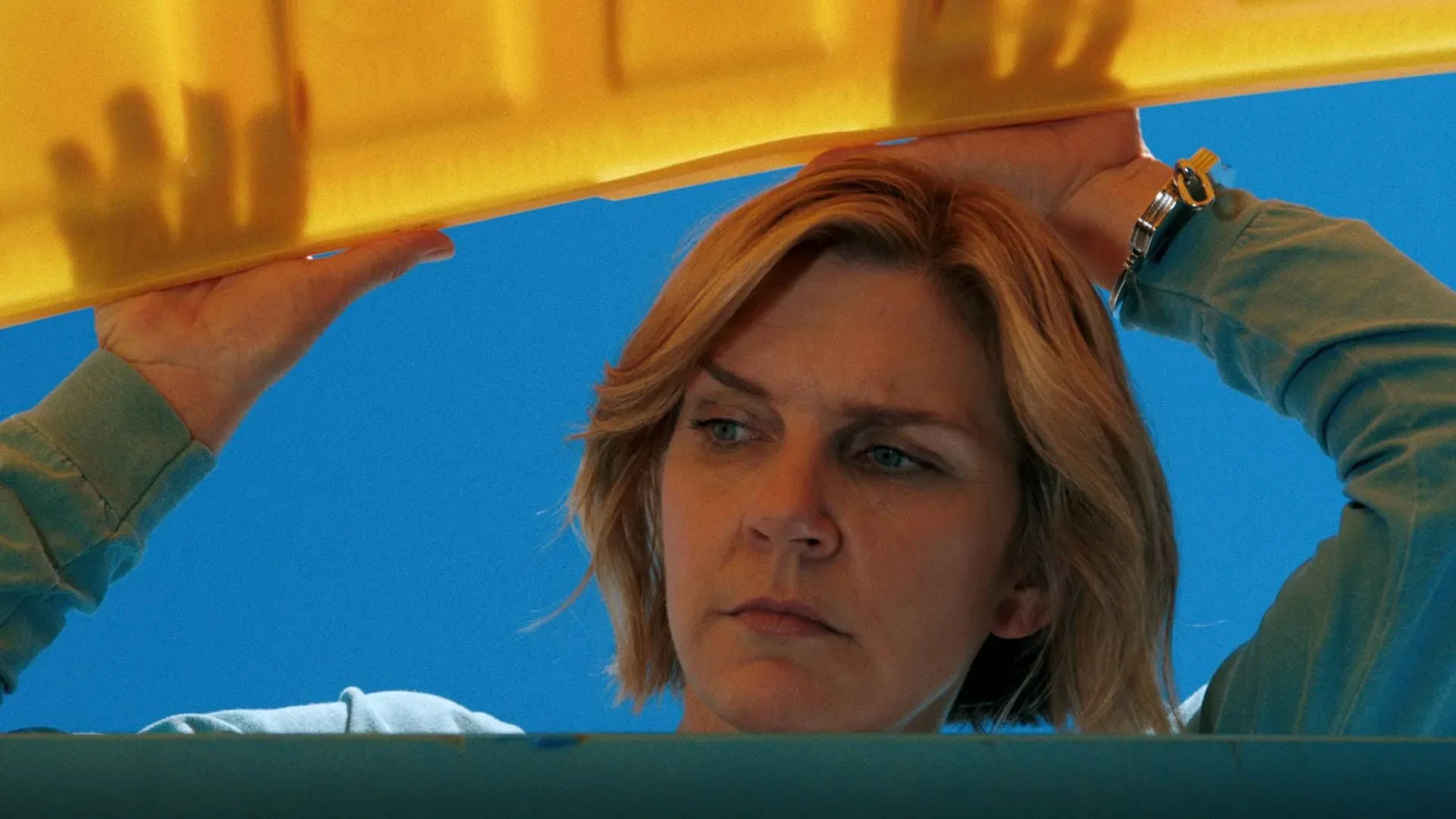
Gilpin’s prize recognized Sarah Westcott Warren, the embattled wife of town founder Richard Warren, in the Widow’s Bay flashback episode “Our History.” The performance came in an episode that appears to operate as its own period-piece pocket within the broader contemporary series. That distinct setup gave Gilpin room for a guest role with a complete, unusual dramatic shape rather than a conventional cameo that simply visits the show’s regular world for a scene or two.
A poem rather than an acceptance-speech template
Gilpin framed the poem as a way to make an acceptance speech less dull, beginning from the premise that a winner should arrive with something ready even when expecting not to hear their name. The format let her move quickly between self-mockery, warm acknowledgements and sincere admiration without pretending those tones need to be separated at an awards ceremony.
She thanked the people behind Widow’s Bay, including creator Katie Dippold, executive producer Hiro Murai, director Ti West, the show’s team and Apple. She also addressed representatives and family, mentioned her daughters and brothers, and paid tribute to Babe, her late dog. The speech was deliberately messy in the productive way that a comic poem can be: the rhymes create momentum while allowing a thought to turn suddenly from a gag into a real expression of gratitude.
Its humor was never only about the entertainment business. Gilpin compared her own profession, with typical performer self-deprecation, against relatives who work in nursing, the priesthood and teaching. Yet the core of the poem was notably generous about acting as a craft and a community. She praised the people encountered through a life in the profession—from veteran performers in dressing rooms to actors met on set—and described the privilege of laughing around craft services and seeing Shakespeare performed in imperfect, drafty theaters.
That context matters for the Shepard-Altman line. It was not presented as a policy statement or an extended attack on the technology world. It was a punchline built out of two very different ideas of cultural aspiration: Sam Shepard as a shorthand for difficult, human, theatrical art, and Sam Altman as an emblem of a technology sector increasingly central to conversations about how creative work is made and valued. In an awards-room poem extolling actors and oddball art, the contrast landed cleanly.
“Let’s all lean toward Sam Shepard and less toward Sam Altman.”
The line also preserved the speech’s playful refusal to act above its setting. Gilpin had already conceded, in rhyme, that the industry can be silly. The joke did not position actors as saviors or award shows as solemn civic occasions. Rather, it argued for making room for a particular kind of human, handmade weirdness—even inside a very polished industry event.
Hamish Linklater supplied the practical nudge
The poem apparently existed because Hamish Linklater insisted that Gilpin prepare. Linklater, Gilpin’s Widow’s Bay co-star in “Our History,” was also nominated for guest actor in a comedy for portraying Richard Warren. Gilpin said they were on the same flight to the ceremony when he asked whether she had written an acceptance speech.
Her answer was no; she did not think she would win. Linklater’s response, as Gilpin relayed it, was to remind her that winning was a real possibility and that she should not arrive unprepared. That prompted her to write what she characterized as a quick, manic poem. The episode is a useful reminder that the spontaneous-seeming energy of a speech may still come from a small act of advance planning—and, in this case, a co-nominee serving as the sensible person in the aisle.
The resulting speech sounded tailored to Gilpin’s comic sensibility, but it also connected strongly to Widow’s Bay. A show with a deliberately idiosyncratic identity benefits when a guest performer accepts recognition in a way that does not flatten that identity into generic prestige-TV language. A poem packed with abrupt shifts, affectionate chaos and slightly unruly jokes seems more compatible with the work being honored than a carefully sanded corporate thank-you list would have been.
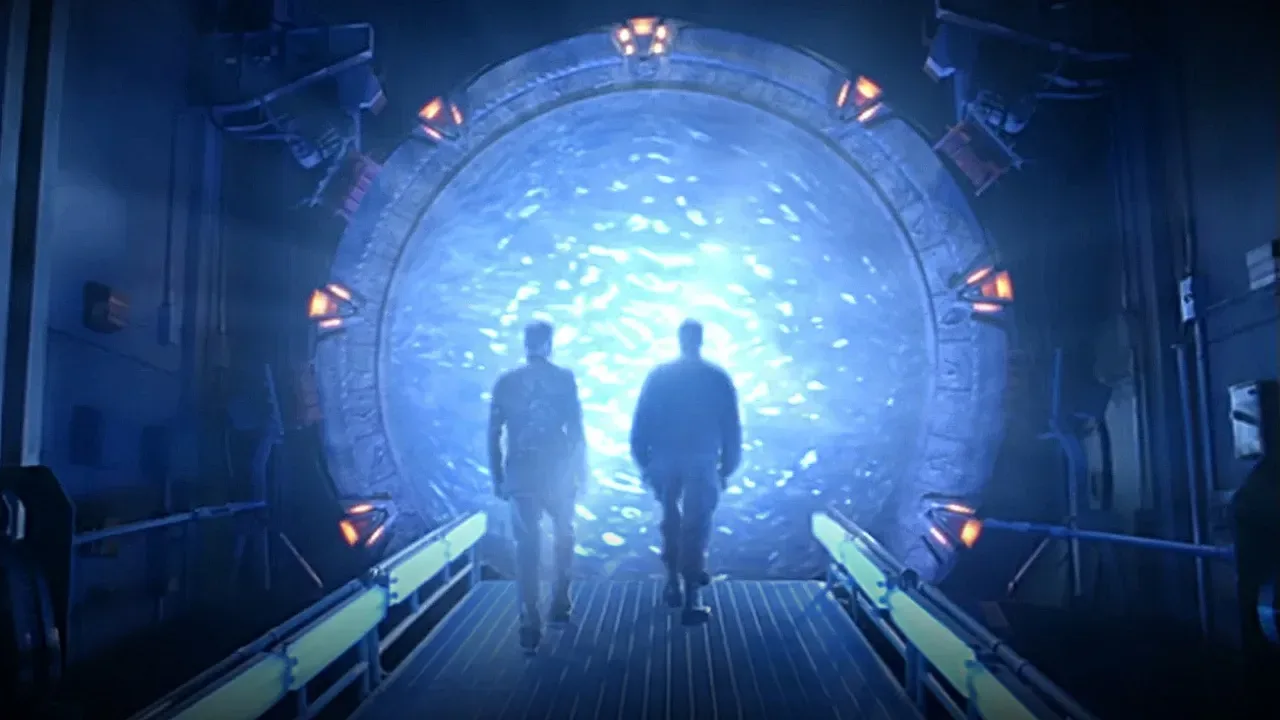
For viewers following television’s larger creative landscape, the moment also lands beside an ongoing appetite for series that take their own tonal risks. That does not mean every unusual show is guaranteed awards success, nor that awards are the final measure of value. But Gilpin’s response focused on the satisfaction of watching a bold idea be supported by talented people and then connect with an audience. Fans looking for more TV-world detours and alternate-reality storytelling can also revisit our look at the canceled Stargate revival and Daniel Jackson’s parallel-universe setup.
“Our History” was an island within the island
Gilpin described the episode she made with Linklater as resembling a strange period independent film produced at the tail end of the main show’s contemporary shoot. In her telling, the rest of the crew and writers had already completed nine episodes by the time the flashback installment came together. That meant the guest production arrived after a long stretch of work by people who were both exceptionally capable and understandably tired.
She called the experience an “island within an island,” a phrase that captures why a flashback episode can be so valuable. A series is normally governed by its established rhythm, its standing locations and the expectations around its continuing characters. A historical detour can loosen those constraints. Costume, setting, character behavior and even pacing may be recalibrated, while the episode can still contribute to the larger mythology.
In this instance, the flashback gives Sarah Westcott Warren and Richard Warren a dedicated space. Sarah is identified as the long-suffering spouse of the town’s founder, a description that already suggests an unequal, perhaps darkly comic history. Gilpin said Sarah appears to die while trying to escape the island. That apparent fate creates an obvious question for anyone invested in the character: could the show find another route back to her?
Gilpin would welcome another trip to Widow’s Bay
Gilpin was candid that the show’s own “demented” lore logic may not support Sarah’s return. She did not claim that a comeback is planned, and there is no confirmed new flashback appearance to report. Still, she made clear she would love the opportunity to return, joking that the creators should find a way to make it work.
That uncertainty is part of the appeal of a show with dense internal mythology. A character’s apparent death may close the door, or it may inspire viewers to examine the details more closely. At present, Gilpin’s comments amount to enthusiasm from an actor who enjoyed the job, not a hint of a formal story decision. The distinction is important: desire to return is not confirmation that a return will happen.
What is confirmed is the scale of the show’s Emmy night. Widow’s Bay had collected eight wins by the end of Night 2, more than any other program at that point in the event. Gilpin called the run of recognition incredible and treated it as a victory for the writers, crew and artists who committed to an original premise.
Her enthusiasm extended to Dippold’s work and to Apple for bringing the series into being. Gilpin said the mainstream success of something niche, strange and recognizably human renewed her faith in the business. That sentiment is perhaps the most direct companion to the poem’s big laugh. The speech made room for jokes about an industry that often invites them, but it also argued that the industry is worth caring about when it backs specific creative voices.
Gilpin’s Emmy moment therefore works on two levels. It was an entertaining acceptance speech, built around one particularly quotable cultural jab. More importantly, it was a compact defense of actors, theater, risky television and the odd creative project that finds a bigger audience without sanding down every eccentric edge. For Widow’s Bay, eight wins and a guest-actress trophy are a major awards result. For Gilpin, a poem written because a colleague said to prepare became the night’s most distinctive victory lap.