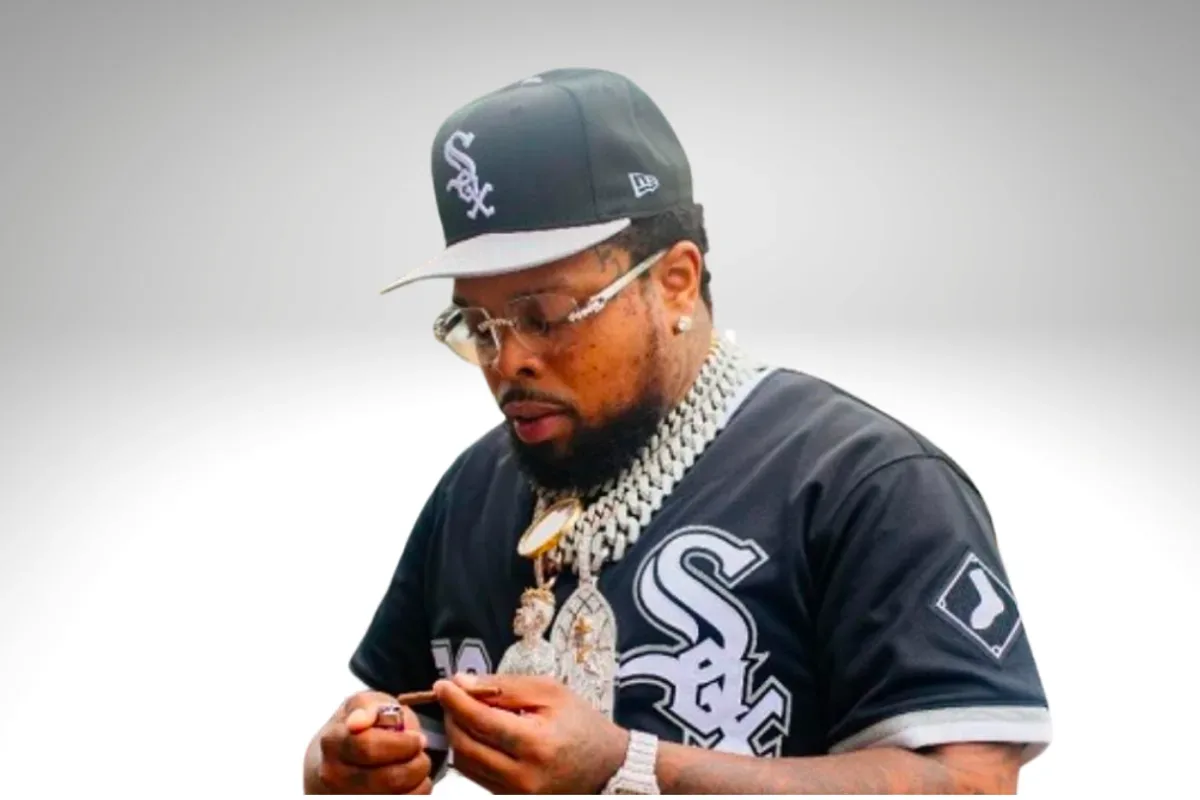
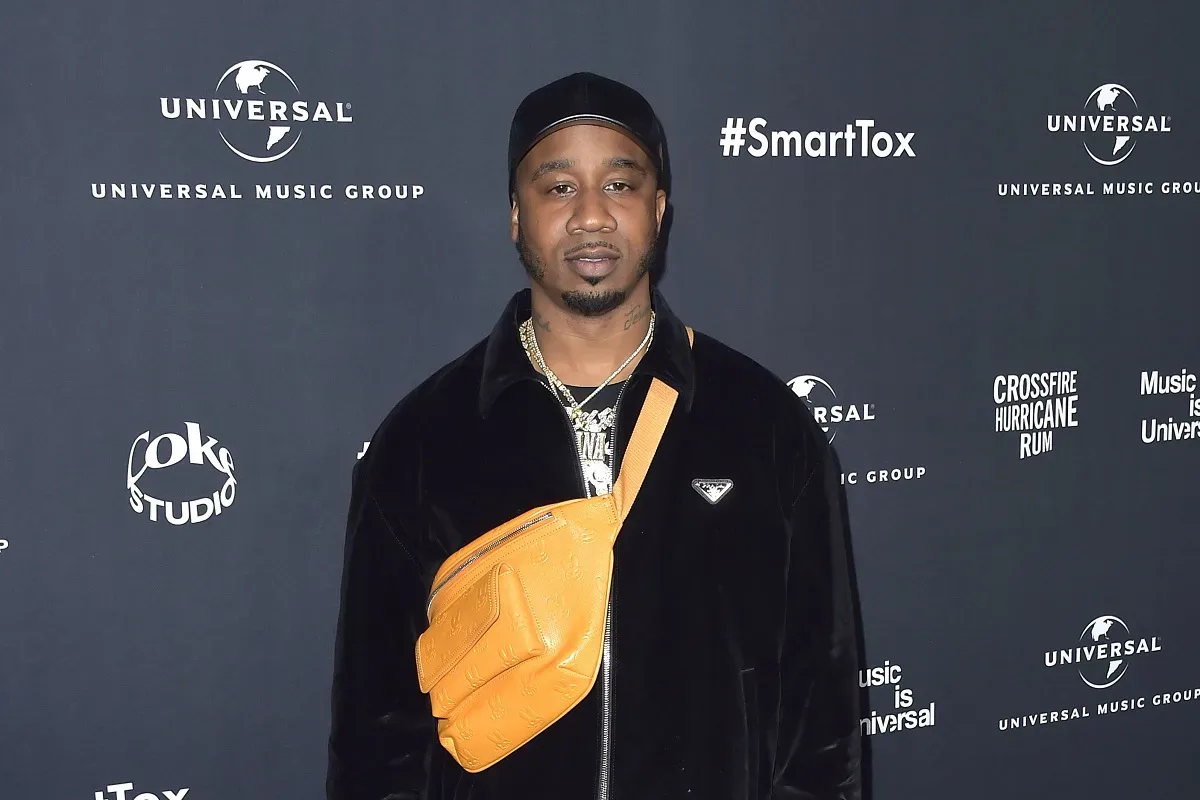
Benny The Butcher has drawn a clear line between his place in Griselda’s musical story and an ownership claim on the label itself. Speaking with Nessa on Hot 97, the rapper said he does not want a percentage of Griselda Records and never believed he was entitled to one.
“I don’t want a percentage of Griselda. I never thought I deserved a percentage.”
That direct position arrives while Westside Gunn and Conway The Machine publicly disagree over the Buffalo label’s business arrangements. Benny is closely associated with both artists and was included in the wider conversation, but his comments make clear that he sees his own circumstances differently from an argument over who should own part of the company.
For listeners, the distinction matters. Being central to a label’s sound, reputation and catalogue is not automatically the same thing as holding equity in the business. Equity, in this context, means an ownership interest: a share of the company rather than simply an artist agreement, a recording role or a creative affiliation. Benny’s remarks do not attempt to settle the other artists’ disagreement. They explain only why he does not personally frame his Griselda connection as grounds for a stake.
Benny separates creative history from ownership
Benny said Griselda was already operating successfully by the time he joined. He recalled reaching BET with Eminem not long after signing, describing an early milestone that underlines how quickly the affiliation put him in a bigger arena.
His account presents Griselda as an organization with momentum before his arrival, rather than a business he believes he helped establish from the ground up. That is the basis for his view that a percentage was never something he deserved by default.
It is also a useful reminder that the word “group” can hide several different professional relationships. Fans may reasonably connect Westside Gunn, Conway and Benny through their extensive run of collaborations, shared identity and joint releases. But an artistic collective can include founders, signed performers, collaborators and executives whose roles are not identical. A shared discography does not, on its own, describe what anybody owns.
The trio’s history nevertheless remains substantial. Their group debut, WWCD, arrived through Shady Records in 2019 and featured Eminem, 50 Cent and Raekwon. That record stands as a major chapter in the artists’ collective output, even as the current discussion emphasizes that they did not all own the underlying label.
What sparked the latest debate
The latest flare-up followed podcaster Mal’s claim that Jay-Z had once suggested Westside Gunn give Conway and Benny five percent apiece. Westside Gunn has disputed that version of events. In subsequent posts on X, he said that he had offered both rappers the same deal and questioned why the conversation was focused on Conway rather than Benny.
Five percent is a specific figure, but it should not be confused with a complete description of any deal. The available comments do not establish the terms, timing, valuation or legal status of an offer. Nor do they establish whether every party understood any proposed arrangement in the same way. Those omissions are important because ownership discussions are often reduced online to a single percentage, when the meaning of that percentage depends on the agreement surrounding it.
Westside Gunn also used a restaurant comparison during a radio appearance, likening the idea of giving up a stake to handing over part of a McDonald’s because someone makes excellent fries. The analogy frames his side of the issue around the difference between building and owning a business versus contributing valuable work within it.
Conway objected to that characterization. He responded on X that he had already expressed his feelings to his half-brother in person and did not intend to leave the comparison unanswered.
That exchange is emotionally charged, but the reported facts also set a limit on what can be concluded. Conway has previously said he signed his Griselda contract without reading it and was unhappy with its terms. He later said that nobody had stolen from him or owed him money. Those statements point toward dissatisfaction with a contract and the way the business was discussed, not a demonstrated claim of unpaid money in the information available here.
Why Benny’s answer is narrower than the broader dispute
Benny’s statement is notable precisely because it does not turn into a sweeping defense of every aspect of Griselda’s business. He did not say that all contractual concerns were imaginary, nor did he claim to speak for Conway. He spoke about his own expectations: he did not expect ownership, and he does not seek it now.
That narrower answer avoids collapsing several separate questions into one:
- Who founded and owns the label?
- What terms did individual artists receive when they signed?
- Did artists have an opportunity to negotiate or review those terms?
- What does a long creative partnership mean after a label becomes more prominent?
- Can relatives and longtime collaborators resolve disagreements without making each stage of it public?
The available material does not provide contracts or enough detail to answer those questions definitively. What it does show is that the three issues—ownership, contract satisfaction and personal recognition—can overlap without being interchangeable.
Benny’s advice to the other two was simple: “Them boys need to have a conversation.” It is a restrained response from someone with personal ties to both sides and enough standing in the collective’s history to be drawn into the debate. Rather than litigating the terms in public, he pointed back toward direct communication.
That suggestion has practical weight even beyond this particular conflict. Public posts can make a disagreement visible, but they rarely clarify the documents, expectations and private conversations that shape a business relationship. A direct conversation cannot guarantee agreement, but it can at least address the specific issue that online framing tends to blur.
Black Soprano Family remains Benny’s immediate focus
Benny’s interview was also connected to new work outside the Griselda argument. He was discussing A Friend of Ours 2, a Black Soprano Family project he co-headlines with Connecticut rapper Fuego Base.
The release follows a 2018 mixtape, a period when Benny used his platform to introduce his crew to listeners who knew him through Griselda. That context helps explain why the ownership question is not the only business story around him. Benny has his own label operation to manage, along with artists and projects that exist under the Black Soprano Family banner.
A label is both a creative identity and a business structure. In public conversation, those functions can look inseparable: the name signals a sound, a circle of artists and a particular era of releases. Internally, though, the work can involve different decision-makers, agreements and priorities. Benny’s focus on Black Soprano Family illustrates that an artist can remain deeply linked to one collective while building a separate platform of his own.
The Griselda connection has not disappeared musically. Westside Gunn, Conway and Benny can all be heard on “Don Pistola,” from Westside Gunn’s new album Heelmatic. Their shared appearance is a concrete sign that the artists’ catalogued collaboration continues to exist alongside the public business tension.
For audiences, that coexistence may be the most important point to keep in mind. Collaborative music, personal relationships and label ownership do not always move in lockstep. The current exchange concerns real questions about recognition and business structure, but Benny’s comments establish that his own answer is not a demand for a share of Griselda. His immediate attention is on his own work, including A Friend of Ours 2, while he encourages Westside Gunn and Conway to speak directly.
That leaves the central dispute unresolved, and it should remain unresolved in public reporting until the principals add clearer details. For now, Benny’s contribution is unusually specific: he values the history, acknowledges the label’s established position when he arrived, and does not regard himself as owed an ownership percentage. For more developments from across entertainment, see our latest pop-culture streaming roundup.