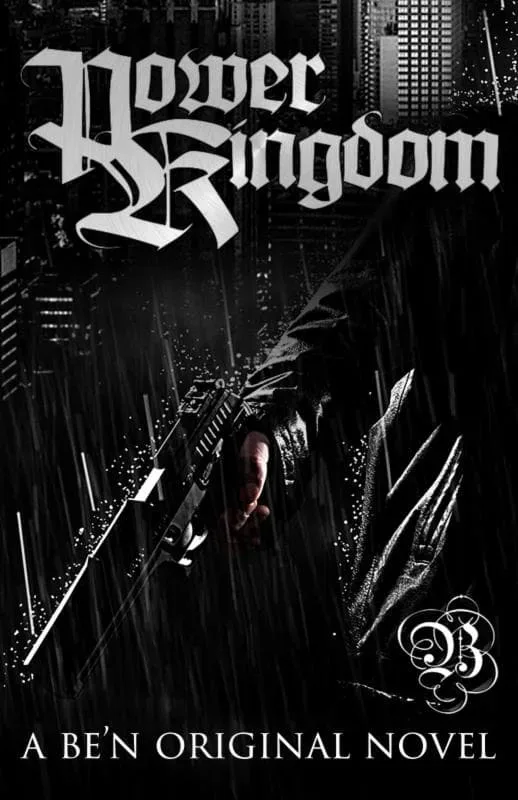
Be’n Original is bringing a career rooted in entertainment media into fiction with Power Kingdom, a debut urban crime thriller centered on an expanding criminal operation, a brotherhood that works in secrecy and the volatile cost of personal loyalty.
The novel’s announced premise puts power in direct conflict with intimacy. Its characters operate in a world shaped by fear, where the people closest to a leader may also be the ones most capable of endangering that leader’s survival. Love, honor, revenge and self-preservation are presented not as cleanly separate motives, but as pressures that can collide when alliances begin to fail.
Be’n Original’s background includes journalism, publishing and creative direction. His past writing has appeared across entertainment and culture publications, while he also serves as a publisher of Urban Magazine. Power Kingdom marks a change in form: reporting examines public people and real developments, while a crime novel can build its tension through private motives, hidden information and fictional relationships under strain.
A crime story built around vulnerability
The announced setup follows more than a criminal enterprise seeking to grow. At its core is a brotherhood whose secrecy is integral to its position. That secrecy creates an immediate story engine: information is power, but holding someone else’s secret can make a person either indispensable or disposable.
In crime fiction, a criminal empire is often the visible structure of the conflict: territory, influence, money or hierarchy may be at stake. Power Kingdom is also framed around the less visible pressures inside that structure. Concealed motives emerge, and relationships that might otherwise offer security become potential liabilities.
That distinction matters because intimidation alone does not necessarily make control stable. Fear may impose obedience in the short term, but it cannot erase jealousy, resentment, divided loyalties or the consequences of someone knowing too much. The premise suggests that the people who appear safest inside this kingdom may be exposed precisely because their authority depends on others remaining silent and loyal.
The announced stakes therefore extend beyond whether the operation expands. The bigger question is whether a system built on fear can survive when personal bonds become leverage. A friendship may bring protection, but it may also leave someone vulnerable to betrayal. Love may offer a reason to stay, or a reason to choose against the group. Honor may demand loyalty, while revenge can make loyalty impossible.
What the title suggests—and what has not been revealed
Power Kingdom is described as unfolding in a kingdom built on fear. The title combines two ideas that naturally pull together in the premise. “Power” points toward command, influence and the ability to determine what others do. “Kingdom” implies a hierarchy with people at the center and people beneath them, along with an order that must be defended if it is to endure.
The announcement also says the premise takes inspiration from a popular colloquial expression connected to Poughkeepsie, New York. It does not identify the expression, define its meaning or explain how Poughkeepsie will function in the plot. It is therefore not yet clear whether the city is the novel’s primary setting, an influence on its atmosphere or a reference point for the larger fictional world.
Likewise, details about the central characters have not yet been disclosed. More information on those characters is expected later. That leaves several important elements open: the identities and roles of the brotherhood’s members, the nature of the competing criminal operation, and which relationships will become most consequential as the story develops.
For readers, that limited information is useful context rather than a complete map of the book. The current description establishes the novel’s thematic terrain—secrecy, authority, loyalty and survival—without revealing its major turns or defining its full cast.
From cultural coverage to fictional characters
Moving from journalism to fiction does not mean the same skill set is simply transferred intact. The two forms ask different questions. Journalism depends on accuracy, verification and clear distinctions between what is known and what remains uncertain. Fiction, meanwhile, gives a writer room to construct characters’ inner conflicts and imagine the consequences of choices without claiming those events occurred.
Still, a professional background in covering culture can inform a novelist’s interest in status, image, ambition and the forces that shape public and private behavior. Those themes are relevant to a crime story about an organization trying to maintain authority. A hierarchy is not just a chain of command; it is also a set of expectations about who deserves trust, who is permitted to speak and what happens to someone who defies the group.
The premise of Power Kingdom turns those questions into personal stakes. The stated danger is not only an outside threat to the enterprise. It is the possibility that closeness itself becomes hazardous. Characters must decide what they owe one another when every promise has a cost and every secret can be used strategically.
That setup places a familiar thriller question at the center of the book: can a person retain loyalty to people they love while staying alive inside a system that treats vulnerability as weakness? The announcement does not answer it, but it makes clear that survival will be weighed against revenge, honor and affection rather than treated as a simple matter of escaping danger.
What readers can expect from the premise
Based on the information released so far, readers should expect a crime-focused saga in which interpersonal conflict is as significant as organizational conflict. The growing operation supplies the scale, while the secretive brotherhood and its relationships supply the tension.
- Criminal power as a central setting: The story concerns a rising operation and the effort to sustain control within an environment shaped by fear.
- Secrecy as leverage: Hidden motives and private knowledge are positioned as sources of danger, not just background details.
- Loyalty under pressure: Relationships are tested when devotion to a person conflicts with safety, ambition or revenge.
- Personal stakes behind authority: The premise treats vulnerability as a threat to leaders and to the people bound to them.
The word “saga” also indicates a story with room for an interconnected set of conflicts, rather than a premise limited to one isolated confrontation. However, no chapter count, length, series plan or additional plot particulars have been announced, so readers should avoid assuming how broad that scope will become.
Pre-orders are open; a release date is still pending
There is not yet a release date for Power Kingdom. Pre-orders are available through the listed Power Kingdom payment page.
Until further character information and publication details arrive, the clearest view of Be’n Original’s fiction debut is its central conflict: an empire may project strength, but its foundation can become unstable when loyalty turns conditional and the people closest to power possess the greatest capacity to undermine it.
Readers interested in crime stories that put character pressure alongside institutional stakes may also want to explore how long-running crime narratives handle changing loyalties in this look at the end of a major crime-drama streaming run.