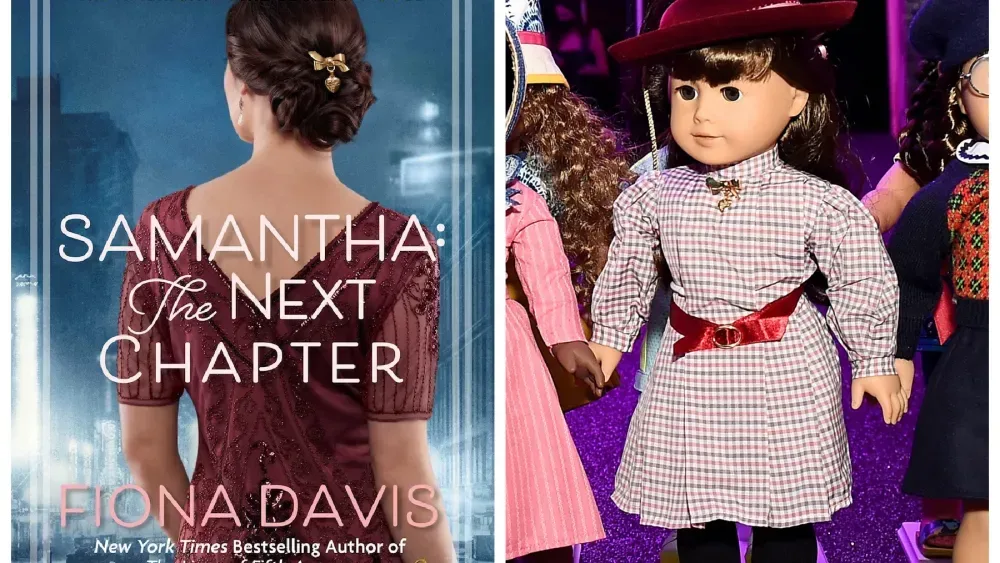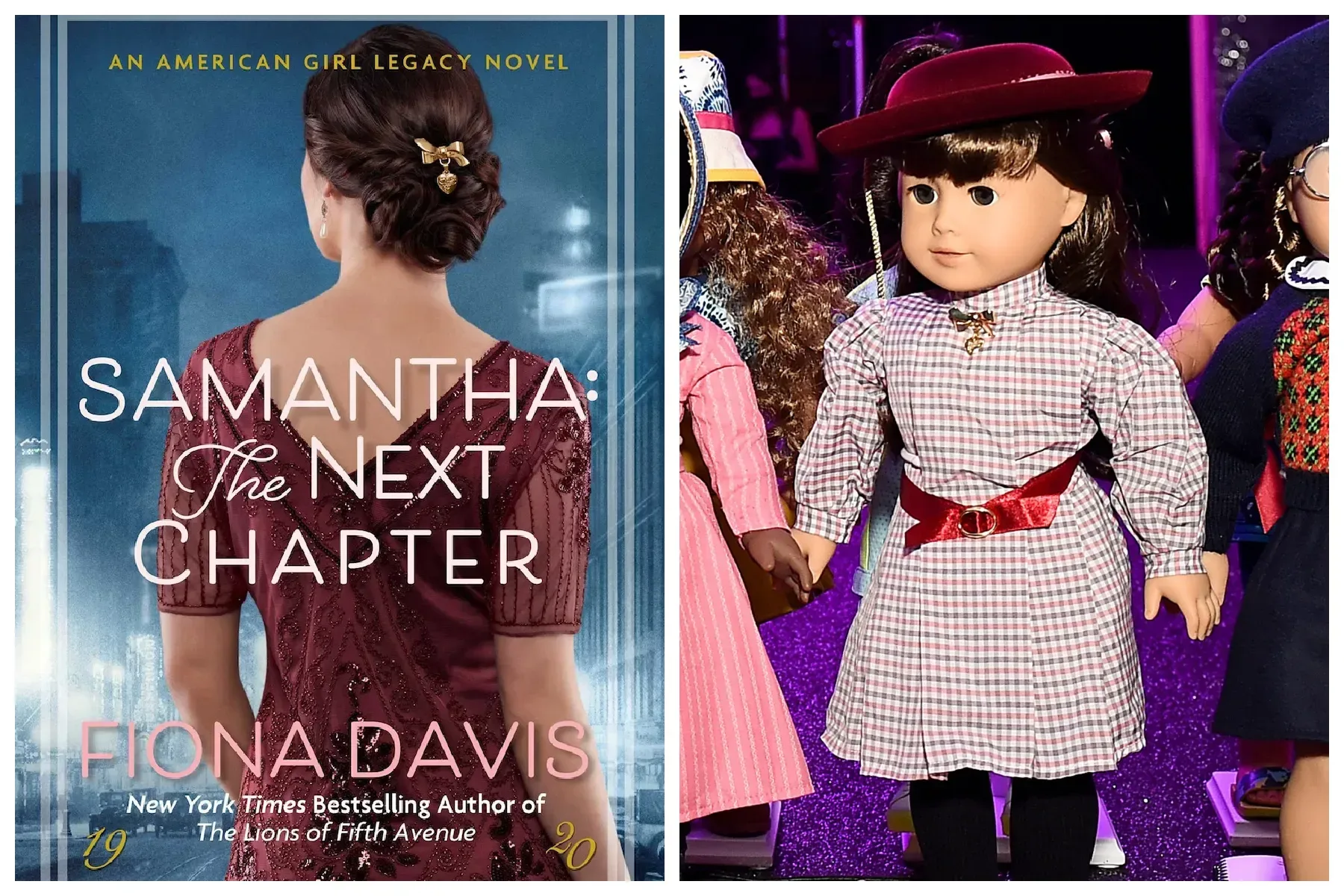
American Girl is taking one of its most familiar historical characters into a distinctly different chapter of life. Samantha: The Next Chapter, written by Fiona Davis, is the brand’s first novel aimed at adults and follows Samantha Parkington as a 25-year-old woman in 1920.
The premise is not a simple nostalgia revisit. Samantha is working in New York to educate women about suffrage and encourage voting in the first presidential election after women gained the right to vote. Her work is interrupted when her inheritance, including her childhood home of Mount Bedford, is taken in a scheme that forces her from a privileged social position into work as a shop girl. The resulting plot combines a change-in-status story with a mystery: Samantha seeks answers by entering the orbit of a notorious New York criminal while trying to protect her family’s legacy.
For a character introduced in 1986 and closely associated with stories of childhood, moving Samantha to adulthood is a major creative adjustment. Davis’s approach uses recognizable elements of Samantha’s earlier characterization—her determination, intelligence and empathy—while placing them under pressures that an older protagonist can confront more directly: grief, independence, work, civic responsibility, romance and financial vulnerability.
Why 1920 is the key setting
The year is more than a period-costume backdrop. In the novel, Samantha’s suffrage work gives the historical moment a practical role in the story. Suffrage means the right to vote; in this case, the book centers women learning about and preparing to exercise that right in a presidential election.
Davis identified 1920 as a moment of enormous change and tied Samantha’s interest in teaching to the era’s progressive education movement. That connection lets the character’s longstanding concern for education shape what she does as an adult, rather than treating her later life as disconnected from the traits readers already recognize.
The book’s version of New York is also designed to challenge Samantha’s assumptions. The stolen inheritance removes the protection of wealth and family property, putting her in a working environment and exposing her to a different side of the city. That reversal establishes the central test of the novel: can Samantha act effectively when the status and security that once surrounded her are gone?
It is a useful framework for an adult continuation because it avoids making maturity mean only a larger scale of the same old adventures. Samantha’s story now concerns how someone responds when an identity built partly around family, home and social position is suddenly unstable.
An established character, but room for new people
The novel retains several familiar figures from Samantha’s world: Grandmary, Uncle Gard, Aunt Cornelia and Agatha appear in the story. Nellie and other characters are referenced but live elsewhere. Davis explained that the selective use of returning characters was partly intended to preserve room for possible stories focused on other figures later.
Related coverage includes American Girl Takes Samantha Parkington Into Adulthood With ‘The Next Chapter’.
That is a meaningful distinction in a continuing fictional universe. A sequel can rely entirely on a familiar ensemble, or it can treat an older protagonist’s changing relationships as part of the point. Here, Samantha’s adult life is opened to new characters and a new social world, while her core family connections remain relevant.
The plan also leaves the ending open enough for another stage of Samantha’s life. An open-ended conclusion is not a confirmation of a further book, but it does mean the narrative has been built not to seal off the character’s future.
American Girl characters have long been closely linked to a particular age, historical setting and set of formative stories. The adult-novel approach asks a different question: what does it look like when that same person has lived beyond the frame readers previously knew? That question has appeared across pop culture whenever a franchise returns to a younger character years later; even television revisits have used a grown-up former child character as a central hook, as with a new take on Baywatch’s Hobie. Samantha’s book applies that basic continuation idea to historical fiction, with the shift in age supported by a precise new era.
Loss creates Samantha’s new starting point
The story also makes a difficult choice early: Grandmary dies. The loss serves as more than a sad event within the plot. Grandmary has been an important anchor for Samantha, and her absence gives Samantha space—and a need—to decide what she believes and who she wants to be without that immediate guidance.
Davis described Grandmary’s voice as continuing to matter throughout the novel, even after her death. That suggests the book is interested in the way family influence remains active after loss: not as an instruction manual that removes a protagonist’s agency, but as memory Samantha must interpret for herself.
The deathbed scene includes Samantha telling Grandmary she loves her for the first time. Davis connected the emotional reserve of that exchange to her own English family background, where saying those words aloud was not routine. In narrative terms, the scene places emotional honesty alongside the book’s external mystery. Samantha does not only have to find stolen property or confront a criminal operation; she also has to face feelings that have not been spoken.
That combination is central to the novel’s premise. The inheritance plot strips away material security, while Grandmary’s death destabilizes an emotional foundation. Both developments turn Samantha’s adulthood into something she must actively build.
Romance without abandoning the period
Minor story details ahead: Samantha has two love interests. Davis said the romantic material was carefully shaped around the social expectations of the period. The novel is not intended to become sexually explicit, and its depiction of courtship is constrained by what the author and brand considered historically appropriate: public hand-holding and public kissing would not fit the standards they were working with.
That does not mean romance is absent. Rather, it is expressed through the limits, choices and tensions available to Samantha in 1920. Davis wanted the two men to represent different sides of the world, creating a choice that is about more than merely selecting a partner.
For readers accustomed to Samantha only as a girl, this is probably the most immediately conspicuous change. But romance is part of the broader adult-fiction experiment, not a replacement for the mystery or the historical stakes. The book’s structure keeps Samantha’s decisions, work and investigation at the center.
What the adult-novel experiment changes
Samantha: The Next Chapter is an expansion of what an American Girl story can be, not a revision that erases the earlier material. Davis said she drew from details and ideas in the original stories, then developed them for a protagonist in a new phase of life. Samantha’s wealth, for example, is not treated as the entire definition of her. The book instead leans into a contradiction already present in her background: she has access to comfort and support, but she is also an orphan.
That tension is why the loss of her inheritance can work as an engine for the plot. It does not simply make Samantha less wealthy for the sake of drama. It exposes the gap between outward privilege and the unresolved need for connection, self-reliance and purpose.
Davis was given broad latitude over the plot, with the work ultimately moving through an approval process. The result, based on the announced setup, is a book that makes a recognizable protagonist face circumstances deliberately unlike the protected childhood setting associated with her.
For longtime readers, the practical appeal is clear: this is an opportunity to encounter Samantha as an adult without losing the historical-fiction foundation that defined the character. For readers coming in fresh, the novel offers a 1920 New York mystery involving women’s voting rights, family upheaval, work, crime and the question of what remains when money and inherited certainty disappear.
Its larger significance rests on the format shift. A character associated with childhood historical fiction is now being used to explore adulthood in the next decade of her life. Whether Samantha’s open ending becomes a longer adult series remains unconfirmed, but the book intentionally keeps that possibility alive.